- Company Articles
- Products and Technology
- Product knowledge
- One Way Rotatory Straight Lean Pipe Joints for Heavy-Duty Material Racks

One Way Rotatory Straight Lean Pipe Joints for Heavy-Duty Material Racks
Related Product
One Way Rotatory Straight Lean Pipe Joint
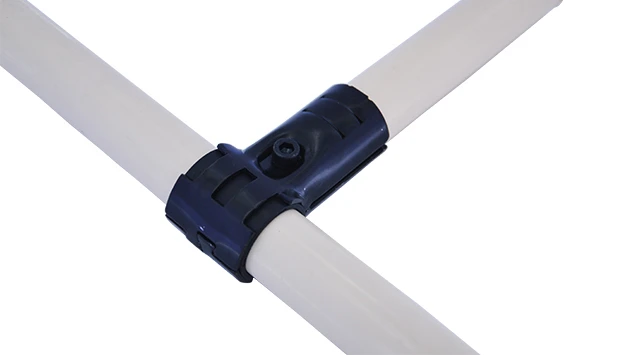
Two way lean pipe joint for 2 pcs 28MM lean pipe connection in straight angle with rotatory fucntion, which used widely in workbench, flow rack, hand trolley frame connection.
Walk into any thriving manufacturing facility, and you'll notice something immediately: the hum of productivity isn't just about machines—it's about movement. Materials glide from station to station, racks adjust to new layouts in hours, and teams adapt to changing orders without skipping a beat. But behind this seamless flow lies a quiet hero: the components that hold it all together. Today, we're diving into one such game-changer: the one way rotatory straight lean pipe joint. If you've ever struggled with rigid, unyielding material racks that slow down your line or waste precious floor space, this might just be the solution you've been searching for.
The Lean Revolution: Why Flexibility Isn't Optional Anymore
Lean manufacturing isn't just a buzzword—it's a mindset that's transformed how we build things. At its core, lean is about cutting waste: wasted time, wasted space, wasted effort. And in a world where customer demands shift overnight and product lifecycles grow shorter, rigidity is the ultimate waste. Traditional material racks, bolted to the floor or welded into fixed shapes, used to be the norm. But ask any plant manager about the last time they had to reconfigure their line for a new product, and you'll hear the same story: days of downtime, crews with grinders and welders, and a mountain of scrap metal from old racks that no longer fit.
Enter lean systems. These adaptable setups—built with modular components like lean pipes, joints, and aluminum profiles—let you reimagine your workspace on the fly. Need a taller rack for bulkier parts? Swap out a few pipes. Want to add a roller track for smoother material flow? Snap on a new section. And at the heart of this adaptability are the joints that connect everything. Not all joints are created equal, though. When it comes to heavy-duty material racks—the workhorses that hold everything from automotive parts to electronics components—you need a joint that's strong, reliable, and yes, flexible. That's where the one way rotatory straight lean pipe joint steps in.
Enter lean systems. These adaptable setups—built with modular components like lean pipes, joints, and aluminum profiles—let you reimagine your workspace on the fly. Need a taller rack for bulkier parts? Swap out a few pipes. Want to add a roller track for smoother material flow? Snap on a new section. And at the heart of this adaptability are the joints that connect everything. Not all joints are created equal, though. When it comes to heavy-duty material racks—the workhorses that hold everything from automotive parts to electronics components—you need a joint that's strong, reliable, and yes, flexible. That's where the one way rotatory straight lean pipe joint steps in.
Material Racks Reimagined: The Heavy-Duty Challenge
Heavy-duty material racks are the backbone of many production lines. They carry the weight—literally—of your operation, holding raw materials, work-in-progress, and finished goods. But "heavy-duty" used to mean "fixed." A rack built to hold 500kg of parts wasn't something you could just move or adjust; it was a permanent fixture, like a wall. The problem? Your production needs aren't permanent. Maybe next month, you're switching from small components to larger assemblies. Or your peak season hits, and you need to double your storage capacity in half the space. Suddenly, that "permanent" rack becomes a roadblock.
This is where the one way rotatory straight lean pipe joint shines. Designed specifically for heavy loads but engineered for movement, these joints let you build racks that are both tough and adaptable. Think of it as a bridge between strength and flexibility: you get the stability to hold heavy materials, but the rotation to adjust angles, reposition shelves, or even repurpose the entire rack for a new task. No welding, no drilling, no downtime—just a quick twist or lock, and you're back to work.
This is where the one way rotatory straight lean pipe joint shines. Designed specifically for heavy loads but engineered for movement, these joints let you build racks that are both tough and adaptable. Think of it as a bridge between strength and flexibility: you get the stability to hold heavy materials, but the rotation to adjust angles, reposition shelves, or even repurpose the entire rack for a new task. No welding, no drilling, no downtime—just a quick twist or lock, and you're back to work.

Meet the One Way Rotatory Straight Lean Pipe Joint: What Makes It Different?
Let's start with the basics. A lean pipe joint is the connector that links lean pipes (or aluminum profiles, stainless steel tubes—more on that later) to form structures like racks, workbenches, or trolleys. Traditional joints are often fixed: they lock pipes into 90-degree or 45-degree angles, and that's it. The one way rotatory straight lean pipe joint, though, adds a critical feature: rotation. Specifically, one-way rotation, meaning it can pivot in a single direction (usually 180 degrees) and lock securely in place. This might sound simple, but it changes everything.
Imagine a material rack where the shelves can tilt slightly to feed parts directly into a conveyor, or a workbench that adjusts its height by rotating the legs to match a worker's posture. Or a mobile trolley that folds flat for storage when not in use, thanks to rotating joints. That's the power of controlled rotation. And because it's "straight," it's designed for linear connections—perfect for building the vertical and horizontal beams of your rack, where strength and alignment matter most.
Imagine a material rack where the shelves can tilt slightly to feed parts directly into a conveyor, or a workbench that adjusts its height by rotating the legs to match a worker's posture. Or a mobile trolley that folds flat for storage when not in use, thanks to rotating joints. That's the power of controlled rotation. And because it's "straight," it's designed for linear connections—perfect for building the vertical and horizontal beams of your rack, where strength and alignment matter most.

Under the Hood: Features That Make a Difference on the Factory Floor
So, what sets a high-quality one way rotatory straight lean pipe joint apart from a cheap knockoff? Let's break down the features that actually matter when you're running a busy line:
1. Load Capacity That Doesn't Quit : Heavy-duty racks need heavy-duty joints. A good rotatory joint should handle 300-500kg per connection without bending or slipping. Look for joints made from high-grade aluminum or stainless steel—materials that resist corrosion and stand up to the daily wear of a factory environment.
2. Smooth, Controlled Rotation : There's a big difference between "wobbly" rotation and "precision" rotation. The best joints use ball bearings or friction-fit mechanisms that let you adjust angles smoothly, then lock tightly with a simple lever or bolt. No more fighting with stuck joints or worrying about shelves suddenly shifting under load.
3. Tool-Free (or Low-Tool) Assembly : Remember lean's enemy: wasted time. A joint that requires a wrench, a drill, and three people to install is a non-starter. Top rotatory joints can be tightened by hand or with a basic hex key, cutting assembly time from hours to minutes.
4. Compatibility with Your Existing Setup : You don't want to replace your entire rack system to upgrade joints. Look for joints that work with standard lean pipe sizes (like 28mm or 30mm), aluminum profiles (4040, 3030), or even stainless steel pipes. Many suppliers design their joints to fit multiple materials, so you can mix and match based on your needs.
5. Durability in the Real World : Factories are messy places—oils, coolants, dust, and occasional impacts. A joint that rusts, cracks, or wears out after a few months isn't worth the savings. Opt for joints with powder-coated finishes, corrosion-resistant metals, or reinforced stress points (like thicker walls at the connection points).
1. Load Capacity That Doesn't Quit : Heavy-duty racks need heavy-duty joints. A good rotatory joint should handle 300-500kg per connection without bending or slipping. Look for joints made from high-grade aluminum or stainless steel—materials that resist corrosion and stand up to the daily wear of a factory environment.
2. Smooth, Controlled Rotation : There's a big difference between "wobbly" rotation and "precision" rotation. The best joints use ball bearings or friction-fit mechanisms that let you adjust angles smoothly, then lock tightly with a simple lever or bolt. No more fighting with stuck joints or worrying about shelves suddenly shifting under load.
3. Tool-Free (or Low-Tool) Assembly : Remember lean's enemy: wasted time. A joint that requires a wrench, a drill, and three people to install is a non-starter. Top rotatory joints can be tightened by hand or with a basic hex key, cutting assembly time from hours to minutes.
4. Compatibility with Your Existing Setup : You don't want to replace your entire rack system to upgrade joints. Look for joints that work with standard lean pipe sizes (like 28mm or 30mm), aluminum profiles (4040, 3030), or even stainless steel pipes. Many suppliers design their joints to fit multiple materials, so you can mix and match based on your needs.
5. Durability in the Real World : Factories are messy places—oils, coolants, dust, and occasional impacts. A joint that rusts, cracks, or wears out after a few months isn't worth the savings. Opt for joints with powder-coated finishes, corrosion-resistant metals, or reinforced stress points (like thicker walls at the connection points).
Traditional vs. Rotatory: A Side-by-Side Comparison
Still not sure if rotatory joints are worth the switch? Let's put them head-to-head with traditional fixed joints in the scenarios that matter most to your operation:
| Feature | Traditional Fixed Joints | One Way Rotatory Straight Lean Pipe Joints |
|---|---|---|
| Flexibility | Fixed angles only (90°, 45°, etc.). No adjustment after assembly. | 180° one-way rotation with locking positions. Adjust shelves, heights, or angles on the fly. |
| Installation Time | 30-60 minutes per joint (welding, bolting, or precise alignment needed). | 5-10 minutes per joint (hand-tightened or basic tools; no welding). |
| Adaptability to Layout Changes | Requires disassembly and reassembly; often damages pipes or joints in the process. | Rotate or reposition without disassembly. Minimal wear and tear. |
| Load Capacity | High (500kg+), but only in fixed positions. | Comparable (300-500kg+), with secure locking to maintain stability under load. |
| Cost Over Time | Lower upfront cost, but higher long-term costs (downtime, replacement parts, scrap from reconfigurations). | Slightly higher upfront cost, but lower long-term costs (faster setup, fewer replacements, no scrap from rigid layouts). |
| Space Utilization | Fixed footprint; wasted space when not fully loaded. | Adjustable to fit varying load sizes; fold or reposition to free up floor space. |
The verdict? If your operation rarely changes, fixed joints might work. But if you value agility, reduced downtime, or space efficiency, rotatory joints are an investment that pays off fast.
Beyond the Joint: Building a Lean Ecosystem
A great joint is just one piece of the puzzle. To truly unlock lean efficiency, you need components that work together seamlessly. Let's talk about how the one way rotatory straight lean pipe joint plays nice with other key players in your setup:
Aluminum Profiles: Strength Meets Lightweight Design : While traditional lean pipes are often steel with a plastic coating, aluminum profiles (like 4040 or 3030 series) offer a lighter, more corrosion-resistant alternative. Rotatory joints designed for aluminum profiles let you build lighter racks that are still tough enough for heavy loads—perfect for mobile trolleys or overhead systems. Pair them with aluminum guide rails, and you've got a smooth, low-friction surface for sliding materials.
Roller Tracks: Let Gravity Do the Work : Ever wished your material rack could feed parts directly into your assembly line? Combine rotatory joints with roller tracks (like 40 steel roller track or 38 aluminum roller track) and you've got a gravity-fed system. Tilt the rack slightly using the rotatory joint, and parts glide down the rollers to where they're needed—no manual lifting, no wasted steps.
Casters: Mobility Without Compromise : Heavy-duty casters turn a static rack into a mobile workstation. But to make that workstation truly adaptable, you need joints that can handle movement. Rotatory joints lock securely to keep shelves stable while rolling, then unlock to adjust the rack's angle once it's in place. Look for casters with brake systems and rotatory joints with vibration-resistant locking mechanisms—your floors (and your back) will thank you.
Accessories: The Little Things That Matter : Don't overlook the extras. Swivel roller balls (1 inch or 0.5 inch) let materials slide in any direction on your workbench. Plastic roller track guide rails (yellow or grey) keep parts aligned on the track. And end supports with stops prevent materials from sliding off the edge. When your rotatory joints work with these accessories, you're not just building a rack—you're building a custom workflow solution.
Aluminum Profiles: Strength Meets Lightweight Design : While traditional lean pipes are often steel with a plastic coating, aluminum profiles (like 4040 or 3030 series) offer a lighter, more corrosion-resistant alternative. Rotatory joints designed for aluminum profiles let you build lighter racks that are still tough enough for heavy loads—perfect for mobile trolleys or overhead systems. Pair them with aluminum guide rails, and you've got a smooth, low-friction surface for sliding materials.
Roller Tracks: Let Gravity Do the Work : Ever wished your material rack could feed parts directly into your assembly line? Combine rotatory joints with roller tracks (like 40 steel roller track or 38 aluminum roller track) and you've got a gravity-fed system. Tilt the rack slightly using the rotatory joint, and parts glide down the rollers to where they're needed—no manual lifting, no wasted steps.
Casters: Mobility Without Compromise : Heavy-duty casters turn a static rack into a mobile workstation. But to make that workstation truly adaptable, you need joints that can handle movement. Rotatory joints lock securely to keep shelves stable while rolling, then unlock to adjust the rack's angle once it's in place. Look for casters with brake systems and rotatory joints with vibration-resistant locking mechanisms—your floors (and your back) will thank you.
Accessories: The Little Things That Matter : Don't overlook the extras. Swivel roller balls (1 inch or 0.5 inch) let materials slide in any direction on your workbench. Plastic roller track guide rails (yellow or grey) keep parts aligned on the track. And end supports with stops prevent materials from sliding off the edge. When your rotatory joints work with these accessories, you're not just building a rack—you're building a custom workflow solution.
Real-World Impact: How One Factory Cut Downtime by 40%
Let's ground this in reality. Consider a mid-sized automotive parts manufacturer we worked with last year. They produced brake components for multiple car models, and every time a new model launched, they had to reconfigure their material racks to hold larger or differently shaped parts. With traditional welded racks, this meant:
- 3 days of downtime while crews cut and rewelded racks
- $5,000 in labor costs for each reconfiguration
- Wasted space when racks sat empty between model runs
They switched to a lean system built with one way rotatory straight lean pipe joints, aluminum profiles, and roller tracks. The results? Their first reconfiguration took 4 hours instead of 3 days. Labor costs dropped to $300 (just a few workers with hex keys). And when not in use, the racks folded flat to store against the wall, freeing up 20% of their floor space for new equipment. Most importantly, they could now adjust individual shelves to hold mixed parts—no more waiting for a full rack to switch models. Downtime between orders? Cut by 40%. That's the power of flexible joints in action.
- 3 days of downtime while crews cut and rewelded racks
- $5,000 in labor costs for each reconfiguration
- Wasted space when racks sat empty between model runs
They switched to a lean system built with one way rotatory straight lean pipe joints, aluminum profiles, and roller tracks. The results? Their first reconfiguration took 4 hours instead of 3 days. Labor costs dropped to $300 (just a few workers with hex keys). And when not in use, the racks folded flat to store against the wall, freeing up 20% of their floor space for new equipment. Most importantly, they could now adjust individual shelves to hold mixed parts—no more waiting for a full rack to switch models. Downtime between orders? Cut by 40%. That's the power of flexible joints in action.
Choosing the Right Supplier: Why Quality Can't Be Skimped
Not all one way rotatory straight lean pipe joints are created equal. A cheap joint might save you $10 today, but if it fails under load next month, you're looking at damaged parts, injured workers, or a line shutdown. When shopping for joints (or any lean components), ask your supplier these questions:
- What materials are they made from? Look for aluminum (lightweight, corrosion-resistant) or stainless steel (heavy-duty, high-temperature resistant) for durability. Avoid plastic joints for heavy loads—they'll warp over time.
- Can you provide load test data? A reputable supplier will have third-party testing showing how much weight the joint can handle, both statically and dynamically (when moving).
- Do they work with standard components? Your joint should fit standard lean pipe sizes (28mm, 30mm), aluminum profiles (4040, 3030), and accessories (casters, roller tracks). No one wants a "proprietary" system that locks you into one supplier.
- What's the warranty? A 1-year warranty is standard, but the best suppliers offer 2-3 years—they stand behind their product.
Remember, your lean system is only as strong as its weakest link. Investing in quality joints from a trusted lean pipe supplier might cost a bit more upfront, but it's nothing compared to the cost of a failed rack or a delayed order.
- What materials are they made from? Look for aluminum (lightweight, corrosion-resistant) or stainless steel (heavy-duty, high-temperature resistant) for durability. Avoid plastic joints for heavy loads—they'll warp over time.
- Can you provide load test data? A reputable supplier will have third-party testing showing how much weight the joint can handle, both statically and dynamically (when moving).
- Do they work with standard components? Your joint should fit standard lean pipe sizes (28mm, 30mm), aluminum profiles (4040, 3030), and accessories (casters, roller tracks). No one wants a "proprietary" system that locks you into one supplier.
- What's the warranty? A 1-year warranty is standard, but the best suppliers offer 2-3 years—they stand behind their product.
Remember, your lean system is only as strong as its weakest link. Investing in quality joints from a trusted lean pipe supplier might cost a bit more upfront, but it's nothing compared to the cost of a failed rack or a delayed order.
Conclusion: The Future of Lean Material Handling is Rotational
At the end of the day, manufacturing isn't about the machines—it's about the people who use them. And people work best when their tools adapt to them, not the other way around. The one way rotatory straight lean pipe joint might seem like a small component, but it's a symbol of that philosophy: strong enough to carry the load, flexible enough to adapt, and simple enough to let your team focus on what they do best—building great products.
Whether you're running a small workshop or a large production line, the question isn't whether you need flexible material handling—it's how soon you can start. So take a look at your current racks. Are they holding you back? Are they wasting space, time, or energy? If the answer is yes, it might be time to give rotatory joints a try. Your floor space will open up, your team will move faster, and your bottom line? It'll thank you too.
After all, in lean manufacturing, the best solutions are the ones that work so well, you forget they're there—quietly, reliably, keeping the flow going. And that's exactly what a great joint does.
Whether you're running a small workshop or a large production line, the question isn't whether you need flexible material handling—it's how soon you can start. So take a look at your current racks. Are they holding you back? Are they wasting space, time, or energy? If the answer is yes, it might be time to give rotatory joints a try. Your floor space will open up, your team will move faster, and your bottom line? It'll thank you too.
After all, in lean manufacturing, the best solutions are the ones that work so well, you forget they're there—quietly, reliably, keeping the flow going. And that's exactly what a great joint does.