- Company Articles
- Products and Technology
- Product knowledge
- One Way Rotatory Straight Lean Pipe Joints for Modular Workbench Design

One Way Rotatory Straight Lean Pipe Joints for Modular Workbench Design
Related Product
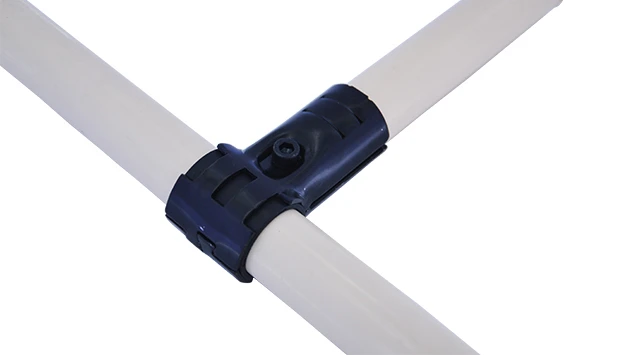
One Way Rotatory Straight Lean Pipe Joint
Two way lean pipe joint for 2 pcs 28MM lean pipe connection in straight angle with rotatory fucntion, which used widely in workbench, flow rack, hand trolley frame connection.
Walk into any modern factory, warehouse, or assembly line, and you'll notice something fundamental that often goes unnoticed: the workbench. It's not just a flat surface where tools and parts sit—it's the silent backbone of productivity. A well-designed workbench adapts to the task at hand, keeps materials within reach, and grows with the needs of the team. But here's the thing: rigid, one-size-fits-all workbenches are relics of the past. Today, the magic lies in modularity—and at the heart of that modularity are components like the one way rotatory straight lean pipe joint chrome. Let's dive into how this small but mighty part is revolutionizing modular workbench design, and why it's become a go-to for manufacturers, big and small.
The Rise of Modular Workbenches: Why Flexibility Matters
Think about the last time you rearranged your home office. Maybe you added a shelf, moved your desk closer to the window, or swapped out a chair for better ergonomics. Now imagine doing that in a factory—where a single workbench might be used for assembling circuit boards in the morning and packaging finished products in the afternoon. Or where a team suddenly needs to scale up production for a seasonal rush, then downsize just as quickly. Rigid workbenches can't keep up with that kind of change. They're expensive to replace, time-consuming to modify, and often end up creating more waste than value.
That's where modular workbenches come in. Built from lean pipe systems—lightweight, durable tubes and joints—they're designed to be reconfigured, extended, or repurposed with minimal effort. Need a taller shelf? Add a few pipes and joints. Want to tilt the work surface for better visibility? Adjust the angle of the supports. Need to move the entire setup to a new part of the factory? Attach caster wheels and roll it away. Modular workbenches don't just save time and money; they align with the principles of lean manufacturing—eliminating waste, optimizing flow, and putting the power of adaptability in the hands of the people who use the tools every day.
But none of this flexibility would be possible without the right joints. Joints are the connectors that hold the lean pipe system together, and their design directly impacts how easy (or hard) it is to adjust the workbench. Which brings us to the star of the show: the one way rotatory straight lean pipe joint chrome. This isn't just any joint—it's a precision-engineered component that balances stability with movement, making it ideal for workbenches that need to do more than just sit still.
Understanding Lean Pipe Systems: The Basics
Before we get into the specifics of the one way rotatory joint, let's take a quick step back to understand lean pipe systems as a whole. At their core, these systems are made up of two main parts: pipes and joints. The pipes are typically made of steel (often coated in plastic or chrome for durability) or aluminum—lightweight and corrosion-resistant, perfect for factory environments. The joints are the pieces that connect the pipes, allowing you to build everything from simple shelves to complex workstations.
Lean pipe systems got their start in manufacturing, inspired by Toyota's lean production philosophy. The goal was to create tools that reduced waste, improved efficiency, and empowered workers to customize their workspace. Over time, they've spread to warehouses, labs, and even retail settings, thanks to their versatility. Today, you'll find lean pipe workbenches in electronics factories assembling smartphones, in auto shops organizing tools, and in fulfillment centers sorting packages—all because they're easy to build, easy to modify, and built to last.
But not all joints are created equal. Fixed joints, for example, lock pipes into a rigid angle (like 90 degrees or 45 degrees) and don't move. They're great for stability but offer zero flexibility. Rotatory joints, on the other hand, allow pipes to swivel or pivot, making it possible to adjust angles or reposition components without disassembling the entire structure. And among rotatory joints, the one way rotatory straight lean pipe joint chrome stands out for its unique ability to combine controlled movement with reliable stability.

Meet the One Way Rotatory Straight Lean Pipe Joint Chrome: Design and Function
Let's break down the name first: "one way rotatory" means the joint can rotate in one direction (usually 180 degrees) but locks into place when turned the other way. "Straight" refers to its design—it connects two pipes in a straight line, but with the added twist of rotation. "Lean pipe joint" tells us it's part of the lean pipe system, and "chrome" is the finish, which adds corrosion resistance and a sleek, professional look.
At first glance, it might look like a simple metal connector, but under the hood, there's some clever engineering. The joint is typically made from a steel core, which gives it strength, with a chrome plating to protect against rust and wear—critical in factories where oil, moisture, or chemicals might be present. Inside, there's a spring-loaded mechanism or a ratchet system that allows smooth rotation in one direction but clicks into place when turned backward. This "one-way" feature is key: it lets you adjust the angle of a pipe (say, tilting a roller track for better material flow) and then lock it securely, so it doesn't shift during use.
Here's how it works in practice: Imagine you're building a lean pipe workbench with a roller track attachment. The roller track needs to slope slightly downward so that parts can glide from the supply area to the assembly station. With a fixed joint, you'd have to measure the angle precisely, cut the pipes to fit, and hope it's right. If you get it wrong, you're stuck—no adjustments, no do-overs. But with a one way rotatory joint, you can attach the roller track to the workbench frame, rotate it to the perfect angle (testing it with a few parts to see how they flow), and then lock it in place. If later you need to change the slope—maybe the parts are too heavy and need a gentler angle—you just unlock the joint, adjust, and relock. It's that simple.
Another example: height adjustment. Maybe your workbench has a shelf that needs to be raised for taller items or lowered for smaller ones. Instead of disassembling the entire shelf, you can use one way rotatory joints on the supporting pipes. Rotate the joint upward to raise the shelf, lock it, and you're done. No tools, no hassle, no downtime. This kind of flexibility is a game-changer for teams that need to adapt quickly.

Key Features of the One Way Rotatory Joint: Why It Stands Out
What makes this joint better than other rotatory joints? Let's compare it to a few common alternatives:
| Joint Type | Rotation Range | Locking Mechanism | Best For | Durability |
|---|---|---|---|---|
| Fixed Lean Pipe Joint | 0 degrees (no rotation) | Threaded or press-fit (permanent) | Static structures (shelves, fixed work surfaces) | High (no moving parts) |
| 360-Degree Rotatory Joint | 360 degrees (full rotation) | Adjustable screw (manual tightening) | Applications needing full movement (swivel arms) | Medium (moving parts can wear over time) |
| One Way Rotatory Straight Lean Pipe Joint Chrome | 180 degrees (one direction) | Spring-loaded/ratchet (automatic locking) | Angled adjustments (roller tracks, tiltable surfaces) | High (chrome finish resists wear; locking mechanism is robust) |
As the table shows, the one way rotatory joint offers a sweet spot between flexibility and stability. Fixed joints are durable but rigid; 360-degree joints are flexible but require manual tightening (which can loosen over time). The one way joint, with its automatic locking, gives you the best of both worlds: adjustability when you need it, rock-solid stability when you don't.
Other features worth noting: easy assembly. Unlike some joints that require wrenches or special tools, most one way rotatory joints can be tightened by hand—just slide the pipe into the joint and twist until it's secure. This saves time during setup and makes on-the-fly adjustments possible even for workers who aren't trained in engineering. The chrome finish also makes maintenance a breeze: a quick wipe with a dry cloth removes dust and grime, and the plating prevents rust from forming, even in humid environments.
Integration with Other Components: Building a Complete System
A great joint is only as good as the system it's part of. The one way rotatory straight lean pipe joint chrome doesn't work in isolation—it pairs seamlessly with other lean pipe components to create fully functional workbenches. Let's look at how it integrates with three key elements: aluminum profile, roller track, and caster wheels.
Aluminum Profile: Lightweight Strength
While traditional lean pipes are often made of steel, aluminum profile has become increasingly popular for its lighter weight and corrosion resistance. Aluminum lean pipes are perfect for workbenches that need to be moved frequently or used in environments where moisture is a concern (like food processing or pharmaceuticals). The one way rotatory joint works just as well with aluminum pipes as it does with steel—its design accommodates standard pipe diameters, so you can mix and match materials without compatibility issues.
For example, a workbench frame might use steel pipes for the base (for stability) and aluminum profile for the upper shelves (to reduce weight). The one way rotatory joints connect the two, allowing you to adjust the angle of the aluminum shelves without compromising the steel frame's strength. This hybrid approach gives you the best of both materials: durability where you need it, lightness where you want it.
Roller Track: Smooth Material Flow
Roller tracks are essential for moving parts along a workbench—think of them as miniature conveyor belts for small components. They're made of a series of rollers mounted on a track, and they rely on gravity (or a slight slope) to move parts from one end to the other. The angle of the track is critical: too steep, and parts might slide too fast and get damaged; too flat, and they might get stuck, causing delays.
This is where the one way rotatory joint shines. By attaching the roller track to the workbench frame with these joints, you can fine-tune the slope until parts glide smoothly. Need to switch from small, light parts to larger, heavier ones? Just adjust the angle. And because the joint locks securely, you don't have to worry about the track shifting mid-operation. It's a simple solution that eliminates the guesswork and frustration of fixed-angle tracks.
Caster Wheels: Mobility When You Need It
Not all workbenches need to be mobile, but when they do, caster wheels are a must. The problem? Adding casters can sometimes make a workbench wobbly or unstable. The one way rotatory joint helps here too. By using the joint to attach the caster wheel mounts to the workbench legs, you can adjust the height of each caster individually—ensuring the workbench sits level on uneven floors. And if you need to lock the casters in place, the joint's locking mechanism keeps the mounts steady, so the wheels don't swivel unexpectedly.
Imagine a team that needs to move a workbench from the assembly line to the testing area several times a day. With caster wheels and one way rotatory joints, they can roll the bench smoothly, adjust the height to match the testing station, and lock it down for stability during use. When they're done, unlock, roll back, and relock—no heavy lifting, no struggle.
Benefits for Modular Workbench Design: More Than Just Flexibility
We've talked about flexibility, but the one way rotatory straight lean pipe joint chrome offers other benefits that make it a smart investment for any manufacturing or warehouse setup.
Cost Savings: Reuse, Don't replace
Traditional workbenches are often custom-built for a specific task. When that task changes, the workbench becomes obsolete—you either pay to modify it (which can be as expensive as buying new) or throw it away. Modular workbenches with one way rotatory joints eliminate that waste. Instead of replacing the entire bench, you just reconfigure the components. A study by the Lean Manufacturing Institute found that companies using modular workbenches reduced their equipment costs by up to 30% over five years, thanks to reusability.
Improved Ergonomics: Work Smarter, Not Harder
Ergonomics is a big deal in factory settings—repetitive strain injuries cost companies billions each year in lost productivity and workers' compensation. A modular workbench with adjustable angles (courtesy of one way rotatory joints) lets each worker customize their setup: raising or lowering shelves, tilting work surfaces, or angling tools to reduce bending or reaching. This not only cuts down on injuries but also boosts morale—workers feel valued when their comfort is prioritized.
Faster Setup and Changeover: Minimize Downtime
In manufacturing, downtime is the enemy. Every minute a workbench is being modified is a minute production isn't happening. The one way rotatory joint's tool-free adjustment means changeovers take minutes, not hours. A team can reconfigure a workbench between shifts, or even mid-shift, without calling in maintenance. This agility is a competitive advantage—especially for small businesses that need to pivot quickly to meet customer demands.
Durability: Built to Last
Chrome plating isn't just for looks—it's a protective barrier. In factories where dust, oil, or water is present, steel joints can rust and seize up. Chrome resists corrosion, ensuring the joint's rotation mechanism stays smooth and reliable for years. Many manufacturers offer warranties of 5+ years on these joints, a testament to their durability.
Real-World Applications: Where the Joint Shines
Let's look at three industries where the one way rotatory straight lean pipe joint chrome has made a tangible difference.
Electronics Assembly: Precision and Adaptability
Electronics factories often work with small, delicate parts that require precise handling. An ESD (electrostatic discharge) workbench is essential to prevent static damage, but these workbenches also need to adapt to different circuit board sizes or assembly steps. By using one way rotatory joints, workers can adjust the angle of ESD-safe roller tracks to feed components gently onto the work surface, or tilt the bench top for better visibility when soldering. When a new product line is introduced, the same workbench can be reconfigured in minutes—no need for specialized ESD benches for each product.
Automotive Manufacturing: Heavy-Duty Flexibility
Automotive plants are fast-paced environments with constantly changing production schedules. A workbench used for assembling car door handles in the morning might be needed for dashboard components in the afternoon. The one way rotatory joint's strength (it can handle heavy loads, thanks to its steel core) makes it ideal for supporting tools like pneumatic drills or torque wrenches. Workers can adjust the height of tool holders or the angle of part bins to reduce fatigue, all while knowing the joint will stay locked under pressure.
Warehouse Fulfillment: Mobile Efficiency
E-commerce warehouses are all about speed—picking, packing, and shipping orders as quickly as possible. Mobile workstations with roller tracks and caster wheels are a must, but they need to be stable when in use. The one way rotatory joint lets workers adjust the roller track angle to match the size of packages (steeper for small boxes, gentler for larger ones) and lock the caster wheels in place during packing. At the end of a shift, the workstation can be folded or reconfigured to save space—no more cluttered aisles.
Maintenance Tips: Keeping Your Joints in Top Shape
Like any tool, the one way rotatory straight lean pipe joint chrome works best when properly maintained. Here are a few simple tips to keep it functioning smoothly for years:
- Keep it clean: Wipe the joint with a dry cloth weekly to remove dust and debris. If it's exposed to oil or chemicals, use a mild detergent and water, then dry thoroughly to prevent water spots on the chrome.
- Lubricate the mechanism: Every six months (or more often if used heavily), apply a drop of lightweight machine oil to the rotation point. This keeps the internal springs or ratchet system moving smoothly.
- Check for wear: Inspect the locking mechanism regularly. If the joint starts to slip or doesn't lock securely, it may need a new spring or internal part. Most suppliers offer replacement parts, so you don't have to replace the entire joint.
- Avoid over-tightening: When attaching pipes, hand-tighten only—over-tightening can strip the threads or damage the joint's internal components.
Conclusion: The Small Joint That Makes a Big Difference
In the world of manufacturing and warehousing, it's often the smallest components that have the biggest impact. The one way rotatory straight lean pipe joint chrome might not grab headlines, but it's quietly transforming how workbenches are designed, built, and used. By combining controlled rotation with reliable locking, it gives teams the flexibility to adapt to changing needs, the durability to withstand tough environments, and the cost savings to invest in other areas of their business.
Whether you're running a small electronics shop or a large automotive plant, modular workbenches are the future of efficient, adaptable production. And at the heart of those workbenches? Joints like this one—proof that sometimes, the best innovations are the ones that make complex tasks feel simple. So the next time you walk past a workbench, take a closer look. Chances are, there's a one way rotatory joint hard at work, making sure everything runs smoothly—just like it should.