- Company Articles
- Products and Technology
- Product knowledge
- One Way Rotatory Straight Lean Pipe Joints for Small-Batch Production Flexibility

One Way Rotatory Straight Lean Pipe Joints for Small-Batch Production Flexibility
Related Product
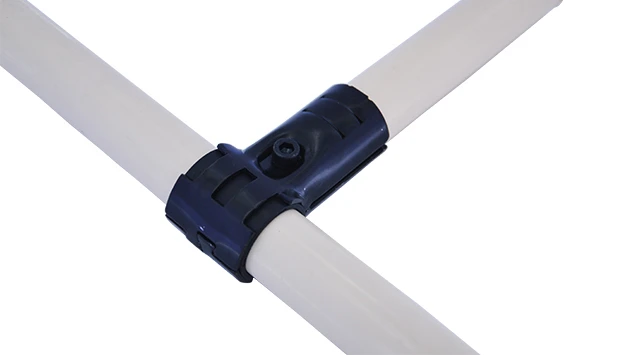
One Way Rotatory Straight Lean Pipe Joint
Two way lean pipe joint for 2 pcs 28MM lean pipe connection in straight angle with rotatory fucntion, which used widely in workbench, flow rack, hand trolley frame connection.
In today's manufacturing landscape, small-batch production isn't just a niche—it's the pulse of innovation. From custom electronics to artisanal machinery parts, businesses are racing to meet consumer demands for personalized, on-trend products. But here's the catch: traditional production setups, with their rigid workstations and one-size-fits-all workflows, weren't built for this. They're slow to adapt, costly to reconfigure, and often leave teams stuck in a cycle of "good enough" instead of "exactly right." That's where lean system solutions step in, and at the heart of that system lies a humble yet revolutionary component: the one way rotatory straight lean pipe joint.
You might be thinking, "A pipe joint? How can something so small make a difference in how I run my production line?" Let's start with the basics. Small-batch production thrives on change—changing product specs, changing team workflows, changing space constraints. If your workbench takes two hours to disassemble and rebuild every time you switch from making part A to part B, you're not just losing time; you're losing opportunities. The one way rotatory straight lean pipe joint is designed to eliminate that friction. It's the unsung hero that turns static workspaces into dynamic, adaptable environments, letting you pivot quickly without sacrificing efficiency or precision.
In this article, we'll dive into why small-batch production needs flexibility above all else, how lean pipe systems lay the groundwork for that flexibility, and why the one way rotatory straight joint is the key to unlocking it. We'll explore real-world applications, from reconfigurable workbenches to adaptive roller tracks, and break down the tangible benefits—faster setup times, lower costs, happier teams. By the end, you'll see why this unassuming component isn't just a part of your production line; it's the bridge between "stuck in the past" and "ready for whatever comes next."
The Small-Batch Production Paradox: Why Flexibility Isn't a Luxury—It's Survival
Let's paint a picture (without using "imagine," of course). You run a small manufacturing shop that specializes in custom circuit boards for startups. One week, a client needs 50 units of a compact sensor board; the next, they want 30 units of a larger, more complex control module. Your current setup? A fixed workbench with bolted-down tool racks and a rigid roller track that only fits the sensor boards. To switch over, your team has to:
- Unbolt the tool rack and move it by hand (risking damage to both the rack and the workbench).
- Disassemble the roller track, which involves unscrewing dozens of fasteners and hunting for the right tools.
- Reassemble the track to fit the larger modules, only to realize the new layout blocks access to the power outlet.
- Spend an extra hour adjusting the height of the work surface because the control modules require a different ergonomic setup.
By the time you're ready to start production, half your workday is gone. And if the client comes back with a last-minute design tweak? You're looking at another round of disassembly and frustration. This isn't just inefficiency—it's a threat to your business. Small-batch clients pay a premium for speed and customization; if you can't deliver both, they'll find someone who can.
The problem isn't that your team isn't skilled. It's that your workspace is working against them. Traditional production equipment is built for scale—think massive assembly lines churning out thousands of identical products. Small-batch production is the opposite: it's about variability . You need to handle different sizes, different weights, different processes—all without grinding to a halt. That's where flexibility becomes non-negotiable.
Flexibility here means more than just "being able to change." It means changing quickly , changing cheaply , and changing without specialized expertise . It means a new product spec shouldn't require a new workstation—just a few adjustments. And that's exactly what lean pipe systems promise. But not all lean pipe systems are created equal. The magic lies in the joints that hold them together.
Lean Pipe Systems: The Backbone of Adaptive Manufacturing
Lean manufacturing isn't a buzzword—it's a philosophy built on eliminating waste, optimizing flow, and empowering teams to work smarter, not harder. At its core, a lean pipe system is a modular framework of pipes and joints that lets you build (and rebuild) workspaces on demand. Unlike traditional steel or wood structures, lean pipe systems are lightweight, durable, and designed for quick reconfiguration. But what makes them truly transformative is the joints.
Most lean pipe joints on the market are fixed or require tools to adjust. You tighten a bolt, and that's it—your structure is locked in place. Useful for stability, but not for flexibility. The one way rotatory straight lean pipe joint changes that. It's a small, unassuming component, but it's engineered with a single goal: to let you rotate, reposition, and reconfigure your lean pipe structures with minimal effort.
Let's break down what makes this joint unique. First, it's "one way rotatory," meaning it allows rotation in a single direction (usually 180 degrees) but locks securely when you need it to. No more fumbling with wrenches or worrying about accidental movement. Second, it's "straight," so it connects pipes in a linear path, making it ideal for building workbenches, racks, and tracks. Third, it's compatible with standard lean pipes—whether you're using traditional steel, corrosion-resistant aluminum, or lightweight aluminum lean pipe.
But why does rotation matter? Imagine your workbench needs a tool rack on the left side for one project and on the right side for another. With a fixed joint, you'd have to unscrew the entire rack, move the pipes, and reattach it. With a one way rotatory joint, you simply rotate the rack into place, lock it, and you're done. That's a 15-minute task instead of a two-hour one. Multiply that by 10 project switches a month, and you're saving weeks of labor annually.
It's not just about speed, either. Traditional joints often require drilling or welding, which weakens the pipe over time. The more you disassemble and reassemble, the more the structure degrades. The one way rotatory joint uses a clamping mechanism that grips the pipe tightly without damaging it, so you can reconfigure it hundreds of times without compromising stability. That durability translates to long-term cost savings—no more replacing bent pipes or cracked joints every few months.

From Rigid to Responsive: How Lean Pipe Systems Transform Workspaces
To understand the impact of the one way rotatory straight lean pipe joint, we first need to appreciate the role of lean pipe systems as a whole. Lean pipe—also known as "flexible pipe" or "kitchen pipe" (a nod to its early use in Japanese factories to organize kitchen supplies)—is a simple concept: lightweight, coated steel or aluminum pipes connected by joints to build custom structures. Unlike fixed metal frames or wooden workbenches, lean pipe systems are modular. You can add a shelf here, extend a track there, or completely rebuild a workstation from scratch—all with basic hand tools.
But not all lean pipe systems are equally flexible. The difference lies in the joints. Traditional lean pipe joints are often fixed-angle (like 90-degree or 45-degree elbows) or require tools to adjust. They're great for building static structures, but they fall short when you need to adapt quickly. The one way rotatory straight joint takes the modularity of lean pipe and supercharges it. It turns "build once" into "build, rebuild, and rebuild again" without the hassle.
Let's take a closer look at the materials. Many modern lean pipe systems use aluminum lean pipe instead of steel. Why? Aluminum is lighter, making structures easier to move and reconfigure. It's also corrosion-resistant, which is a boon for environments with moisture or chemicals. The one way rotatory joint pairs perfectly with aluminum lean pipe because its clamping mechanism is designed to grip the pipe's smooth surface without slipping. Steel pipes work too, but aluminum adds another layer of flexibility—literally. A workbench built with aluminum lean pipe is light enough for two people to move, even fully loaded with tools.
Now, let's zoom in on the joint itself. At first glance, it looks like a standard cylindrical joint with a lever or knob. Inside, though, there's a clever design: a series of cam locks or friction pads that tighten around the pipe when you rotate the lever. To adjust, you loosen the lever, rotate the joint to the desired angle, and tighten it again. The "one way" feature ensures it only rotates in the direction you need, preventing accidental over-rotation. For example, if you're building a roller track that needs to tilt slightly downward to help products glide, you can set the joint to rotate up to 10 degrees downward but lock it from rotating upward, ensuring the track stays at the perfect angle.
Another key advantage is compatibility. The one way rotatory joint works with most standard lean pipe diameters (typically 28mm or 30mm), so you don't have to replace your existing lean pipe inventory to upgrade. That's a huge plus for businesses that already have lean systems in place—you can retrofit your current workbenches and racks with these joints instead of starting from scratch.
Let's consider a real-world example: a lean pipe workbench . A traditional lean pipe workbench might have a fixed height, fixed shelves, and fixed tool holders. With one way rotatory joints, that same workbench becomes a chameleon. Need to lower the surface for a shorter team member? Loosen the height-adjustment joints, rotate the legs to the new position, lock them, and done. Need to add a side shelf for extra parts? Attach a pipe with a rotatory joint, swing it into place, and lock. When the project is done, swing it back or remove it entirely. No tools, no hassle, no downtime.
Even better, these joints work seamlessly with other lean accessories. Add a roller track to the workbench, and you can rotate the track to feed parts from the left or right, depending on the workflow. Attach a caster wheel to the base, and the entire workbench becomes mobile—roll it to the assembly line, lock the casters, and reconfigure the top as needed. It's like having a custom workstation for every project, without the custom price tag.

The Numbers Don't Lie: Quantifying the Benefits of One Way Rotatory Joints
Flexibility sounds great, but as a business owner, you need to see the ROI. Let's put this into concrete terms. We'll compare a traditional lean pipe setup (with fixed joints) to a setup using one way rotatory straight lean pipe joints, focusing on three key metrics: setup time, labor costs, and reconfiguration frequency.
| Metric | Traditional Lean Pipe Setup | One Way Rotatory Joint Setup | Improvement |
|---|---|---|---|
| Time to reconfigure a workbench (e.g., adding a shelf) | 120 minutes (requires tools, disassembly, reassembly) | 15 minutes (no tools, rotate and lock) | 87.5% faster |
| Labor cost per reconfiguration (based on $25/hour labor rate) | $50 (2 hours x $25) | $6.25 (0.25 hours x $25) | 87.5% cost reduction |
| Number of reconfigurations possible per month (without structural damage) | 3-5 (due to wear from disassembly) | Unlimited (no damage to pipes/joints) | Essentially infinite |
| Annual labor savings (10 reconfigurations/month) | $50 x 10 x 12 = $6,000 | $6.25 x 10 x 12 = $750 | $5,250 saved annually |
| Replacement cost for damaged pipes/joints (annual) | $1,200 (replacing bent pipes, cracked joints) | $0 (no damage from reconfiguration) | $1,200 saved annually |
These numbers are conservative. If your team reconfigures workspaces more than 10 times a month, the savings multiply. And that's just direct labor and replacement costs. There are also indirect benefits, like reduced downtime (which means more products shipped, more revenue), improved team morale (less frustration, more productivity), and better client retention (faster turnaround times mean happier clients).
Consider the impact on new product development, too. Small-batch production often involves prototyping, which requires even more frequent workspace changes. With one way rotatory joints, your R&D team can test different assembly workflows in hours instead of days, accelerating time to market. A product that launches two weeks earlier could capture a critical window of customer demand, boosting sales by tens of thousands of dollars.
Then there's space efficiency. Traditional setups often require dedicated workspaces for each product, leading to cluttered floors and wasted square footage. With adaptive lean pipe workbenches, you can use the same space for multiple projects by reconfiguring the layout. A small shop with 500 sq ft of production space might suddenly feel like 700 sq ft—no expensive expansion needed.
It's also worth noting that the one way rotatory joint is an affordable upgrade. At around $5-$10 per joint (depending on quantity), retrofitting a standard workbench with 8-10 joints costs less than $100. Compare that to the $5,250 in annual labor savings, and the ROI is clear: payback in less than a month. For businesses building new lean systems, the upfront cost is minimal compared to the long-term benefits.
Beyond the Joint: Building a Lean Culture of Flexibility
The one way rotatory straight lean pipe joint is more than a tool—it's a catalyst for change. When your workspace is flexible, your team starts thinking differently. They stop saying, "We can't do that because the workbench won't fit," and start saying, "How can we reconfigure the workbench to make this happen?" That shift in mindset is the true power of lean manufacturing.
Take Maria, a production supervisor at a small automotive parts shop. Before switching to rotatory joints, her team avoided taking on small-batch orders for custom brackets because "it would take too long to set up." Now, they embrace those orders. "Last week, a client needed 20 brackets with a unique hole pattern," she says. "We reconfigured the workbench in 20 minutes, set up the drill press on a rotating arm, and had the order done by lunch. The client was so impressed, they're doubling their next order." Maria's team isn't just more productive—they're more engaged. They feel empowered to solve problems instead of being limited by their tools.
Another example: a furniture manufacturer that specializes in custom office chairs. Their upholstery team used to struggle with different chair sizes—standard, ergonomic, executive—each requiring a different sewing station setup. With lean pipe workbenches fitted with one way rotatory joints, they now have a single "master station" that adjusts to each chair type. The sewing machine swivels into place, the material racks rotate to feed fabric from either side, and the cutting surface tilts for better visibility. "We used to have three separate stations taking up half the shop," says the plant manager. "Now we have one station, and we're producing 30% more chairs per day."
These stories highlight a bigger trend: flexibility breeds innovation. When your team isn't bogged down by reconfiguration headaches, they have mental bandwidth to think about how to improve processes, reduce waste, and deliver better products. The joint doesn't just change the workspace—it changes the way people work together.
Of course, no tool works in a vacuum. To maximize the benefits of rotatory joints, businesses should invest in training. Teach your team how to safely adjust the joints, how to lock them securely, and how to design efficient layouts. Provide a few basic guidelines (e.g., "keep heavy items on lower shelves to prevent tipping") but encourage experimentation. Some of the best workspace configurations come from frontline workers who know the day-to-day challenges best.
It's also important to choose the right materials. Aluminum lean pipe is ideal for most small-batch applications because it's lightweight and durable, but if you're working with heavy parts (e.g., metal castings), steel lean pipe might be better. The one way rotatory joint works with both, so you can mix and match based on your needs. Don't forget accessories, either—casters for mobility, roller tracks for material flow, and shelf brackets for storage. The more versatile your lean system, the more flexible your production line.
The Future of Small-Batch Production: Where Flexibility Meets Scalability
As consumer demand for customization grows, small-batch production will only become more critical. The businesses that thrive won't just be those that make great products—they'll be those that can make great products quickly , cheaply , and adaptively . The one way rotatory straight lean pipe joint is a small but essential piece of that puzzle. It's not about replacing humans with machines; it's about giving humans the tools to work smarter, not harder.
Looking ahead, we'll likely see even more innovations in lean pipe technology—joints with digital locking mechanisms, sensors that alert teams when a joint needs tightening, or modular accessories that snap on and off with minimal effort. But for now, the one way rotatory joint offers a proven, affordable solution for businesses ready to embrace flexibility.
So, what's next for you? If you're stuck in the cycle of rigid workspaces and slow reconfigurations, it's time to ask: How much time and money are you losing every month because your tools can't keep up with your projects? The answer might surprise you. And if the answer is "too much," the one way rotatory straight lean pipe joint could be the solution you've been waiting for.
Small-batch production isn't just about making products—it's about making possibilities. With the right tools, your workspace can be as dynamic as your ideas. The one way rotatory straight lean pipe joint doesn't just build better workbenches or roller tracks; it builds better businesses. And in today's fast-paced market, that's the difference between falling behind and leading the pack.