- Company Articles
- Products and Technology
- Product knowledge
- One Way Rotatory Straight Lean Pipe Joints for Sustainable Factory Layouts

One Way Rotatory Straight Lean Pipe Joints for Sustainable Factory Layouts
Related Product
One Way Rotatory Straight Lean Pipe Joint
Two way lean pipe joint for 2 pcs 28MM lean pipe connection in straight angle with rotatory fucntion, which used widely in workbench, flow rack, hand trolley frame connection.
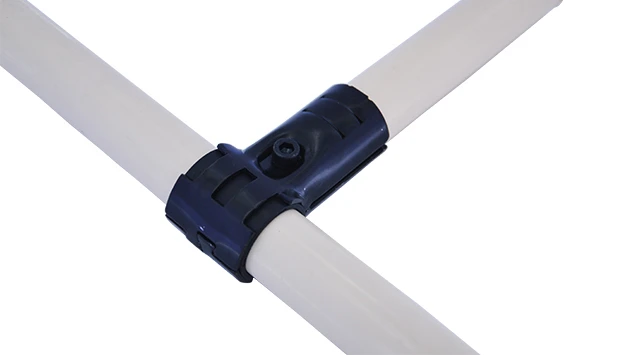
Walk into any busy manufacturing facility, and you'll quickly spot the heartbeat of production: the layout. It's the invisible force that dictates how materials move, how workers collaborate, and how efficiently products come to life. But too often, that heartbeat feels sluggish—weighed down by rigid, fixed structures that resist change. Workbenches bolted to the floor, flow racks that can't adapt to new product sizes, conveyors that take days to reconfigure. For factory managers and frontline workers alike, this inflexibility isn't just frustrating; it's costly. Downtime during retooling, wasted space, and the inability to pivot quickly to market demands can turn even the most promising operations into laggards. Enter lean manufacturing—and at its core, the unsung hero of flexible factory design: lean pipe systems. And within that system, one component stands out for its ability to transform rigidity into responsiveness: the one way rotatory straight lean pipe joint.
In this article, we'll explore how this small but mighty joint is redefining sustainable factory layouts. We'll break down what makes it unique, how it aligns with lean principles, and why it's becoming a cornerstone for manufacturers aiming to balance productivity, adaptability, and environmental responsibility. Whether you're managing a bustling automotive plant or a precision electronics workshop, understanding the one way rotatory straight lean pipe joint could be the key to unlocking a more efficient, agile, and sustainable operation.
Lean Manufacturing: More Than a Buzzword
Before diving into the specifics of the one way rotatory joint, let's ground ourselves in the philosophy that makes it all possible: lean manufacturing. Born from the Toyota Production System in the mid-20th century, lean isn't just about cutting costs—it's about eliminating waste in all its forms. That includes wasted time, wasted space, wasted effort, and even wasted materials. At its heart, lean is about creating value for the customer by streamlining processes, and a big part of that is flexibility . Factories today don't produce the same product day in and day out for decades; consumer demands shift, product lines evolve, and production runs get shorter. A layout that worked yesterday might be obsolete tomorrow. Lean manufacturing teaches us that our physical spaces should be just as adaptable as our processes.
This is where lean pipe systems come into play. Also known as "flexible pipe systems" or "kitchen pipe systems" (a nod to their early, simple design), lean pipe systems are modular setups built from lightweight pipes, joints, and accessories. Unlike traditional fixed structures—think welded steel workbenches or bolted-together shelving—lean pipe systems are designed to be assembled, disassembled, and reconfigured with minimal tools and time. They're the embodiment of lean's "just-in-time" ethos, but for physical space: you build what you need, when you need it, and change it when you don't.
But not all lean pipe systems are created equal. The magic lies in the joints—the connectors that hold the pipes together. And among these, the one way rotatory straight lean pipe joint is a game-changer. It's not just a connector; it's a flexibility enabler. Let's unpack why.
The One Way Rotatory Straight Lean Pipe Joint: What It Is and How It Works
At first glance, the one way rotatory straight lean pipe joint looks unassuming—a small, often metal or aluminum component with a cylindrical body and a socket for inserting lean pipes. But its simplicity is deceptive. What sets it apart is its unique rotation mechanism: as the name suggests, it allows pipes to rotate in one direction (usually 180 degrees or more) while locking securely in place when needed. This might sound like a minor feature, but in a factory setting, it's revolutionary.
Let's break down the mechanics. Traditional lean pipe joints are often fixed—they lock pipes at a specific angle (90 degrees, 45 degrees, etc.) and don't move. If you want to adjust the angle of a workbench shelf or the slope of a flow rack, you'd need to disassemble the joint, reposition the pipes, and reassemble. With the one way rotatory joint, that process is eliminated. Imagine a workbench where the side shelf can be rotated up to 90 degrees to create more surface space when assembling large parts, then rotated back to tuck out of the way when not needed. Or a flow rack where the roller track can be tilted slightly to speed up material flow during peak hours, then flattened to prevent products from sliding too quickly during slower periods. All of this can happen in seconds, without tools, by a single worker.
The joint's design typically includes a spring-loaded pin or a friction-based locking mechanism. When you want to rotate the pipe, you simply release the lock (often by pressing a button or twisting the joint), adjust the angle, and let the lock engage again. It's intuitive enough that even new employees can master it after a quick demo. And because it's built to withstand the wear and tear of factory life—scratches, bumps, and repeated use—it maintains its functionality for years, making it a durable investment.
Materials matter here, too. Many one way rotatory joints are made from aluminum or high-grade steel, chosen for their strength-to-weight ratio. Aluminum lean pipe joints, in particular, are popular for their corrosion resistance and lightweight properties, making them ideal for clean environments like electronics assembly lines or food processing facilities. They're also recyclable, aligning with sustainability goals we'll explore later.

Real-World Applications: How Factories Are Using This Joint Today
To understand the impact of the one way rotatory straight lean pipe joint, let's look at how it's being used in everyday factory operations. These examples aren't hypothetical—they're scenarios playing out in facilities around the world, from small workshops to large-scale production plants.
1. Adaptive Workbenches
Workbenches are the workhorses of any factory, and their design directly affects worker productivity and comfort. Traditional workbenches are static: a fixed height, fixed shelves, and no room for adjustment. But workers come in different heights, and tasks vary—assembling a tiny circuit board requires a different setup than packing a large appliance. The one way rotatory joint solves this by letting workers adjust bench components on the fly. For instance, a workbench E (single deck—without caster) can be outfitted with side shelves attached via one way rotatory joints. A taller worker might rotate the shelf upward to keep tools within arm's reach, while a shorter colleague could rotate it downward to avoid hunching. During shift changes, the transition takes 30 seconds, not 30 minutes of retooling. The result? Happier workers, fewer ergonomic injuries, and less downtime.
2. Dynamic Flow Racks
Flow racks are critical for "first in, first out" (FIFO) material handling, ensuring that older inventory is used before newer stock. But traditional flow racks have fixed roller angles, which means they're optimized for one product size or weight. If you switch from small plastic components to larger metal parts, the rollers might not slope steeply enough, causing jams. Enter the one way rotatory joint. By attaching roller tracks to the rack's frame with these joints, workers can adjust the slope of the track in seconds. For lightweight items, a steeper angle speeds up flow; for heavier items, a gentler slope prevents damage. A material rack B (3 row and 3 floor) outfitted with these joints can handle everything from small electronic parts to automotive components, eliminating the need for multiple dedicated racks. That's space saved, and waste reduced.
3. Flexible Conveyor Systems
Conveyors are the arteries of production lines, moving products from one station to the next. But rigid, fixed conveyors are a nightmare when production needs change. If you need to reroute a conveyor to accommodate a new machine, you're looking at days of downtime and costly modifications. Lean pipe conveyors with one way rotatory joints change the game. Roller tracks connected by these joints can be pivoted to create gentle curves or straight sections, adapting to new layouts without disassembly. For example, a 40 steel roller track yellow wheel conveyor can be reconfigured to snake around a new inspection station by rotating sections of the track, all while the line is still running (during a short break, of course). It's agility in action.

Sustainability: More Than Flexibility—A Greener Way to Build
Sustainability in manufacturing isn't just about reducing carbon emissions or using recycled materials (though those are important). It's also about resource efficiency —getting the most out of what you have, and minimizing waste. The one way rotatory straight lean pipe joint excels here, making it a cornerstone of eco-friendly factory design.
Let's start with waste reduction. Traditional fixed structures are often "one and done." If your production line changes, that welded steel workbench or bolted shelving unit becomes obsolete. It's either scrapped (ending up in a landfill) or stored (taking up valuable space). Lean pipe systems, by contrast, are reusable. When you reconfigure a setup using the one way rotatory joint, you're not throwing away parts—you're repurposing them. A workbench today becomes a turnover trolley tomorrow, which becomes a flow rack next month. The one way rotatory joint ensures that pipes and accessories stay in use, not in the trash. Studies have shown that lean pipe systems can reduce material waste by up to 70% compared to traditional setups, and the rotatory joint amplifies this by making reconfiguration so easy that companies are more likely to reuse components instead of buying new.
Then there's energy efficiency. Building traditional fixed structures requires energy-intensive processes: welding, painting, cutting steel. Lean pipe systems, with their simple, modular design, require far less energy to manufacture. Aluminum lean pipe, in particular, is lightweight and requires minimal processing, and aluminum itself is 100% recyclable with no loss of quality. When a lean pipe setup is finally retired (after years of use), the pipes and joints can be melted down and reused, closing the loop on the material lifecycle.
There's also the hidden sustainability benefit of worker behavior. When reconfiguring a workstation is easy, workers are more likely to keep their spaces organized and efficient. A cluttered, inefficient workstation leads to wasted movement (a form of lean waste known as "motion") and even wasted materials (e.g., misplacing tools or parts). The one way rotatory joint empowers workers to take ownership of their space—adjusting shelves, racks, or work surfaces to fit their needs—leading to cleaner, more efficient work areas and less waste overall.
Traditional vs. Lean Pipe Layouts: A Closer Look
To truly grasp the impact of the one way rotatory straight lean pipe joint, let's compare traditional fixed layouts with lean pipe setups that use this innovative joint. The table below highlights key differences in flexibility, cost, sustainability, and worker experience.
| Feature | Traditional Fixed Layout | Lean Pipe Layout with One Way Rotatory Joint |
|---|---|---|
| Reconfiguration Time | 2–5 days (requires tools, contractors, or specialized labor) | 15–30 minutes (can be done by line workers with no tools) |
| Material Waste | High (structures are often scrapped when obsolete) | Low (pipes and joints are reused in new configurations) |
| Worker Ergonomics | Poor (fixed heights/angles lead to awkward postures) | Excellent (adjustable setups reduce strain and fatigue) |
| Initial Cost | Lower upfront (but higher long-term due to replacements) | Higher upfront (but 50–70% lower over 5+ years due to reusability) |
| Adaptability to Product Changes | Very low (requires full redesign for new product sizes/weights) | Very high (adjustable angles/slopes accommodate new products quickly) |
Why the One Way Rotatory Straight Lean Pipe Joint Matters for the Future of Manufacturing
In a world where manufacturing demands are more dynamic than ever—shorter product lifecycles, custom orders, and rapid market shifts—flexibility isn't a luxury; it's a necessity. The one way rotatory straight lean pipe joint isn't just a tool for building better workbenches or flow racks. It's a tool for building better factories—factories that can adapt, grow, and thrive without leaving a trail of waste in their wake.
For factory managers, it's a cost-saver: less downtime, fewer new purchases, and a workforce that can adjust on the fly. For workers, it's a quality-of-life improver: no more struggling with ill-fitting workstations or inefficient layouts. For the planet, it's a step forward: less waste, lower energy use, and a more sustainable approach to production.
As lean manufacturing continues to evolve, and as sustainability becomes a core business priority, the one way rotatory straight lean pipe joint will only grow in importance. It's a small component, but it represents a big idea: that the best factory layouts aren't built to last forever—they're built to change forever. And in that change, there's efficiency, there's resilience, and there's a future where manufacturing works with people and the planet, not against them.
So the next time you walk through a factory, take a closer look at the workbenches, the flow racks, the conveyors. If they're built with lean pipe systems—and if those systems include one way rotatory straight lean pipe joints—you're looking at a facility that's ready for whatever the future brings. And that's a factory worth investing in.