- Company Articles
- Products and Technology
- Product knowledge
- One Way Rotatory Straight Lean Pipe Joints in Consumer Electronics Assembly

One Way Rotatory Straight Lean Pipe Joints in Consumer Electronics Assembly
Related Product
One Way Rotatory Straight Lean Pipe Joint
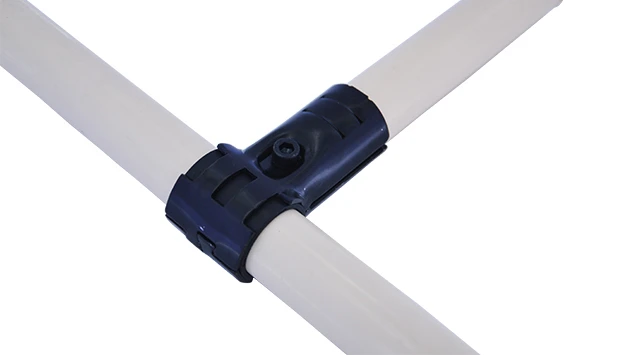
Two way lean pipe joint for 2 pcs 28MM lean pipe connection in straight angle with rotatory fucntion, which used widely in workbench, flow rack, hand trolley frame connection.
In the humming heart of a consumer electronics factory, where smartphones, smartwatches, and tablets take shape, every second counts. Assembly lines hum with precision, workers' hands move in practiced rhythms, and components—tiny as a screw, delicate as a circuit board—flow like water through a well-tuned system. But what keeps that flow steady? What turns a static production line into a flexible, adaptable machine that can shift from assembling a 5-inch phone to a 10-inch tablet in hours? Often, it's the smallest parts that make the biggest difference. Today, we're shining a light on one such unsung hero: the one way rotatory straight lean pipe joint chrome. It's not flashy, it's not featured in product launches, but in the world of lean manufacturing, it's the quiet force that keeps electronics assembly lines moving forward—literally.
The Backbone of Lean: Why Lean Pipe Systems Matter in Electronics Assembly
Before we dive into the specifics of the one way rotatory straight lean pipe joint chrome, let's step back and talk about lean pipe systems. If you've ever walked through an electronics factory, you've probably seen them—workbenches with sleek metal frames, racks loaded with components gliding along tracks, and trolleys zipping between stations. These are all part of lean pipe systems, designed to eliminate waste, boost efficiency, and keep production lines agile.
In consumer electronics, agility isn't just a buzzword; it's survival. Product cycles are shorter than ever. A new phone model hits the market, and six months later, it's replaced by a sleeker version. Factories can't afford to build rigid, permanent assembly lines that take weeks to reconfigure. Lean pipe systems solve this with modularity: they're built from lightweight pipes (often steel or aluminum) and joints that snap together like building blocks. Need to raise a workbench by 6 inches? Swap out a pipe. Want to add a new shelf for a larger component? Add a joint. No welding, no heavy tools, no downtime.
At the center of this modularity are the joints. Think of them as the connective tissue—they hold the pipes together, but they also determine how the system moves, adapts, and functions. And in electronics assembly, where components are small, delicate, and often need to flow in a specific direction (think circuit boards moving from soldering to testing, or screws feeding into a pick-and-place machine), not all joints are created equal. That's where the one way rotatory straight lean pipe joint chrome comes in.
Why electronics assembly demands more from lean joints:
Unlike automotive or heavy machinery manufacturing, electronics assembly deals with lightweight, precision-sensitive parts. A misaligned joint can cause a circuit board to jostle, leading to microcracks. A sticky joint can slow down material flow, creating bottlenecks. And with workers often standing at lean pipe workbenches for 8-hour shifts, ergonomics matter—joints that make adjusting work heights or angles effortless reduce fatigue and errors. The one way rotatory straight lean pipe joint chrome is engineered to meet all these needs.
Meet the One Way Rotatory Straight Lean Pipe Joint Chrome: Design That Delivers Direction
Let's get up close with the star of the show. The one way rotatory straight lean pipe joint chrome is a small component—typically 3-4 inches long—with a simple but genius design. At first glance, it looks like a standard straight joint, but twist it, and you'll feel the difference: it rotates smoothly in one direction, then locks firmly when you try to twist it back. That "one way" rotation is its superpower, and in electronics assembly, directionality is everything.
Let's break down its key features:
- Chrome Plating: More Than Just Shine The "chrome" in its name isn't just for aesthetics. Chrome plating adds a hard, corrosion-resistant layer to the steel core, making it durable enough to withstand the daily grind of a factory floor. Electronics factories aren't just clean—they're full of oils (from machinery), coolants (for heat management), and occasional spills. A chrome finish repels these substances, preventing rust and ensuring the joint stays smooth even after months of use. Run your finger along it, and you'll notice the slick, almost mirror-like surface—no rough edges, no burrs, just precision.
- One-Way Rotation: Controlling the Flow The magic is in the rotation mechanism. Inside the joint, a spring-loaded pin or cam system allows it to spin freely in one direction (say, clockwise) but locks when turned counterclockwise. This is critical for material flow. Imagine a flow rack loaded with small component bins: you want them to glide down to the worker at the end of the line, but you don't want them sliding back if the rack is jostled. The one way joint ensures they move forward only—no backtracking, no jams, no workers wasting time repositioning bins.
- Straight Design: Alignment for Precision "Straight" might seem basic, but in lean pipe systems, alignment is non-negotiable. A bent or misaligned joint can throw off an entire workbench or roller track, leading to uneven material flow or wobbly structures. The straight design of this joint ensures pipes connect perfectly end-to-end, creating level surfaces and straight tracks—essential for keeping delicate electronics components stable as they move.
- Tool-Free Assembly: Speed and Flexibility Like most lean pipe components, this joint is designed for quick assembly. No bolts, no nuts, no wrenches—just slide the pipe into the joint, twist, and it locks into place. This matters when a factory needs to reconfigure a line overnight. A team can disassemble a workbench, add a new section with one way rotatory joints, and have it up and running in an hour. In electronics, where product launches can mean last-minute line changes, this speed is invaluable.
To put it simply: this joint isn't just a connector. It's a traffic cop for your assembly line, directing materials where they need to go, when they need to go there, without fuss. And in a factory where even a 5-minute delay can cost thousands in lost production, that's priceless.

From Flow Racks to Workbenches: Real-World Applications in Electronics
Now that we understand what the one way rotatory straight lean pipe joint chrome is, let's look at how it's used in the real world of electronics assembly. Its versatility makes it a staple in three key areas: flow racks, roller tracks, and lean pipe workbenches. Let's walk through each.
Flow Racks: Keeping Components Moving Forward
Flow racks are the backbone of material storage in electronics factories. They're tilted slightly, so bins of components (resistors, capacitors, screws) slide down to the front as the top bins are emptied—"first in, first out" (FIFO) at its finest. But without the right joints, this system can fail. A bin that slides back due to a bump or vibration can cause a pileup, or worse, spill components onto the floor (and in electronics, a single lost screw can halt a line).
Here's where the one way rotatory joint shines. Installed at intervals along the flow rack's rails, these joints act as one-way gates. As a bin slides down, it pushes the joint's rotating arm forward, which then snaps back into place, locking the bin from sliding backward. Workers at the front of the rack pull the bin, and the next one slides down—smooth, predictable, and safe. It's like adding speed bumps that only work in reverse, ensuring gravity does its job without chaos.
Roller Tracks: Smooth Sailing for Delicate Parts
Roller tracks are everywhere in electronics assembly—they carry circuit boards from soldering to inspection, move screens from assembly to testing, and transport finished products to packaging. The problem? Rollers can be finicky. If a track isn't perfectly level, or if there's too much friction, a circuit board might get stuck, leading to scratches or delays.
The one way rotatory straight lean pipe joint chrome solves this by keeping the track aligned and the movement controlled. When building a roller track, pipes are connected with these joints to ensure the track stays straight (no sagging in the middle). The one-way rotation also allows for slight adjustments: if a worker needs to tilt the track up by a few degrees to speed up flow, they can rotate the joint, lock it, and the track stays in place. No more propping tracks up with blocks or shims—just clean, precise adjustment.
Lean Pipe Workbenches: Ergonomics at Your Fingertips
A lean pipe workbench is where the magic happens—this is where workers assemble, test, and inspect electronics. The height, angle, and layout of the workbench directly impact productivity and worker comfort. A workbench that's too low leads to back strain; a shelf that's too high means reaching and stretching. The one way rotatory joint makes these workbenches adaptable.
Imagine a worker assembling a smartwatch. They need their tools within arm's reach, so they rotate the joint on their tool shelf, swing it closer, and lock it. An hour later, they switch to assembling a tablet, which requires more space—they rotate the joint again, swing the shelf out of the way, and lock it. No tools, no help, no downtime. The one-way rotation ensures the shelf stays put once locked, so even if they bump it, it won't swing back unexpectedly. It's customization on demand, and in electronics, where workers handle multiple tasks daily, that customization is a game-changer.

Why Chrome? Comparing Lean Pipe Joints for Electronics Assembly
You might be wondering: there are other lean pipe joints out there—plastic, unplated steel, fixed joints—so why choose the one way rotatory straight lean pipe joint chrome? To answer that, let's compare it to common alternatives. The table below breaks down key factors like durability, rotation, and best uses, so you can see why chrome-plated one-way rotatory joints stand out in electronics assembly.
| Joint Type | Rotation Capability | Durability (Resistance to Corrosion/Wear) | Best For | Limitations in Electronics Assembly |
|---|---|---|---|---|
| One Way Rotatory Straight Lean Pipe Joint Chrome | 180° one-way (locks in reverse direction) | High (chrome plating resists oils, coolants, rust) | Flow racks, roller tracks, directional material handling, adjustable workbenches | None—ideal for electronics due to precision and durability |
| Fixed Two-Way Joint (Unplated Steel) | None (fixed position) | Medium (prone to rust in humid factories) | Static structures (permanent workbenches, fixed racks) | No adjustability; rigid lines can't adapt to new products |
| Plastic Rotatory Joint | 360° two-way (no locking) | Low (can crack under heavy loads; melts near heat sources) | Light-duty, non-industrial use (warehouse shelving) | Not durable enough for factory use; no direction control |
| Three-Way Adjustable Joint (Aluminum) | 360° two-way (adjustable, no locking) | Medium (aluminum resists rust but dents easily) | Multi-directional structures (trolleys, custom racks) | No locking mechanism; components may slide back on inclines |
The takeaway? For electronics assembly, where precision, durability, and directionality matter, the one way rotatory straight lean pipe joint chrome is the clear winner. It's built to handle the unique challenges of the factory floor while keeping lines flexible and workers efficient.
Behind the Scenes: Sourcing Quality One Way Rotatory Joints
Of course, not all one way rotatory straight lean pipe joint chrome products are created equal. To get the performance we've discussed, you need to source from a reliable lean pipe supplier. But what should you look for in a supplier? Let's break it down.
First, material quality. The best joints are made from high-grade steel (typically Q235 or Q345) before chrome plating. Cheaper joints use thinner steel, which can bend under heavy loads—bad news if you're supporting a rack of circuit boards. Ask suppliers for material certificates; reputable ones will happily share them.
Second, plating thickness. Chrome plating should be at least 0.0005 inches thick to ensure durability. A quick test? Run a magnet over the joint—if it sticks, the plating is too thin (chrome is non-magnetic, but steel is; a thick enough layer will block the magnet). Alternatively, ask for salt spray test results: a good joint should withstand 48+ hours of salt spray without rusting.
Third, rotation smoothness. A joint that sticks or grinds when rotated is a dud. Reputable suppliers test each batch for rotation torque—how much force it takes to turn the joint. For electronics, you want torque between 2-5 Nm (newton-meters)—light enough for workers to adjust by hand, but not so light that it moves accidentally.
Pro Tip for Buyers:
Ask for a sample. A good lean pipe supplier will send you a few joints to test. Assemble them into a small rack, load it with components, and twist the joints repeatedly. Do they lock firmly? Do they still rotate smoothly after 100 twists? If yes, you're on the right track.
The Future of Lean: Where One Way Rotatory Joints Fit In
As consumer electronics get smaller, smarter, and more complex, the demand for lean pipe systems will only grow. Factories are moving toward "lights-out" manufacturing (automated lines with minimal human input), but even then, lean systems will remain critical—robots need flexible, adaptable structures too. So where does the one way rotatory straight lean pipe joint chrome fit in this future?
For starters, expect to see smarter joints. Imagine a joint with a built-in sensor that tracks how often it's rotated, alerting maintenance when it's time for lubrication. Or joints with RFID tags, so factories can track inventory and reorder automatically when stock runs low. These innovations are already in the works, and the chrome-plated design will serve as the foundation—durable enough to house electronics, corrosion-resistant enough to protect them.
There's also a push for sustainability. Lean systems are inherently green (they reduce waste, use recyclable materials), and future joints may be made from recycled steel with eco-friendly chrome plating (using less toxic chemicals). Suppliers are already experimenting with this, and it aligns perfectly with the electronics industry's goal of reducing its carbon footprint.
But even with all these advancements, the core purpose of the one way rotatory straight lean pipe joint chrome will stay the same: to keep things moving forward. In a world where electronics assembly never stops evolving, that's a promise you can count on.
Final Thoughts: The Small Joint That Powers Big Innovation
The next time you pick up your smartphone or tablet, take a moment to think about the journey it took to get to you. Behind that sleek design, there's a factory floor where workers, machines, and yes, lean pipe joints worked together to bring it to life. The one way rotatory straight lean pipe joint chrome might not have a starring role in that story, but it's a supporting actor that never misses a cue—ensuring components flow, workbenches adapt, and lines keep moving, one rotation at a time.
In the end, lean manufacturing is about more than efficiency; it's about respect for people and process. A well-designed joint reduces frustration for workers, cuts down on wasted motion, and lets factories focus on what they do best: creating the gadgets that connect us all. So here's to the small parts, the quiet innovators, and the one way rotatory straight lean pipe joint chrome—proof that in electronics assembly, the future moves forward, one joint at a time.