- Company Articles
- Products and Technology
- Product knowledge
- One Way Rotatory Straight Lean Pipe Joints in Flexible Production Lines

One Way Rotatory Straight Lean Pipe Joints in Flexible Production Lines
Related Product
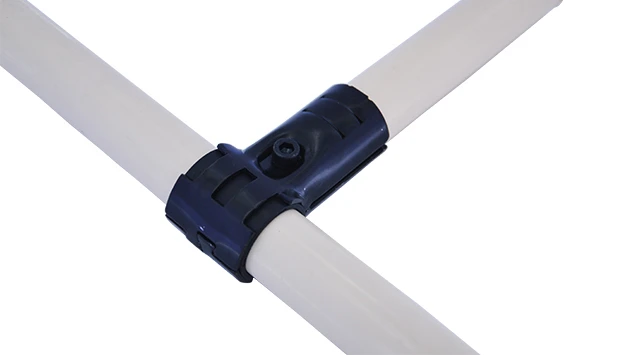
One Way Rotatory Straight Lean Pipe Joint
Two way lean pipe joint for 2 pcs 28MM lean pipe connection in straight angle with rotatory fucntion, which used widely in workbench, flow rack, hand trolley frame connection.
In today's fast-paced manufacturing world, the ability to adapt is no longer a luxury—it's a survival skill. Factories and production facilities of all sizes are grappling with shorter product lifecycles, custom order demands, and the need to switch between workflows at a moment's notice. This is where flexible production lines step in, designed to be reconfigured, adjusted, and repurposed without the hassle of overhauls or expensive equipment replacements. At the heart of these adaptable systems lies a quiet hero: the lean pipe system. And within that system, few components are as critical as the one way rotatory straight lean pipe joint—a small but mighty part that unlocks a new level of flexibility for modern manufacturers.
The Rise of Flexible Production: Why Rigidity No Longer Works
Gone are the days of fixed assembly lines churning out the same product day in and day out. Today's manufacturers face a market that demands variety: a smartphone factory might produce five different models in a single week; a medical device plant could shift from surgical tools to diagnostic equipment overnight. Rigid, bolted-down infrastructure simply can't keep up. When a production line is fixed, changing even a small part of the workflow—like adjusting the height of a workbench or repositioning a material rack—requires hours (or days) of downtime, not to mention additional labor and costs.
This is where the concept of "flexible manufacturing" takes center stage. Flexible production lines are built to be modular, meaning they can be rearranged, extended, or modified with minimal effort. Think of them as the manufacturing equivalent of building blocks: individual components that can be snapped together in different configurations to create new structures. And at the core of this modularity? Lean pipe systems and their accompanying accessories—tools that turn the idea of a "flexible factory" into a tangible reality.
Lean Pipe Systems: The Backbone of Flexible Manufacturing
Before diving into the specifics of the one way rotatory straight lean pipe joint, let's take a step back and understand what a lean pipe system is—and why it's become so indispensable. A lean pipe system (often called a "flexible pipe system") is a modular framework made up of pipes, joints, and accessories that can be assembled into almost any structure imaginable: workbenches, material racks, conveyor systems, turnover trolleys, and more. The magic lies in its simplicity: instead of welding or bolting parts together, lean pipe systems use easy-to-connect joints that allow for quick assembly and disassembly.
Traditional lean pipe systems historically used steel pipes coated in plastic (PE coated lean pipe), but modern iterations often incorporate aluminum pipe or aluminum profile for lighter weight and enhanced durability. Regardless of the material, the goal remains the same: to create a system that's strong enough to handle industrial workloads but flexible enough to adapt to changing needs. And this is where joints come into play. Joints are the connectors that hold the pipes together, and their design directly impacts how easy (or difficult) it is to reconfigure the system.
Fun Fact: The first lean pipe systems emerged in Japan in the 1970s as part of the Toyota Production System, designed to eliminate waste (or "muda") by making workflows more efficient. Today, they're used worldwide in industries ranging from automotive and electronics to logistics and healthcare.

Meet the One Way Rotatory Straight Lean Pipe Joint: A Closer Look
Among the many types of joints available in lean pipe systems, the one way rotatory straight lean pipe joint stands out for its unique functionality. As the name suggests, this joint is designed to connect two straight pipes while allowing rotation in one direction—think of it like a hinge that only swings forward, not backward. This might sound simple, but in a production environment, this controlled rotation is a game-changer.
How It Works: Design and Mechanics
At first glance, the one way rotatory straight lean pipe joint looks similar to other lean pipe joints: a metal (often aluminum or steel) connector with holes to insert pipes. But inside, it has a specialized mechanism—usually a spring-loaded pin or a ratchet system—that allows rotation in one direction (e.g., clockwise) but locks when turned the opposite way (counterclockwise). This means you can adjust the angle of connected pipes with minimal effort, but once set, the joint stays in place, even under load.
Most models are designed to fit standard lean pipe sizes (common diameters include 28mm for steel pipes or 30mm for aluminum pipe), making them compatible with existing lean pipe and accessories. They're typically easy to install: just insert the pipes into the joint's sockets, tighten a setscrew (or use a friction fit), and you're ready to go. No welding, no drilling, no specialized tools—just a wrench or even your hands for a snug fit.
Key Features That Matter
What makes this joint so useful in flexible production lines? Let's break down its standout features:
- Controlled Rotation: Unlike fixed joints (which don't rotate) or swivel joints (which rotate 360°), the one way rotatory joint lets you set a specific angle and lock it in. This is perfect for applications where you need adjustability but not full rotation—like tilting a workbench surface to reduce operator strain or angling a material rack to improve access.
- Durable Construction: Made from materials like aluminum alloy or stainless steel, these joints are built to withstand the wear and tear of industrial environments. They resist corrosion, can handle heavy loads (often up to 50kg or more per joint), and stand up to repeated adjustments without losing functionality.
- Compatibility: Designed to work with standard lean pipe, aluminum profile, and lean pipe accessories, they integrate seamlessly into existing systems. This means you don't have to replace your entire framework to upgrade—just swap out old joints for these rotatory ones.
- Tool-Free Adjustments (in Some Models): Advanced versions feature quick-release mechanisms, allowing operators to adjust angles on the fly without tools. This is a huge time-saver during line reconfigurations, cutting setup time from hours to minutes.

Applications: Where the One Way Rotatory Joint Shines
To truly understand the value of the one way rotatory straight lean pipe joint, let's look at how it's used in real-world production scenarios. From workbenches to material handling systems, this joint turns ordinary structures into adaptable, multi-purpose tools.
1. Adjustable Workbenches
Workbenches are the workhorses of any production line, and their height, angle, and layout directly impact operator comfort and efficiency. With a one way rotatory joint, a standard workbench can be transformed into an adjustable workstation. For example, in an electronics assembly plant, operators might need to switch between sitting and standing positions throughout the day. By using rotatory joints at the base of the workbench legs, the height can be adjusted in seconds—no need for separate benches for sitting and standing.
Even better, the joint's one-way rotation ensures the bench stays stable once adjusted. Imagine a worker tilting the workbench surface slightly downward to prevent small parts (like screws or circuit boards) from rolling off—with a rotatory joint, they can set the angle, lock it, and focus on the task without worrying about the surface shifting.
2. Dynamic Material Racks
Material racks are essential for storing and organizing components, but their layout often needs to change based on the size or quantity of parts. A static rack with fixed shelves can't accommodate a sudden influx of larger components, but a rack built with one way rotatory joints can. For example, a "material rack B (3 row and 3 floor)" (a common configuration) can have its shelves tilted or repositioned using rotatory joints to create more vertical space for taller boxes or to angle shelves for easier access to frequently used items.
In a warehouse setting, this flexibility reduces the need for multiple specialized racks—one adjustable rack can replace three or four fixed ones, saving floor space and cutting costs.
3. Conveyor and Roller Track Systems
Conveyors and roller tracks move materials from one workstation to the next, but their (slope) often needs to be adjusted based on the weight or fragility of the items being transported. A heavy component might require a steeper slope to move by gravity, while a delicate part needs a gentler incline. The one way rotatory joint makes it easy to adjust the slope of roller tracks without rebuilding the entire system. By rotating the joint, operators can tweak the angle, lock it, and test the flow—all in a matter of minutes.
This is especially useful in mixed-production environments where the same conveyor might handle different products throughout the day. For example, a food packaging plant could use the same roller track for small snack boxes in the morning and larger cereal boxes in the afternoon, adjusting the slope with rotatory joints to ensure smooth, efficient movement.
The Benefits: Why Manufacturers Love This Joint
So, what makes the one way rotatory straight lean pipe joint a must-have for flexible production lines? Let's quantify the benefits:
| Benefit | Impact on Production | Real-World Example |
|---|---|---|
| Reduced Downtime | Reconfiguring a workstation takes minutes instead of hours. | A small electronics manufacturer reported cutting setup time for new product runs by 40% after switching to rotatory joints. |
| Lower Costs | Eliminates the need for multiple fixed structures (e.g., separate workbenches for different tasks). | A automotive parts supplier saved $15,000 in equipment costs by using adjustable racks with rotatory joints instead of buying new racks for each product line. |
| Improved Ergonomics | Workstations can be adjusted to fit individual operators, reducing strain and injuries. | A warehouse saw a 25% decrease in worker fatigue complaints after installing height-adjustable workbenches with rotatory joints. |
| Scalability | Systems can grow or shrink as production needs change, without major overhauls. | A startup expanded from 10 to 50 employees in a year, using rotatory joints to reconfigure their lean pipe system instead of moving to a larger facility. |
Beyond these tangible benefits, there's an intangible one: peace of mind. Manufacturers using these joints report feeling more confident taking on custom orders or pivoting to new products, knowing their production line can keep up. In an era where agility is key, that confidence is priceless.
Comparing Joints: Why One Way Rotatory Stands Out
To truly appreciate the one way rotatory straight lean pipe joint, it helps to compare it to other common joint types in lean pipe systems. Let's see how it stacks up:
Fixed Joints (e.g., 90° Fixed Lean Pipe Joint)
Fixed joints connect pipes at a set angle (usually 90° or 45°) and don't allow rotation. They're strong and affordable but offer zero flexibility. If you need to adjust the angle of a structure, you have to disassemble the joint and reassemble it—a time-consuming process. Best for static structures that never need to change.
Swivel Joints (e.g., 180° Swivel Lean Pipe Joint)
Swivel joints allow 360° rotation, making them highly flexible. However, this unrestricted movement can be a downside in applications where stability is key—imagine a workbench that rotates unexpectedly when you lean on it. They're great for applications like overhead material rails but less ideal for workstations or racks that need to stay in place.
One Way Rotatory Straight Lean Pipe Joint
The one way rotatory joint strikes a balance between flexibility and stability. It allows controlled rotation in one direction, so you can adjust angles, but locks in place to prevent unwanted movement. This makes it the best of both worlds for most production line applications—adaptable enough to handle changes, stable enough to keep workflows consistent.
Pro Tip: For maximum flexibility, mix joint types! Use fixed joints for the core structure (e.g., the legs of a workbench), swivel joints for overhead components, and one way rotatory joints for adjustable parts like shelves or surfaces. This hybrid approach gives you the best of all worlds.
Future Trends: Where Lean Pipe Systems Are Headed
As manufacturing continues to evolve, so too will lean pipe systems and their components. Here's what we can expect to see in the coming years:
Smart Joints with IoT Integration
Imagine a one way rotatory joint equipped with sensors that track how often it's adjusted, the angle it's set to, or even the weight it's supporting. This data could be fed into a factory management system to optimize workflows—for example, alerting managers if a workstation is being adjusted multiple times a day, indicating a need for a permanent redesign.
Lightweight, High-Strength Materials
Advancements in materials science will lead to even lighter, stronger joints. Expect to see more use of carbon fiber composites or advanced aluminum alloys that reduce weight without sacrificing durability—great for mobile structures like turnover trolleys.
Eco-Friendly Designs
Sustainability is becoming a top priority for manufacturers, and lean pipe systems are no exception. Future joints may be made from recycled materials or designed for easier disassembly and recycling at the end of their lifespan. Some suppliers are already experimenting with plant-based plastics for joint components, reducing reliance on petroleum-based materials.
Conclusion: Small Joint, Big Impact
In the grand scheme of manufacturing, the one way rotatory straight lean pipe joint might seem like a small component. But as we've explored, its impact is anything but minor. By enabling quick, easy adjustments to lean pipe systems, it transforms rigid production lines into flexible, adaptable workflows that can keep up with the demands of modern manufacturing. Whether you're a small startup looking to scale or a large enterprise aiming to reduce waste, this joint is a tool that delivers measurable results—less downtime, lower costs, happier workers, and a competitive edge.
As flexible production becomes the norm, the one way rotatory straight lean pipe joint will only grow in importance. It's a testament to the power of simplicity: sometimes, the most innovative solutions are the ones that make existing systems work smarter, not harder. So the next time you walk through a factory, take a closer look at those unassuming joints holding the pipes together—they might just be the reason that facility can adapt, evolve, and thrive in a world that never stops changing.