- Company Articles
- Products and Technology
- Product knowledge
- One Way Rotatory Straight Lean Pipe Joints in Food Processing Equipment Assembly

One Way Rotatory Straight Lean Pipe Joints in Food Processing Equipment Assembly
Related Product
One Way Rotatory Straight Lean Pipe Joint
Two way lean pipe joint for 2 pcs 28MM lean pipe connection in straight angle with rotatory fucntion, which used widely in workbench, flow rack, hand trolley frame connection.
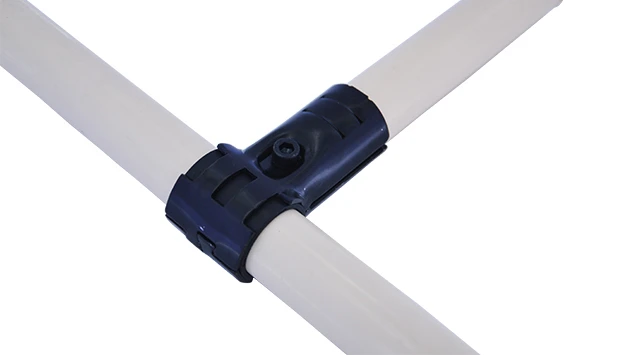
How a small component transforms efficiency, safety, and adaptability on the factory floor
Walk into any food processing plant, and you'll feel it immediately—the hum of machinery, the crisp scent of fresh ingredients, and the quiet urgency of a clock that never stops. In this world, where perishability dictates pace and precision defines quality, every second counts. Assembly lines here don't just build equipment; they build the backbone of how we feed communities. Yet, for all the focus on high-tech machinery, some of the most critical innovations are the smallest ones: the unassuming parts that hold systems together, adapt to change, and keep workers moving without friction. Today, we're shining a light on one such unsung hero: the one way rotatory straight lean pipe joint. It's a component that sounds technical, but in reality, it's the bridge between rigid systems and the dynamic needs of modern food processing.
The Problem with "Set It and Forget It" in Food Processing
Food processing isn't static. A plant might shift from packaging frozen vegetables in the morning to assembling salad kits in the afternoon. A new product line requires taller workbenches; a seasonal surge demands reconfigured material racks. For decades, many facilities relied on fixed, welded metal structures—sturdy, yes, but about as adaptable as a brick wall. Workers would spend hours (or even days) dismantling and rebuilding workstations, losing valuable production time. worse, rigid setups often forced employees into awkward postures, increasing fatigue and the risk of errors. "We used to have a workbench that was perfect for our old cereal box size," recalls Miguel, a floor supervisor at a mid-sized snack processing plant in Ohio. "Then we launched a family-sized box, and suddenly everyone was bending over to reach the conveyor. We tried propping up boards with cinder blocks—jury-rigged solutions that never felt safe."
This is where lean systems step in. Lean isn't just a buzzword thrown around in management meetings; on the factory floor, it's a lifeline. At its core, lean is about eliminating waste—whether that's wasted time, wasted effort, or wasted space. And lean pipe systems, with their modular, build-as-you-go design, have become the gold standard for bringing lean principles to life. Made from lightweight yet durable materials like steel or aluminum, lean pipes (often called "lean tubes") connect via joints to form everything from workbenches to flow racks to conveyor supports. But not all joints are created equal. Traditional fixed joints lock pipes into place at rigid angles, limiting how much a system can evolve. Enter the one way rotatory straight lean pipe joint—a small but mighty component that's changing how teams build, adapt, and thrive.
What Is a One Way Rotatory Straight Lean Pipe Joint, Anyway?
Let's break it down. A lean pipe joint is the connector that links two lean pipes, forming the structure of a workstation, rack, or conveyor system. Most joints are fixed: they hold pipes at 90°, 45°, or 180° angles, and that's it. The one way rotatory straight lean pipe joint, though, adds a critical twist (pun intended): it allows controlled rotation in one direction while locking securely in the other. Imagine a hinge that lets you adjust a shelf height up or down smoothly, then clicks into place to stay put—no tools, no struggle, no wobbly surfaces.
These joints are typically made from zinc-plated steel or chrome (more on chrome later) and feature a spring-loaded mechanism. When you need to adjust a pipe's position, a gentle push or pull rotates the joint in its "free" direction. Let go, and it locks automatically, thanks to internal gears or friction pads that prevent backsliding. "It's like a ratchet wrench for your workstation," says Elena, an industrial designer who specializes in manufacturing ergonomics. "You get precise control over movement, but once you set it, it stays. That's huge for stability—you don't want a workbench shelf suddenly dropping while someone's loading jars onto it."
Key to their design is compatibility. These joints work seamlessly with standard lean pipes (usually 28mm or 30mm in diameter) and play well with other lean accessories: caster wheels for mobile trolleys, roller tracks for smooth material flow, even ESD (electrostatic discharge) components for plants handling sensitive electronics. "We use them on our ESD workbenches where we assemble circuit boards for our packaging machines," notes Raj, a maintenance lead at a bakery equipment manufacturer. "The rotatory joints let us angle the work surface slightly, so operators aren't craning their necks. And because they lock tight, there's zero risk of static buildup from loose connections."

Why Chrome? The Hidden Benefit of Corrosion Resistance
Many one way rotatory straight lean pipe joints come with a chrome coating—and for good reason. Food processing environments are tough on equipment: spills, humidity, frequent washdowns with sanitizing agents. Uncoated steel joints would rust quickly, weakening connections and introducing contamination risks. Chrome plating adds a hard, non-porous layer that repels moisture and chemicals. "We wash our production lines daily with a citrus-based cleaner," explains Sarah, a quality control manager at a dairy processing plant. "Before we switched to chrome joints, we'd replace rusted ones every few months. Now? They look brand-new after two years. And because chrome is smooth, there are no crevices for bacteria to hide—critical for meeting FDA standards."
Chrome also adds a sleek, professional finish, which might seem trivial until you consider worker morale. "A clean, well-maintained workspace feels safer," Sarah adds. "When your tools and stations look cared for, it sends a message that the company values your work. Our team notices those details."

From Frustration to Flow: Real-World Impact on the Factory Floor
To understand the difference these joints make, let's step into the shoes of a team using them daily. Take Maria, who runs the packaging line at a craft sauce company in Vermont. Her team assembles bottles, labels, and caps on a lean pipe workbench connected to a roller track that feeds bottles to the capping machine. "Before rotatory joints, the roller track was fixed at a slight incline," she says. "On hot days, the sauce would thin out, and bottles would zip down too fast, crashing into each other. On cold days, the sauce thickened, and bottles would get stuck—we'd have two people standing there, pushing them along."
After installing one way rotatory straight lean pipe joints at the track's supports, Maria's team can adjust the incline in seconds. "Now, if the sauce is runny, we flatten the track a bit. If it's thick, we steepen it slightly. One person can tweak it with a quick twist of the joint—no tools, no downtime. We haven't had a bottle crash in six months, and the line runs 15% faster because we're not stopping to unjam."
Then there's the ergonomic win. At a poultry processing plant in Georgia, workers once spent hours loading chicken parts onto a fixed-height material rack. "The rack was too low for tall workers and too high for shorter ones," says James, the plant's safety coordinator. "We had so many shoulder strains, we were averaging one workers' comp claim a month." The solution? Replacing fixed joints with one way rotatory ones on the rack's support legs. Now, each section of the rack can be adjusted to match the worker's height. "We measured everyone, marked their ideal height on the pipes, and they can tweak it themselves," James explains. "Claims dropped to zero in three months. And because the joints lock securely, there's no wobble—even when the rack's fully loaded with 50-pound crates."
Beyond Workstations: Building a Lean Ecosystem
The beauty of one way rotatory straight lean pipe joints is that they don't work in isolation—they're part of a larger lean ecosystem. Pair them with roller tracks, and you've got a dynamic material flow system that adjusts to product size. Attach them to caster wheels, and suddenly your static workbench becomes a mobile station that can roll to where it's needed. "We built a turnover trolley using these joints and aluminum lean pipes," says Lisa, a production planner at a coffee roastery. "The trolley holds green coffee bags, and with rotatory joints on the handle, we can angle it to fit through tight doorways. When we unload, we adjust the shelf height to match the roaster's hopper—no more lifting bags over our heads."
This modularity also future-proofs facilities. When a plant adds a new product line, there's no need to buy entirely new equipment—just reconfigure existing lean systems. "We used to budget $20,000 for new workstations every time we launched a product," says Mike, operations director at a snack bar manufacturer. "Now we spend $2,000 on extra pipes and joints, and the team reconfigures the old ones in a day. It's not just cost savings—it's agility. We can test a new layout, tweak it, and scale it up without waiting for custom fabrication."
Traditional vs. Rotatory: A Side-by-Side Look
| Feature | Traditional Fixed Lean Pipe Joints | One Way Rotatory Straight Lean Pipe Joints |
|---|---|---|
| Adjustability | Fixed angles only; requires tools to disassemble/reassemble | 360° rotation in one direction; tool-free adjustment |
| Assembly Time | 1-2 hours for reconfiguration | 5-10 minutes for reconfiguration |
| Stability | High, but only at fixed angles | High; locks securely after adjustment |
| Ergonomics | Limited; forces workers to adapt to fixed setups | High; customizable to worker height/position |
| Longevity in Food Environments | Moderate; prone to rust without extra coating | High; chrome coating resists corrosion/washdowns |
Choosing the Right Supplier: Why Quality Matters
Not all one way rotatory straight lean pipe joints are created equal. A cheap, poorly made joint might rotate smoothly at first but wear out quickly, slipping or jamming after a few months. For food processing, where reliability is non-negotiable, partnering with a trusted lean pipe supplier is key. "We once bought generic joints online to save money," admits Miguel, the Ohio snack plant supervisor. "They worked for a week, then started sticking. One even failed mid-shift, dumping a rack of granola bars on the floor. We switched to a supplier that specializes in food-grade lean components, and we haven't had a single issue since."
What should you look for in a supplier? First, material quality: ensure joints are made from high-grade steel with a thick chrome plating (at least 0.0005 inches) to resist corrosion. Second, testing: reputable suppliers will share load-bearing specs (most food processing joints should handle 500+ pounds per connection) and durability test results (e.g., "tested to 10,000 rotations without failure"). Finally, customer support: a good supplier won't just sell you parts—they'll help you design systems. "Our supplier sent a consultant to map our workflow and recommend joint placements," says Lisa from the coffee roastery. "They even did a trial setup with sample joints so we could test before buying. That level of partnership makes all the difference."
The Future of Lean: Small Parts, Big Impact
As food processing continues to evolve—with faster production cycles, stricter safety standards, and a growing focus on worker well-being—the demand for adaptable, user-centric tools will only rise. The one way rotatory straight lean pipe joint might seem like a small piece of the puzzle, but it's a reminder that innovation often lives in the details. It's not about flashy robots or high-tech software (though those have their place); it's about making the daily work of building, adjusting, and creating feel less like a chore and more like a seamless extension of the team's skill.
"At the end of the day, our job is to make great food," says Sarah, the dairy plant quality manager. "But to do that, we need to make sure the people behind the scenes have the tools to do their best work. When a joint adjusts smoothly, or a workbench stays stable, or a roller track flows without jams, that's when magic happens—less stress, more focus, better products. And that's the real power of lean: it's not just about systems. It's about people."
So the next time you walk through a food processing plant, take a closer look at the structures holding everything together. Chances are, you'll spot a one way rotatory straight lean pipe joint—quietly, reliably, making sure the line keeps moving, the workers keep thriving, and the food keeps flowing.