- Company Articles
- Products and Technology
- Product knowledge
- One Way Rotatory Straight Lean Pipe Joints in Medical Device Packaging Lines

One Way Rotatory Straight Lean Pipe Joints in Medical Device Packaging Lines
Related Product
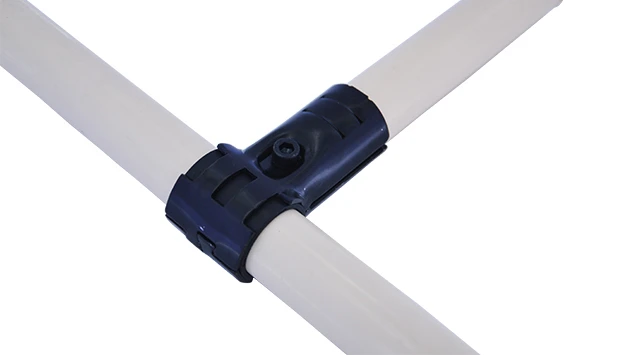
One Way Rotatory Straight Lean Pipe Joint
Two way lean pipe joint for 2 pcs 28MM lean pipe connection in straight angle with rotatory fucntion, which used widely in workbench, flow rack, hand trolley frame connection.
In the world of medical device manufacturing, where precision can mean the difference between a life-saving tool and a costly mistake, every component of the production process matters—including the often-overlooked infrastructure that keeps operations running smoothly. Medical device packaging lines, in particular, face unique pressures: they must handle delicate instruments, maintain strict sterility standards, adapt to frequent product design changes, and keep up with ever-increasing demand. This is where lean manufacturing systems step in, and at the heart of these systems lies a small but mighty component: the one way rotatory straight lean pipe joint chrome. In this article, we'll explore how this unassuming joint becomes a linchpin in creating efficient, flexible, and reliable medical device packaging lines, and why it's more than just a piece of hardware—it's a catalyst for operational excellence.
The Critical Role of Medical Device Packaging Lines
Before diving into the specifics of lean pipe joints, let's first understand why medical device packaging is such a high-stakes operation. Medical devices—from syringes and surgical tools to pacemakers and implantable devices—require packaging that protects them from contamination, ensures sterility until use, and provides clear, compliant labeling. Even the smallest flaw in packaging can compromise a device's safety, leading to recalls, patient harm, or regulatory penalties.
Beyond sterility, packaging lines must also be incredibly adaptable. Medical device manufacturers often produce a wide range of products, from small, standardized items to large, custom-ordered equipment. This means packaging lines need to reconfigure quickly—adjusting conveyor heights, repositioning workbenches, or modifying flow racks—to accommodate different product sizes and shapes. Downtime for reconfiguration is costly, so flexibility isn't just a nice-to-have; it's a necessity.
Efficiency is another non-negotiable. With global demand for medical devices rising, manufacturers are under pressure to increase throughput without sacrificing quality. Bottlenecks in the packaging line can slow down the entire production cycle, delaying critical supplies to hospitals and clinics. Lean manufacturing principles, which focus on minimizing waste and maximizing value, have become the gold standard for addressing these challenges—and lean pipe systems are a cornerstone of this approach.
Lean Pipe Systems: The Backbone of Flexible Manufacturing
Lean pipe systems, also known as "flexible pipe systems," are modular structures built from lightweight pipes and joints that can be assembled, disassembled, and reconfigured with minimal effort. Unlike fixed, welded metal structures, lean pipe systems offer near-infinite customization, making them ideal for environments where change is constant—like medical device packaging lines.
At first glance, a lean pipe system might look simple: aluminum or steel pipes connected by various joints, forming workbenches, flow racks, conveyors, or material trolleys. But its simplicity is its strength. By using standardized components, manufacturers can design a system tailored to their specific needs, then adapt it as those needs evolve. Need to raise a conveyor by 6 inches to accommodate a new product? Swap out a few joints. Want to add a second level to a flow rack for extra storage? Attach new pipes and connectors. This modularity reduces the need for custom fabrication, cuts down on lead times, and lowers costs over time.
But none of this flexibility would be possible without the right joints. Joints are the "glue" that holds lean pipe systems together, determining how easily the system can be adjusted, how much weight it can support, and how well it withstands the rigors of daily use. And among the many types of lean pipe joints available, the one way rotatory straight lean pipe joint chrome stands out for its unique ability to balance rigidity with movement—making it especially valuable in dynamic environments like medical device packaging lines.

Meet the Star: One Way Rotatory Straight Lean Pipe Joint Chrome
So, what exactly is a one way rotatory straight lean pipe joint chrome? Let's break it down. "One way rotatory" means the joint allows rotation in a single direction (typically 180 degrees), giving users the ability to adjust the angle of connected pipes without fully disassembling the structure. "Straight" indicates that it connects pipes in a linear path, rather than at a 90-degree or T-junction. "Chrome" refers to its finish—a layer of chromium plating that adds durability and corrosion resistance. And "lean pipe joint" confirms its role in lean manufacturing systems.
But numbers and definitions only tell part of the story. To appreciate this joint, you have to understand its design philosophy: to provide controlled flexibility. Unlike fixed joints, which lock pipes in place, or fully swiveling joints, which allow 360-degree rotation (and can sometimes be too loose for precision work), the one way rotatory joint strikes a balance. It lets operators adjust pipe angles smoothly and securely, then locks into place to maintain stability during operation. This is especially useful in medical packaging, where even small misalignments in workbenches or conveyors can lead to product damage or packaging errors.
Key Features of the One Way Rotatory Straight Lean Pipe Joint Chrome
- Controlled Rotation: The joint's internal mechanism allows smooth, one-way rotation (often up to 180 degrees) with built-in stops to prevent over-rotation. This precision ensures that adjustments are consistent and repeatable—critical for maintaining alignment in packaging lines.
- Chrome-Plated Finish: Chromium plating isn't just for aesthetics. It creates a smooth, non-porous surface that resists rust, corrosion, and bacterial growth—essential for cleanroom environments where sterility is paramount. Chrome is also easy to wipe down with disinfectants, making it ideal for medical settings.
- Durable Construction: Most one way rotatory joints are made from high-grade steel or aluminum, with reinforced stress points to handle the weight of materials, equipment, and products. This durability ensures the joint can withstand the constant use and occasional bumps common in busy packaging lines.
- Tool-Free Assembly: Like most lean pipe components, this joint is designed for quick, tool-free installation. Operators can tighten or loosen it by hand or with a simple wrench, reducing downtime during reconfiguration.
- Compatibility: The joint works seamlessly with standard lean pipes (often 28mm or 30mm in diameter), as well as aluminum lean pipe and accessories, making it easy to integrate into existing systems or expand new ones.

Why Medical Device Packaging Lines Can't Afford to Ignore This Joint
Now, let's connect the dots: why does a medical device packaging line specifically benefit from the one way rotatory straight lean pipe joint chrome? Let's look at three key challenges in medical packaging and how this joint solves them.
Challenge 1: Frequent Line Reconfiguration
Medical device manufacturers rarely produce the same product forever. New regulations, design improvements, or customer demands mean packaging lines must adapt. For example, a company might switch from packaging 10mm syringes to 15mm syringes, requiring adjustments to conveyor guides, workbench heights, or flow rack spacing. With fixed joints, this would mean disassembling and rebuilding entire sections of the line—a process that could take hours or even days.
The one way rotatory joint changes this. Imagine a packaging line where the roller track (used to slide products from one station to the next) is mounted on lean pipes connected by these joints. When the product size changes, operators can simply rotate the joints to adjust the track's angle or height, then lock them in place. What once took a team of technicians a day now takes a single operator 30 minutes. This agility reduces downtime, keeps production on schedule, and lets manufacturers respond faster to market changes.
Challenge 2: Maintaining Sterility and Cleanliness
Medical device packaging lines often operate in cleanrooms or controlled environments where dust, debris, and microbes are strictly regulated. Traditional steel joints with rough surfaces or crevices can trap dirt and bacteria, becoming a hidden source of contamination. Chrome-plated joints, by contrast, have a smooth, seamless finish that leaves nowhere for contaminants to hide. Wiping them down with alcohol or other disinfectants removes germs quickly, ensuring the line meets ISO 13485 and FDA standards for medical device manufacturing.
Consider a lean pipe workbench used for inspecting packaged devices. The workbench's frame, built with one way rotatory joints, can be easily adjusted to the inspector's height, reducing fatigue. At the end of each shift, the chrome joints are wiped clean, leaving no residue or bacteria behind. This combination of ergonomics and cleanliness is a win-win for both operator comfort and product safety.
Challenge 3: Supporting Diverse Product Sizes and Weights
From tiny surgical screws to large implant cases, medical devices come in all shapes and sizes. Packaging lines must handle this diversity without compromising on stability or safety. The one way rotatory joint's ability to lock into position ensures that even when supporting heavy loads (like stacks of packaging materials on a flow rack), the structure remains rigid and secure. At the same time, its rotational flexibility allows for subtle adjustments to accommodate taller or wider products, preventing jams or damage during transport.
For example, a flow rack used to store packaging trays might need to angle slightly downward to help trays slide toward the operator. With fixed joints, the angle is set during installation; changing it requires rebuilding the rack. With one way rotatory joints, operators can tweak the angle incrementally until the trays flow smoothly—no disassembly required. This level of control is invaluable for preventing product jams and ensuring a steady workflow.
How It All Comes Together: Integrating with Other Lean Components
The one way rotatory straight lean pipe joint chrome doesn't work in isolation. It's part of a larger ecosystem of lean components that, when combined, create a fully functional packaging line. Let's explore how it integrates with three key components: lean pipe workbenches, flow racks, and roller tracks.
Lean Pipe Workbenches: The Heart of Packaging Operations
Workbenches are where much of the packaging work happens—inspecting devices, assembling packages, labeling, and more. A well-designed workbench should be height-adjustable, stable, and clutter-free. The one way rotatory joint plays a key role here by allowing operators to adjust the height of the workbench surface or add accessories like tool holders or bin rails. For example, a workbench E (single deck—without caster) might use these joints to attach side shelves that can be rotated out of the way when not needed, freeing up space for larger products.
Flow Racks: Streamlining Material Movement
Flow racks use gravity to move materials from the back to the front, ensuring operators always have easy access to packaging supplies. The angle of the rack's shelves is critical—too steep, and materials slide too fast; too shallow, and they get stuck. One way rotatory joints let operators fine-tune this angle, ensuring a steady, controlled flow. For instance, a material rack B (3 row and 3 floor) might use these joints to adjust each shelf independently, accommodating different package weights (heavier packages need a shallower angle, lighter ones a steeper slope).
Roller Tracks: Smooth Transport for Delicate Devices
Roller tracks (or conveyor tracks) move packaged devices from one station to the next—for example, from sealing to labeling to boxing. The alignment of these tracks is crucial; even a slight misalignment can cause devices to jam or fall off. One way rotatory joints allow operators to adjust the track's height or angle, ensuring it connects seamlessly with other equipment. They also help in creating curved or angled tracks, which are often needed to navigate around obstacles in the packaging line.
Comparing Lean Pipe Joints: Why One Way Rotatory Stands Out
Not all lean pipe joints are created equal. To understand why the one way rotatory straight lean pipe joint chrome is so valuable for medical packaging lines, let's compare it to other common joint types:
| Joint Type | Rotation | Material | Key Feature | Best For |
|---|---|---|---|---|
| One Way Rotatory Straight (Chrome) | 180° one-way | Chrome-plated steel/aluminum | Adjustable angle with locking mechanism; smooth, sterile finish | Medical packaging lines, cleanrooms, dynamic environments needing frequent reconfiguration |
| Fixed Straight Joint | None (fixed angle) | Steel/plastic | Sturdy, low-cost, simple design | Static structures (e.g., permanent shelving) with no need for adjustment |
| 90° Crossing Joint | None (fixed 90°) | Steel/aluminum | Connects pipes at right angles; high weight capacity | Corner supports for workbenches or racks |
| Swivel Joint (360°) | 360° full rotation | Plastic/steel | Maximum flexibility for multi-directional adjustment | Non-critical applications (e.g., temporary storage trolleys) where precision is less important |
As the table shows, the one way rotatory joint's combination of adjustability, sterility, and stability makes it uniquely suited for medical device packaging lines. Fixed joints lack flexibility, swivel joints can be too loose for precision work, and non-chrome finishes may not meet cleanliness standards. For manufacturers prioritizing adaptability, sterility, and efficiency, this joint is the clear choice.
Choosing the Right Supplier: A Critical Decision
Even the best-designed joint is only as good as the supplier who makes it. When selecting a lean pipe supplier (or a flow rack supplier, roller track supplier, etc.), medical device manufacturers should prioritize a few key qualities:
- Quality Materials: The supplier should use high-grade steel or aluminum for joints, with consistent chrome plating (no bubbles, cracks, or uneven coverage). Ask for material certifications to ensure compliance with medical standards.
- Customization Options: Every packaging line is unique. A good supplier will offer custom joint sizes, finishes, or features (e.g., locking mechanisms) to meet specific needs.
- Technical Support: Reconfiguring lean systems can be tricky. Look for suppliers who provide design assistance, installation guides, or on-site support to help optimize your line.
- Reliable Lead Times: Delays in receiving components can halt production. Choose a supplier with a track record of on-time deliveries, even for large or custom orders.
- Compliance Expertise: Medical device manufacturing is highly regulated. The supplier should understand ISO 13485, FDA, and other relevant standards, and be able to provide documentation to prove their products meet these requirements.
The Future of Lean Systems in Medical Packaging
As medical device technology advances, packaging lines will face even greater demands for speed, flexibility, and precision. Lean pipe systems, and components like the one way rotatory straight lean pipe joint chrome, will play an increasingly important role in meeting these challenges. We're already seeing trends like the integration of aluminum lean pipe (lighter, more corrosion-resistant than steel) and smart sensors (to monitor joint wear or track system performance in real time). These innovations will make lean systems even more adaptable and data-driven, further enhancing efficiency in medical packaging lines.
Conclusion: Small Joint, Big Impact
In the grand scheme of medical device manufacturing, the one way rotatory straight lean pipe joint chrome might seem like a minor detail. But as we've explored, it's a detail that makes a major difference. By enabling quick reconfiguration, maintaining sterility, and supporting diverse products, this joint helps packaging lines run smoother, safer, and more efficiently. It's a testament to the power of lean manufacturing—finding value in simplicity, flexibility, and attention to detail.
For medical device manufacturers looking to stay competitive in a fast-paced, highly regulated industry, investing in quality lean pipe systems and components isn't just a smart move—it's essential. And at the center of that investment? A small, chrome-plated joint that proves great things really do come in small packages.