- Company Articles
- Products and Technology
- Product knowledge
- One Way Rotatory Straight Lean Pipe Joints in Warehouse Logistics Systems

One Way Rotatory Straight Lean Pipe Joints in Warehouse Logistics Systems
Related Product
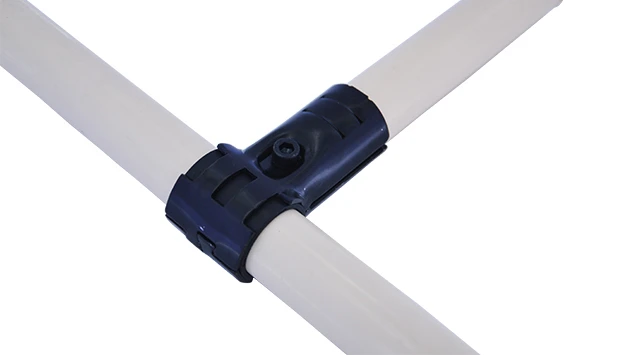
One Way Rotatory Straight Lean Pipe Joint
Two way lean pipe joint for 2 pcs 28MM lean pipe connection in straight angle with rotatory fucntion, which used widely in workbench, flow rack, hand trolley frame connection.
Introduction: The Pulse of Modern Warehousing
Walk into any thriving warehouse today, and you'll feel it immediately—the hum of efficiency, the rhythm of materials moving seamlessly from point A to point B, and the quiet confidence that every square foot is working as hard as the team managing it. But behind that harmony lies a critical truth: modern warehouses don't just store goods; they orchestrate a symphony of logistics where even the smallest component can make or break the entire operation. In this fast-paced world, adaptability isn't just a buzzword—it's the lifeline that keeps businesses ahead of the curve. And that's where the unsung heroes of modular logistics systems come into play: components like the one way rotatory straight lean pipe joint, which quietly but powerfully transform how warehouses handle, store, and transport materials.
Warehouses today face a unique set of challenges. E-commerce booms demand faster order fulfillment. Global supply chains require greater flexibility to pivot between suppliers and markets. Labor costs and space constraints push operators to do more with less. Traditional rigid systems—fixed shelves, immovable workstations, and one-size-fits-all material handling setups—simply can't keep up. They breed inefficiencies, create bottlenecks, and leave little room for growth or change. This is where lean systems step in, designed to eliminate waste, streamline processes, and adapt to evolving needs. At the heart of these systems is lean pipe, a versatile material that, when paired with the right joints, becomes the building block of a truly flexible logistics infrastructure. And among these joints, the one way rotatory straight lean pipe joint stands out as a game-changer, offering precision, durability, and adaptability that redefine what's possible in warehouse design.
The Lean Revolution: Redefining Warehouse Efficiency
Before diving into the specifics of one way rotatory straight lean pipe joints, it's essential to understand the philosophy that drives their design: lean manufacturing. Born from the Toyota Production System in the mid-20th century, lean principles have since spread far beyond automotive factories, reshaping industries from healthcare to logistics. At its core, a lean system is about maximizing value while minimizing waste—waste of time, space, labor, and resources. In warehousing, this translates to creating environments where materials flow smoothly, workflows are intuitive, and every tool and structure serves a clear, purposeful function.
Lean systems in logistics are built on modularity. Unlike fixed infrastructure, which locks warehouses into static layouts, modular systems use interchangeable components that can be reconfigured, expanded, or repurposed as needs change. Imagine a warehouse that needs to shift from storing bulk goods to handling small-package e-commerce orders overnight. With a modular setup, that transition isn't a months-long renovation project—it's a matter of adjusting shelves, reconfiguring workbenches, and rerouting roller tracks. This flexibility is why lean systems have become the gold standard for modern logistics, and at the center of this modular revolution is lean pipe.
Lean pipe, often made from steel, aluminum, or PE-coated materials, is lightweight yet surprisingly strong, making it ideal for constructing everything from simple material racks to complex conveyor systems. But lean pipe alone is just a tube—it's the joints that it shape, strength, and versatility. Joints connect pipes into structures, allowing for the creation of workbenches, flow racks, turnover trolleys, and more. And among the many types of joints available, the one way rotatory straight lean pipe joint is a standout for its ability to combine rigidity with controlled movement, enabling precise material flow in applications where directionality and smooth transition are critical.

Lean Pipe: The Backbone of Flexible Logistics
To appreciate the role of one way rotatory straight lean pipe joints, we first need to understand the material they're designed to connect: lean pipe. Also known as "kitchen pipe" in some industries (a nod to its early use in food service), lean pipe has evolved into a cornerstone of industrial and warehouse design. Its appeal lies in its simplicity and adaptability. Most lean pipes are hollow, with diameters ranging from 28mm to 40mm, and are constructed from materials like galvanized steel (for durability), aluminum (for lightweight applications), or steel coated in polyethylene (PE) for corrosion resistance and a smooth finish. This diversity in materials means lean pipe can be tailored to specific environments—whether it's a humid warehouse requiring rust-resistant stainless steel or a cleanroom needing non-conductive aluminum.
What makes lean pipe truly revolutionary is its modularity. Unlike traditional building materials like wood or metal beams, which require cutting, welding, or drilling to modify, lean pipe systems use friction-fit or bolt-on joints to connect pipes. This means structures can be assembled, disassembled, and reassembled with basic tools, often in a matter of hours. A single lean pipe workbench, for example, can be adjusted in height to suit different workers, extended to accommodate new equipment, or repurposed as a material rack when needs change. This adaptability drastically reduces downtime during reconfigurations and eliminates the need for costly custom fabrication—a win for both efficiency and budget.
Lean pipe's versatility extends to its load-bearing capacity. While it's lightweight, don't let that fool you: properly constructed lean pipe structures can support hundreds of kilograms. This makes them suitable for a wide range of applications, from holding small electronic components on a workbench to storing heavy pallets on a flow rack. And because the system is modular, load capacity can be scaled up by adding more pipes or reinforcing joints—no need to replace the entire structure when requirements grow. For warehouse managers, this means investing in a system that grows with their business, rather than one that becomes obsolete after a year or two.

The Star Player: One Way Rotatory Straight Lean Pipe Joints
If lean pipe is the backbone of modular logistics, then joints are the joints—literally the connections that hold everything together. And among the many joint types available, the one way rotatory straight lean pipe joint is a standout for its unique combination of stability and controlled movement. Let's break down what makes this joint so special.
Design and Functionality
At first glance, a one way rotatory straight lean pipe joint looks like a simple connector, but its internal mechanics are cleverly engineered. Unlike fixed joints, which lock pipes into static angles (90 degrees, 45 degrees, etc.), or fully rotatory joints, which allow 360-degree movement, this joint is designed for unidirectional rotation. Picture a hinge that only swings forward, not backward—that's the basic idea. This one-way action is critical for applications where materials need to flow in a specific direction without backtracking, such as on flow racks or roller tracks.
The joint typically consists of two main parts: a stationary base that attaches to one lean pipe and a rotating arm that connects to another. Inside, a spring-loaded mechanism or ratchet system ensures the arm rotates freely in one direction (usually clockwise or counterclockwise) but locks into place when pushed in the opposite direction. This prevents materials from sliding backward, which is essential for maintaining a smooth, efficient flow in gravity-fed systems like flow racks. For example, when a worker places a bin on a flow rack, the one way rotatory joints in the roller track allow it to glide forward toward the picking station but stop it from rolling back, even if the rack is slightly tilted.
Durability is another key feature. These joints are often made from high-strength materials like zinc-plated steel or aluminum, with reinforced components at stress points. The rotating mechanism is designed to withstand thousands of cycles without wear, ensuring longevity even in high-traffic warehouse environments. Some models also include plastic or rubber gaskets to reduce friction and noise, making them ideal for settings where quiet operation is important (like electronics assembly lines).
Compatibility and Versatility
One of the greatest strengths of one way rotatory straight lean pipe joints is their compatibility with standard lean pipe systems. They're designed to fit most common pipe diameters (e.g., 28mm, 30mm), meaning they can be integrated into existing setups without requiring special pipes or adapters. This is a huge advantage for warehouses looking to upgrade incrementally—there's no need to replace entire structures; simply swap out traditional joints for one way rotatory ones in key areas to improve material flow.
Beyond flow racks, these joints find use in a variety of applications. On roller tracks, they help guide materials along a specific path, reducing the risk of jams or misalignment. On workbenches, they can be used to create adjustable components like tool holders or part bins that swing into place when needed and lock securely during use. Even on turnover trolleys, one way rotatory joints can add stability by preventing loads from shifting during transport. The possibilities are nearly endless, limited only by the warehouse designer's creativity.
Applications: Where These Joints Shine Brightest
To truly grasp the impact of one way rotatory straight lean pipe joints, let's look at how they transform real-world warehouse operations. From flow racks that keep picking stations stocked to roller tracks that streamline assembly lines, these joints are quietly enhancing efficiency across the logistics landscape.
Flow Racks: The Heart of Picking Efficiency
Flow racks are a staple in order fulfillment centers, where speed and accuracy are paramount. These racks use gravity to move materials from the loading end (often at the back) to the picking end (at the front), reducing the need for workers to walk back and forth to restock. But without proper direction control, materials can get stuck, backtrack, or collide, causing delays and frustration. That's where one way rotatory straight lean pipe joints come in.
In a typical flow rack setup, the shelves are angled slightly downward toward the picking station. Each shelf is lined with roller tracks, which are supported by lean pipe frames connected by one way rotatory joints. As a worker loads bins onto the back of the shelf, the joints allow the rollers to spin forward, carrying the bins toward the front. If a bin is accidentally bumped or the shelf vibrates, the joints lock, preventing the bin from rolling back. This ensures that the picking station always has a steady supply of materials, with no gaps or backups.
Consider a large e-commerce warehouse handling thousands of small items daily. Before installing one way rotatory joints, workers often found bins rolling back onto the loading side, requiring them to constantly reposition materials. With the joints in place, the flow became uninterrupted: bins glided forward smoothly, and picking times dropped by 15%—a significant improvement that translated to hundreds of more orders processed each day.
Roller Tracks: Precision Movement for Assembly Lines
Assembly lines rely on the precise movement of components from one workstation to the next. Any hiccup—a part getting stuck, a trolley veering off course—can bring the entire line to a halt. Roller tracks, supported by lean pipe frames, are the solution, and one way rotatory joints make them even more reliable.
In automotive or electronics assembly, for example, roller tracks are used to move subassemblies between workbenches. Each track is constructed from lean pipe and fitted with rollers that rotate as the subassembly passes over them. One way rotatory joints ensure that the track remains aligned and that the subassembly moves in only one direction, preventing collisions or misplacements. The joints also allow for easy adjustment of the track's angle or height, making it simple to adapt the line to new product models.
A electronics manufacturer recently upgraded its assembly line with lean pipe roller tracks using one way rotatory joints. Previously, workers had to manually push subassemblies along fixed tracks, which was time-consuming and led to ergonomic issues. With the new system, gravity and the one way joints did the work: subassemblies glided smoothly to the next station, and workers could focus on more skilled tasks. The result? A 20% increase in production speed and a noticeable reduction in worker fatigue.
Workbenches: Customizable Workspaces That Adapt
Workbenches are the command centers of warehouse operations, where workers sort, assemble, and inspect goods. A well-designed workbench should be ergonomic, organized, and adaptable to different tasks. One way rotatory straight lean pipe joints play a key role in achieving this flexibility.
Imagine a workbench used for both small-parts assembly and quality inspection. With traditional fixed joints, the layout is static: shelves, tool holders, and bins are in fixed positions, making it hard to switch between tasks. But with one way rotatory joints, components can be repositioned quickly. For example, a bin holder can swing out of the way during inspection to provide more workspace, then swing back into place for assembly. Tool racks can be adjusted to the worker's height, reducing strain on shoulders and wrists.
A medical device manufacturer implemented this approach, equipping its workbenches with lean pipe frames and one way rotatory joints. Workers could now customize their stations in minutes, switching between assembling catheters and inspecting surgical tools without wasted time. The result was a 10% improvement in task efficiency and a 25% reduction in workplace injuries related to poor ergonomics.
Traditional vs. One Way Rotatory Joints: A Comparison
To truly understand the value of one way rotatory straight lean pipe joints, it helps to compare them side by side with traditional fixed joints. The table below highlights key differences in flexibility, efficiency, and cost-effectiveness:
| Feature | Traditional Fixed Joints | One Way Rotatory Straight Lean Pipe Joints |
|---|---|---|
| Movement | No rotation; locks pipes into fixed angles. | Unidirectional rotation; allows materials to flow forward, prevents backward movement. |
| Flexibility | Static; requires disassembly to reconfigure. | Dynamic; can be adjusted on the fly for changing workflows. |
| Material Flow Efficiency | Limited; materials may backtrack or jam in gravity-fed systems. | High; ensures smooth, one-way flow, reducing bottlenecks. |
| Installation Time | Moderate; requires precise alignment. | Similar to fixed joints; no special tools needed. |
| Maintenance | Low; few moving parts, but fixed angles can loosen over time. | Moderate; rotating mechanism needs occasional lubrication, but built to withstand heavy use. |
| Cost | Lower upfront cost. | Slightly higher upfront cost, but higher long-term ROI due to efficiency gains. |
| Best For | Static structures (e.g., fixed shelves, non-adjustable racks). | Dynamic systems (e.g., flow racks, roller tracks, adjustable workbenches). |
As the table shows, while traditional fixed joints have their place in static applications, one way rotatory joints offer significant advantages in dynamic, high-efficiency environments. The slightly higher upfront cost is quickly offset by reduced labor time, fewer bottlenecks, and the ability to adapt to changing needs—making them a smart investment for forward-thinking warehouses.
Integration with Other Lean Components
One of the greatest strengths of lean pipe systems is their ability to work seamlessly with other components, and one way rotatory straight lean pipe joints are no exception. These joints don't operate in isolation—they're part of a larger ecosystem of lean accessories that together create fully functional, adaptable logistics solutions. Let's explore how they integrate with key components like aluminum profiles, casters, and roller track accessories.
Aluminum Profiles: Strength and Lightweight Support
Aluminum profiles are increasingly popular in lean systems for their lightweight yet rigid construction, corrosion resistance, and sleek appearance. They're often used in conjunction with lean pipe to create hybrid structures that combine the best of both materials. One way rotatory joints pair exceptionally well with aluminum profiles, as their modular design allows for easy attachment via T-slot connections or brackets.
For example, a flow rack might use aluminum profiles for the main frame (providing stability) and lean pipe with one way rotatory joints for the roller tracks (enabling smooth material flow). The joints can be bolted directly to the aluminum profiles using standard T-slot nuts, creating a strong, secure connection that's still adjustable. This hybrid approach is ideal for environments where weight is a concern (like upper-level mezzanines) or where corrosion resistance is needed (like cold storage facilities).
Casters: Mobility with Control
Turnover trolleys and mobile workbenches are essential for moving materials around the warehouse, and casters are what make them mobile. When combined with one way rotatory joints, casters become even more useful, allowing trolleys to be easily reconfigured or locked into position when needed.
For instance, a mobile material cart might use lean pipe frames with one way rotatory joints to attach shelves or bins. The joints allow the shelves to be tilted for easy loading/unloading but lock in place during transport, preventing materials from shifting. Casters with brakes provide additional stability, ensuring the cart stays put when workers are accessing its contents. This combination of mobility and controlled movement makes the cart indispensable for order picking or line-side replenishment.
Roller Track Accessories: Enhancing Flow Precision
Roller tracks rely on a range of accessories—like guide rails, stops, and connectors—to function optimally. One way rotatory straight lean pipe joints complement these accessories by ensuring the track itself remains stable and aligned. For example, plastic roller track guide rails (available in yellow or grey) help keep bins or packages centered on the track, while the one way joints prevent backward movement. Together, they create a system where materials flow precisely, even at high speeds.
Another example is roller track placon mounts, which connect roller tracks to aluminum profiles or lean pipe frames. These mounts are adjustable, allowing the track to be tilted to the optimal angle for gravity flow. When paired with one way rotatory joints, they ensure that the angle remains consistent and that materials move smoothly without jamming. This level of precision is critical for high-volume operations where even a small misalignment can cause significant delays.
Choosing the Right Lean Pipe Supplier
To fully leverage the benefits of one way rotatory straight lean pipe joints, it's essential to partner with a reliable lean pipe supplier. Not all suppliers are created equal—quality, customization options, and customer support can vary widely. Here are key factors to consider when selecting a supplier:
Quality of Materials
The durability of your lean system depends on the quality of the materials used. Look for suppliers that use high-grade steel, aluminum, or PE-coated pipes with thick walls and corrosion-resistant finishes. For joints, check that they're made from reinforced metals (like zinc-plated steel) and that the rotating mechanism is precision-engineered to withstand heavy use. A reputable supplier will provide material certifications and test reports, giving you confidence in the longevity of their products.
Range of Products
A good lean pipe supplier should offer a comprehensive range of components, including not just pipes and joints but also accessories like casters, roller tracks, workbench tops, and connectors. This ensures you can source everything you need from a single provider, simplifying ordering and reducing lead times. If you're using one way rotatory joints, for example, you'll want a supplier that also carries compatible lean pipe, roller tracks, and aluminum profiles to ensure seamless integration.
Customization Capabilities
Every warehouse has unique needs, so a supplier that offers customization is a valuable partner. Whether you need a specific pipe length, a custom joint design, or a pre-assembled workbench, look for suppliers with in-house fabrication capabilities. Some suppliers even offer design services, helping you create a lean system tailored to your space and workflow. For example, if you need a flow rack with non-standard dimensions, a supplier with customization skills can adjust the pipe lengths and joint placements to fit your exact requirements.
Customer Support and Lead Times
In fast-paced warehouse environments, delays can be costly. Choose a supplier with short lead times and reliable shipping. Equally important is responsive customer support—look for suppliers that offer technical assistance, whether it's helping you troubleshoot a joint installation or advising on system design. A supplier with a dedicated support team can save you time and frustration, ensuring your project stays on track.
Reputation and Reviews
Finally, do your research. Check online reviews, ask for references, and look for suppliers with a proven track record in the industry. A supplier with many positive reviews from other warehouse operators is more likely to deliver quality products and service. Don't hesitate to ask for case studies or examples of past projects—this will give you a sense of their expertise and ability to handle your specific needs.
Maintenance Tips for Longevity
Like any mechanical component, one way rotatory straight lean pipe joints require regular maintenance to ensure optimal performance. Fortunately, with a little care, these joints can last for years, even in high-traffic environments. Here are some simple maintenance tips:
Lubricate the Rotating Mechanism
The one-way rotation mechanism relies on moving parts that can wear over time if not lubricated. Every 3–6 months (or more frequently in dusty or humid environments), apply a small amount of light machine oil or silicone lubricant to the joint's pivot points. This reduces friction, prevents rust, and ensures smooth rotation.
Inspect for Wear and Tear
Regularly check the joints for signs of damage, such as cracks in the metal housing, bent components, or excessive play in the rotating arm. If you notice any of these issues, replace the joint immediately—damaged joints can compromise the stability of the entire structure and lead to accidents.
Tighten Connections
Over time, the bolts or clamps that attach the joint to the lean pipe may loosen due to vibration. Periodically inspect these connections and tighten them with a wrench if needed. This prevents the joint from shifting, which can disrupt material flow and cause misalignment in roller tracks or flow racks.
Clean Regularly
Dust, dirt, and debris can accumulate in the rotating mechanism, causing it to jam. Use a soft brush or compressed air to clean the joint regularly, paying special attention to the gaps between moving parts. In particularly dirty environments, you may also wipe the joint with a damp cloth (followed by drying to prevent rust).
Train Staff on Proper Use
Even the best-maintained joints can fail if misused. Train your team to handle materials gently on flow racks and roller tracks, avoiding excessive force that could damage the joints. For example, slamming bins onto a flow rack can jar the joints and cause the locking mechanism to fail. A little care goes a long way in extending the life of your lean system.
Future Trends: The Next Frontier in Lean Logistics
As warehouses continue to evolve, so too will the components that power them. One way rotatory straight lean pipe joints are just the beginning—here are some emerging trends that could shape the future of lean logistics:
Smart Lean Systems
The rise of Industry 4.0 is bringing smart technology to lean systems. Imagine one way rotatory joints equipped with sensors that monitor rotation cycles, detect wear, or alert managers when maintenance is needed. These "smart joints" could integrate with warehouse management systems (WMS), providing real-time data on material flow and system performance. For example, a sensor might detect that a joint on a flow rack is rotating more slowly than usual, indicating a need for lubrication—preventing a breakdown before it happens.
Sustainable Materials
Environmental sustainability is becoming a priority for many warehouses, and lean systems are no exception. We're likely to see more suppliers offering lean pipe made from recycled materials or biodegradable coatings. Aluminum, which is highly recyclable, may become even more popular as a lightweight, eco-friendly alternative to steel. Joints could also be designed with modular components that are easier to repair or recycle, reducing waste.
AI-Driven Design Tools
Designing a lean system can be complex, requiring careful planning to optimize flow and space. Future tools may use artificial intelligence (AI) to analyze warehouse layouts, workflows, and material types, then recommend the optimal configuration of lean pipe, joints, and accessories. For example, an AI tool could suggest where to place one way rotatory joints to minimize bottlenecks based on historical order data, taking the guesswork out of system design.
Conclusion: Small Joints, Big Impact
In the grand scheme of warehouse logistics, one way rotatory straight lean pipe joints may seem like small components—but their impact is anything but minor. These unassuming connectors are the glue that holds together flexible, efficient lean systems, enabling warehouses to adapt, grow, and thrive in an increasingly competitive landscape. From ensuring smooth material flow on flow racks to enhancing the ergonomics of workbenches, they play a critical role in transforming static warehouses into dynamic hubs of productivity.
As we've explored, the benefits of these joints are clear: they reduce waste, improve efficiency, and offer unparalleled flexibility. When paired with high-quality lean pipe, aluminum profiles, and other accessories, they create systems that can be reconfigured in hours, not months, allowing businesses to respond quickly to changing market demands. And with proper maintenance and the right supplier partner, they provide a long-term return on investment that far exceeds their upfront cost.
So the next time you walk through a warehouse and marvel at the seamless flow of materials, take a moment to appreciate the small but mighty components making it all possible. One way rotatory straight lean pipe joints may not grab headlines, but they're the unsung heroes working behind the scenes to keep our supply chains moving—one rotation at a time.