- Company Articles
- Products and Technology
- Product knowledge
- One Way Rotatory Straight Lean Pipe Joints: Key to Agile Production Systems

One Way Rotatory Straight Lean Pipe Joints: Key to Agile Production Systems
Related Product
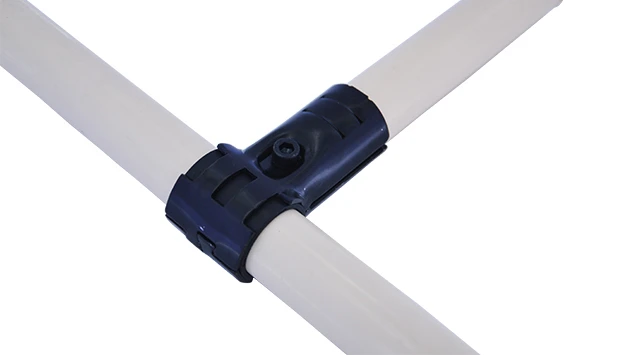
One Way Rotatory Straight Lean Pipe Joint
Two way lean pipe joint for 2 pcs 28MM lean pipe connection in straight angle with rotatory fucntion, which used widely in workbench, flow rack, hand trolley frame connection.
The Need for Agile Production in Modern Manufacturing
Walk into any manufacturing facility today, and you'll likely hear the same buzzwords: "agility," "flexibility," "lean." These aren't just industry jargon—they're survival skills. In a world where customer demands shift overnight, product lifecycles shrink by the quarter, and competitors lurk around every corner, rigid, one-size-fits-all production setups are quickly becoming relics of the past. The problem? Many factories are still stuck with inflexible infrastructure: workbenches bolted to the floor, material racks that can't be reconfigured without power tools, and assembly lines that take days (or weeks) to adapt to new products.
Take a small electronics manufacturer, for example. Last year, they launched a new smartphone model, only to realize their existing assembly line—built with fixed steel frames and welded joints—couldn't accommodate the smaller circuit boards. They spent three weeks and $15,000 modifying the line, losing valuable time to market. Or consider a pharmaceutical packaging plant that needed to switch from glass bottles to plastic vials overnight due to supply chain issues. Their fixed flow racks couldn't handle the new container sizes, leading to bottlenecks and delayed shipments.
These stories aren't outliers—they're the norm for manufacturers clinging to traditional production tools. The solution? Modular, adaptable systems that can pivot as quickly as your business needs. And at the heart of that adaptability lies a humble but powerful component: the one way rotatory straight lean pipe joint.
What Are One Way Rotatory Straight Lean Pipe Joints?
At first glance, a lean pipe joint might seem like just another metal connector. But the one way rotatory straight lean pipe joint is anything but ordinary. Let's break it down: "lean pipe" refers to the lightweight, durable tubes (often aluminum or steel) used in modular systems; "straight" means it connects pipes in a linear path; "rotatory" denotes its ability to swivel; and "one way" specifies that this rotation is controlled—you can adjust the angle in one direction, then lock it securely in place. Think of it as a hinge with a mission: it gives you the freedom to reposition parts of your setup without disassembling everything, while ensuring stability once you've found the right configuration.
These joints are typically made from high-grade aluminum or stainless steel, designed to withstand the wear and tear of factory floors. They feature a precision-engineered internal mechanism—usually a spring-loaded pin or friction lock—that lets you rotate connected pipes up to 180 degrees in one direction (say, horizontally) but locks them firm when moved the other way. This "one way" action prevents accidental shifts during operation, while still allowing quick adjustments when needed.
But what really sets them apart is their compatibility with lean pipe systems. Whether you're building a lean pipe workbench, a flow rack, or a turnover trolley, these joints act as the "universal translator" between pipes, allowing you to mix and match components without custom fabrication. No welding, no drilling, no specialized tools—just a simple twist to adjust, a click to lock, and you're ready to go.

The Core Benefits: Why These Joints Transform Production Floors
1. Unmatched Flexibility
Imagine a workbench where you can adjust the height of the tool shelf with a flick of the wrist, or a flow rack where you can reangle the roller tracks to accommodate taller boxes in 30 seconds flat. That's the flexibility one way rotatory straight lean pipe joints deliver. Traditional fixed joints lock your setup into a permanent shape; these joints turn your infrastructure into a living, breathing system that adapts to your needs.
For example, a automotive parts supplier recently used these joints to build a modular assembly line for brake components. When they shifted from producing parts for sedans to SUVs (which required wider work surfaces), workers simply rotated the joint-connected side panels outward, locked them, and continued production—no downtime, no contractors, no extra cost.
2. Durability That Stands Up to Real-World Use
Factory floors are tough environments: heavy loads, constant movement, occasional bumps from forklifts. These joints are built to handle it all. Made from corrosion-resistant aluminum or stainless steel, they resist rust and wear even in humid or chemical-exposed areas (like pharmaceutical cleanrooms). The internal locking mechanism is tested to withstand thousands of rotations without losing tension, ensuring your setup stays stable for years.
A food packaging plant in Ohio, for instance, has been using the same set of joints on their flow racks for over five years. Despite daily exposure to cleaning chemicals and temperature fluctuations, the joints still rotate smoothly and lock securely—proving that durability doesn't have to come at the cost of flexibility.
3. Cost Savings That Add Up
Reconfiguring a traditional fixed setup can cost thousands in labor and materials. With one way rotatory joints, those costs vanish. No need to hire welders or buy new steel frames when your product line changes—just repurpose what you already have. A mid-sized electronics manufacturer estimated they saved $45,000 in the first year alone by using these joints to adapt existing workbenches and racks instead of buying new ones.
There's also the savings from reduced downtime. When you can adjust a flow rack in 10 minutes instead of 10 hours, you're not just saving time—you're keeping production on track, meeting deadlines, and avoiding costly delays. For a company with $10,000 in hourly revenue, even a single hour of downtime avoided pays for a set of joints many times over.
4. Safety First
Loose or unstable equipment is a safety hazard. These joints eliminate that risk with their secure locking mechanism. Once locked, they hold firm under load—even when supporting hundreds of pounds of materials. Unlike makeshift solutions (like zip ties or duct tape), they provide consistent, reliable stability, reducing the risk of accidents or injuries.
In a recent OSHA audit, a medical device manufacturer was praised for their use of these joints in their lean pipe workbenches. Inspectors noted that the secure locking feature prevented tools from slipping off adjustable shelves, a common hazard in facilities with fixed setups.

Real-World Applications: From Lean Pipe Workbenches to Flow Racks
Lean Pipe Workbenches: The Heart of the Operation
The lean pipe workbench is the workhorse of any factory, and one way rotatory joints make it smarter. Picture a workbench where the main surface is connected to the legs via these joints—adjust the height by rotating the legs up or down, lock them, and you've got a bench that fits workers of all sizes (no more straining backs from poorly positioned surfaces). Add a joint-connected tool rail above, and you can swing tools into reach when needed, then tuck them out of the way when not in use.
A furniture manufacturer in North Carolina took this a step further: they built workbenches with joint-connected side panels that fold down when not in use, freeing up floor space for larger assemblies. When they need extra workspace, workers rotate the panels up, lock them, and instantly double their surface area. "It's like having a transformable workbench," said their production manager. "We used to need two separate benches for small and large parts—now we just flip a joint."
Flow Racks: Optimizing Material Flow
Flow racks are all about moving materials efficiently—from receiving to assembly to shipping. One way rotatory joints let you adjust the angle of the roller tracks, ensuring gravity does the work without damaging products. For fragile items (like glassware), you can rotate the tracks to a gentler slope; for heavy boxes, a steeper angle speeds up flow. And if you switch from small to large containers, just rotate the side guides outward to widen the track—no need to buy a new rack.
A beverage distributor recently upgraded their flow racks with these joints. When they started carrying taller cans, workers rotated the joint-connected vertical supports to raise the track height, making room for the new packaging. "We used to have to rebuild the entire rack every time our product mix changed," said their warehouse supervisor. "Now it takes two people 15 minutes. That's a game-changer."
Assembly Lines: Adapting to Product Variations
Modern assembly lines need to handle multiple product variants—think a single line that builds both 13-inch and 15-inch laptops, or three different sizes of power tools. One way rotatory joints make this possible by letting you reposition workstations, tool holders, and material feeders on the fly.
A consumer electronics company used these joints to build a "chameleon line" for smartwatches. When switching from the standard model (with a small battery compartment) to the premium model (with a larger one), workers rotated the joint-connected battery installation fixture to a wider position, locked it, and continued assembling—no need to stop the line for retooling. The result? A 40% reduction in changeover time, and a 25% boost in daily output.
Integrating with Lean Systems: Aligning with Continuous Improvement
Lean manufacturing is all about eliminating waste—whether it's time, materials, or space. One way rotatory straight lean pipe joints are a lean manager's dream, because they turn "wasteful" fixed infrastructure into a tool for continuous improvement.
Take 5S, the cornerstone of lean systems (Sort, Set in Order, Shine, Standardize, Sustain). These joints make "Set in Order" a breeze: you can arrange tools and materials exactly where workers need them, then reorder them as processes improve. When a Kaizen event identifies a better workflow, you don't need to redesign the entire workbench—just rotate the joints to reposition components, and standardize the new setup.
SMED (Single-Minute Exchange of Die), the practice of reducing setup time to under 10 minutes, is another area where these joints shine. Traditional setup changes often involve swapping out fixed fixtures or rebuilding workstations; with one way rotatory joints, you adjust on the fly. A medical device maker recently used this to cut setup time for their syringe assembly line from 45 minutes to 8 minutes—all by rotating joint-connected guides and tool holders to fit the new syringe size.
Perhaps most importantly, these joints support the "lean mindset" of adaptability. In a lean system, nothing is permanent—processes evolve, customer needs change, and your infrastructure should keep up. One way rotatory straight lean pipe joints don't just enable change; they encourage it, empowering workers to experiment with better layouts and managers to iterate quickly without fear of costly overhauls.
Comparing Traditional vs. One Way Rotatory Joints: A Clear Advantage
| Feature | Traditional Fixed Joints | One Way Rotatory Straight Lean Pipe Joints |
|---|---|---|
| Reconfiguration Time | Hours to days (requires tools, disassembly) | Seconds to minutes (no tools, simple rotation) |
| Durability | High (but permanent; damage requires full replacement) | High (corrosion-resistant, tested for thousands of rotations) |
| Cost | Low upfront, but high long-term (frequent replacements/modifications) | Slightly higher upfront, but low long-term (reusable, no modifications) |
| Flexibility | None (fixed angle/position) | High (adjustable angles, compatible with multiple pipe sizes) |
| Safety | Stable but rigid (no room for error in setup) | Stable and adaptable (locks securely, reduces human error in adjustments) |
The table tells the story: traditional joints are stuck in the past, while one way rotatory joints are built for the future. Where fixed joints require you to plan for every possible scenario (and pay for unused capacity), these joints let you adapt as scenarios unfold. They turn capital expenses (like custom workbenches) into operational flexibility, letting you invest in a system that grows with your business.
Choosing the Right Joints: Factors to Consider for Your Facility
Not all one way rotatory straight lean pipe joints are created equal. To get the most out of your investment, consider these key factors:
Load Capacity
How much weight will the joint need to support? A small lean pipe workbench for electronics might only need a joint rated for 50 lbs, while a flow rack for automotive parts could require 500 lbs or more. Check the manufacturer's specs—look for joints tested to withstand 1.5x their rated load to account for sudden impacts.
Environment
Will the joints be used in a dry warehouse, a humid food processing plant, or a chemical-exposed cleanroom? Aluminum joints are lightweight and corrosion-resistant, making them ideal for most indoor environments. Stainless steel is better for wet or chemical-heavy areas, as it resists rust and pitting.
Compatibility with Your Existing System
Not all lean pipes are the same—some are 28mm in diameter, others 40mm. Make sure the joints match your pipe size. Most suppliers offer adapters, but it's easier (and cheaper) to stick with a single system if possible. If you're using aluminum profile accessories, look for joints with T-slot compatibility to integrate seamlessly.
Supplier Reliability
A great joint is only as good as the supplier behind it. Look for a lean pipe supplier with a track record of quality—check reviews, ask for case studies, and request samples before buying in bulk. A reliable supplier will offer warranties (at least 1 year), replacement parts, and technical support if you run into issues.
The Future of Agile Manufacturing: Beyond the Joint
As manufacturing moves toward Industry 4.0—smart factories with IoT sensors, AI-driven production planning, and automated workflows—modular infrastructure will become even more critical. One way rotatory straight lean pipe joints are just the beginning; the next generation may feature built-in sensors that alert managers when a joint needs lubrication or is nearing the end of its lifespan, or app-controlled locks that let you save and recall custom configurations with a tap on your phone.
Imagine a flow rack that automatically adjusts roller angles based on real-time order data (more slope for high-priority shipments, less for fragile items), all controlled by joint-integrated actuators. Or a lean pipe workbench that "learns" worker preferences, adjusting height and tool positions automatically as different operators log in. These aren't sci-fi—they're logical next steps for a technology already rooted in adaptability.
But even without futuristic add-ons, these joints are reshaping how manufacturers think about infrastructure. They're not just tools—they're enablers of a new mindset, where agility isn't an afterthought but the foundation of your production strategy. In a world where the only constant is change, the ability to pivot quickly isn't just a competitive advantage; it's survival.
Conclusion: Empowering Your Production Line with the Right Tools
At the end of the day, manufacturing is about people—workers on the floor, managers making tough calls, teams collaborating to meet deadlines. One way rotatory straight lean pipe joints don't just make their jobs easier; they empower them to do more. They turn rigid, frustrating setups into tools of creativity and efficiency, letting your team focus on what matters: building great products, serving customers, and staying ahead of the competition.
Whether you're a small shop looking to save time on reconfigurations or a large enterprise aiming to scale your lean system, these joints offer a simple, cost-effective solution. They're proof that sometimes, the most powerful innovations aren't flashy robots or complex software—they're humble components that solve real-world problems, one rotation at a time.
So, the next time you walk through your factory floor, take a look at your workbenches, flow racks, and assembly lines. Are they holding you back, or helping you move forward? With one way rotatory straight lean pipe joints, the answer can be the latter—agile, adaptable, and ready for whatever the future throws your way.