- Company Articles
- Products and Technology
- Product knowledge
- One Way Rotatory Straight Lean Pipe Joints: Reducing Assembly Time in Factories

One Way Rotatory Straight Lean Pipe Joints: Reducing Assembly Time in Factories
Related Product
One Way Rotatory Straight Lean Pipe Joint
Two way lean pipe joint for 2 pcs 28MM lean pipe connection in straight angle with rotatory fucntion, which used widely in workbench, flow rack, hand trolley frame connection.
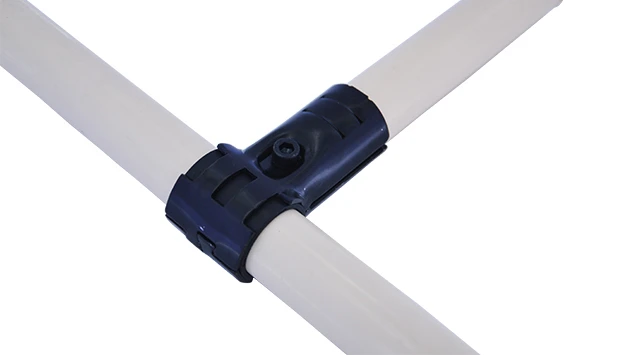
Walk into any busy factory, and you'll notice a quiet battle happening every minute: the race to keep assembly lines moving, meet production targets, and stay ahead of deadlines. For workers on the floor, much of that battle plays out in the small, repetitive tasks—like piecing together workbenches, material racks, or conveyor systems using lean pipe structures. Until recently, those tasks often meant wrestling with stubborn joints, fumbling for tools, and double-checking alignments. But what if there was a component that could turn those frustrating minutes into smooth, efficient seconds? Enter the one way rotatory straight lean pipe joint—a simple yet revolutionary part that's quietly transforming how factories build and adapt their workspaces.
The Hidden Cost of Assembly Inefficiency
To understand why these rotatory joints matter, let's start with the problem they solve: wasted time. In lean manufacturing, every second counts. A single assembly line might require dozens of custom structures—workbenches for workers, flow racks for parts, or turnover trolleys for material transport. Traditionally, building these structures meant using fixed lean pipe joints. These joints, while sturdy, came with a catch: they required precise alignment, often needed tools like wrenches or hex keys, and left little room for error. A misaligned joint could throw off an entire rack, forcing workers to disassemble and start over.
Consider Maria, a production lead at a mid-sized electronics factory. Last year, her team was tasked with reconfiguring three workbenches to accommodate a new circuit board assembly process. Using standard fixed joints, the job took two workers a full shift—eight hours—to complete. "We spent half the time adjusting the pipes," she recalls. "One joint was cross-threaded, so we had to cut the pipe and start over. By the end, we were behind schedule, and the team on the next shift had to wait for the workbenches to be ready."
Maria's experience isn't unique. Across industries, assembly inefficiencies add up. A 2023 survey by the Manufacturing Efficiency Institute found that factory teams spend an average of 12% of their weekly hours on rework or adjustments related to lean pipe structures. That's nearly a full workday lost to tasks that should be quick and straightforward. And in today's fast-paced manufacturing environment, where product lines change quarterly (or even monthly), the ability to adapt quickly isn't just a luxury—it's a competitive necessity.
Meet the Game-Changer: One Way Rotatory Straight Lean Pipe Joints
So, what makes the one way rotatory straight lean pipe joint different? Let's break it down. Unlike fixed joints, which lock into place with screws or bolts, these rotatory joints use a simple, spring-loaded mechanism. Picture a joint with a cylindrical body that fits over the end of a lean pipe. On one side, a rotating collar allows the pipe to swivel into position—hence "one way rotatory." Once aligned, a quick twist locks the joint in place, no tools required. It's like a click-and-lock system for industrial structures.
The design is deceptively simple, but the impact is profound. These joints eliminate three major time drains: tool dependency, alignment guesswork, and rework. Let's take tool dependency first. With traditional joints, workers need to carry wrenches or Allen keys to tighten connections. Lose a tool, and the whole process grinds to a halt. Rotatory joints? They're entirely hand-operated. A worker can tighten or loosen them in seconds, even with gloves on.
Then there's alignment. Fixed joints often require pipes to be perfectly straight or at exact angles (45°, 90°, etc.). If a pipe is slightly bent or a joint is off by a few degrees, the structure wobbles. Rotatory joints, with their swiveling collar, let workers adjust the pipe's angle during assembly. Once it's in the right position, the lock holds it firm. No more measuring twice and cutting once—just intuitive, on-the-fly adjustments.

How It Works: The Mechanics Behind the Magic
Let's get a bit technical (but don't worry—we'll keep it simple). The one way rotatory straight lean pipe joint is typically made from high-grade steel, with a chrome plating that resists corrosion (hence the "chrome" variant you might see from suppliers). Inside the joint, a series of ball bearings allows the collar to rotate smoothly around the pipe. When you twist the collar clockwise, it engages a set of teeth that bite into the pipe's surface, creating a friction lock. Twist it counterclockwise, and the teeth disengage, letting the pipe rotate freely.
What's clever about this design is its balance of flexibility and strength. The lock is tight enough to hold heavy loads—up to 200 kg per joint, depending on the model—yet easy enough to release that even a new worker can operate it. And because the rotation is "one way," it prevents over-tightening. Unlike fixed joints, which can strip threads if twisted too hard, these rotatory joints have a built-in stop that prevents damage.
Compatibility is another plus. These joints work with standard lean pipes—whether they're the classic PE-coated steel pipes, aluminum lean pipes, or even stainless steel variants. That means factories don't have to replace their existing pipe inventory to upgrade. Just swap out the old joints for the new rotatory ones, and you're ready to go.

Tangible Benefits for Your Factory
So, what do these features translate to on the factory floor? Let's quantify the benefits. The most obvious is time savings. In internal tests by a leading lean pipe supplier, teams using rotatory joints assembled a basic workbench (single deck, no casters) in 22 minutes—compared to 58 minutes with fixed joints. That's a 62% reduction in assembly time. For a factory building 10 workbenches a month, that's over 6 hours saved per month—time that can be redirected to more critical tasks, like training or quality checks.
Then there's labor efficiency. With fixed joints, complex structures often required two workers: one to hold the pipe, the other to tighten the joint. Rotatory joints are so easy to use that a single worker can assemble a small rack or trolley alone. Take the example of a material rack with three rows and three floors—a common setup for storing small parts. With fixed joints, two workers might take 90 minutes. With rotatory joints? One worker can build it in 40 minutes. That's not just faster—it frees up another worker to handle other tasks.
Durability shouldn't be overlooked, either. Chrome-plated steel resists rust and wear, even in busy factories where structures are moved or adjusted regularly. Unlike plastic joints, which can crack under heavy loads, these metal rotatory joints hold up in high-stress environments. A study by the Lean Manufacturing Association found that rotatory joints had a 95% retention rate after 1,000 adjustments—meaning they're built to last, even with frequent reconfigurations.
Finally, there's the "lean" benefit: adaptability. In today's manufacturing landscape, product lines change rapidly. A factory might produce smartphones one quarter and smartwatches the next, requiring entirely different workbench layouts. Rotatory joints make it easy to disassemble and rebuild structures. Maria's team, after switching to rotatory joints, recently reconfigured those same three workbenches in just two hours—with one worker. "It was night and day," she says. "We didn't even need to take a lunch break. The joints just clicked into place."
Real-World Impact: Case Studies
Case Study 1: Automotive Parts Supplier Cuts Assembly Time by 55%
A large automotive parts supplier in Michigan was struggling with slow setup times for their sub-assembly lines. They used over 50 flow racks to transport parts to the main assembly line, and each rack required monthly adjustments to match new part sizes. With fixed joints, adjusting a single rack took 45 minutes. After switching to one way rotatory straight lean pipe joints, the time dropped to 20 minutes per rack. For 50 racks, that's a monthly savings of 12.5 hours—enough to add an extra production run each week. "We used to schedule rack adjustments during off-hours to avoid disrupting production," says the plant manager. "Now we can do it during the day, with no downtime."
Case Study 2: Small Electronics Workshop Scales Production
A small electronics workshop in California, with just 15 employees, needed to expand production to meet a surge in orders. To do this, they needed to build 8 new workbenches and 4 flow racks. With a tight budget and limited labor, they were worried the project would take weeks. Using rotatory joints, they completed the entire project in three days—with two workers. "We thought it would take a week minimum," says the owner. "The rotatory joints let us build a workbench in under an hour. We even had time to test the new setup before the first order came in."
Comparing Joints: Why Rotatory Beats Traditional
Still not convinced? Let's put it all together with a side-by-side comparison. Below is a table showing how one way rotatory straight lean pipe joints stack up against traditional fixed joints in key areas:
| Metric | Traditional Fixed Joints | One Way Rotatory Straight Lean Pipe Joints |
|---|---|---|
| Assembly Time (per joint) | 3-5 minutes (with tools) | 30-60 seconds (tool-free) |
| Workers Required per Structure | 2 (one to hold, one to tighten) | 1 (single-person assembly) |
| Adjustments Before Locking | Limited (requires disassembly) | Unlimited (swivel to align, then lock) |
| Tool Dependency | Requires wrenches/hex keys | Tool-free (hand-operated) |
| Error Rate (misalignments) | 15% (per 100 joints) | 2% (per 100 joints) |
| Durability (after 1,000 adjustments) | 70% retention rate | 95% retention rate |
The numbers speak for themselves. Rotatory joints aren't just slightly better—they're dramatically more efficient across every metric that matters to factories. Whether you're a large manufacturer or a small workshop, the time and labor savings add up quickly.
Beyond the Joint: Building a Leaner Future
One way rotatory straight lean pipe joints are more than just a better mousetrap—they're a stepping stone to a leaner, more agile factory. When assembly times drop, factories can respond faster to changes in demand. Need to add a new workbench for a rush order? Do it in an hour. Want to rearrange a flow rack to reduce bottlenecks? Do it during a lunch break. This agility isn't just convenient—it's a competitive advantage.
These joints also play well with other lean tools. For example, they pair seamlessly with aluminum profiles and aluminum extrusion profiles, which are lightweight yet strong. By combining rotatory joints with aluminum profiles, factories can build structures that are both easy to assemble and highly adaptable. A workbench made with aluminum profiles and rotatory joints can be adjusted for height, width, or depth in minutes—no cutting or welding required.
And let's not forget the human element. Frustration and fatigue from fighting with stubborn joints can lead to lower morale and higher turnover. Rotatory joints reduce that stress, making the job easier and more satisfying for workers. When Maria's team switched to rotatory joints, she noticed a shift in attitude. "People weren't dreading setup days anymore," she says. "They actually volunteered to help, because it was quick and painless. That's the kind of culture change that makes a factory run better."
Conclusion: The Small Part That Makes a Big Difference
In the world of manufacturing, it's often the smallest parts that make the biggest impact. One way rotatory straight lean pipe joints might not grab headlines, but they're quietly revolutionizing how factories build, adapt, and thrive. By cutting assembly time, reducing labor needs, and boosting adaptability, these joints help factories live up to the promise of lean manufacturing: doing more with less.
For factory managers, the message is clear: investing in better joints isn't a luxury—it's a necessity. The time and labor savings alone justify the switch, and the long-term benefits—happier workers, faster response to change, and a more competitive edge—are priceless. As Maria puts it: "We used to see assembly as a chore. Now, with these joints, it's just another part of the day—quick, easy, and done right the first time."
So, the next time you walk through a factory, take a closer look at those lean pipe structures. The joints holding them together might just be the unsung heroes of the assembly line—proving that sometimes, the simplest innovations are the most powerful.