- Company Articles
- Products and Technology
- Product knowledge
- One Way Rotatory Straight Lean Pipe Joints vs Magnetic Connectors: Which Is Better?

One Way Rotatory Straight Lean Pipe Joints vs Magnetic Connectors: Which Is Better?
Related Product
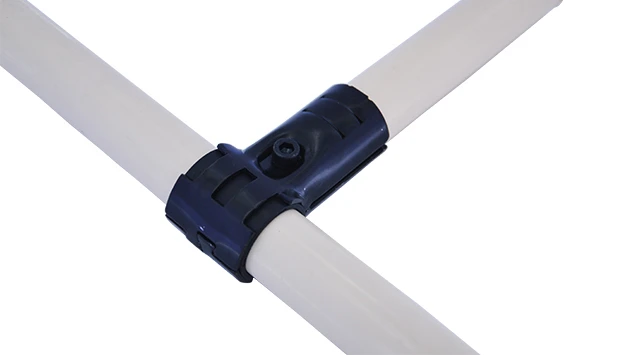
One Way Rotatory Straight Lean Pipe Joint
Two way lean pipe joint for 2 pcs 28MM lean pipe connection in straight angle with rotatory fucntion, which used widely in workbench, flow rack, hand trolley frame connection.
Step onto any factory floor today, and you'll quickly realize that the backbone of efficient production isn't just the machines—it's the quiet infrastructure holding everything together. From the workbenches where technicians assemble components to the roller tracks that keep materials flowing, how these systems connect directly impacts workflow, adaptability, and your team's daily productivity. At the center of this infrastructure are connectors—the small but critical components that turn pipes and profiles into functional workspaces. Today, we're putting two heavyweights head-to-head: One Way Rotatory Straight Lean Pipe Joints and Magnetic Connectors. Which deserves a spot in your lean manufacturing setup? Let's explore.
The Foundation: Why Connectors Matter in Lean Systems
Lean manufacturing thrives on eliminating waste—whether it's time, materials, or unnecessary complexity. That's why lean pipe systems have become industry staples: they're modular, reusable, and adaptable. But even the best aluminum lean pipe or stainless steel roller track is only as good as the connectors holding it together. These tiny components dictate how quickly you can reconfigure a line, how much weight your workbench can support, and how easily your team can adapt to new production needs. Choose the wrong connector, and you'll end up with wobbly structures, frustrating downtime, or wasted spending on frequent replacements.
One Way Rotatory Straight Lean Pipe Joints: The Mechanical Workhorses
If lean pipe systems were a building, One Way Rotatory Straight Lean Pipe Joints would be the steel beams. These mechanical connectors have been around for decades, trusted by manufacturers for their reliability and strength. Typically made from zinc-plated steel or aluminum alloy, they're designed to join lean pipes at precise angles with a unique rotational feature that simplifies assembly.
How They Work: Precision in Every Turn
Imagine a cylindrical joint with a hollow core that slides over the end of a lean pipe. Its defining feature? A one-directional rotating collar that lets you swivel the joint into position before locking it down—no more struggling to align pipes at awkward angles. Once set, a setscrew or cam lever tightens the joint around the pipe, creating a rigid connection that won't shift under pressure. This design makes them perfect for structures that need to stay rock-solid, like heavy-duty workbenches or permanent roller track systems moving consistent loads.
The Advantages: Why Factories Rely On Them
Unmatched Load Capacity: These joints are built for heavy lifting. A well-made steel lean pipe joint can easily support hundreds of pounds, making them ideal for workbenches holding heavy machinery or roller tracks carrying metal components. In automotive plants, where engine parts weighing 50+ pounds glide along roller tracks daily, mechanical joints ensure zero sagging or misalignment.
Long-Term Durability: Unlike plastic components that degrade over time, metal lean pipe joints withstand years of use. They resist corrosion (especially stainless steel variants), handle temperature fluctuations, and tolerate the daily bumps and vibrations of factory life. Many manufacturers report using the same joints for 5+ years without replacement.
Compatibility with Lean Pipe and Accessories: These joints play well with standard lean pipe, aluminum lean pipe, and even stainless steel pipe series. Pair them with roller track connectors, caster wheels, or workbench accessories, and you've got a versatile system that grows with your needs. A single joint type can build everything from a simple material rack to a complex assembly line workstation.
The Drawbacks: Where Mechanical Joints Fall Short
Assembly Time Adds Up: Every joint requires tools—usually an Allen wrench—to tighten. Building a multi-tier material rack with 3 rows and 3 floors might take a team hours, not minutes. For facilities with frequent line reconfigurations, this becomes a bottleneck.
Limited Adjustability: Once locked, these joints aren't easy to reposition. Need to tweak your workbench height or reroute a roller track? You'll spend time loosening each joint, adjusting, and retightening—a process that disrupts production flow.
Potential Pipe Damage: Over-tightening setscrews can leave indentations on aluminum lean pipe, weakening it over repeated adjustments. This isn't a problem for permanent setups, but it limits pipe reuse in flexible environments.

Magnetic Connectors: The Flexible Upstarts
Enter magnetic connectors—the new kids on the lean manufacturing block. Using high-strength neodymium magnets, these connectors eliminate the need for tools, screws, or clamps. Just align the pipes, let the magnets snap together, and you're done. It's a game-changer for teams prioritizing speed and adaptability.
How They Work: Magnetism Meets Manufacturing
Each magnetic connector has embedded rare-earth magnets arranged to create a powerful, uniform attraction. Guide pins ensure pipes align correctly, while some models include secondary locking clips for extra security. The result? A connection that's strong enough for light to medium loads but easy enough to break apart with a firm pull. This "snap-and-go" design is revolutionizing how teams build and reconfigure workspaces.
The Advantages: Speed and Flexibility Redefined
Tool-Free Assembly in Minutes: Forget hunting for Allen wrenches or dealing with stripped screws. A team can assemble a basic aluminum lean pipe workbench in under 30 minutes with magnetic connectors. When a electronics manufacturer in Texas switched to magnetic connectors, they cut line reconfiguration time from 8 hours to just 2—freeing up their team for more critical tasks.
Endless Reconfigurability: Need to adjust your workbench for a new product size? Simply pull the connectors apart, reposition the pipes, and snap back together. No damage to pipes, no wear on components, and no downtime. This is a lifesaver for contract manufacturers handling multiple client projects monthly.
Gentle on Materials: Magnetic connectors exert even pressure without clamping, making them perfect for delicate aluminum profile or anodized aluminum lean pipe. A medical device manufacturer reported zero pipe damage after 12+ reconfigurations—something they couldn't achieve with traditional lean pipe joints.
The Drawbacks: Where Magnetism Has Limits
Load Capacity Constraints: Even the strongest magnets can't match mechanical joints for heavy loads. A magnetic connection might start to weaken under 100+ pounds or constant vibration—fine for circuit boards, but risky for engine blocks. Most manufacturers cap magnetic connector use at 75 pounds per joint.
Magnet Degradation Over Time: High temperatures, moisture, and strong external magnetic fields can reduce magnet strength over years. A food packaging plant in Florida found their magnetic connectors needed replacement after 3 years of humid conditions—adding long-term costs they hadn't anticipated.
Alignment Challenges: Without precise guide pins, magnets can pull pipes into misaligned positions. A furniture manufacturer reported initial struggles with crooked roller tracks until they switched to magnetic connectors with reinforced alignment guides.

Head-to-Head Comparison: Key Factors That Matter
| Factor | One Way Rotatory Straight Lean Pipe Joints | Magnetic Connectors |
|---|---|---|
| Maximum Load Capacity | 200-500 lbs per joint (steel variants) | 30-75 lbs per joint |
| Assembly Time (Basic Workbench) | 2-3 hours (with tools) | 20-30 minutes (tool-free) |
| Typical Lifespan | 7-10 years (minimal wear) | 3-5 years (magnet degradation) |
| Best For | Heavy machinery, permanent structures, high-vibration environments | Electronics assembly, frequent reconfigurations, light material handling |
| Cost (per Joint) | $3-$8 (steel), $5-$12 (aluminum) | $12-$25 (higher initial cost) |
| Compatibility | Works with all lean pipe types (steel, aluminum, pe-coated) | Best with non-magnetic materials (aluminum lean pipe, plastic-coated steel) |
Real-World Applications: When to Choose Which
Case Study 1: Automotive Plant Relies on Mechanical Joints for Heavy Loads
A Michigan-based automotive supplier needed roller tracks to move transmission housings (250 lbs each) between assembly stations. They tested both connector types and quickly realized magnetic connectors couldn't handle the weight—tracks sagged, leading to misaligned parts. Switching to stainless steel lean pipe joints with one-way rotation solved the problem. The tracks have now run continuously for 4 years with zero alignment issues, saving the plant $120,000 in maintenance costs.
Case Study 2: Electronics Manufacturer Boosts Flexibility with Magnetic Connectors
A California electronics firm producing smart home devices struggled with monthly line reconfigurations for new product launches. Their old process using lean pipe joints took 16 worker-hours per reconfiguration. After switching to magnetic connectors with aluminum lean pipe, they cut that time to 3 hours—saving 520 worker-hours annually. The team now reconfigures lines during breaks instead of overtime, and employee satisfaction scores for "work environment" jumped 23%.
Making Your Decision: Key Questions to Ask
Choosing between these connectors depends on your unique workflow. Ask yourself:
1. What's the Maximum Weight Your Structure Will Support?
If you're moving heavy parts daily, mechanical joints are non-negotiable. For lighter loads (under 75 lbs), magnetic connectors offer flexibility without compromise.
2. How Often Do You Reconfigure Your Line?
Monthly or quarterly changes? Magnetic connectors will save you hours. Rarely reconfigure? Mechanical joints' lower cost and longer lifespan make sense.
3. What Materials Are You Using?
Aluminum lean pipe pairs well with both, but magnetic connectors are gentler on anodized or cosmetic finishes. For stainless steel pipe series, mechanical joints avoid magnet interference.
4. What's Your Long-Term Cost Tolerance?
Magnetic connectors have higher upfront costs but save on labor. Mechanical joints cost less initially but may require pipe replacements sooner if reconfigured often.
The Verdict: It's About Balance, Not Perfection
There's no universal "winner"—the best connector depends on your specific needs. Many forward-thinking facilities use a hybrid approach: mechanical joints for core infrastructure like heavy-duty workbenches and main roller tracks, with magnetic connectors for auxiliary stations that need frequent tweaks. This balances durability where it matters most with flexibility where it's needed most.
Remember, lean manufacturing is about optimizing for your reality. Whether you choose the tried-and-true mechanical reliability of One Way Rotatory Straight Lean Pipe Joints or the innovative flexibility of Magnetic Connectors, the right choice will make your team's work easier, your processes smoother, and your production line ready to adapt to whatever the future brings. After all, in manufacturing, the smallest components often create the biggest impact.