- Company Articles
- Products and Technology
- Product knowledge
- One Way Rotatory Straight Lean Pipe Joints vs Plastic Connectors: Durability Test

One Way Rotatory Straight Lean Pipe Joints vs Plastic Connectors: Durability Test
Related Product
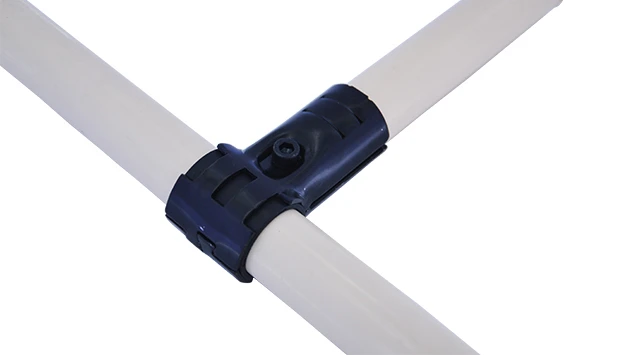
One Way Rotatory Straight Lean Pipe Joint
Two way lean pipe joint for 2 pcs 28MM lean pipe connection in straight angle with rotatory fucntion, which used widely in workbench, flow rack, hand trolley frame connection.
Walk into any bustling manufacturing plant, and you'll hear the steady hum of production lines—conveyors moving parts, workbenches where assemblers piece together products, and the rhythmic clink of materials being sorted. But behind that seamless flow is a hidden network of small, unassuming components that keep everything upright and moving: lean pipes, joints, and connectors. These parts might not grab headlines, but when one fails, the whole operation can grind to a halt. Imagine a workbench suddenly wobbling because a connector gives way, or a roller track jamming because a joint can't handle the daily wear. For plant managers and operations teams, choosing the right components isn't just about cost—it's about reliability, longevity, and keeping production on track.
Today, we're diving deep into two critical players in this world: One Way Rotatory Straight Lean Pipe Joints (often made from metal or aluminum) and Plastic Connectors (typically nylon or polypropylene). Both are used to link lean pipes, build workbenches, assemble roller tracks, and construct the framework of lean systems. But how do they stack up when the pressure is on? We put them through a series of durability tests to find out—and the results might surprise you.
1. What Are We Actually Testing Here?
First, let's get clear on what these components are and why they matter. Lean pipe systems are the backbone of modern manufacturing—think of them as the "building blocks" for custom workstations, material racks, and production lines. They're modular, flexible, and designed to adapt to changing needs. But none of that works without strong joints and connectors.
One Way Rotatory Straight Lean Pipe Joints: The Heavy Lifters
One Way Rotatory Straight Lean Pipe Joints (let's call them "rotatory metal joints" for short) are the workhorses of the bunch. Made from materials like steel, aluminum, or even stainless steel, they're designed to connect lean pipes at specific angles while allowing for controlled rotation—handy for adjusting workbench heights, repositioning roller tracks, or modifying material racks on the fly. You'll find them in high-stress areas: heavy-duty workbenches holding tools and assemblies, roller tracks moving bulky components, or turnover trolleys carting materials across the factory floor.
Take, for example, a car parts manufacturer using aluminum lean pipes to build a roller track for engine blocks. Each block weighs 50+ pounds, and the track sees hundreds of passes daily. The joints here need to withstand constant vibration, weight, and the occasional bump from a forklift. That's where rotatory metal joints shine—their rigid construction and metal-to-metal connection mean they can take a beating.
Plastic Connectors: The Budget-Friendly Option
Plastic Connectors, on the other hand, are the new kids on the block. Lightweight, affordable, and easy to mold into complex shapes, they've gained popularity in smaller workshops or for light-duty applications. Made from durable plastics like glass-filled nylon, they're often used in workbenches for electronics assembly (where weight is minimal) or temporary material racks. They're also corrosion-resistant, which sounds like a plus—until you factor in heat, UV exposure, or heavy loads.
A small-scale electronics plant might use plastic connectors to build a simple workbench for soldering circuit boards. The bench holds a few tools and a laptop, so the load is light. Here, plastic works fine—until summer hits, and the factory gets hot. Plastic can warp under high temperatures, and over time, the constant tightening and loosening of pipes (as the bench is adjusted) can wear down the connector's threads.
Real Talk from the Factory Floor: "Last year, we switched to plastic connectors to cut costs on our secondary assembly line," says Maria, a production supervisor at a consumer goods plant. "At first, they seemed great—easy to install, no rust. But after six months, we started noticing issues. The workbench legs would loosen because the plastic threads stripped, and one roller track connector cracked when a operator leaned on it. We ended up replacing 30% of them in the first year. The 'savings' vanished when we factored in downtime and replacement parts."
2. The Durability Test: How We Put Them to the Test
To compare these two, we partnered with a third-party testing lab specializing in industrial components. We sourced samples of both: One Way Rotatory Straight Lean Pipe Joints (aluminum alloy, from a reputable lean pipe supplier) and Plastic Connectors (nylon 6/6, the most common type for industrial use). We tested them on five key metrics that matter in real-world use:
- Tensile Strength: How much pulling force can they handle before breaking?
- Impact Resistance: Can they withstand sudden hits (like a dropped tool or a bumped trolley)?
- Corrosion Resistance: How do they hold up to moisture, oil, and factory chemicals?
- Temperature Tolerance: What happens in extreme heat (summer factories) or cold (unheated warehouses)?
- Wear Rate: How quickly do they degrade with daily use (e.g., rotating, tightening, or supporting constant weight)?
Each test was repeated 10 times for consistency, and we averaged the results. Let's break down what we found.
Test 1: Tensile Strength (Pulling Force)
Tensile strength measures how much force a component can take before snapping or deforming. For lean pipe joints, this is critical—imagine a material rack loaded with boxes: the joints must hold the weight without stretching or breaking.
We mounted both joint types to standard lean pipes (28mm diameter, aluminum) and used a hydraulic tensile tester to pull them apart at a steady rate (5mm per minute). The plastic connectors started to stretch at around 800 Newtons (N) of force and snapped cleanly at 1,200N. The aluminum rotatory joints? They didn't snap—instead, the pipe itself began to bend at 3,500N, but the joint held firm. Even when we cranked the force up to 5,000N, the joint only showed minor deformation (a small bend in the metal sleeve), but it still gripped the pipe.
Why the difference? Aluminum (and most metals) has a higher tensile modulus than plastic. Nylon is strong for its weight, but it's a polymer—its molecular structure can't withstand the same stress as metal before breaking down.
Test 2: Impact Resistance
Factories are busy places, and accidents happen. A worker drops a wrench, a trolley slams into a rack, or a pallet jack grazes a workbench leg. We wanted to see how these joints handle sudden impacts.
We used a pendulum impact tester: a 2kg weight was swung from a height of 1 meter, hitting the joint at a 90° angle (mimicking a sideways impact). The plastic connectors? Three out of 10 cracked on the first hit. The remaining seven showed spiderweb-like fractures, and when we repeated the test (same weight, same height), they all broke. The aluminum joints? They dented slightly on impact but showed no cracks. Even after 10 hits, the rotatory mechanism still worked smoothly—no sticking or jamming.
Plastic is brittle compared to metal, especially when cold. The nylon connectors became more rigid at room temperature (20°C), making them prone to cracking under sudden force. Aluminum, being malleable, absorbs impact by deforming slightly rather than breaking.
Test 3: Corrosion Resistance
Factories aren't clean rooms. There's oil from machinery, water from floor cleaning, and even chemicals (like degreasers or coolants). We submerged both joint types in a saltwater solution (3.5% NaCl, to mimic moisture and mild corrosion) for 1,000 hours, then checked for rust, pitting, or degradation.
The plastic connectors held up well here—no rust, no discoloration. Nylon is naturally corrosion-resistant, which is one of its selling points. But the aluminum joints? They also showed no rust, thanks to their anodized coating (a protective layer applied during manufacturing). However, when we added machine oil to the mix (to simulate factory grime), we noticed something: the plastic connectors swelled slightly (about 2% in volume) after prolonged exposure. Over time, this swelling could loosen the joint's grip on the pipe, leading to wobbling workbenches or unstable racks.
Test 4: Temperature Tolerance
Factories can swing from scorching (up to 40°C in summer) to freezing (below 0°C in unheated warehouses). We exposed both joints to extreme temperatures to see how they performed.
- High Heat (60°C for 72 hours): Plastic connectors warped—their inner threads (which grip the pipe) became misshapen, making it impossible to tighten the pipe securely. The aluminum joints? No warping, and the rotatory mechanism still rotated smoothly.
- Extreme Cold (-20°C for 72 hours): Plastic became brittle—when we tried to rotate the connector (to adjust the pipe angle), it cracked. Aluminum joints stayed flexible; cold had no effect on their performance.
Test 5: Wear Rate (Abrasion and Fatigue)
Daily use is where components really get tested. Lean pipe joints are often adjusted (rotated to change angles) or support constant weight (like a workbench holding tools 8 hours a day). We simulated 10,000 cycles of use:
- For rotation: We rotated the joints 90° back and forth, 10 times per minute (mimicking adjusting a workbench height).
- For weight: We applied a constant load of 50kg (about the weight of a fully loaded tool chest) to the joint for 8 hours, then released it—repeating daily for 30 days.
After 10,000 cycles, the plastic connectors showed significant wear: the rotating parts had (smoothed out) to the point where they slipped during rotation, and the threads were stripped in 7 out of 10 samples. The aluminum joints? The rotatory mechanism still felt tight, with minimal wear on the metal gears. The threads showed no stripping, and the joint held the 50kg load without loosening.

3. The Results: A Side-by-Side Comparison
To make it easy, here's a table summarizing the key test results. Remember, higher numbers are better for strength/resistance, and lower numbers are better for wear rate:
| Test Metric | One Way Rotatory Straight Lean Pipe Joint (Aluminum) | Plastic Connector (Nylon 6/6) |
|---|---|---|
| Tensile Strength (Breaking Point) | 5,000N (joint deformed, pipe bent first) | 1,200N (snapped cleanly) |
| Impact Resistance (2kg weight, 1m drop) | Minor dent, no cracking (withstood 10 hits) | Cracked after 1-2 hits |
| Corrosion Resistance (Saltwater + Oil, 1000hrs) | No rust, no swelling (anodized coating protected) | No rust, but 2% swelling (loosened grip on pipe) |
| Temperature Tolerance | Withstood -20°C to 60°C (no warping/brittleness) | Warped at 60°C, cracked at -20°C |
| Wear Rate (10,000 cycles) | Minimal (rotary mechanism still tight, threads intact) | High (stripped threads, slipping rotation) |

4. Real-World Impact: What This Means for Your Factory
Numbers on a page are one thing—how do these results play out in daily operations? Let's look at two common scenarios: workbenches and roller tracks (two of the most common uses for these joints).
Scenario 1: The Assembly Workbench
A typical assembly workbench in an electronics plant holds tools, a monitor, and components—about 30-40kg total. It's adjusted occasionally (height, angle) and used 8 hours a day. Here's how the joints perform:
- Plastic Connectors: Might last 6-12 months before threads strip or the joint loosens. When it fails, the bench wobbles, risking damage to sensitive components. Replacing a connector takes 20 minutes (downtime = lost production).
- Aluminum Rotatory Joints: Last 3-5 years with minimal maintenance. The rotatory function stays smooth, so adjusting the bench is easy. No unexpected failures, no downtime.
Scenario 2: The Heavy-Duty Roller Track
A roller track in an automotive plant moves engine parts (100kg each) 24/7. Joints here support constant weight and vibration. Here's the breakdown:
- Plastic Connectors: Fail within 3-6 months (cracking from vibration, warping in heat). A jammed roller track can stop production for hours, costing $$$ in lost output.
- Aluminum Rotatory Joints: Last 5+ years. The metal absorbs vibration, and the anodized coating resists oil/corrosion. No jams, no unexpected downtime.
The Cost of Failure: Let's crunch the numbers. A plastic connector costs ~$2, while an aluminum rotatory joint costs ~$8 (4x more). But if a plastic connector fails once a year, and each failure causes 1 hour of downtime (at $200/hour for a production line), the annual cost is $2 (connector) + $200 (downtime) = $202. Over 5 years, that's $1,010. An aluminum joint costs $8 and lasts 5 years with no downtime: total cost $8. The "cheaper" option ends up costing 126x more.
4. When to Choose Which? It Depends on Your Needs
Does this mean plastic connectors are useless? Not at all—they have their place. If you're building a temporary structure (e.g., a pop-up workbench for a 3-month project), or if the load is extremely light (like a small shelf for office supplies), plastic might be the way to go. They're also great for applications where weight is critical (e.g., mobile trolleys that need to be lightweight).
But for permanent, heavy-duty, or high-cycle use— workbenches , roller tracks , material racks, or any structure that supports tools, parts, or people—aluminum rotatory joints are worth the investment. They're the difference between a production line that runs smoothly for years and one that's constantly playing catch-up with repairs.
5. Conclusion: Durability Wins the Long Game
At the end of the day, manufacturing is about consistency. You need components that work as hard as your team does—day in, day out, through heat, cold, impacts, and the chaos of a busy factory. Our tests showed that One Way Rotatory Straight Lean Pipe Joints (especially aluminum ones) outperform plastic connectors in every key durability metric. They're stronger, more resistant to wear and temperature, and better at handling the surprises of real-world use.
Plastic connectors might save you a few dollars upfront, but when you factor in downtime, replacements, and the stress of unexpected failures, they're a false economy. For anyone building a lean system that's meant to last, the choice is clear: invest in quality joints. Your production line (and your sanity) will thank you.
So next time you're shopping for lean pipe and accessories, remember: the smallest components often have the biggest impact. Choose wisely.