- Company Articles
- Products and Technology
- Product knowledge
- One Way Rotatory Straight Lean Pipe Joints vs Standard Pipe Fittings: Differences

One Way Rotatory Straight Lean Pipe Joints vs Standard Pipe Fittings: Differences
Related Product
One Way Rotatory Straight Lean Pipe Joint
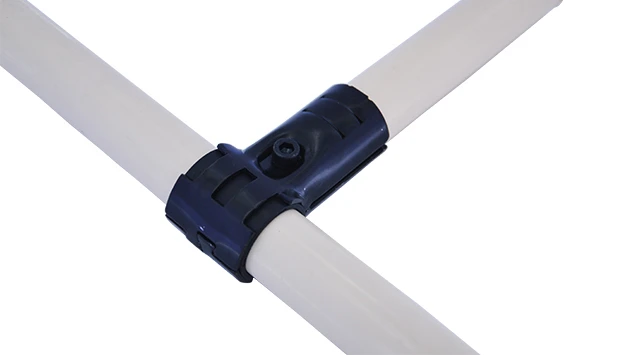
Two way lean pipe joint for 2 pcs 28MM lean pipe connection in straight angle with rotatory fucntion, which used widely in workbench, flow rack, hand trolley frame connection.
Introduction: The Unsung Heroes of Lean Manufacturing
Walk into any modern factory or assembly plant, and you'll likely notice a quiet revolution happening on the shop floor. It's not in the flashy robots or high-tech machinery—but in the humble structures that hold everything together: the workbenches where operators assemble components, the material racks that feed production lines, and the roller tracks that move parts from station to station. These are the backbone of lean manufacturing, and at their core lie two unassuming yet critical components: pipe joints and fittings.
Lean manufacturing isn't just a buzzword; it's a philosophy centered on eliminating waste, streamlining workflows, and empowering teams to work smarter. And while big-picture strategies get the spotlight, the smallest tools often make the biggest difference. Imagine a workbench that can't adjust to a new product line, or a material rack that takes hours to reconfigure—suddenly, "waste" isn't just a concept; it's a tangible frustration for the operator stuck dismantling bolts or wrestling with rigid structures. That's where the choice between one way rotatory straight lean pipe joints and standard pipe fittings becomes more than a technical detail—it's a decision that shapes daily productivity, adaptability, and even employee morale.
In this article, we'll dive deep into these two types of connectors, unpacking their design, functionality, and real-world impact. We'll explore why a one way rotatory joint might transform a chaotic assembly line into a smooth, flexible workspace, and when sticking with tried-and-true standard fittings still makes sense. Along the way, we'll touch on key elements of lean pipe systems, from the lightweight strength of aluminum lean pipe to the practicality of a well-designed workbench. By the end, you'll understand not just the differences between these fittings, but how to choose the right one for your unique needs.
Lean manufacturing isn't just a buzzword; it's a philosophy centered on eliminating waste, streamlining workflows, and empowering teams to work smarter. And while big-picture strategies get the spotlight, the smallest tools often make the biggest difference. Imagine a workbench that can't adjust to a new product line, or a material rack that takes hours to reconfigure—suddenly, "waste" isn't just a concept; it's a tangible frustration for the operator stuck dismantling bolts or wrestling with rigid structures. That's where the choice between one way rotatory straight lean pipe joints and standard pipe fittings becomes more than a technical detail—it's a decision that shapes daily productivity, adaptability, and even employee morale.
In this article, we'll dive deep into these two types of connectors, unpacking their design, functionality, and real-world impact. We'll explore why a one way rotatory joint might transform a chaotic assembly line into a smooth, flexible workspace, and when sticking with tried-and-true standard fittings still makes sense. Along the way, we'll touch on key elements of lean pipe systems, from the lightweight strength of aluminum lean pipe to the practicality of a well-designed workbench. By the end, you'll understand not just the differences between these fittings, but how to choose the right one for your unique needs.
The Basics: What Are Lean Pipe Systems, Anyway?
Before we jump into joints and fittings, let's ground ourselves in the foundation: lean pipe systems. At their simplest, these are modular structures built from pipes and connectors, used to create everything from workbenches and material racks to conveyor systems and turnover trolleys. What makes them "lean" is their ability to adapt quickly to changing needs—no welding, no permanent fixtures, just components that snap together and reconfigure in minutes.
Traditional lean pipes were often made of steel, but today, aluminum lean pipe has emerged as a game-changer. Lightweight yet surprisingly strong, aluminum resists corrosion, reduces operator fatigue during setup, and pairs seamlessly with modern accessories. It's the reason you'll find aluminum lean pipe in industries from electronics manufacturing (where cleanliness and precision matter) to automotive (where durability is non-negotiable).
But a pipe is just a tube without the right joint. Whether you're building a workbench for assembling circuit boards or a flow rack for moving heavy parts, the connector determines how flexible, stable, and user-friendly the structure will be. That's where one way rotatory straight lean pipe joints and standard fittings enter the picture—they're the "hinges" of lean systems, dictating how much a structure can bend, twist, or stay put.
Traditional lean pipes were often made of steel, but today, aluminum lean pipe has emerged as a game-changer. Lightweight yet surprisingly strong, aluminum resists corrosion, reduces operator fatigue during setup, and pairs seamlessly with modern accessories. It's the reason you'll find aluminum lean pipe in industries from electronics manufacturing (where cleanliness and precision matter) to automotive (where durability is non-negotiable).
But a pipe is just a tube without the right joint. Whether you're building a workbench for assembling circuit boards or a flow rack for moving heavy parts, the connector determines how flexible, stable, and user-friendly the structure will be. That's where one way rotatory straight lean pipe joints and standard fittings enter the picture—they're the "hinges" of lean systems, dictating how much a structure can bend, twist, or stay put.

What Are One Way Rotatory Straight Lean Pipe Joints?
Let's start with the newer, more specialized option: the one way rotatory straight lean pipe joint. If standard fittings are the "fixed" backbone of traditional structures, these joints are the "dynamic" problem-solvers of modern lean systems. But what exactly makes them "one way rotatory," and how do they work?
At first glance, a one way rotatory joint looks similar to a standard straight connector—it's a small, cylindrical piece designed to link two lean pipes end-to-end. But inside, it's a marvel of simplicity and engineering. Unlike fixed joints, which lock pipes in a rigid straight line, these joints feature an internal mechanism that allows controlled rotation in one direction while preventing movement in the other. Think of it like a ratchet wrench: twist it clockwise, and it spins freely; try to twist it counterclockwise, and it locks tight.
How does this mechanism work? Most one way rotatory joints use a spring-loaded pawl (a small, tooth-like component) that engages with notches on an inner sleeve. When you rotate the joint in the "allowed" direction, the pawl slides over the notches, creating a smooth, almost silent movement. Rotate it the opposite way, and the pawl catches in a notch, stopping rotation cold. This one-way action is key— it lets operators adjust angles or positions with minimal effort, then locks the structure in place to handle weight and vibration.
But why would you need a joint that rotates only one way? Consider a roller track on a production line. Parts need to flow forward toward the next station, but you don't want them sliding back and causing jams. A one way rotatory joint can angle the track slightly downward, using gravity to move parts forward, while the locking mechanism prevents the track from tilting backward under the weight of the load. Or picture a workbench where the height needs to adjust for different operators—with a rotatory joint, an operator can lift the tabletop to their ideal height, and the joint locks automatically, no extra bolts or clamps required.
These joints also shine in scenarios where frequent reconfiguration is needed. A manufacturer producing seasonal products, for example, might switch from assembling small gadgets in summer to larger appliances in winter. With standard fittings, reconfiguring the workbench would mean unscrewing each joint, realigning pipes, and retightening—wasting precious time. With one way rotatory joints, the process is as simple as rotating the joint to release tension, adjusting the angle, and letting the mechanism lock back into place. It's tool-less, fast, and frustration-free.
At first glance, a one way rotatory joint looks similar to a standard straight connector—it's a small, cylindrical piece designed to link two lean pipes end-to-end. But inside, it's a marvel of simplicity and engineering. Unlike fixed joints, which lock pipes in a rigid straight line, these joints feature an internal mechanism that allows controlled rotation in one direction while preventing movement in the other. Think of it like a ratchet wrench: twist it clockwise, and it spins freely; try to twist it counterclockwise, and it locks tight.
How does this mechanism work? Most one way rotatory joints use a spring-loaded pawl (a small, tooth-like component) that engages with notches on an inner sleeve. When you rotate the joint in the "allowed" direction, the pawl slides over the notches, creating a smooth, almost silent movement. Rotate it the opposite way, and the pawl catches in a notch, stopping rotation cold. This one-way action is key— it lets operators adjust angles or positions with minimal effort, then locks the structure in place to handle weight and vibration.
But why would you need a joint that rotates only one way? Consider a roller track on a production line. Parts need to flow forward toward the next station, but you don't want them sliding back and causing jams. A one way rotatory joint can angle the track slightly downward, using gravity to move parts forward, while the locking mechanism prevents the track from tilting backward under the weight of the load. Or picture a workbench where the height needs to adjust for different operators—with a rotatory joint, an operator can lift the tabletop to their ideal height, and the joint locks automatically, no extra bolts or clamps required.
These joints also shine in scenarios where frequent reconfiguration is needed. A manufacturer producing seasonal products, for example, might switch from assembling small gadgets in summer to larger appliances in winter. With standard fittings, reconfiguring the workbench would mean unscrewing each joint, realigning pipes, and retightening—wasting precious time. With one way rotatory joints, the process is as simple as rotating the joint to release tension, adjusting the angle, and letting the mechanism lock back into place. It's tool-less, fast, and frustration-free.
Real-World Example: The Electronics Assembly Line
A mid-sized electronics company was struggling with frequent product changes. Their old workbenches, built with standard fixed joints, took 2-3 hours to reconfigure for new circuit board sizes. Operators spent more time adjusting the bench than assembling parts, and deadlines were slipping. After switching to one way rotatory straight lean pipe joints and lightweight aluminum lean pipe, reconfiguration time dropped to 15 minutes. "It's like night and day," said one lead operator. "Now, when the design team sends a new blueprint, we don't dread the setup—we just rotate the joints, adjust the shelves, and get back to work."

What Are Standard Pipe Fittings? The Tried-and-True Workhorses
If one way rotatory joints are the new kids on the block, standard pipe fittings are the veterans—reliable, straightforward, and deeply familiar to anyone who's built a lean structure. These are the fixed connectors that have been the backbone of factory setups for decades: 90-degree elbows, T-joints, straight couplers, and flanges, all designed to lock pipes into rigid, unchanging angles.
Standard fittings are simple by design. Most are made of metal (often steel or zinc-plated alloy) and feature threaded ends or set screws that clamp tightly around lean pipes. To assemble a structure, you align two pipes, slide the fitting over the ends, and tighten the screws with a wrench—creating a bond that's meant to stay put. There's no fancy internal mechanism here, no moving parts, just brute force and friction holding everything together.
This simplicity is their greatest strength—and sometimes their weakness. For structures that rarely change, standard fittings are ideal. Think of a permanent material rack in a warehouse, holding the same boxes day in and day out, or a workbench dedicated to a single, high-volume product. In these cases, rigidity is an asset. A fixed 90-degree joint won't accidentally shift under heavy loads, and a threaded coupler won't loosen over time from vibration. There's comfort in knowing the structure will be exactly where you left it, even after months of use.
Standard fittings also excel in high-stress environments. Heavy-duty applications, like supporting large machinery or storing metal parts, demand connectors that can handle constant weight and strain. Fixed joints distribute load evenly across the pipe, reducing the risk of bending or failure. They're also often cheaper upfront than specialized rotatory joints, making them a budget-friendly choice for static setups.
But their rigidity becomes a liability when flexibility is needed. Let's say a bakery uses a standard-fitted rack to hold ingredient bins, but suddenly needs to switch to taller bins for a holiday rush. With fixed joints, the team would have to disassemble the entire rack, buy longer pipes, and rebuild from scratch—wasting time and materials. Or consider a small workshop where space is tight: a workbench built with standard fittings can't fold or adjust to make room for a new tool, forcing operators to work around it instead of with it.
Another downside? Installation and maintenance take more effort. Tightening set screws requires tools, and over time, threads can strip or screws can rust, making disassembly a headache. In a lean system focused on minimizing waste, every minute spent wrestling with a stuck bolt is a minute lost to production.
Standard fittings are simple by design. Most are made of metal (often steel or zinc-plated alloy) and feature threaded ends or set screws that clamp tightly around lean pipes. To assemble a structure, you align two pipes, slide the fitting over the ends, and tighten the screws with a wrench—creating a bond that's meant to stay put. There's no fancy internal mechanism here, no moving parts, just brute force and friction holding everything together.
This simplicity is their greatest strength—and sometimes their weakness. For structures that rarely change, standard fittings are ideal. Think of a permanent material rack in a warehouse, holding the same boxes day in and day out, or a workbench dedicated to a single, high-volume product. In these cases, rigidity is an asset. A fixed 90-degree joint won't accidentally shift under heavy loads, and a threaded coupler won't loosen over time from vibration. There's comfort in knowing the structure will be exactly where you left it, even after months of use.
Standard fittings also excel in high-stress environments. Heavy-duty applications, like supporting large machinery or storing metal parts, demand connectors that can handle constant weight and strain. Fixed joints distribute load evenly across the pipe, reducing the risk of bending or failure. They're also often cheaper upfront than specialized rotatory joints, making them a budget-friendly choice for static setups.
But their rigidity becomes a liability when flexibility is needed. Let's say a bakery uses a standard-fitted rack to hold ingredient bins, but suddenly needs to switch to taller bins for a holiday rush. With fixed joints, the team would have to disassemble the entire rack, buy longer pipes, and rebuild from scratch—wasting time and materials. Or consider a small workshop where space is tight: a workbench built with standard fittings can't fold or adjust to make room for a new tool, forcing operators to work around it instead of with it.
Another downside? Installation and maintenance take more effort. Tightening set screws requires tools, and over time, threads can strip or screws can rust, making disassembly a headache. In a lean system focused on minimizing waste, every minute spent wrestling with a stuck bolt is a minute lost to production.
Head-to-Head: Comparing the Two Types
To truly understand the differences between one way rotatory straight lean pipe joints and standard pipe fittings, let's break them down side by side. The table below compares key factors like flexibility, installation, durability, and cost—so you can see exactly how each performs in real-world scenarios.
As the table shows, there's no "better" option—only the right option for your needs. Rotatory joints thrive in environments where change is constant, while standard fittings shine in stability and cost-effectiveness. The magic happens when you combine them strategically: using rotatory joints for adjustable parts of a workbench and standard fittings for the fixed, load-bearing base, for example.
| Feature | One Way Rotatory Straight Lean Pipe Joints | Standard Pipe Fittings |
|---|---|---|
| Flexibility | High: Allows controlled rotation in one direction; easy to adjust angles or positions without disassembly. Ideal for dynamic setups (e.g., workbenches, roller tracks with variable flow). | Low: Fixed angles (90°, 45°, straight) that can't be adjusted without tools. Best for static structures (e.g., permanent material racks, fixed-height workbenches). |
| Installation Time | Fast: Tool-less assembly; simply slide onto pipes and rotate to lock. Reconfiguration takes minutes (e.g., adjusting a workbench height in 10-15 minutes). | Slow: Requires tools (wrenches, hex keys) to tighten set screws or bolts. Initial setup and reconfiguration take hours (e.g., rebuilding a rack takes 2-3 hours). |
| Durability | Good: Made with reinforced plastic or aluminum; internal mechanisms (pawls, springs) are durable but may wear over time with extreme use (e.g., heavy loads >500 lbs). | Excellent: Metal construction (steel, zinc) with no moving parts; withstands heavy loads and constant vibration. Lasts for years in high-stress environments. |
| Cost | Higher upfront: Specialized design and internal components make them 20-30% more expensive than standard fittings. | Lower upfront: Simple, mass-produced design; costs 20-30% less than rotatory joints. Best for tight budgets with static needs. |
| Best For | Dynamic workspaces, frequent product changes, lean systems prioritizing adaptability (e.g., electronics assembly, small-batch manufacturing). | Static setups, heavy loads, long-term fixed structures (e.g., warehouse storage, high-volume production lines with consistent workflows). |
As the table shows, there's no "better" option—only the right option for your needs. Rotatory joints thrive in environments where change is constant, while standard fittings shine in stability and cost-effectiveness. The magic happens when you combine them strategically: using rotatory joints for adjustable parts of a workbench and standard fittings for the fixed, load-bearing base, for example.
Beyond the Joint: How Material Matters
While we've focused on joints and fittings, the material of the lean pipe itself plays a huge role in how these connectors perform. Traditional steel pipes are strong but heavy, making them harder to adjust—even with rotatory joints. Aluminum lean pipe, by contrast, is lightweight (about 1/3 the weight of steel) and corrosion-resistant, making it the perfect partner for flexible systems.
Aluminum lean pipe's smooth surface and consistent diameter ensure a tight, reliable fit with both rotatory and standard fittings. It's also easier to handle, reducing operator strain during setup. For example, a team reconfiguring a material rack with steel pipes might need two people to lift and align sections; with aluminum lean pipe, one person can do the job alone.
Another material consideration is the joint's construction. Many one way rotatory joints use reinforced plastic for the outer shell (to reduce weight and cost) with metal internal components (for strength). Standard fittings, on the other hand, are often all-metal, which adds durability but also weight. When choosing between the two, think about the total weight of the structure—heavier materials might require sturdier casters or more support, adding to overall costs.
Aluminum lean pipe's smooth surface and consistent diameter ensure a tight, reliable fit with both rotatory and standard fittings. It's also easier to handle, reducing operator strain during setup. For example, a team reconfiguring a material rack with steel pipes might need two people to lift and align sections; with aluminum lean pipe, one person can do the job alone.
Another material consideration is the joint's construction. Many one way rotatory joints use reinforced plastic for the outer shell (to reduce weight and cost) with metal internal components (for strength). Standard fittings, on the other hand, are often all-metal, which adds durability but also weight. When choosing between the two, think about the total weight of the structure—heavier materials might require sturdier casters or more support, adding to overall costs.
Choosing the Right Fitting: A Practical Guide
So, how do you decide whether to go with one way rotatory straight lean pipe joints or standard fittings? Here's a step-by-step guide to help you evaluate your needs:
1. Ask: How often does your setup change? If you're producing the same product day in and day out, standard fittings are probably sufficient. If you switch product lines weekly (or even daily), rotatory joints will save you hours of frustration.
2. Consider the load: Are you supporting lightweight parts (e.g., circuit boards) or heavy machinery (e.g., engine blocks)? Standard metal fittings are better for loads over 500 lbs; rotatory joints work well for lighter to medium loads.
3. Think about your team: Do operators have the tools and time to disassemble/rebuild structures? If your team is small or time is tight, tool-less rotatory joints reduce reliance on specialized skills.
4. Factor in long-term costs: Rotatory joints cost more upfront, but if they cut reconfiguration time from 3 hours to 15 minutes, the ROI (return on investment) kicks in quickly. For example, if labor costs $30/hour, saving 2.75 hours per reconfiguration means each rotatory joint pays for itself after just a few uses.
5. Mix and match: You don't have to choose one or the other! Many lean systems use standard fittings for fixed, load-bearing bases and rotatory joints for adjustable upper shelves or roller tracks. This hybrid approach balances stability and flexibility.
1. Ask: How often does your setup change? If you're producing the same product day in and day out, standard fittings are probably sufficient. If you switch product lines weekly (or even daily), rotatory joints will save you hours of frustration.
2. Consider the load: Are you supporting lightweight parts (e.g., circuit boards) or heavy machinery (e.g., engine blocks)? Standard metal fittings are better for loads over 500 lbs; rotatory joints work well for lighter to medium loads.
3. Think about your team: Do operators have the tools and time to disassemble/rebuild structures? If your team is small or time is tight, tool-less rotatory joints reduce reliance on specialized skills.
4. Factor in long-term costs: Rotatory joints cost more upfront, but if they cut reconfiguration time from 3 hours to 15 minutes, the ROI (return on investment) kicks in quickly. For example, if labor costs $30/hour, saving 2.75 hours per reconfiguration means each rotatory joint pays for itself after just a few uses.
5. Mix and match: You don't have to choose one or the other! Many lean systems use standard fittings for fixed, load-bearing bases and rotatory joints for adjustable upper shelves or roller tracks. This hybrid approach balances stability and flexibility.
Conclusion: The Right Joint for the Right Job
At the end of the day, one way rotatory straight lean pipe joints and standard pipe fittings are tools—each with a purpose, each with its place in the lean manufacturing toolkit. Standard fittings are the reliable workhorses, perfect for static, heavy-duty setups where rigidity and durability are non-negotiable. They're the connectors you trust to hold a warehouse rack steady for years, no surprises, no fuss.
One way rotatory joints, though, are the innovators. They're for the factories that need to pivot quickly, the teams that refuse to be held back by rigid structures, and the operators who deserve tools that adapt to their needs, not the other way around. When paired with lightweight aluminum lean pipe, they transform workbenches, roller tracks, and material racks from fixed obstacles into dynamic assets—turning "we can't" into "we can, and we'll do it in 15 minutes."
So, whether you're building a new lean system from scratch or upgrading an existing setup, remember: the best choice isn't about picking the "better" joint. It's about understanding your workflow, your team's needs, and how each connector will impact the daily reality of the people using it. After all, lean manufacturing is about more than eliminating waste—it's about creating systems that empower people to do their best work. And sometimes, that starts with something as small as a joint that knows when to move… and when to stay put.
One way rotatory joints, though, are the innovators. They're for the factories that need to pivot quickly, the teams that refuse to be held back by rigid structures, and the operators who deserve tools that adapt to their needs, not the other way around. When paired with lightweight aluminum lean pipe, they transform workbenches, roller tracks, and material racks from fixed obstacles into dynamic assets—turning "we can't" into "we can, and we'll do it in 15 minutes."
So, whether you're building a new lean system from scratch or upgrading an existing setup, remember: the best choice isn't about picking the "better" joint. It's about understanding your workflow, your team's needs, and how each connector will impact the daily reality of the people using it. After all, lean manufacturing is about more than eliminating waste—it's about creating systems that empower people to do their best work. And sometimes, that starts with something as small as a joint that knows when to move… and when to stay put.