- Company Articles
- Products and Technology
- Product knowledge
- Optimizing Material Rack B with Suction Cup Anti-Slip Foot Adjusters

Optimizing Material Rack B with Suction Cup Anti-Slip Foot Adjusters
Related Product
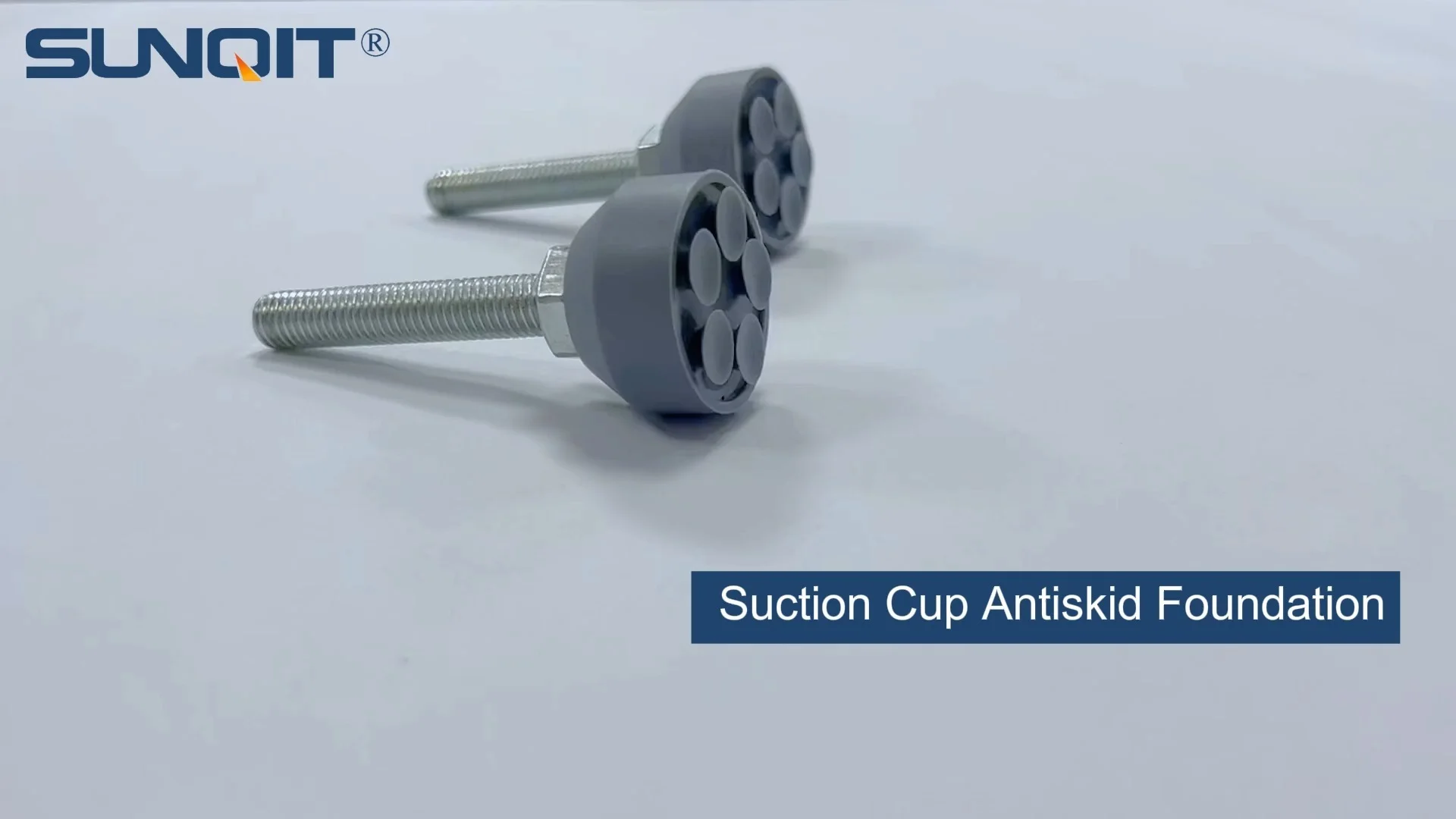
Suction Cup Anti-slip Foot Adjuster
D=35mm suction cup anti-slip foot adjusterï¼screw M10*55ï¼with a blot, used for workbench, flowrack pipe contact with groud.
Walk into any manufacturing facility, and you'll quickly realize that the unsung heroes of productivity aren't just the high-tech machines or the latest software—it's the humble equipment that keeps materials moving, organized, and accessible. Among these, the Material Rack B (3 row and 3 floor) stands out as a workhorse. Found in electronics assembly plants, automotive workshops, and warehouses worldwide, this rack is designed to hold everything from small components to heavy parts, with three rows and three floors maximizing vertical space. But like any hardworking tool, it has its flaws. Over time, factory floors warp, vibrations shake stability, and heavy loads test its limits. That's where a small but mighty innovation comes in: the suction cup anti-slip foot adjuster. In this article, we'll dive into how this unassuming accessory can transform Material Rack B from a reliable but imperfect workhorse into a cornerstone of lean system efficiency, safety, and stability.
1. The Backbone of Material Handling: Why Material Rack B Matters
Before we talk about fixing what's broken, let's appreciate what Material Rack B gets right. Imagine a typical day on the factory floor: assemblers need quick access to screws, brackets, and circuit boards; warehouse staff need to restock parts without disrupting production; and supervisors need to ensure space is used efficiently. A 3-row, 3-floor Material Rack B answers all these needs. Its vertical design means it takes up minimal floor space while offering ample storage—perfect for facilities where square footage is a premium. Each shelf can be adjusted to fit different-sized bins or boxes, and its open structure makes it easy to see and grab items at a glance. In short, it's the kind of tool that fades into the background when it works well, but becomes a major headache when it doesn't.
But here's the thing: "working well" isn't just about holding materials. It's about doing so safely, consistently, and without slowing down operations. I once visited a small electronics plant where a Material Rack B had been in use for over five years. The team loved its capacity, but the lead assembler, Maria, sighed when she showed me how one corner of the rack sat half an inch higher than the others. "We've shimmed it with old cardboard, but every time we load the top shelf, it wobbles," she said. "Last month, a box of capacitors slid off and broke—cost us an hour of cleanup and a few hundred dollars in parts." That's the problem with even minor instability: it doesn't just risk damage; it erodes trust. When workers hesitate to fully load a rack or spend extra time adjusting it, productivity takes a hit. And in a lean system, where every second and every square inch counts, those hits add up.
2. The Hidden Challenges: Why Racks Wobble, Slip, and Fail
To understand why Material Rack B struggles, let's start with the floor. Factory floors are tough, but they're far from perfect. Years of heavy machinery rolling over them, temperature fluctuations, and even minor foundation shifts can create uneven surfaces—dips, bumps, and slopes that are barely visible to the eye but throw a rack off balance. Add in vibrations from nearby conveyor belts or stamping machines, and that "stable" rack suddenly becomes a swaying hazard. Then there's the weight: a fully loaded 3-row, 3-floor rack can hold hundreds of pounds of materials. When that weight isn't distributed evenly (and let's be real, who loads racks with mathematical precision every single time?), stress,.
Another culprit? The feet that come standard on many racks. Traditional fixed feet or basic leveling feet might adjust for height, but they lack grip. On smooth concrete or slightly oily floors (a common sight in manufacturing), even a small nudge can cause a rack to shift. I spoke with a warehouse manager, Raj, who described a near-miss: "A new hire was pushing a hand trolley past the Material Rack B, and the trolley clipped the rack's base. It shifted an inch, and the top shelf's bin started to tip. Luckily, someone caught it, but we all—if that bin had fallen, it could have injured someone." That's the danger of slipping: it's not just about the rack itself, but the domino effect it creates on the entire workflow.
These issues aren't just anecdotal. A 2023 survey by the Manufacturing Safety Council found that 42% of reported "minor incidents" in factories involved unstable storage equipment, with Material Rack B cited as a common offender. The costs add up: damaged materials, downtime for repairs, and increased workers' compensation claims. Worse, instability can create a culture of complacency. "We've always dealt with it," becomes the norm, and small wobbles turn into big problems over time. But it doesn't have to be that way.

3. The Solution: What Are Suction Cup Anti-Slip Foot Adjusters?
Enter the suction cup anti-slip foot adjuster—a small accessory with a big mission. At first glance, it looks like a standard leveling foot, but its base tells the story: a durable rubber suction cup designed to grip onto smooth surfaces like concrete or tile. The adjuster itself is threaded, allowing you to twist it up or down to level the rack, while the suction cup creates a vacuum-like seal with the floor, resisting slipping and shifting. Think of it as a combination of a leveler and a super-strong sticker for your rack's feet.
Let's break down the design. Most suction cup anti-slip foot adjusters are made with a metal stem (for strength) and a rubber suction cup base (for grip). The stem is threaded to fit into the rack's existing foot mounts, making installation a breeze. The suction cup is typically 2–3 inches in diameter, providing a wide contact area to distribute weight and increase friction. Some models even have a release valve, letting you break the suction when you need to move the rack—handy for reorganizing your workspace or deep cleaning.
But what makes these adjusters different from regular anti-slip pads? It's the combination of adjustability and grip. A fixed anti-slip pad might stop slipping, but it can't level an uneven rack. A basic leveling foot can adjust height, but it won't grip the floor. Suction cup anti-slip foot adjusters do both. They let you dial in the perfect height to compensate for floor unevenness, then lock the rack in place with that suction cup grip. It's like giving your rack a set of stable, grippy shoes instead of flimsy slippers.
3.1 How They Work: The Science of Suction and Stability
The magic of the suction cup lies in atmospheric pressure. When you press the rubber cup against a smooth surface, you push out most of the air between the cup and the floor. The air pressure outside the cup (atmospheric pressure) is then greater than the pressure inside, creating a vacuum that holds the cup in place. The more weight on the rack, the tighter the seal—the suction cup essentially "sticks" to the floor, resisting lateral movement. This is why they work so well on factory floors: even if the floor isn't perfectly smooth, the flexible rubber conforms to minor imperfections, maintaining contact and grip.
The adjustability feature is equally important. Most models have a hex nut or a flat section on the stem, allowing you to use a wrench or even just a pair of pliers to twist the adjuster up or down. This means you can fine-tune each foot independently, ensuring the rack is perfectly level from front to back and side to side. Leveling isn't just about preventing wobbling—it also ensures even weight distribution across all four feet, reducing stress on the rack's frame and.

4. The Benefits: From Safety to Savings
Installing suction cup anti-slip foot adjusters on Material Rack B isn't just a quick fix—it's an investment in your facility's efficiency, safety, and bottom line. Let's break down the benefits:
4.1 Enhanced Safety: No More Tipping or Slipping
The most obvious benefit is safety. A stable rack is a safe rack. With suction cup adjusters, the risk of tipping or slipping drops dramatically. That means fewer accidents, fewer damaged materials, and less stress for workers who no longer have to worry about the rack shifting when they reach for a bin. Maria, the assembler I mentioned earlier, installed adjusters on her plant's Material Rack B last year. "Now when I load the top shelf, it doesn't budge," she told me. "I don't hold my breath anymore. It sounds small, but it makes the whole line feel calmer."
4.2 Improved Efficiency: Less Time Adjusting, More Time Producing
In a lean system, efficiency is king. Unstable racks eat up time: workers adjust shims, rearrange loads to balance weight, or.With adjusters, those minutes vanish. The rack stays level and stable, so loading and unloading become quick, routine tasks. Raj, the warehouse manager, calculated that his team was spending about 15 minutes per day adjusting their Material Rack B before installing adjusters. "That adds up to over 75 hours a year—time we could spend restocking or helping the production line," he said. "Now, we set it and forget it."
4.3 Longer Rack Lifespan: Reducing Wear and Tear
Wobbling racks don't just risk materials—they damage themselves. When a rack sways, stress,,.Over time, this can weaken the rack, making it unsafe to use even if it hasn't tipped over. By keeping the rack level and stable, suction cup adjusters distribute weight evenly, reducing stress on individual components. A well-maintained rack can last years longer than one that's constantly under strain. For facilities on a budget, that's a huge win—no need to replace racks prematurely because of avoidable damage.
4.4 Compatibility with Lean Systems: Aligning with 5S Principles
Lean manufacturing is built on the 5S principles: Sort, Set in Order, Shine, Standardize, Sustain. Suction cup anti-slip foot adjusters align with all of them. "Set in Order" means organizing tools and materials for easy access—a stable rack ensures materials stay where they're supposed to. "Shine" (cleanliness) is easier when racks don't shift, making it simpler to sweep and clean around them. "Standardize" is possible when all racks are consistently stable, creating predictable workflows. And "Sustain" becomes easier when workers see the tangible benefits of the adjusters and are motivated to keep the racks in good condition. In short, adjusters aren't just a tool—they're a lean system enabler.

5. Step-by-Step: Installing Suction Cup Anti-Slip Foot Adjusters on Material Rack B
Ready to upgrade your Material Rack B? Installing suction cup anti-slip foot adjusters is a straightforward process that takes about 30 minutes, even for beginners. Here's how to do it:
5.1 Gather Your Tools
You'll need: suction cup anti-slip foot adjusters (one per rack foot), a wrench or pliers, a level (preferably a 2-foot spirit level), and a clean cloth. Most adjusters come with a standard thread size (M10 is common), but double-check your rack's existing feet to ensure compatibility. If your rack has fixed feet, you may need to remove them first—look for bolts or screws holding them in place.
5.2 Empty the Rack
Safety first: Remove all materials from the rack before starting. A loaded rack is heavy and unstable, making installation risky. Plus, an empty rack is easier to adjust and level.
5.3 Clean the Floor and Rack Feet
Suction cups work best on clean surfaces. Use the cloth to wipe dirt, oil, or debris from the floor where the rack will sit and from the rack's foot mounts. Even a small speck of dirt can break the suction seal, so take your time here.
5.4 Install the Adjusters
Screw the suction cup adjusters into the rack's foot mounts by hand until they're snug. Don't tighten them fully yet—you'll need to adjust the height first.
5.5 Level the Rack
Place the level on the top shelf of the rack, first along the length, then along the width. Twist the adjusters up or down to raise or lower each corner until the bubble in the level is centered. Start with the front two feet, then the back two. Check both directions again to ensure it's level. This might take a few minutes of tweaking, but patience pays off—an accurately leveled rack is a stable rack.
5.6 Secure the Adjusters and Test
Once the rack is level, use the wrench or pliers to tighten the adjusters (be careful not to overtighten and strip the threads). Then, press down firmly on each corner of the rack to engage the suction cups—you should feel them "stick" to the floor. Give the rack a gentle push from the side; it should stay in place. If it shifts, check the level again—you might need to readjust or clean the suction cup.
5.7 Reload and Enjoy
Finally, reload the rack, distributing weight evenly across shelves. Take a step back and admire your handiwork—a stable, safe, and efficient Material Rack B, ready to support your lean system goals.
6. Beyond the Rack: Integrating with Other Lean Tools
Suction cup anti-slip foot adjusters are powerful on their own, but they shine when paired with other lean system tools. Let's look at how they work with two common components: aluminum profiles and roller tracks.
6.1 Aluminum Profiles: Building a Sturdy Foundation
Many modern Material Rack B models are built with aluminum profiles—lightweight, durable, and easy to customize. Aluminum profiles (like 4040 or 3030 series) have T-slots that let you attach accessories, but they're only as stable as their base. By adding suction cup adjusters to an aluminum profile rack, you combine the profile's strength with the adjusters' stability. The result? A rack that's both lightweight and rock-solid. I visited a automotive parts supplier that built custom Material Rack B units using 3030 aluminum profiles and suction cup adjusters. "We needed racks that could be moved if we reorganized the line, but still stay put during use," the plant engineer explained. "The adjusters let us lock them in place when they're in use, then release the suction cups with a quick twist to move them. It's the best of both worlds."
6.2 Roller Tracks: Smoother Flow, Stable Base
Roller tracks are another staple of lean material handling, used to slide bins and boxes along racks with minimal effort. But a wobbly rack can turn a smooth roller track into a bumpy ride, causing bins to get stuck or slide off. By stabilizing the rack with suction cup adjusters, roller tracks work as intended—materials glide smoothly, reducing the force needed to move them. Raj's warehouse added roller tracks to their Material Rack B after installing adjusters: "Before, the tracks would bind because the rack wasn't level. Now, bins slide right off—no more tugging or jiggling. Our pick times dropped by 20%."
7. Real-World Results: Case Studies from the Factory Floor
To put these benefits into perspective, let's look at two real-world examples of facilities that optimized their Material Rack B with suction cup anti-slip foot adjusters.
7.1 Case Study 1: Electronics Assembly Plant
A mid-sized electronics plant in Ohio was struggling with their Material Rack B units, which held small components for circuit board assembly. The plant had recently upgraded to faster conveyor belts, which increased floor vibrations. Within months, workers reported frequent bin slippage, and two incidents of minor component damage occurred. The plant manager, Sarah, researched solutions and decided to test suction cup anti-slip foot adjusters on three racks. After installation, the plant tracked metrics for six months:
- Component damage incidents: 0 (down from 2 in the previous six months)
- Time spent adjusting racks: 0 hours (down from 10 hours monthly)
- Worker satisfaction scores (on a 1–5 scale): 4.8 (up from 3.2)
Sarah was so impressed that she rolled out adjusters to all 15 Material Rack B units in the plant. "The ROI was clear within the first month," she said. "The adjusters paid for themselves in saved materials and time."
7.2 Case Study 2: Food Packaging Facility
A food packaging facility in Texas used Material Rack B to hold plastic containers and labels. The facility's concrete floor had developed minor dips over time, making racks unstable. Worse, the floor was occasionally damp from cleaning, increasing slip risk. The safety team recommended suction cup adjusters, citing their anti-slip grip on wet surfaces. After installation, the facility saw:
- Slip incidents involving racks: 0 (down from 3 in the previous year)
- Time spent cleaning up spills from fallen containers: 0 hours (previously 2 hours monthly)
- Regulatory compliance: Passed OSHA inspection with zero findings related to storage stability
"We were worried the suction cups wouldn't work on damp floors, but they stuck like glue," the safety manager noted. "It's one less thing to stress about during audits."
8. The Bottom Line: Why Suction Cup Adjusters Are a Must-Have
At the end of the day, optimizing Material Rack B with suction cup anti-slip foot adjusters is about more than just stability. It's about creating a workplace where workers feel safe, processes run smoothly, and every tool supports your lean system goals. The cost of adjusters is minimal compared to the savings: fewer damaged materials, less downtime, and a more productive team. They're easy to install, compatible with most racks, and adaptable to changing floor conditions.
Maria summed it up best: "You don't think about the rack until it's a problem. With these adjusters, it's never a problem. It just works." And in manufacturing, "it just works" is the highest praise you can give a tool. So if your Material Rack B is wobbling, slipping, or causing stress, don't reach for the cardboard shims—invest in suction cup anti-slip foot adjusters. Your team, your materials, and your lean system will thank you.
9. Comparison: Material Rack B Before and After Optimization
| Metric | Before Suction Cup Anti-Slip Foot Adjusters | After Suction Cup Anti-Slip Foot Adjusters |
|---|---|---|
| Stability | Wobbles under heavy loads; shifts on uneven floors or with vibrations | Rock-solid; no wobbling or shifting, even with full loads and vibrations |
| Safety Risk | High risk of tipping, slipping, or falling materials | Minimal risk; stable base reduces accidents and damage |
| Worker Time Spent Adjusting | 10–15 minutes daily (shimming, rebalancing loads) | 0–5 minutes monthly (occasional level checks) |
| Material Damage | Frequent (1–2 incidents monthly) | Rare (0–1 incidents yearly) |
| Compatibility with Lean Systems | Suboptimal (wastes time, creates inefficiencies) | Excellent (supports 5S, reduces waste, improves flow) |
In conclusion, the suction cup anti-slip foot adjuster is a small investment that delivers big returns for Material Rack B users. By addressing instability at the source—uneven floors, vibrations, and slippery surfaces—these adjusters transform a common pain point into a pillar of lean system success. Whether you're using aluminum profiles, roller tracks, or standard steel racks, adding adjusters ensures your Material Rack B works as hard as your team does: reliably, safely, and efficiently. So go ahead—give your rack the stable base it deserves. Your factory floor will never be the same.