- Company Articles
- Products and Technology
- Product knowledge
- Optimizing Medical Device Production with One Way Rotatory Straight Lean Pipe Joints

Optimizing Medical Device Production with One Way Rotatory Straight Lean Pipe Joints
Related Product
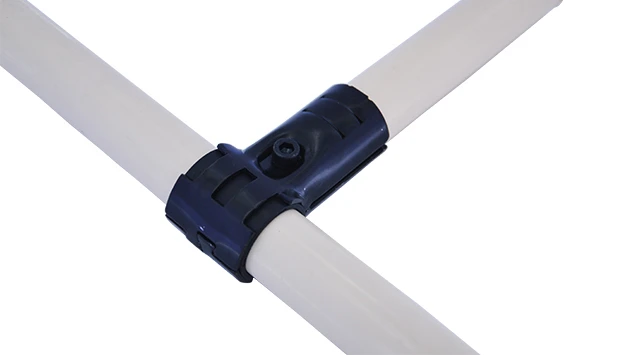
One Way Rotatory Straight Lean Pipe Joint
Two way lean pipe joint for 2 pcs 28MM lean pipe connection in straight angle with rotatory fucntion, which used widely in workbench, flow rack, hand trolley frame connection.
In the world of medical device manufacturing, where precision can mean the difference between life and death, every component of the production process matters. From the tiniest screw in a pacemaker to the casing of a surgical robot, each part must meet uncompromising standards of quality, consistency, and safety. Yet, even the most advanced machinery and skilled workforce can be held back by an outdated, rigid production setup. This is where lean manufacturing systems step in—not just as a buzzword, but as a lifeline for manufacturers striving to keep pace with evolving healthcare needs. At the heart of these systems lies a humble yet powerful component: the one way rotatory straight lean pipe joint. In this article, we'll explore how this unassuming piece of hardware, when integrated with lean pipe workbenches, flow racks, and roller tracks, transforms medical device production lines into models of efficiency, adaptability, and reliability.
The Hidden Challenges of Medical Device Production
Medical device manufacturing is a high-stakes industry. Unlike consumer goods, where minor defects might lead to returns or complaints, a flaw in a medical device can have catastrophic consequences for patients and legal repercussions for manufacturers. This pressure is compounded by two other critical factors: speed and adaptability .
Consider the current landscape: global demand for medical devices is soaring, driven by aging populations, advances in telemedicine, and the ongoing need for innovative treatments. At the same time, product lifecycles are shrinking. A manufacturer might launch a new insulin pump design one year, only to need a updated version with enhanced sensors the next. Traditional production lines, built with fixed conveyor belts, welded metal frames, and inflexible workstations, struggle to keep up. Reconfiguring these setups to accommodate new products can take weeks—time that manufacturers can't afford to lose.
Then there's the issue of workflow efficiency. In many facilities, workers spend precious minutes walking between storage areas and assembly stations, or manually adjusting workbench heights to fit different tasks. These small inefficiencies add up: a 5-minute delay per unit across a 10-hour shift translates to dozens of lost products. Worse, fatigue from repetitive motions or awkward postures increases the risk of human error—exactly what medical manufacturers must avoid.
Finally, compliance looms large. Regulatory bodies like the FDA and ISO set strict guidelines for cleanroom conditions, traceability, and material safety. Traditional production materials, such as painted steel, can chip or harbor bacteria, violating sterility standards. Meanwhile, static electricity from non-ESD (Electrostatic Discharge) workbenches can damage sensitive electronic components in devices like heart monitors or diagnostic equipment.
Lean Systems: More Than Just Efficiency—A Culture of Improvement
Lean manufacturing, born from the Toyota Production System, is often associated with "waste reduction," but its impact goes deeper. At its core, lean is about creating value for the customer by streamlining processes, empowering workers, and fostering continuous improvement. In medical device manufacturing, this translates to safer products, faster time-to-market, and lower costs—without sacrificing quality.
Central to lean systems is the concept of modularity . Instead of fixed, one-size-fits-all production lines, lean setups use interchangeable components that can be reconfigured on the fly. This flexibility allows manufacturers to adapt to new product designs, scale production up or down, and even repurpose workstations for different tasks—all with minimal downtime. And at the center of this modularity are lean pipes and their accessories, including the game-changing one way rotatory straight lean pipe joint.

The One Way Rotatory Straight Lean Pipe Joint: Small Part, Big Impact
To understand the value of the one way rotatory straight lean pipe joint, let's start with the basics: what is a lean pipe? Also known as "lean tube," it's a lightweight, durable tube—typically made of aluminum, stainless steel, or steel with a plastic coating—used to build everything from workbenches and flow racks to material trolleys. These pipes are connected using joints, which determine the system's stability, flexibility, and ease of assembly.
Most traditional lean pipe joints are fixed, meaning once you lock them into place, adjusting the angle or position requires tools and time. The one way rotatory straight lean pipe joint changes that. As its name suggests, it allows for one-directional rotation (e.g., 0° to 90°) while maintaining a secure lock when not in use. This simple feature unlocks a world of possibilities for medical production lines.
Let's break down its design: the joint consists of a metal (often aluminum or stainless steel) housing with internal gears or a ratchet mechanism. When pressure is applied in the allowed direction, the gears disengage, letting the joint rotate smoothly. Release the pressure, and the gears lock back into place, holding the pipe firmly. No tools needed—just a gentle push or pull. This "tool-free adjustment" is a game-changer for workers who need to reposition workbench shelves, tilt flow rack angles, or adjust roller track heights multiple times a day.
But the benefits don't stop there. The joint's materials are chosen for medical environments: aluminum resists corrosion and is easy to sanitize, while stainless steel adds strength for heavier loads (like holding stacks of surgical instrument trays). Many models also feature ESD-safe coatings, preventing static buildup that could damage sensitive electronics—a critical detail for devices with circuit boards or microchips.
Perhaps most importantly, the one way rotatory joint is compatible with standard lean pipes and accessories . This means manufacturers don't have to replace their entire existing lean setup to upgrade—they can simply swap out old fixed joints for these rotatory ones, reducing costs and implementation time.

Building a Lean Medical Production Line: Joints, Workbenches, Flow Racks, and Roller Tracks
The true power of the one way rotatory straight lean pipe joint shines when it's integrated with other lean components. Let's explore how it transforms three key elements of medical device production lines: lean pipe workbenches, flow racks, and roller tracks.
Lean Pipe Workbenches: Ergonomics Meets Flexibility
Workbenches are the heart of assembly lines, where workers spend hours piecing together devices. Traditional workbenches have fixed heights and static shelves, forcing workers to hunch, stretch, or twist to reach tools and components. With one way rotatory joints, this changes entirely.
Imagine a workbench where the upper shelf can be rotated upward 30° to bring frequently used tools closer to eye level, then locked in place. Or side panels that swing out to hold instruction manuals, then fold back when not needed—all without tools. This adjustability reduces strain on the neck, shoulders, and back, cutting down on fatigue and errors. In one case study, a manufacturer of dental implants reported a 40% decrease in worker complaints of back pain after retrofitting their workbenches with rotatory joints.
But it's not just about ergonomics. Medical device production often requires "5S" organization (Sort, Set in Order, Shine, Standardize, Sustain), where every tool has a designated place. With rotatory joints, workbench accessories like tool holders, bin dividers, and monitor arms can be positioned with pinpoint precision, ensuring workers never waste time searching for a screwdriver or a component bin. And when a new product requires a different layout? A quick twist of the joint, and the workbench is reconfigured in minutes—no need for a maintenance team or downtime.
For cleanroom environments, aluminum lean pipe workbenches with rotatory joints are ideal. Aluminum is non-porous, easy to wipe down with disinfectants, and doesn't shed particles like painted wood or steel. Some models even feature built-in cable management channels, keeping power cords and data lines organized and away from sterile work surfaces.
Flow Racks: Gravity-Powered Material Delivery
Flow racks (also called "gravity flow racks") use inclined shelves with roller tracks to move materials from the back to the front, ensuring first-in, first-out (FIFO) inventory management. In medical manufacturing, this is critical for expiration-sensitive items like sterile packaging or adhesives. But traditional flow racks have fixed angles—too steep, and components slide too fast, risking damage; too shallow, and workers have to push them forward, wasting energy.
Enter one way rotatory joints. By attaching the roller tracks to rotatory joints, workers can adjust the rack's incline in 5° increments, fine-tuning it for different component weights. A lightweight plastic part might need a 10° angle, while a heavy metal instrument tray could require 15°. This precision prevents jams, reduces product damage, and ensures a steady flow of materials to the assembly line.
Plus, flow racks built with lean pipes and rotatory joints are modular. Need to add a shelf for a new component size? Simply connect a new pipe section with a joint. Relocate the rack to a different part of the facility? Thanks to caster wheels (another lean accessory), it's as easy as unlocking the brakes and rolling it into place. This flexibility is a boon for manufacturers with limited floor space or evolving production needs.
Roller Tracks: Smooth Movement, Seamless Workflow
Roller tracks are the arteries of a lean production line, transporting components between workstations. In medical manufacturing, they're often used to move trays of parts from kitting areas to assembly stations, or finished devices to quality control. Traditional roller tracks are fixed, meaning if a component gets stuck (e.g., a misaligned tray), workers have to stop the line to fix it—costing time and disrupting workflow.
With one way rotatory joints, roller tracks become dynamic. For example, a section of track leading up to an assembly station can be rotated slightly upward to slow down components, giving workers time to grab them without rushing. If a jam occurs, a quick rotation of the joint lifts the track, allowing the stuck component to be removed without stopping the entire line. Some manufacturers even use multiple rotatory joints along a single track to create "zones" with different speeds—faster for long-distance transport, slower for precision handoff points.
Roller tracks with rotatory joints also excel at handling mixed component sizes . Medical device production often involves both small parts (like screws or gaskets) and large assemblies (like MRI machine casings). By adjusting the track's angle and height via the joints, manufacturers can safely transport both without needing separate tracks for each—saving space and simplifying the line.
Case Study: How One Manufacturer Cut Errors by 25% with Rotatory Joints
To put these concepts into perspective, let's look at a real-world example. A mid-sized manufacturer of laparoscopic surgical tools was struggling with two major issues: high error rates (10% of tools had misaligned grips) and worker fatigue leading to frequent breaks.
Their production line relied on fixed-height workbenches and rigid flow racks. Workers had to reach across the bench to grab components from the far shelf, leading to shoulder strain, and the flow rack's steep angle caused small parts to slide off, resulting in lost components and assembly delays. The manufacturer considered replacing the entire line with automated conveyors, but the cost ($500,000+) was prohibitive.
Instead, they opted for a lean upgrade, focusing on three changes: retrofitting workbenches with one way rotatory joints, adjusting flow rack angles with the same joints, and installing adjustable roller tracks between stations. The total cost? $75,000—less than 15% of the automated conveyor quote.
Within two weeks of implementation, results were clear:
- Error rates dropped from 10% to 7.5% (a 25% reduction) as workers could position tools and components at eye level, reducing misalignment.
- Assembly time per tool decreased by 18% (from 12 minutes to 9.8 minutes) thanks to smoother material flow from the adjusted flow racks and roller tracks.
- Worker breaks decreased by 30% as ergonomic workbench adjustments reduced fatigue.
One worker noted, "I used to go home with a sore shoulder every night. Now I can rotate the shelf to bring parts right to me—it's like the bench adapts to how I work, not the other way around." For the manufacturer, the ROI was clear: the upgrade paid for itself in under six months through increased output and reduced rework costs.
Beyond the Joint: Complementary Components for a Fully Optimized Line
While the one way rotatory straight lean pipe joint is a star player, it works best with a supporting cast of lean components. Here are a few that medical manufacturers should consider:
Aluminum Profiles: Strength Meets Cleanliness
Aluminum profiles (extruded aluminum with T-slots) are a popular alternative to traditional lean pipes for workbench frames and flow rack structures. They're lightweight yet strong enough to hold heavy loads, and their smooth, non-porous surface is easy to sanitize—perfect for cleanrooms. When paired with rotatory joints, aluminum profiles allow for even more precise adjustments, as their T-slots accept a wide range of accessories (like tool hooks, bin holders, and monitor mounts) without drilling or welding.
ESD Workstations: Protecting Sensitive Electronics
Many medical devices, from heart rate monitors to surgical robots, contain delicate electronic components. ESD workstations (equipped with static-dissipative surfaces and grounding straps) prevent static electricity from damaging these parts. By integrating one way rotatory joints into ESD workstations, manufacturers can adjust the height and angle of ESD-safe mats or shelves, ensuring workers stay grounded while maintaining ergonomic comfort.
Caster Wheels: Mobility for Dynamic Layouts
Caster wheels (with locks) turn stationary workbenches and flow racks into mobile units. This is invaluable for medical manufacturers who need to reconfigure lines for batch production (e.g., making 500 of Device A, then switching to Device B). When combined with rotatory joints, mobile workstations become even more versatile: a worker can roll the bench to a new location, then adjust its shelves and accessories in minutes to fit the new task.
Traditional vs. Lean: A Side-by-Side Comparison
| Feature | Traditional Production Setup | Lean Setup with One Way Rotatory Joints |
|---|---|---|
| Reconfiguration Time | Weeks (requires welding/tooling) | Minutes (tool-free adjustments) |
| Error Rate | 8-10% (due to fatigue/awkward positioning) | 5-7% (ergonomic, adjustable workspaces) |
| Worker Fatigue | High (repetitive stretching/reaching) | Low (customizable, comfortable positions) |
| Compliance with Medical Standards | Variable (painted steel may harbor bacteria) | High (aluminum/stainless steel, ESD options) |
| Cost Over 5 Years | Higher (rework, downtime, replacement costs) | Lower (flexibility, reduced errors, longevity) |
The Future of Lean in Medical Manufacturing: Smart Joints and Sustainability
As medical device technology advances, so too will lean manufacturing systems. One emerging trend is the integration of "smart" lean components—like one way rotatory joints with built-in sensors that track usage, rotation angles, and wear. These sensors could alert maintenance teams when a joint needs lubrication or replacement, preventing unexpected breakdowns. Imagine a workbench that automatically adjusts to a worker's height based on a quick scan of their ID badge, or a flow rack that tweaks its angle in real-time based on the weight of components being loaded—all powered by IoT-enabled rotatory joints.
Sustainability is another key focus. Medical manufacturers are under increasing pressure to reduce their environmental footprint, and lean systems are uniquely positioned to help. Aluminum lean pipes and joints are 100% recyclable, and modular setups reduce waste by allowing components to be repurposed instead of replaced. Some suppliers are even developing biodegradable plastic coatings for lean pipes, further cutting down on environmental impact.
Conclusion: Small Components, Big Impact on Patient Care
At first glance, the one way rotatory straight lean pipe joint might seem like a minor detail in the grand scheme of medical device manufacturing. But as we've explored, its ability to add flexibility, ergonomics, and efficiency to production lines has a ripple effect: faster assembly times, fewer errors, happier workers, and ultimately, safer devices for patients.
For medical manufacturers facing the dual pressures of increasing demand and stricter regulations, lean systems built around components like rotatory joints, lean pipe workbenches, and roller tracks offer a practical, cost-effective path forward. They don't require a complete overhaul of existing operations—just a willingness to embrace modularity and continuous improvement.
In the end, it's not just about optimizing production lines. It's about ensuring that every medical device that leaves the factory is built with the precision, care, and reliability that patients deserve. And that's a goal worth investing in.