- Company Articles
- Products and Technology
- Product knowledge
- Overcoming Compatibility Issues: Four Way Straight Lean Pipe Joint with Non-Standard Pipes

Overcoming Compatibility Issues: Four Way Straight Lean Pipe Joint with Non-Standard Pipes
Related Product
Four Way Straight Lean Pipe Joint
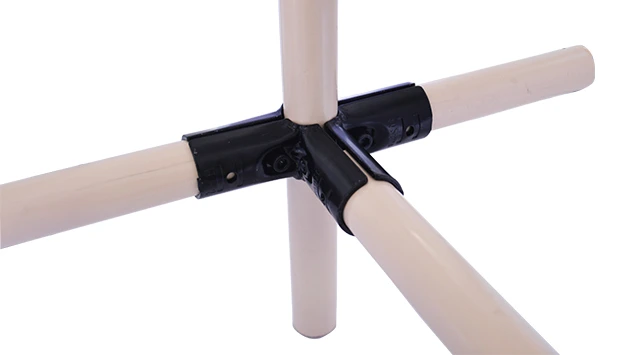
Four way lean pipe joint for 4 pcs 28MM lean pipe connection in straight angle, which used widely in workbench, flow rack, hand trolley frame connection.
If you've ever stood in the middle of a workshop, staring at a pile of pipes and joints that just won't fit together, you know the frustration. Maybe you ordered a batch of non-standard lean pipes to save costs, or inherited a mishmash of materials from a previous setup. Either way, the moment you try to connect them with a four way straight lean pipe joint, you hit a wall: gaps, wobbly connections, or joints that just plain refuse to clamp down. It's not just a hassle—it's a roadblock to the efficiency and flexibility that lean manufacturing is supposed to deliver.
In this article, we're diving deep into the world of four way straight lean pipe joints and the compatibility challenges they often face with non-standard pipes. We'll break down why these issues happen, explore practical solutions to fix them, and share real-world examples of teams that turned mismatched parts into seamless workflows. Whether you're a seasoned plant manager or a small business owner setting up your first production line, this guide is for anyone who's ever thought, "There's got to be a better way to make these parts work."
First Things First: What Are Lean Pipes and Four Way Straight Joints, Anyway?
Let's start by getting on the same page about the basics. Lean pipes—sometimes called "flexible pipes" or "kitchen pipes" in casual shop talk—are the backbone of modular workspaces. They're typically made of steel, aluminum, or plastic, coated in materials like PE (polyethylene) for durability, and come in various diameters and wall thicknesses. Their claim to fame? They're lightweight, easy to cut, and infinitely adaptable, making them perfect for building workbenches, material racks, conveyor supports, and just about any structure you can dream up in a manufacturing or warehouse setting.
Now, the unsung hero of this system: the lean pipe joint. These small, often unassuming components are what turn a bunch of loose pipes into a stable structure. They come in all shapes—T-joints, L-joints, cross-joints—but today, we're focusing on the four way straight lean pipe joint. As the name suggests, this joint connects four pipes in a straight, cross-like formation (think of a plus sign: +). It's ideal for creating intersections in your setup, like where a horizontal material rack meets a vertical support, or where two conveyor lines cross. Without a reliable four way joint, those intersections become weak points—wobbly, unsafe, and prone to collapse under even light loads.
But here's the catch: most lean pipe joints are designed for standard pipes. Standard lean pipes typically have a diameter of 28mm (about 1.1 inches) with a wall thickness of 1.2mm to 2.0mm, coated in PE or made of stainless steel. Non-standard pipes, on the other hand, can vary wildly—maybe they're 30mm in diameter, have a thicker wall, or are made of aluminum instead of steel. When you pair a standard four way straight lean pipe joint with these non-standard pipes, that's when the trouble starts.
Why Compatibility Issues Happen: The Root Causes
Let's say you walk into your workshop with a new set of non-standard aluminum lean pipes. They're lighter than steel, which is great for moving racks around, and you scored them at a discount. You grab your trusty four way straight lean pipe joint—chrome-plated, sturdy, the same one you've used a hundred times with standard steel pipes—and try to clamp it down. Nothing. The joint's clamping mechanism is too loose; the pipe spins inside. Or maybe the pipe is slightly thicker, and the joint can't even close around it. What's going on here?
1. Size Mismatches: Diameter and Wall Thickness
The most obvious culprit is size. Standard lean pipe joints are precision-engineered to fit specific diameters. A typical four way straight lean pipe joint, for example, is designed for 28mm pipes. If your non-standard pipe is 32mm, the joint's inner diameter will be too small—you'll struggle to insert the pipe at all. If it's 25mm, the joint will clamp down, but there will be play, leading to unstable connections that shake or shift under load.
Wall thickness plays a role too. Thicker walls mean the pipe's outer diameter might stay the same, but the inner diameter shrinks—so when you insert a pipe with a 2mm wall into a joint designed for 1.2mm, the joint's set screws or clamping bolts might not reach far enough to grip securely. Over time, that joint will loosen, putting stress on the entire structure.
2. Material Differences: Steel, Aluminum, and Beyond
Lean pipes aren't one-size-fits-all when it comes to materials. Steel pipes are strong and affordable but heavy. Aluminum lean pipes are lightweight and corrosion-resistant but softer. Plastic-coated pipes add grip but can vary in thickness depending on the coating quality. Non-standard pipes might even be a mix—steel cores with uneven PE coatings, or recycled aluminum with inconsistent diameters.
Here's why that matters for four way straight lean pipe joints: different materials behave differently under pressure. A chrome-plated steel joint clamping down on a soft aluminum pipe might dent or crush the pipe if overtightened. Conversely, a joint designed for the flexibility of plastic-coated steel might not grip a rigid stainless steel pipe tightly enough. Material incompatibility doesn't just cause fit issues—it can lead to premature wear, with pipes getting scratched or joints corroding when metals react (hello, galvanic corrosion between steel and aluminum).
3. Load and Stress: When Joints Are Pushed Beyond Their Limits
Even if a non-standard pipe seems to fit a four way straight lean pipe joint, there's a hidden danger: load capacity. Standard joints are tested to handle specific weights based on standard pipe strength. If you swap in a thinner-walled non-standard pipe, the joint might hold initially, but under the daily stress of materials sliding on a roller track or workers leaning on a workbench, the pipe could bend or the joint could slip. Suddenly, that "temporary fix" becomes a safety hazard.
Real-Life Scenario: A electronics manufacturer switched to thinner 1.0mm PE-coated lean pipes to reduce shipping costs. They used their existing four way straight lean pipe joints to build a material rack for circuit boards. Within a month, the joints began to loosen, and the rack tilted—spilling a batch of sensitive components. The issue? The thinner pipes couldn't distribute weight evenly, causing the joint clamps to fatigue and slip. The fix? Reinforcing the pipes with internal sleeves and upgrading to joints with adjustable clamping pressure.

Solving the Compatibility Puzzle: Practical Fixes for Mismatched Pipes and Joints
The good news is that compatibility issues between four way straight lean pipe joints and non-standard pipes aren't unsolvable. With a little creativity and the right tools, you can turn those frustrating mismatches into reliable, long-lasting connections. Let's walk through the most effective solutions, from quick hacks to more permanent upgrades.
Adapter Sleeves: The Quick Fix for Diameter Gaps
If your non-standard pipe is too small for the joint (say, 25mm pipe in a 28mm joint), adapter sleeves are your first line of defense. These thin, cylindrical sleeves—usually made of steel or aluminum—slide over the pipe, increasing its effective diameter to match the joint. Think of them as a "spacer" that fills the gap between pipe and joint.
The key here is choosing the right sleeve thickness. Most suppliers offer sleeves in 1mm, 2mm, or 3mm increments, so you can stack them if needed (though stacking more than two isn't recommended, as it can reduce grip). For example, a 25mm pipe + a 3mm sleeve = 28mm, which fits perfectly into a standard joint. Pro tip: Look for sleeves with a knurled or textured outer surface—they add friction, preventing the pipe from spinning inside the joint.
Custom Machining: When Off-the-Shelf Just Won't Cut It
For non-standard pipes with unusual diameters or shapes (like oval or square cross-sections), custom machining might be necessary. This could mean drilling extra holes in the joint for longer set screws, reaming out the joint's inner diameter slightly, or even fabricating a entirely new clamping mechanism. While this sounds intimidating, many local machine shops can handle small batches of modified joints for a reasonable cost—especially if you're dealing with a one-time setup.
Case in point: A furniture manufacturer once had a batch of 30mm aluminum lean pipes that were too large for their 28mm four way joints. Instead of scrapping the pipes, they had a shop mill down the inner diameter of the joints by 2mm. The modified joints fit snugly, and the aluminum pipes (which were lighter than steel) reduced the overall weight of their assembly line carts—an unexpected bonus.
Material-Specific Joints: Playing to Each Pipe's Strength
Not all four way straight lean pipe joints are created equal. If you're working primarily with aluminum lean pipes, look for joints designed specifically for aluminum. These often have softer clamping surfaces (like rubberized jaws) to prevent denting, or adjustable torque settings to avoid over-tightening. Similarly, if you're using plastic-coated pipes, joints with wider clamping areas distribute pressure more evenly, preventing the coating from peeling or cracking.
Stainless steel pipes, on the other hand, require joints with corrosion-resistant hardware—chrome-plated or stainless steel joints that won't rust when in contact with the pipe. The takeaway? Matching the joint material to the pipe material goes a long way in preventing both fit and longevity issues.
Reinforcement and Bracing: Adding Stability to Weak Connections
Sometimes, even after fitting the pipe and joint together, the connection still feels wobbly. That's where reinforcement comes in. Adding a brace—like a small angle bracket between two pipes—can reduce stress on the joint, distributing weight more evenly. For example, if you're using a four way joint to connect a vertical pipe and three horizontal pipes, adding a diagonal brace between two horizontal pipes takes pressure off the joint, making the entire structure stiffer.
Another trick: Internal pipe stiffeners. These are solid rods or tubes that slide inside the lean pipe, increasing its rigidity. They're especially useful for thin-walled non-standard pipes that bend under load. Just make sure the stiffener is shorter than the pipe itself—you don't want it protruding and interfering with the joint.
Testing and Prototyping: Avoiding Costly Mistakes
Before committing to a solution for an entire production line, test it first! Set up a small prototype with your non-standard pipes and modified four way straight lean pipe joints. Apply the expected load (use sandbags or weights to simulate materials) and let it sit for a week or two. Check for signs of slipping, bending, or corrosion. If the prototype holds up, you're good to go. If not, tweak the solution—maybe a thicker sleeve, a different joint, or added bracing.
This step might seem time-consuming, but it's far cheaper than rebuilding an entire structure after it fails. One manufacturer we worked with skipped prototyping and ended up replacing 50 joints when their initial adapter sleeves proved too slippery. A week of testing would have saved them thousands in replacement parts and downtime.

Standard vs. Non-Standard: A Compatibility Reference Table
To help you quickly identify solutions for common pipe and joint mismatches, we've put together this handy reference table. It breaks down typical pipe types, their specs, and the best joint compatibility fixes:
| Pipe Type | Diameter Range | Wall Thickness | Common Material | Compatible Joint Type | Recommended Fix |
|---|---|---|---|---|---|
| Standard Lean Pipe | 28mm | 1.2-2.0mm | Steel (PE-coated) | Standard Four Way Straight Joint | N/A (direct fit) |
| Non-Standard (Small Diameter) | 22-26mm | 1.0-1.5mm | Aluminum or Steel | Standard Four Way Straight Joint | 1-3mm adapter sleeves (textured) |
| Non-Standard (Large Diameter) | 30-32mm | 1.5-2.5mm | Stainless Steel | Custom-Machined Four Way Joint | Ream joint inner diameter to 30-32mm |
| Thin-Walled Non-Standard | 28mm | 0.8-1.0mm | Aluminum (anodized) | Aluminum-Specific Four Way Joint | Internal steel sleeve + rubber-grip joint |
| Plastic-Coated (Thick Coating) | 28mm (outer diameter, including coating) | 1.2mm (core) + 2mm (coating) | Steel with thick PE coating | Adjustable-Clamp Four Way Joint | Loosen clamp, remove excess coating, retighten |
From Problem to Productivity: Real Teams, Real Solutions
To bring these solutions to life, let's look at two teams that turned compatibility headaches into success stories. Their challenges were different, but their approach—creative problem-solving, testing, and a willingness to adapt—was the same.
Case Study 1: The Small Batch Manufacturer
A family-run electronics company in Ohio had a problem: they needed to build a custom workbench for assembling circuit boards, but their budget was tight. Instead of buying all new standard lean pipes, they sourced a mix of used 25mm aluminum pipes (from a local surplus store) and new 28mm steel pipes. When they tried to connect them with four way straight lean pipe joints, the aluminum pipes wobbled in the joints, making the workbench unstable.
Their solution? They ordered 3mm aluminum adapter sleeves and cut them to length (matching the joint's clamping area). To add extra grip, they roughened the sleeves with sandpaper before sliding them over the aluminum pipes. The result? A sturdy workbench that cost 40% less than a new setup. Six months later, the bench is still in use, with no signs of joint slippage.
Case Study 2: The Automotive Plant with a Roller Track Dilemma
A mid-sized automotive parts plant in Michigan was expanding their production line and needed to extend a roller track system for moving heavy engine components. The existing system used standard 28mm steel pipes and four way straight lean pipe joints, but the new section required longer pipes—so they ordered non-standard 30mm stainless steel pipes for durability. The problem? The 30mm pipes were too large for the existing joints, and replacing all joints would cost $5,000.
Their fix? They partnered with a local machine shop to ream out the inner diameter of the existing joints from 28mm to 30.5mm (leaving a small gap for a snug fit). They then added a thin layer of high-strength epoxy around the pipe before inserting it into the joint, creating a permanent bond. The modified joints held up to the roller track's daily load of 500+ pounds, and the total cost was just $800—saving them $4,200.
Looking Ahead: The Future of Flexible Lean Systems
As manufacturing continues to evolve—with smaller batches, faster turnaround times, and more customization—flexibility in workspace design will only grow in importance. That means the demand for adaptable solutions, like four way straight lean pipe joints that can handle non-standard pipes, will keep rising.
One trend we're already seeing is the rise of modular joints with interchangeable components. Imagine a joint where you can swap out the clamping jaws to fit different pipe materials or diameters—no machining required. Another development is smart joints with built-in sensors that alert you when clamping pressure drops below a threshold, preventing failures before they happen.
For now, though, the most powerful tool in your toolkit is knowledge. Understanding why compatibility issues occur, knowing which fixes to try, and being willing to test and adapt—these are the skills that will turn a jumble of mismatched pipes and joints into a workspace that works for you, not against you.
Final Thoughts: Embrace the Mismatch
At the end of the day, non-standard pipes and four way straight lean pipe joints don't have to be enemies. With the right mindset and solutions, they can be allies in building a lean system that's both cost-effective and flexible. The next time you face a compatibility issue, remember: it's not a dead end—it's an opportunity to get creative, learn something new, and build a better workspace.
And if all else fails? Take a step back, grab a coffee, and remember: even the most frustrating pipe-joint mismatch is solvable. You've got this.