- Company Articles
- Products and Technology
- Solution
- Overcoming Space Constraints with Lean Pipe Clamp Chrome Configurations

Overcoming Space Constraints with Lean Pipe Clamp Chrome Configurations
Related Product
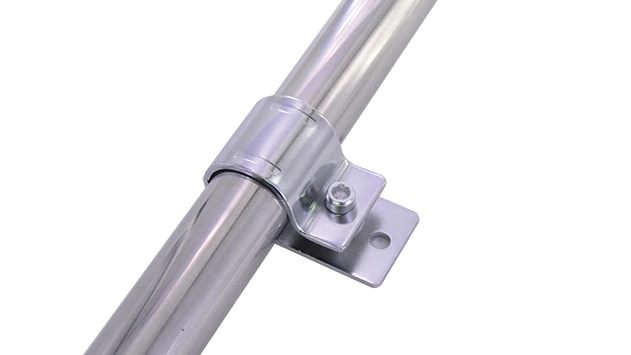
Lean Pipe Clamp Chrome
Lean pipe clamp is used for rack system hang monitor or other panel for workbenck, flowrack in production daily use.
In today's fast-paced manufacturing facilities, warehouses, and workshops, space is more than just a commodity—it's a critical resource that directly impacts productivity, efficiency, and bottom-line success. Whether you're running a small electronics assembly shop with limited square footage or managing a large-scale distribution center where every inch counts, the challenge of optimizing space while adapting to evolving operational needs is universal. Traditional fixed furniture and rigid equipment often fall short here, trapping teams in layouts that can't keep up with changing production demands, seasonal fluctuations, or growth. This is where lean pipe clamp chrome configurations step in: a modular, flexible solution designed to transform cluttered, inefficient spaces into streamlined, adaptable environments that grow with your business.
The Hidden Cost of Wasted Space
Before diving into solutions, let's first acknowledge the problem: wasted space isn't just about "having enough room to walk around." It has tangible, often overlooked costs. For starters, commercial real estate is expensive—whether you're leasing a workshop or owning a warehouse, every unused square foot translates to lost investment. Then there's the operational toll: disorganized layouts force workers to travel longer distances to retrieve materials, slowing down workflows and increasing fatigue. Fixed workbenches or storage racks that can't be adjusted mean valuable vertical space goes unused, while outdated material handling systems create bottlenecks that ripple through production timelines.
Consider a mid-sized automotive parts manufacturer I worked with last year. Their facility was crammed with heavy, welded steel workbenches that had been in place for over a decade. These benches were bolted to the floor, so rearranging them to accommodate a new assembly line required hiring contractors, shutting down production for days, and spending thousands on modifications. Worse, the fixed height of the benches meant taller workers hunched over tasks, while shorter team members struggled to reach tools—both leading to decreased efficiency and higher ergonomic strain. The kicker? A quick audit revealed they were using less than 60% of their available vertical space, with piles of inventory stacked haphazardly on the floor simply because their storage racks couldn't be adjusted to fit taller items.
This scenario is far from unique. From startups scaling their operations to established businesses adapting to lean manufacturing principles, the need for flexible, space-efficient infrastructure is clear. And that's where lean pipe clamp chrome systems shine.
What Are Lean Pipe Clamp Chrome Configurations?
At their core, lean pipe clamp chrome systems are modular frameworks built from lightweight, durable components that can be assembled, disassembled, and reconfigured with minimal effort. Unlike traditional fixed equipment, they rely on two key elements: lean pipes (hollow tubes, often made of steel with a chrome-plated finish for corrosion resistance) and lean pipe clamp chrome joints—versatile connectors that lock pipes together securely without welding or specialized tools. This simplicity is their superpower: with a few basic components, you can build everything from workbenches and material racks to flow racks and conveyor systems, then tweak or rebuild them as your needs change.
The chrome-plated clamps, in particular, are a game-changer. Designed with a screw-on mechanism, they tighten firmly around pipes to create stable, rigid structures while remaining easy to loosen and adjust. This means a workbench that's too low today can be raised by swapping out a few clamps tomorrow. A storage rack that's overflowing with small parts can be expanded vertically by adding extra pipe sections and joints. And if your production line shifts from assembling smartphones to larger appliances, you can disassemble the entire setup in hours and rebuild it to fit the new workflow—no welding, no drilling, no permanent modifications to your facility.
But lean pipe clamp chrome systems aren't just about pipes and clamps. They're part of a broader ecosystem of compatible components, including lean pipe joints (which come in angles like 30°, 45°, 90°, and 180° to enable complex configurations), aluminum profiles, roller tracks, casters, and accessories like workbench surfaces and tool holders. This modularity means you're not limited to "one-size-fits-all" solutions; you can mix and match parts to create custom setups tailored to your specific space and tasks.

Space-Saving Solutions: 3 Key Configurations That Deliver Results
Now, let's explore how lean pipe clamp chrome configurations solve real-world space challenges. Below are three of the most impactful setups, each designed to maximize space efficiency while boosting productivity.
1. Adjustable Workbenches: Your Flexible Workhorse
The workbench is the heart of any workshop or assembly area—but traditional fixed-height benches are a one-trick pony. They force workers to adapt to the bench, rather than the bench adapting to the worker or the task. Enter lean pipe clamp chrome workbenches: lightweight, height-adjustable, and customizable to fit even the tightest corners.
Take the workbench E (single deck-without caster) as a starting point. Built with basic aluminum tubes and lean pipe clamp chrome joints, this setup features a sturdy, single-level surface that can be adjusted in height by simply loosening the clamps, repositioning the legs, and retightening. Need to lower it for seated assembly tasks? No problem. Raise it to standing height for heavy-duty machining? Just a few turns of a wrench. And because it's not bolted to the floor, you can easily move it (with the addition of casters, if needed) to free up space when it's not in use.
But the real space-saving magic comes from customization. Add overhead shelves using vertical pipe sections and lean pipe joints to store tools, manuals, or small parts, keeping the work surface clutter-free. Mount tool hooks or bins along the sides to eliminate the need for separate tool cabinets. Even better, pair it with a fold-down extension: when you need extra workspace for a large project, unfold the extension; when the task is done, fold it back up to reclaim floor space. I recently helped a jewelry manufacturer implement this exact setup—their team went from juggling projects on a single crowded bench to having a flexible workspace that expands or contracts based on daily needs, cutting down on "hunt time" for tools by 40%.
2. Flow Racks: Vertical Space, Horizontal Efficiency
Storage is often the biggest space hog in any facility. Bulky, fixed shelving units take up valuable floor space and rarely make full use of vertical height. Flow racks, built with lean pipe clamp chrome and roller track components, solve this by turning vertical space into an asset while enabling "first-in, first-out" (FIFO) material handling—critical for inventory management and reducing waste.
A typical flow rack configuration uses inclined roller tracks (made from plastic or aluminum) mounted on a frame of lean pipes and chrome clamps. Materials or products are loaded onto the higher end of the track and "flow" down to the picking end via gravity, eliminating the need for workers to reach, bend, or climb to retrieve items. The beauty here is that flow racks can be built to fit almost any space: narrow aisles, tight corners, even above workbenches or along walls that were previously unused.
Consider the material rack B (3 row and 3 floor) design. Using lean pipe clamp chrome joints to connect vertical and horizontal pipes, this rack features three levels of roller tracks, each with three rows of storage. At just 3 feet deep, it fits neatly against a wall, yet its vertical height (adjustable via clamps, of course) allows it to hold up to 9 times more inventory than a traditional single-level shelf of the same footprint. A local bakery I advised adopted this setup for storing packaging materials—they went from having boxes stacked on the floor (taking up 100 sq ft) to a wall-mounted flow rack that occupied just 30 sq ft, freeing up space for a new mixing station.
Flow racks also adapt to different item sizes. By adjusting the spacing between roller tracks (using lean pipe joints to reposition supports), you can store everything from small electronic components in bins to larger boxes of raw materials. And because the entire structure is built with lightweight pipes and clamps, it's easy to disassemble and relocate if your storage needs shift—say, moving from storing winter inventory to summer stock.
3. Roller Track Systems: Streamlining Material Flow Without the Footprint
Material handling is another major space culprit. Conventional conveyor belts or fixed roller tables are often large, heavy, and permanent, taking up valuable floor space even when they're not in use. Lean pipe clamp chrome roller track systems offer a smarter alternative: lightweight, modular, and designed to move materials precisely where they're needed—without monopolizing space.
Roller tracks, made from plastic or aluminum and mounted on lean pipe frames with chrome clamps, create gravity-fed or manually pushed pathways for materials. For example, in an assembly line, a roller track can be angled slightly to move parts from a storage area directly to the workbench, eliminating the need for workers to carry items back and forth. Because the tracks are mounted on adjustable frames, they can be positioned at waist height to reduce bending, or even overhead (using ceiling-mounted lean pipe supports) to free up floor space entirely.
One of the most versatile roller track setups I've seen is a "U-shaped" configuration used in a medical device assembly plant. Built with plastic roller track guide rails (yellow for visibility) and lean pipe clamp chrome joints, the track started at a flow rack where components were stored, curved around two workbenches, and ended at a packaging station. By keeping materials moving along a compact, predefined path, the system cut down on worker travel time by 35% and reduced the assembly area footprint by nearly 200 sq ft—space that was repurposed for a quality control station.
What makes roller tracks so space-efficient is their modularity. Unlike fixed conveyors, they can be extended, shortened, or re-routed by adding or removing track sections and clamps. Need to bypass a workbench during maintenance? Simply disconnect a section of track and reattach it later. Expanding production to a new line? Add a "spur" track using a 90° lean pipe joint to feed materials to the new area. And when the line isn't in use, the entire system can be disassembled and stored compactly, turning your production floor into a blank canvas for other tasks.
Comparing Space-Saving Configurations: Which Is Right for You?
To help you choose the best lean pipe clamp chrome setup for your space, let's compare the three configurations above side by side:
| Configuration Type | Key Components | Space Saved (Typical) | Best For | Top Benefit |
|---|---|---|---|---|
| Adjustable Workbench | Lean pipe clamp chrome, lean pipe joint, basic aluminum tube, workbench E (single deck) | 20-30% vs. fixed steel benches | Assembly tasks, tool storage, ergonomic workstations | Height adjustability and compact footprint |
| Flow Rack | Lean pipe clamp chrome, roller track, lean pipe joint, material rack B (3 row and 3 floor) | 40-60% vs. traditional shelving | Inventory storage, FIFO material handling, vertical space use | Maximizes vertical storage without expanding floor area |
| Roller Track System | Lean pipe clamp chrome, plastic roller track guide rail, lean pipe joint, aluminum profile | 25-40% vs. fixed conveyors | Material transport between workstations, assembly lines | Flexible routing and easy disassembly for temporary use |
Beyond Space: The Hidden Benefits of Lean Pipe Clamp Chrome
While space savings are the headline benefit, lean pipe clamp chrome configurations offer a host of other advantages that make them a smart long-term investment:
Cost-Effective: Compared to custom-built steel furniture or automated conveyor systems, lean pipe setups are significantly cheaper. The modular components are mass-produced, and because they're reusable, you won't have to buy new equipment every time your needs change. A small business owner I worked with replaced three fixed steel workbenches ($1,500 each) with lean pipe versions for under $800 total—and reused the pipes later to build a flow rack when they expanded.
Quick Deployment: No need to wait for contractors or factory lead times. With basic tools (a hex key or wrench), a team can assemble a workbench or flow rack in under an hour. This is critical for businesses that need to adapt fast—like seasonal operations ramping up for the holidays or startups scaling to meet sudden demand.
Ergonomic Design: By adjusting heights, angles, and positions, lean pipe configurations reduce strain on workers. For example, a roller track positioned at waist height eliminates bending to pick up heavy materials, while a height-adjustable workbench prevents hunching. This leads to fewer ergonomic injuries, lower absenteeism, and happier, more productive teams.
Sustainability: Lean pipe systems are inherently eco-friendly. The aluminum and steel components are recyclable, and their reusability reduces waste from discarded fixed equipment. Plus, by optimizing space, you may even reduce your facility's energy usage—less square footage to heat, cool, or light.
Real-World Success Story: From Cluttered to Streamlined in 3 Days
Let's put this all into context with a real example. A small electronics repair shop in Chicago, with just 800 sq ft of workspace, was struggling to keep up with demand. Their shop was packed with mismatched workbenches, tools scattered on the floor, and inventory stacked in cardboard boxes—so much so that two technicians often had to take turns using the only "clear" workspace. Customer wait times were climbing, and employee morale was low.
Their solution? A lean pipe clamp chrome overhaul. Working with a local supplier, they invested in a kit that included:
- Two adjustable workbenches (using lean pipe clamp chrome, lean pipe joints, and workbench E frames)
- A 3-tier flow rack (built with material rack B components and roller tracks)
- A short roller track system connecting the flow rack to the workbenches
- Wall-mounted tool holders and accessory hooks (attached with lean pipe clamps)
The transformation was dramatic. Over a weekend (just 3 days), the team disassembled their old setup, assembled the new lean pipe systems, and reorganized their tools and inventory. The results? They freed up over 200 sq ft of space—enough to add a third workbench and hire an additional technician. The flow rack reduced floor storage by 70%, while the roller track cut down on time spent retrieving parts by 45%. Within a month, customer wait times dropped by 30%, and the team reported feeling "less stressed and more focused."
Getting Started: Tips for Designing Your Space-Saving Setup
Ready to embrace lean pipe clamp chrome configurations? Here are a few tips to ensure success:
Start with a Space Audit: Before buying components, map your current layout and identify pain points. Where is space being wasted? Are there bottlenecks in material flow? Which areas feel cramped or disorganized? This will help you prioritize which configurations (workbench, flow rack, roller track, etc.) will have the biggest impact.
Think Vertically: Most facilities underutilize vertical space. Design your lean pipe setups to reach up—install wall-mounted racks, overhead roller tracks, or tall flow racks to keep floor space clear.
Invest in Quality Components: Not all lean pipe clamps or joints are created equal. Look for chrome-plated clamps with durable screws (to prevent stripping) and joints made from high-strength aluminum or steel. A few extra dollars upfront will save you from replacements down the line.
Involve Your Team: The people using the space daily know best what works and what doesn't. Ask for their input on workbench height, material placement, and workflow needs—their feedback will ensure the new setup actually improves, rather than hinders, productivity.
Plan for Growth: Buy extra pipes, clamps, and joints. You never know when you'll need to expand a workbench or add a new roller track section. Having spare components on hand makes reconfiguration quick and easy.
Conclusion: Space as a Strategic Advantage
In a world where businesses are constantly evolving, rigid, space-hogging equipment is no longer viable. Lean pipe clamp chrome configurations offer a smarter way forward: a modular, adaptable system that turns wasted space into a strategic advantage. By combining adjustable workbenches, vertical flow racks, and flexible roller tracks, you can create a workspace that not only fits your current needs but grows with them—without breaking the bank or disrupting operations.
The key takeaway? Space isn't just something to "make do with"—it's a resource to be optimized. With lean pipe clamp chrome, you're not just organizing your facility; you're investing in a future where efficiency, flexibility, and productivity go hand in hand. So why let your space hold you back? Start small, think modular, and watch as your once-cluttered workspace transforms into a lean, mean, space-saving machine.