- Company Articles
- Products and Technology
- Installation And Maintenance
- Pairing Aluminum Guide Rail A with Rotational Aluminum Joints: Assembly Guide

Pairing Aluminum Guide Rail A with Rotational Aluminum Joints: Assembly Guide
Related Product
Aluminum Guide Rail A
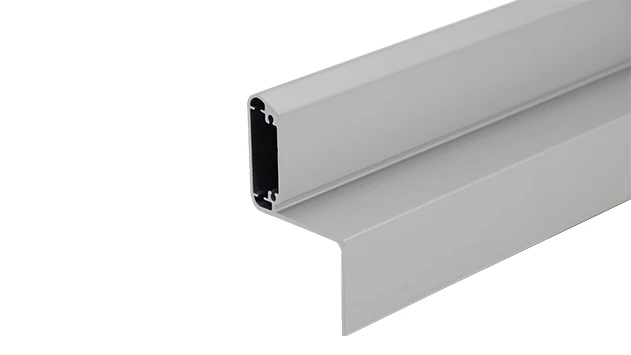
The aluminum guide rails hold the transport goods securely on the roller track. For installation, the guide rails are simply pushed over the roller tracks.To protect sensitive products.
Ever walked through a manufacturing floor and noticed how the little things—the way a workbench fits, how parts glide along a rail—can make or break a team's rhythm? In the world of lean production, where every second and every square inch counts, flexibility isn't just a nice-to-have; it's the heartbeat of efficiency. Today, we're diving into two unsung heroes that keep that heartbeat steady: Aluminum Guide Rail A and Internal Rotational Aluminum Joints . Together, they're not just parts—they're the backbone of a production line that adapts as fast as your ideas do.
Whether you're setting up a new workstation for 3C assembly or revamping a medical device production area, getting these two components right can turn a rigid setup into one that grows with your needs. Let's walk through how they work, how to put them together, and why they might just become your team's new favorite tools.
First Things First: Meet Your New Team Players
Before we grab the tools, let's get to know the stars of the show. Think of this as introductions—because when you understand what each part brings to the table, assembly becomes less "following instructions" and more "building something that works for you ."
Aluminum Guide Rail A: The Silent Workhorse
Aluminum Guide Rail A isn't just a length of metal. It's precision engineered to keep parts moving smoothly, even when the floor gets busy. Made from high-grade aluminum extrusion profile, it's lightweight enough to maneuver but tough enough to handle daily wear—no bending, no warping, even with heavy loads. What really sets it apart? Its T-slot design. Those grooves aren't just for show; they're where you'll attach brackets, stops, or other accessories, turning a simple rail into a customized pathway for your products.
Internal Rotational Aluminum Joints: The Flexibility Experts
If the guide rail is the spine, the internal rotational aluminum joint is the (joint) that lets it twist and turn. These little connectors are designed to lock onto aluminum lean pipe (or the rail itself) while letting you rotate angles up to 180 degrees. Tighten the bolt, and they stay put; loosen it, and you can reposition in seconds. No welding, no drilling—just a quick twist to adapt to a new workflow. It's like having a production line that can "learn" new tricks without calling in a technician.
| Component | Material | Key Feature | Typical Load Capacity |
|---|---|---|---|
| Aluminum Guide Rail A | 6063-T5 Aluminum Extrusion | T-slot design for easy accessory mounting | Up to 150kg/m (even distribution) |
| Internal Rotational Aluminum Joint | High-strength aluminum alloy | 180° rotation with secure locking bolt | Supports radial loads up to 80kg |
Step-by-Step: Putting It All Together
Assembly day doesn't have to feel like a puzzle with missing pieces. With these steps, you'll have your guide rail and joints working in sync in no time—no prior engineering degree required.
What You'll Need (The "Don't Forget These" List)
- Aluminum Guide Rail A (cut to your desired length—pro tip: measure twice, cut once!)
- Internal Rotational Aluminum Joints (quantity depends on your setup; we recommend 1 joint per 1.5m of rail for stability)
- Hex key (usually included with the joints—keep it handy!)
- Aluminum lean pipe (if building a frame; 28mm diameter works best with these joints)
- Rubber mallet (for gentle adjustments—no brute force needed)
- Level (to keep things straight; trust us, your future self will thank you)
Let's Build: 5 Simple Steps
-
Prep the Rail & Joints
Start by wiping down the Aluminum Guide Rail A with a dry cloth—dust and debris love to sneak into T-slots and slow things down. Then, take one rotational joint and loosen its locking bolt with the hex key. You'll feel it give a little—just enough to slide onto the rail or pipe. -
Attach the Joint to the Rail
Slide the joint onto the end of the Aluminum Guide Rail A. If you're connecting the rail to a vertical frame (like the legs of a workbench), position the joint so its rotating arm faces the direction you need. For example, if the rail will slope downward for gravity feeding, angle the joint slightly—this is where that 180° rotation shines! Tighten the bolt just enough to hold it in place for now (we'll finalize later). -
Connect to the Lean Pipe Frame
Now, take your aluminum lean pipe (the vertical or horizontal frame supports) and slide the other end of the rotational joint onto it. Again, keep the bolt loose—we're still in "adjustment mode." Use the level to check that the rail is straight or angled correctly. A wonky rail means parts might get stuck later, so take an extra minute here. -
Lock It In (But Not Too Tight!)
Once everything lines up, grab the hex key and tighten the joint's bolt. You want it snug enough that the joint doesn't wiggle, but not so tight that you strip the threads. A good rule: tighten until you feel resistance, then give it a quarter-turn more. Test the rotation—if you need to adjust later, it should still loosen without a fight. -
Add Extras (Because Details Matter)
Now that the rail and joints are secure, use the T-slots on Aluminum Guide Rail A to add accessories. Need a stop at the end to prevent parts from sliding off? Snap in a plastic end cap. Want to guide small components? Attach side guides (we love the yellow plastic ones for visibility). This is where your setup goes from "functional" to "perfect for your team."
Pro Tip: If you're building a longer rail (over 3m), add a center support bracket. It's a small step that prevents sagging over time—because even the strongest aluminum needs a little backup now and then.

Where Does This Setup Shine? Real-World Wins
These components aren't just for show—they're built to solve real problems on factory floors. Here are a few places we've seen them make the biggest difference:
3C Assembly Lines: Speed Meets Precision
Picture a workstation where workers assemble smartphones. Parts like screens and batteries need to glide smoothly from one station to the next, but each operator might prefer a slightly different angle. With Aluminum Guide Rail A and rotational joints, the rail can slope gently toward the next bench, and if a new model comes in with larger components? Loosen the joints, adjust the angle, and you're back to work—no waiting for a custom rail to be fabricated.
Medical Device Workbenches: Clean, Quiet, Consistent
Medical manufacturing demands two things: sterility and zero room for error. Aluminum's smooth surface is easy to wipe down, and the rotational joints let teams reconfigure workbenches (like our Workbench E) without tools—critical when switching between assembling syringes and surgical tools. Plus, the rail's quiet glide means less noise, which keeps focus sharp during delicate tasks.
Warehouse Pick Stations: Adapt to Inventory Swings
Ever noticed how holiday seasons turn warehouses into chaos? With these rails and joints, you can build temporary flow racks that adjust as stock levels change. One month, it's holding small electronics; the next, larger boxes. Just reposition the joints, adjust the rail angles, and your pickers are moving faster than ever.

Why This Pair Beats the Rest: The "Lean" Difference
You might be thinking, "Can't I just use steel rails or fixed joints?" Sure—but here's why aluminum and rotation are a game-changer for lean production:
-
No More "Set It and Forget It" Regret
Fixed steel setups lock you into one workflow. If your product line changes (and let's be real, when doesn't it?), you're stuck with a rail that's suddenly in the wrong place. Rotational joints let you pivot—literally—so your setup evolves with your business. -
Lightweight, But No Pushover
Aluminum is 30% lighter than steel, so your team can move rails or reconfigure workbenches without heavy lifting equipment. But don't let the weight fool you—this stuff is tough. We've seen Aluminum Guide Rail A hold up to daily use in automotive plants for years, with barely a scratch. -
Saves More Than Time—Saves Money
Custom steel fabrication? Expensive. Replacing a bent rail? Even more so. With these aluminum components, you reuse parts across projects. A rail from an old workbench? Repurpose it as a flow rack guide. Rotational joints? Swap them between setups. It's lean manufacturing at its core: less waste, more value.
Got Questions? We've Got Answers
Even the best setups hit snags. Here's how to troubleshoot the most common issues:
Q: The rail feels wobbly after assembly. Did I do something wrong?
Probably not! Check two things: 1) Are the rotational joints tightened evenly? Sometimes one joint is snug and the other is loose, causing imbalance. 2) Do you need more joints? For longer rails, adding a joint every 1m instead of 1.5m boosts stability. A quick tighten or extra joint usually fixes it.
Q: Parts keep getting stuck on the Aluminum Guide Rail A. Why?
Dust or debris in the T-slots is the usual culprit—grab a soft brush and clean them out. If that doesn't work, check the rail's angle. Too steep, and parts might slide too fast; too shallow, and they drag. A 3-5° slope is perfect for most small to medium parts.
Q: Can I use these joints with other aluminum profiles, or just Aluminum Guide Rail A?
Great question! These rotational joints are designed to work with standard 28mm aluminum lean pipe and most T-slot aluminum profiles (like 4040 or 3030). Just make sure the pipe diameter matches the joint's opening—if in doubt, reach out to your supplier (we're happy to help!).
At the end of the day, manufacturing isn't just about machines and parts—it's about people. It's about the technician who doesn't have to waste 20 minutes adjusting a rigid rail, the supervisor who can scale up production without a major overhaul, and the team that feels proud of a workspace that works with them, not against them.
Aluminum Guide Rail A and Internal Rotational Aluminum Joints might not be the flashiest tools in the shed, but they're the ones that turn "this is how we've always done it" into "look how much better we can do it." So grab your hex key, gather your team, and start building something that adapts, grows, and keeps that lean production heartbeat strong.