- Company Articles
- Products and Technology
- Product knowledge
- Pairing Internal Straight Aluminum Joints with Conveyor Systems: Efficiency Boost

Pairing Internal Straight Aluminum Joints with Conveyor Systems: Efficiency Boost
Related Product
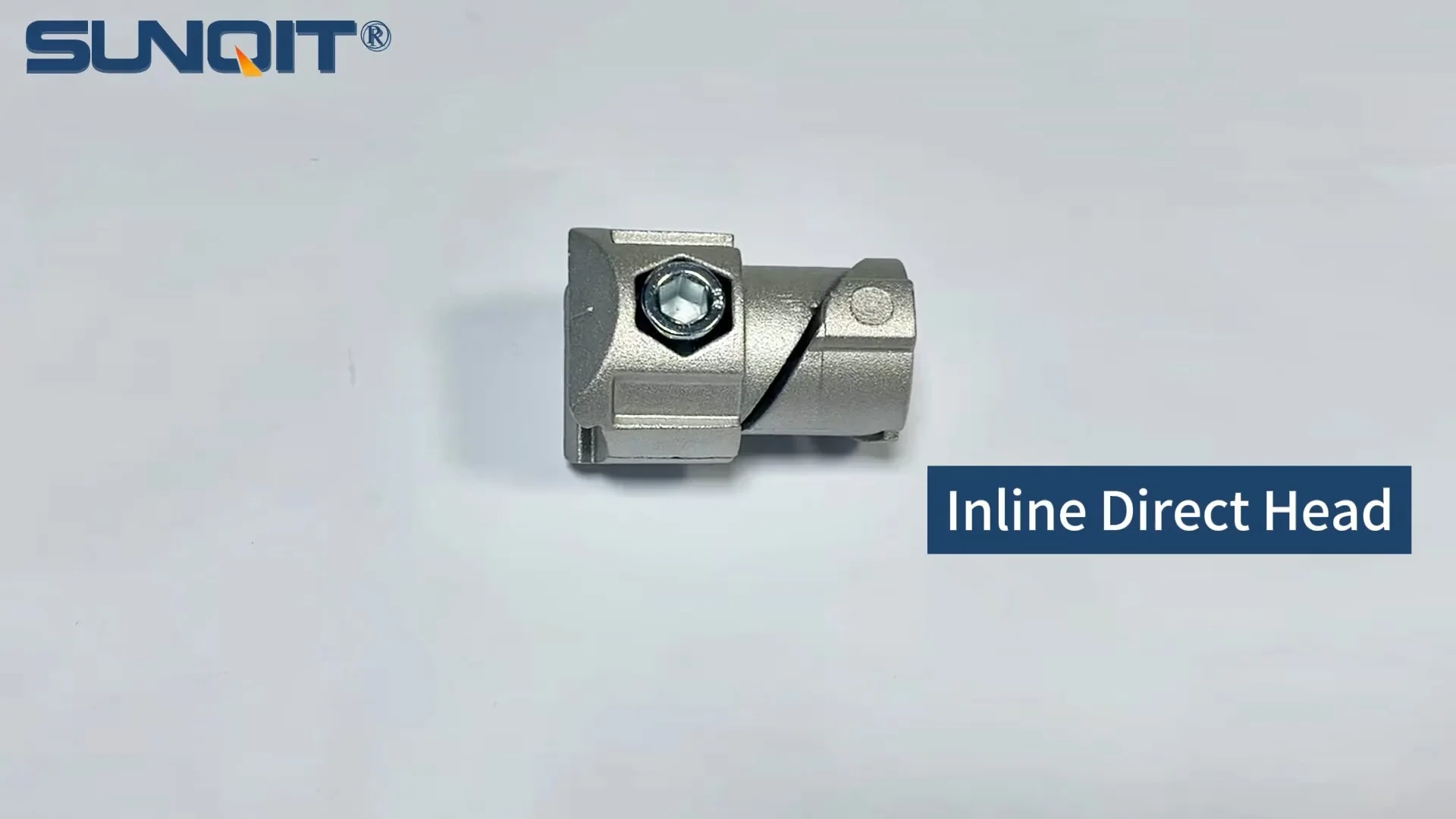
Internal straight aluminum joint
Aluminum pipe joint inside connection used for two pcs 28pcs aluminum pipe connection in straight angle,it connects two pcs pipe from inside.
Walk into any busy manufacturing plant, warehouse, or assembly facility, and you'll notice a common heartbeat: the steady hum of conveyor belts, the rhythmic roll of materials along tracks, and the coordinated movement of products from one station to the next. It's a symphony of productivity—when everything works. But too often, that symphony hits a sour note: a wobbly joint here, a jammed roller there, or a setup that takes hours to reconfigure when production needs shift. These small hiccups add up, eating into time, increasing frustration, and dragging down your bottom line. What if there was a way to eliminate those disruptions, make your workflow more agile, and turn those daily headaches into smooth, seamless operations? The answer lies in a powerful partnership: internal straight aluminum joints paired with modern conveyor systems. Together, they're not just tools—they're the foundation of a lean, adaptable, and hyper-efficient workspace that grows with your business.
Understanding the Building Blocks: From Joints to Conveyors
Before we dive into how these two elements transform efficiency, let's break down what they are and why they matter. At first glance, a joint or a conveyor might seem like simple pieces of hardware, but their design and functionality are anything but. Let's start with the unsung hero: the internal straight aluminum joint.
Internal Straight Aluminum Joints: The Quiet Powerhouse
Think of a traditional manufacturing setup—maybe you've seen it: steel pipes bolted together with bulky, external joints that stick out like sore thumbs. They're heavy, hard to adjust, and over time, the bolts loosen, leading to wobbly structures. Now, imagine a joint that's sleek, lightweight, and built to integrate seamlessly with aluminum pipes. That's the internal straight aluminum joint. Unlike external joints that clamp around pipes, these joints fit inside the aluminum tube, creating a clean, flush connection. This design isn't just about aesthetics—it's about strength, flexibility, and precision.
Made from high-grade aluminum alloy, these joints are resistant to corrosion, lightweight enough to handle without heavy equipment, and strong enough to support the demands of daily use. What really sets them apart, though, is their internal rotation mechanism. Need to adjust the angle of a workbench or reposition a conveyor track? Instead of fumbling with wrenches and loosening bolts, you can simply rotate the joint from the inside, lock it into place, and get back to work. It's a small change that saves big time—especially when you're reconfiguring a production line for a new product or seasonal demand.
Conveyor Systems: The Backbone of Material Flow
Now, pair that flexibility with a conveyor system, and you've got a match made in operational heaven. Conveyors are the circulatory system of any facility, moving materials, parts, and products where they need to go—without relying on manual lifting or cart-pushing. But not all conveyors are created equal. Modern systems, especially those built with aluminum profiles and roller tracks, are a far cry from the clunky, one-size-fits-all belt conveyors of the past. They're modular, meaning you can add or remove sections, change directions, or adjust heights with minimal effort. And when those conveyors are built using internal straight aluminum joints, their adaptability skyrockets.
Roller Tracks: The Smooth Operators
A key component of many conveyor systems is the roller track. These tracks, lined with small, free-spinning rollers, allow materials to glide along with minimal friction—perfect for moving boxes, bins, or components between workstations. But again, the magic is in the details. Roller tracks built with aluminum profiles and connected via internal straight aluminum joints are lightweight, easy to assemble, and incredibly durable. The aluminum profiles provide a sturdy base, while the joints ensure the track stays aligned, even under heavy loads. No more bent steel tracks or rollers that seize up; these systems are designed to keep moving, day in and day out.
Aluminum Profiles: The Silent Framework
None of this works without a solid framework, and that's where aluminum profiles come in. These extruded aluminum rails, with their T-slot design, are the building blocks of modern workspaces. They're strong yet lightweight, corrosion-resistant, and compatible with a wide range of accessories—from shelves and workbenches to conveyor tracks and tool holders. When paired with internal straight aluminum joints, aluminum profiles become a modular system where you can snap together structures in minutes, not hours. Want to add a new section to your conveyor line? Just cut an aluminum profile to length, insert an internal joint, and connect it to the existing track. It's like building with giant, industrial Legos—only sturdier and designed for real-world productivity.
Why This Pairing Transforms Lean Systems
Lean manufacturing isn't just a buzzword—it's a philosophy centered on eliminating waste, optimizing flow, and continuous improvement. And when it comes to waste, time and inefficiency are two of the biggest culprits. Internal straight aluminum joints and conveyor systems are tailor-made for lean principles, addressing common pain points that slow down traditional setups. Let's break down the benefits.
1. Waste Reduction: Less Time, More Action
In a traditional setup, reconfiguring a workbench or conveyor line can take hours. You need tools, maybe a team of workers, and often, you're left with leftover materials or mismatched parts. With internal straight aluminum joints, that reconfiguration time drops dramatically. Since the joints lock into place without external bolts, you can disassemble and reassemble structures in a fraction of the time. For example, a small electronics manufacturer we worked with recently used to spend 6 hours reconfiguring their assembly line for a new product. After switching to aluminum profiles and internal joints, they cut that time to 1.5 hours. That's 4.5 hours saved per changeover—time that can be spent producing, not rearranging.
Conveyors, especially roller tracks, further reduce waste by eliminating manual material handling. Instead of workers pushing heavy carts back and forth, products flow automatically to the next station. This not only saves time but also reduces the risk of injury, another form of waste in lean terms.
2. Flexibility: Adapt Like a Chameleon
Market demands change fast. One month, you're producing 10,000 units of Product A; the next, a sudden surge in orders for Product B requires a completely different assembly process. Traditional setups, with their fixed steel structures and welded joints, can't keep up. They're rigid, like trying to fit a square peg into a round hole. Internal straight aluminum joints and conveyor systems, though, are flexible by design. Need to shorten a conveyor track? Remove a section. Add a new workstation? Snap on an aluminum profile with a joint. It's adaptability without the hassle, letting you pivot quickly and seize opportunities instead of scrambling to keep up.
3. Durability: Built to Last, Not to replace
Aluminum is naturally resistant to rust and corrosion, making it ideal for busy facilities where spills, humidity, or harsh chemicals are common. Unlike steel, which can degrade over time, aluminum profiles and joints maintain their strength and appearance for years. Roller tracks, too, benefit from aluminum's durability—their rollers glide smoothly without seizing, and the tracks themselves don't bend or warp under heavy loads. This longevity means fewer replacements, less maintenance, and lower long-term costs. A warehouse in the automotive industry we partnered with reported a 40% reduction in maintenance costs after switching to aluminum conveyor systems with internal joints. Instead of replacing bent steel tracks every 6 months, their aluminum tracks lasted over 3 years with minimal upkeep.
4. Safety: Sturdy, Stable, and Secure
A wobbly workbench or a misaligned conveyor isn't just inefficient—it's dangerous. Loose joints can cause structures to collapse, and jammed conveyors can lead to pinched fingers or falls. Internal straight aluminum joints, with their flush, internal design, eliminate protruding bolts and sharp edges that catch on clothing or skin. The tight, secure connection also ensures structures stay stable, even under heavy loads. Roller tracks, with their smooth-rolling wheels, reduce the risk of jams, and aluminum profiles are lightweight enough to handle safely during reconfiguration. Safety isn't just a bonus here—it's built into the design.
Traditional vs. Modern: A Side-by-Side Comparison
| Feature | Traditional Steel Joints & Conveyors | Internal Straight Aluminum Joints & Aluminum Conveyors |
|---|---|---|
| Installation Time | 4–8 hours for a basic conveyor line | 1–2 hours for the same setup |
| Reconfiguration Flexibility | Requires tools, cutting, and welding; often permanent | Tool-free adjustments; modular and reusable |
| Weight | Heavy (steel pipes/joints add bulk) | Lightweight (aluminum reduces load by 30–50%) |
| Maintenance Needs | Frequent tightening of bolts; prone to rust/corrosion | Minimal—no external bolts; corrosion-resistant |
| Load Capacity | High, but rigidity limits adaptability | High, with flexibility to adjust for varying loads |
| Long-Term Cost | Higher (frequent replacements, maintenance, downtime) | Lower (durable, low maintenance, reduced downtime) |

Real-World Impact: Where This Pairing Shines
Theory is great, but let's talk about real results. From small workshops to large-scale factories, internal straight aluminum joints and conveyor systems are making a difference across industries. Here are a few examples of how they're being put to work.
Automotive Assembly Lines: Speed and Precision
Automotive manufacturing is all about precision and speed. Every part—from door panels to engine components—needs to move seamlessly between stations. A leading auto parts supplier recently revamped their assembly line using aluminum profiles, internal straight aluminum joints, and roller track conveyors. The result? They reduced the time it took to move parts from the welding station to the painting station by 25%. The modular design also let them add a new quality control checkpoint in just a day, something that would have taken a week with their old steel setup. Workers reported less fatigue from pushing carts, and the plant saw a 15% increase in daily output.
Electronics Manufacturing: Clean, Flexible Workspaces
Electronics assembly requires clean, static-free environments, and frequent reconfigurations for small-batch production. A smartphone component manufacturer turned to ESD (electrostatic discharge) workbenches built with aluminum profiles and internal joints. The ESD-safe materials protected sensitive components, while the modular design let them switch between assembling circuit boards and testing modules in under an hour. Roller track conveyors, integrated into the workbenches via internal joints, moved components smoothly without generating static, reducing defects by 30%.
Warehouse Logistics: Adapting to E-Commerce Demands
E-commerce has turned warehouse logistics upside down. Orders come in 24/7, and fulfillment centers need to process them faster than ever. A regional logistics company with a 50,000-square-foot warehouse was struggling with bottlenecks in their picking area. They replaced their fixed steel shelving and manual cart system with aluminum roller track conveyors connected by internal straight joints. Now, bins of products flow directly from storage to packing stations, and the conveyor lines can be reconfigured overnight to handle seasonal spikes (like the holiday rush). The warehouse increased its order processing capacity by 40% and cut picking errors by 20%.
Case Study: How XYZ Manufacturing Cut Downtime by Half
The Challenge: XYZ Manufacturing, a mid-sized producer of industrial tools, was facing two major issues: their assembly line took 8 hours to reconfigure for new product runs, and frequent jams in their steel roller conveyors were causing 2–3 hours of downtime per week. Their old setup used steel pipes with external bolted joints, and the conveyors were prone to rust, which gummed up the rollers.
The Solution: They partnered with a supplier to install aluminum profile workstations and roller track conveyors, all connected with internal straight aluminum joints. The workstations were built with ESD-safe surfaces for handling metal components, and the roller tracks were designed to integrate seamlessly with the assembly line via modular joints.
The Results:
- Reconfiguration Time: From 8 hours to 1.5 hours per product changeover.
- Downtime: Conveyor jams dropped to less than 30 minutes per week, a 85% reduction.
- Productivity: Daily output increased by 25%, as workers spent less time waiting and more time assembling.
- Maintenance Costs: Annual maintenance costs for conveyors and workstations fell by $12,000.
Quote from the Plant Manager: "We used to dread product launches because of the setup time. Now, we can switch between products in the morning and be back to full production by lunch. The internal joints are a game-changer—no more fighting with bolts or worrying about rust. It's like night and day."

Keeping It Running Smoothly: Maintenance Tips
Even the most durable systems need a little care to keep performing at their best. Here's how to maintain your internal straight aluminum joints and conveyor systems for long-term efficiency.
For Internal Straight Aluminum Joints:
- Regular Inspections: Check joints monthly for signs of wear, especially in high-load areas. Look for cracks in the aluminum or looseness in the internal locking mechanism.
- Cleaning: Wipe joints with a damp cloth to remove dust and debris. For stubborn grime, use a mild detergent—avoid harsh chemicals that can damage the aluminum finish.
- Lubrication: The internal rotation mechanism may need light lubrication every 6 months (check the manufacturer's guidelines). Use a dry lubricant (like silicone spray) to avoid attracting dust.
For Roller Track Conveyors:
- Roller Cleaning: ,,.
- Alignment Checks: .,.,,.
- Wheel Replacement: (),..
For Aluminum Profiles:
- Surface Care: ,.,.
- Tightening Connections: ,..
Looking Ahead: The Future of Modular Workspaces
As technology advances and industries evolve, the demand for flexible, efficient workspaces will only grow. Internal,.
,(IoT).,,,,.,,.
.100%,,.,,,.
,.(cobots),.cobots,.
Conclusion: Your Workspace, Reimagined
——,,..,,,,,,.
,.,,.,,,.
,.,——?.