- Company Articles
- Products and Technology
- Product knowledge
- Parallel Fixation Aluminum Pipe Joints: Anti-Static Applications in Electronics

Parallel Fixation Aluminum Pipe Joints: Anti-Static Applications in Electronics
Related Product
Parallel Fixation Aluminum Pipe Joint
Aluminum parallel joint for two pcs 28mm aluminum pipe connected by parallel direction.
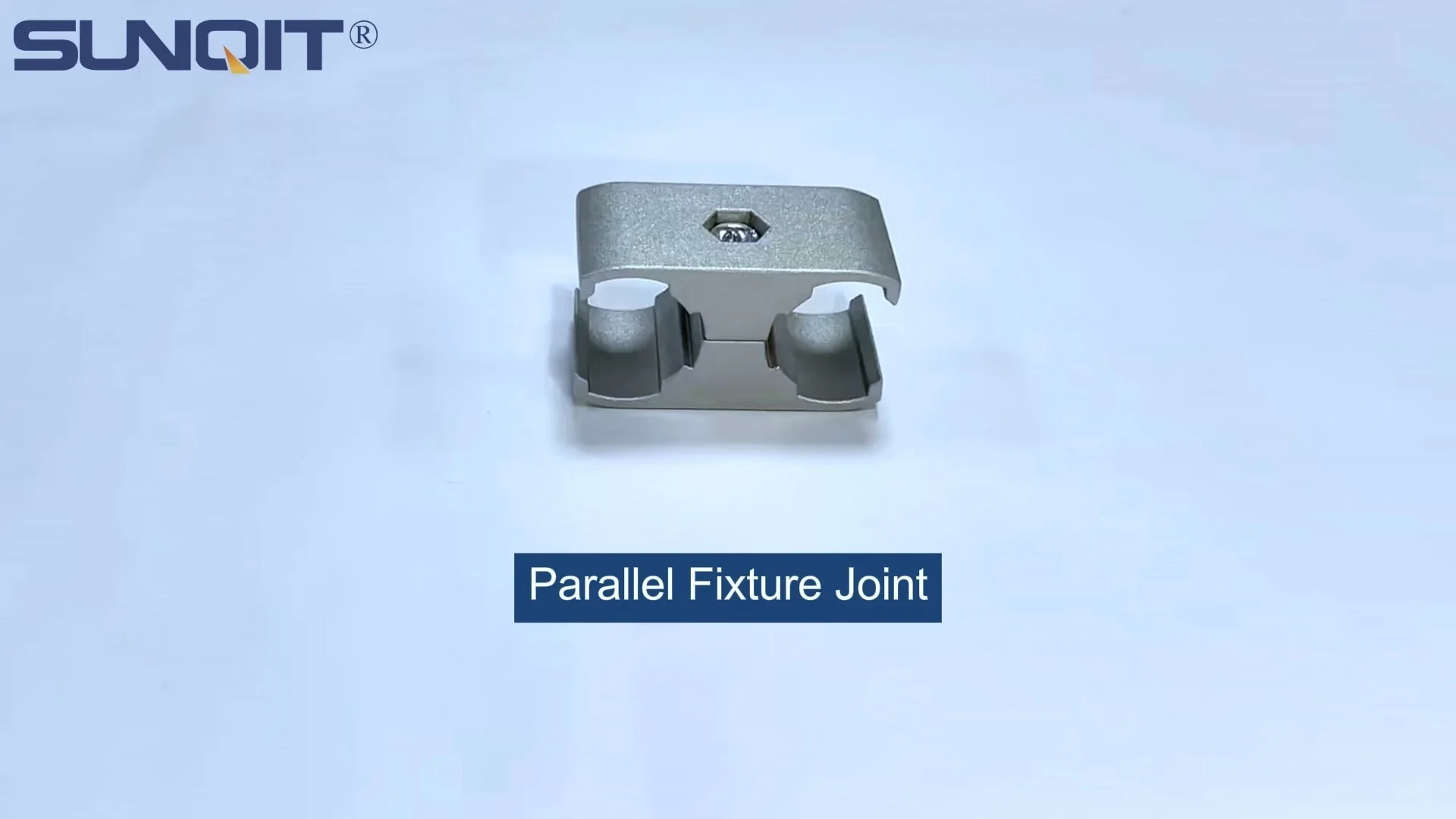
Walk into any modern electronics manufacturing facility, and you'll likely notice a symphony of precision: robotic arms gliding silently, technicians hunched over workbenches with magnifying glasses, and conveyor belts carrying delicate components from station to station. But beneath this seamless choreography lies a hidden threat—one that can turn a perfectly assembled circuit board into a useless hunk of plastic and metal in an instant: electrostatic discharge (ESD). For manufacturers, ESD isn't just a technical term; it's a daily battle. A single spark, invisible to the naked eye, can fry microchips, corrupt data, and derail production schedules. That's where the unsung heroes of the factory floor come in: parallel fixation aluminum pipe joints. These unassuming connectors aren't just pieces of metal—they're the backbone of anti-static workspaces, the quiet guardians of electronic integrity, and a cornerstone of efficient, lean manufacturing systems.
In this article, we'll dive into the world of parallel fixation aluminum pipe joints, exploring how their design, materials, and functionality make them indispensable in ESD workstations. We'll uncover why aluminum, a material celebrated for its versatility, is the ideal choice for these joints, and how they integrate seamlessly with lean systems to streamline production while keeping static at bay. Whether you're a plant manager looking to reduce defects, a technician curious about the tools you use daily, or simply someone fascinated by the engineering that powers our electronic devices, this deep dive will show you why these small but mighty components are critical to the electronics industry's success.
Understanding Parallel Fixation Aluminum Pipe Joints: More Than Just a Connector
At first glance, a parallel fixation aluminum pipe joint might look like little more than a metal bracket with a few holes. But that simplicity is deceptive. These joints are engineered with a specific purpose: to connect aluminum pipes (or profiles) in a way that's both rigid and adjustable, creating structures that can withstand the demands of a busy factory while maintaining the precision required for anti-static applications. Let's break down what makes them unique.
Design That Balances Strength and Flexibility
Parallel fixation joints are designed to secure two or more aluminum pipes in a parallel configuration, hence the name. Unlike standard joints that might allow for rotation or swiveling, these joints prioritize stability. They typically feature clamping mechanisms—often screws or bolts—that grip the aluminum pipes tightly, preventing movement that could disrupt the flow of materials or create friction (a common source of static buildup). But here's the kicker: they're also adjustable. Loosen a few screws, reposition the pipes, and retighten, and you've got a completely new structure. This flexibility is a game-changer in electronics manufacturing, where production lines are constantly evolving to accommodate new products or processes.
Aluminum: The Material of Choice for Anti-Static Solutions
Why aluminum? For starters, aluminum is a lightweight metal, which means structures built with aluminum pipes and joints are easy to move and reconfigure—no small feat in a factory where workstations might need to be rearranged weekly. But more importantly, aluminum is conductive. Wait, isn't conductivity a bad thing for anti-static applications? Actually, no—when managed properly. Static electricity builds up when electrons accumulate on a surface, and the risk comes when that charge discharges suddenly (like a spark). Conductive materials like aluminum allow that charge to dissipate slowly and safely, rather than building up to dangerous levels. Parallel fixation aluminum pipe joints, made from high-grade aluminum, act as part of a "grounding network" in ESD workstations, channeling static away from sensitive components and into the floor, where it can't cause harm.
But aluminum offers another advantage: corrosion resistance. Electronics manufacturing environments are often tightly controlled, with specific humidity and temperature levels to minimize static. However, even in these conditions, metal components can degrade over time. Aluminum's natural oxide layer protects it from rust and corrosion, ensuring that joints remain strong and conductive for years, even with daily use. This durability reduces maintenance costs and ensures that anti-static properties don't diminish over time—a critical factor when lives (and livelihoods) depend on consistent performance.
The Critical Need for Anti-Static Solutions in Electronics: Why Even Small Sparks Matter
To appreciate the role of parallel fixation aluminum pipe joints, we first need to understand why ESD is such a threat in electronics manufacturing. Let's start with a simple example: imagine picking up a plastic comb and running it through your hair. The friction creates static electricity, and if you hold the comb near a piece of paper, the paper will stick to it. Now, scale that up to a factory setting, where components like microprocessors have circuits so small that a single static discharge of just 250 volts can damage them. To put that in perspective, a human can't even feel a static shock until it reaches about 3,000 volts. By the time you feel a spark, the damage is already done.
The Cost of Static: Beyond Damaged Components
For manufacturers, ESD damage isn't just about replacing a $5 chip. It's about the ripple effects: a batch of 1,000 circuit boards might have 10 defective units due to static, but testing each one to find those 10 takes time and labor. Worse, some defects might not show up immediately—components could fail months after they've been shipped, leading to product recalls, angry customers, and a tarnished reputation. According to the Electrostatic Discharge Association (ESDA), ESD costs the electronics industry an estimated $5 billion annually in damaged goods, lost production, and warranty claims. That's a staggering number, and it's why anti-static measures are non-negotiable.
ESD Workstations: The First Line of Defense
An ESD workstation is more than just a table with a rubber mat. It's a carefully designed environment where every surface, tool, and component is engineered to prevent static buildup and discharge. This includes anti-static flooring, wrist straps for technicians, ionizers to neutralize air particles, and—you guessed it—structures built with materials like aluminum pipes and parallel fixation joints. These workstations are grounded, meaning they're connected to the earth via a conductor, allowing any static charge to flow away harmlessly. Parallel fixation joints play a key role here: by securely connecting aluminum pipes (which are conductive), they ensure that the entire structure—whether it's a workbench, a material rack, or a conveyor system—is part of that grounding network. No gaps, no weak points, just a continuous path for static to escape.
"We used to have a problem with static in our smartphone assembly line—about 2% of our circuit boards were failing due to ESD," says Maria Gonzalez, a production manager at a major electronics manufacturer in Texas. "After reconfiguring our workstations with aluminum pipes and parallel fixation joints, that number dropped to 0.2%. It wasn't just the joints themselves, but how they worked with our anti-static mats and grounding cables. The whole system became more integrated, more reliable. Now, we don't even think about static anymore—it's just… handled."

How Parallel Fixation Joints Support ESD Workstations: Building a Static-Free Ecosystem
Now that we understand the "why" behind anti-static measures, let's explore the "how." Parallel fixation aluminum pipe joints aren't standalone solutions—they're part of a larger ecosystem that includes aluminum profiles, roller tracks, and other components. Together, these elements create workstations that are not only static-safe but also efficient and adaptable.
Creating a Continuous Grounding Path
One of the most critical functions of parallel fixation joints is ensuring that the entire workstation is grounded. Here's how it works: aluminum pipes are conductive, so when they're connected by parallel fixation joints (which are also made of aluminum), they form a continuous metal network. This network is then connected to the facility's grounding system via a cable or clamp. Any static charge that builds up on the workstation—whether from a technician's movements, friction between components, or environmental factors—travels through the aluminum pipes, into the joints, and down to the ground. There's no break in the chain, no weak link that could allow static to accumulate. This is far more reliable than using non-conductive materials (like plastic joints), which would interrupt the grounding path and leave components vulnerable.
Stability That Reduces Friction (and Static)
Static doesn't just come from human contact; it also builds up when materials rub against each other. In a busy workstation, components are constantly moving—sliding across workbenches, rolling down roller tracks, or being transported on trolleys. If those surfaces are unstable or uneven, components might jostle, creating friction and static. Parallel fixation joints solve this by creating rigid structures. When aluminum pipes are secured with these joints, the resulting workbench or rack doesn't wobble or shift. Roller tracks, which are often mounted on aluminum profiles connected by parallel fixation joints, stay aligned, ensuring that components glide smoothly without unnecessary friction. Less friction means less static, and less static means fewer defects.
Adaptability for Changing Needs
Electronics manufacturing is a fast-paced industry. Today's workstation might be assembling smartwatch components; tomorrow, it could be retooled for laptop motherboards. Parallel fixation joints make reconfiguration quick and easy. Unlike welded or permanently fixed structures, these joints allow technicians to disassemble and reassemble workstations in hours, not days. Need to add a shelf to a material rack? Loosen the joints, add a new aluminum pipe, and retighten. Want to adjust the height of a workbench to accommodate a new machine? Simply reposition the vertical pipes in the joints. This adaptability ensures that anti-static measures don't get left behind during reconfigurations. Even as the workstation changes, the grounding path remains intact, and stability is maintained—critical for keeping static under control, no matter what's being produced.

Integration with Lean Systems: Efficiency Meets Anti-Static Protection
Lean manufacturing isn't just a buzzword—it's a philosophy centered on eliminating waste, streamlining processes, and maximizing value. At its core, lean is about doing more with less: less time, less space, less materials. Parallel fixation aluminum pipe joints align perfectly with this philosophy, offering the flexibility and efficiency that lean systems demand, all while supporting anti-static goals. Let's see how they work together.
Reducing Waste Through Modular Design
Traditional manufacturing structures—like welded steel racks or fixed workbenches—are often "one and done." If a process changes, the entire structure might need to be scrapped and replaced, leading to waste. Parallel fixation joints, on the other hand, are modular. Aluminum pipes and joints can be reused and repurposed indefinitely. A material rack that's no longer needed for one production line can be disassembled and rebuilt into a trolley for another line. This reduces material waste and cuts down on costs, a key pillar of lean manufacturing. What's more, because these joints are lightweight, they're easy to transport and reconfigure, saving time and labor that would otherwise be spent on building new structures from scratch.
Streamlining Workflow with Customizable Structures
Lean systems thrive on workflow optimization—ensuring that materials and components move smoothly from one step to the next, with minimal delays. Parallel fixation joints make it easy to design custom structures that fit the unique needs of a production line. For example, a roller track connected to an ESD workstation via aluminum profiles and parallel fixation joints can be angled precisely to ensure components flow to the next station at the optimal speed. Material racks can be built to hold exactly the number of parts needed for a shift, reducing overstock and clutter. Workbenches can be tailored to the height and reach of technicians, minimizing unnecessary movement (another form of waste in lean terms). Every inch of space is used efficiently, and every structure serves a specific, value-adding purpose.
Supporting Just-In-Time (JIT) Production
Just-In-Time production, a cornerstone of lean manufacturing, relies on delivering components to the production line exactly when they're needed—not before, not after. This requires material handling systems that are agile and responsive. Parallel fixation joints enable the creation of lightweight, mobile trolleys and racks that can be quickly moved to where they're needed. For example, a turnover trolley built with aluminum pipes and parallel fixation joints is light enough for a single technician to push, yet strong enough to carry heavy components. When a workstation runs low on parts, the trolley is there in minutes, eliminating wait times. And because these structures are part of the anti-static ecosystem, the components on the trolley remain protected from ESD during transport—no need for additional anti-static packaging that would create waste.

Materials Matter: Why Aluminum Profiles and Parallel Fixation Joints Are a Match Made in the Factory
We've mentioned aluminum several times, but it's worth diving deeper into why this material is so critical for parallel fixation joints and anti-static applications. Aluminum isn't just chosen for its conductivity—it's a perfect storm of properties that make it ideal for the harsh, fast-paced environment of electronics manufacturing.
Conductivity Without the Weight
Copper is more conductive than aluminum, so why not use copper joints? The answer is simple: weight. Copper is dense and heavy, making structures built with copper pipes and joints cumbersome and difficult to reconfigure. Aluminum, by contrast, has about one-third the density of copper, so even large structures (like multi-tiered material racks) are lightweight enough to move. This lightness is a boon for lean systems, where flexibility and mobility are key. Yet aluminum still conducts electricity well enough to ensure that static charges dissipate quickly—making it the sweet spot between conductivity and practicality.
Durability That Stands Up to Daily Wear
Factory floors are tough on equipment. Workstations get bumped by trolleys, joints get tightened and loosened repeatedly during reconfigurations, and cleaning chemicals can corrode lesser materials. Aluminum's natural oxide layer acts as a protective barrier, preventing rust and corrosion. This means parallel fixation aluminum joints can withstand years of use without degrading, ensuring that the grounding path remains intact and the structure stays stable. Stainless steel is also durable, but it's heavier and more expensive than aluminum—making aluminum the more cost-effective choice for most applications.
Compatibility with a Range of Accessories
Parallel fixation joints don't work in isolation—they're part of a larger system of aluminum profiles, roller tracks, casters, and accessories. Aluminum's malleability makes it easy to machine, so manufacturers can create a wide range of compatible components: T-slot aluminum profiles that allow for easy mounting of roller tracks or shelves, end caps that protect against sharp edges, and brackets that connect joints to other structures. This compatibility means that building an anti-static, lean workstation isn't a matter of cobbling together mismatched parts—it's about selecting components from a cohesive system, ensuring everything works together seamlessly. For example, a roller track placon mount (used to connect roller tracks to aluminum profiles) is designed to fit perfectly with parallel fixation joints, creating a stable, static-free path for components.
Comparing Joint Types: Why Parallel Fixation Aluminum Joints Outperform the Rest
Not all joints are created equal. When it comes to building anti-static workstations in lean environments, the type of joint you choose can make or break your efforts. Let's compare parallel fixation aluminum pipe joints with other common options—like plastic joints, stainless steel joints, and standard swivel joints—to see why they stand out.
| Feature | Parallel Fixation Aluminum Joints | Plastic Joints | Stainless Steel Joints | Standard Swivel Joints |
|---|---|---|---|---|
| Anti-Static Performance | Excellent (conductive, maintains grounding path) | Poor (non-conductive, interrupts grounding) | Good (conductive, but heavier) | Variable (depends on material; swivel can loosen grounding) |
| Weight | Lightweight (easy to reconfigure) | Lightweight | Heavy (hard to move/reconfigure) | Light to medium (varies by material) |
| Stability | High (locks pipes in parallel; minimal movement) | Low (can flex under weight; prone to loosening) | High (but rigidity makes reconfiguration hard) | Low (designed for movement, not stability) |
| Cost-Effectiveness | High (durable, reusable, low maintenance) | Low upfront cost, but short lifespan (needs frequent replacement) | Low (expensive upfront and heavy) | Medium (but requires replacement due to wear on swivel parts) |
| Lean Compatibility | High (easily reconfigurable, lightweight, modular) | Medium (light but not durable; creates waste from replacements) | Low (heavy, hard to reconfigure) | Medium (flexible but not stable enough for lean workflows) |
As the table shows, parallel fixation aluminum joints excel in the areas that matter most for anti-static, lean environments: they maintain grounding, offer stability, are lightweight and reconfigurable, and provide long-term cost savings. Plastic joints might be cheap, but they sacrifice anti-static protection and durability. Stainless steel is strong but heavy and expensive. Swivel joints offer flexibility but lack the stability needed to reduce friction and static. For electronics manufacturers, the choice is clear: parallel fixation aluminum pipe joints deliver the best of all worlds.
Real-World Impact: A Case Study in Reducing Defects with Parallel Fixation Joints
To truly understand the value of parallel fixation aluminum pipe joints, let's look at a real-world example. Consider a mid-sized electronics manufacturer in California that produces printed circuit boards (PCBs) for medical devices. A few years ago, the company was struggling with a 3% defect rate due to ESD—higher than the industry average of 1-2%. For a company producing 10,000 PCBs per month, that meant 300 defective boards, costing tens of thousands of dollars in wasted materials and rework.
Their old workstations were built with a hodgepodge of materials: wooden workbenches, plastic shelving, and steel pipes connected by welded joints. The wooden surfaces generated static, the plastic shelves interrupted grounding, and the welded steel structures were impossible to reconfigure. When the production team switched to aluminum profiles connected by parallel fixation joints, the results were dramatic.
First, the new workstations were fully grounded. Aluminum pipes and joints created a continuous path for static to dissipate, and anti-static mats (mounted on the aluminum frames) provided an extra layer of protection. Second, the roller tracks, now mounted on stable aluminum profiles, reduced friction, cutting down on static from component movement. Third, the team could reconfigure the workstations in hours, not days, allowing them to test new layouts that minimized unnecessary movement (a key lean principle). Within six months, the defect rate dropped to 0.5%—a 83% reduction. The savings from fewer defective boards, combined with the efficiency gains from leaner workflows, paid for the new equipment in less than a year.
"We didn't realize how much the old workstations were holding us back," says David Chen, the company's production manager. "The parallel fixation joints made the workstations feel… alive. We could adjust them on the fly, add shelves when we needed more space, and move entire lines to make room for new machines. And the static issues? They just disappeared. Our technicians no longer worry about frying a board—they can focus on building quality products. That's the real win."
Installation and Maintenance: Keeping Your Joints (and Workstations) in Top Shape
Like any piece of equipment, parallel fixation aluminum pipe joints require proper installation and maintenance to perform at their best. Fortunately, they're designed to be user-friendly, with simple steps that even novice technicians can follow. Here's what you need to know.
Installation Tips for Maximum Performance
Installing parallel fixation joints is straightforward, but attention to detail ensures a stable, grounded structure:
- Clean the pipes first: Dust, oil, or debris on the aluminum pipes can prevent the joints from clamping properly. Wipe the pipes with a clean, dry cloth before assembly.
- Align pipes carefully: Parallel fixation joints rely on proper alignment to maintain stability. Use a level to ensure pipes are straight and parallel before tightening the screws.
- Tighten evenly: When securing the joint, tighten the screws in a crisscross pattern (like you would with a car tire) to ensure even pressure. Over-tightening can strip threads; under-tightening can lead to wobbling.
- Test the grounding path: After assembly, use a multimeter to check that the entire structure is grounded. The resistance between the workstation and the ground should be less than 30 ohms (the industry standard for anti-static workspaces).
Maintenance: Simple Steps for Longevity
Parallel fixation aluminum joints are low-maintenance, but a little care goes a long way:
- Inspect regularly: Check joints monthly for loose screws, signs of corrosion, or damage. Tighten any loose screws and replace damaged joints immediately.
- Clean with mild detergent: If joints get dirty, wipe them with a damp cloth and mild soap. Avoid harsh chemicals, which can damage the aluminum's oxide layer.
- Lubricate threads occasionally: A drop of anti-corrosive lubricant on the screws can make reconfiguration easier and prevent threads from seizing.
- replace when worn: While aluminum is durable, joints that are repeatedly loosened and tightened may eventually wear out. replace any joint that no longer clamps securely—don't risk a unstable or ungrounded structure.
The Future of Parallel Fixation Joints: Innovations on the Horizon
As electronics continue to shrink and become more powerful, the demand for anti-static solutions will only grow. Parallel fixation aluminum pipe joints are evolving to meet these new challenges. Manufacturers are experimenting with new alloys that offer even better conductivity and strength, and 3D printing is opening up possibilities for custom joint designs tailored to specific applications. Some companies are even integrating smart sensors into joints, which can monitor grounding continuity in real time and alert technicians if a connection is lost—adding an extra layer of protection.
Another trend is the move toward modular systems, where joints, pipes, and accessories are designed to work together seamlessly across brands. This interoperability will make it even easier for manufacturers to build custom workstations that fit their unique needs. And as sustainability becomes a bigger priority, aluminum's recyclability will make it an even more attractive choice—parallel fixation joints can be melted down and repurposed at the end of their lifespan, reducing waste and environmental impact.
Conclusion: The Quiet Guardians of Our Electronic World
Parallel fixation aluminum pipe joints may not be the most glamorous components in a factory, but they're undoubtedly among the most important. They're the unsung heroes that keep static at bay, ensure our electronic devices work as intended, and enable the lean, efficient manufacturing that powers the tech industry. From the smartphone in your pocket to the medical devices that save lives, these small but mighty joints play a role in bringing innovation to life.
As we've explored, their success lies in their design—balancing strength and flexibility, conductivity and durability—and their ability to integrate with anti-static and lean systems. For manufacturers, they're more than just connectors; they're a investment in quality, efficiency, and peace of mind. For technicians, they're the reliable tools that let them focus on what they do best: building the technology that shapes our world.
So the next time you walk into an electronics factory, take a moment to look at the workstations, the material racks, and the roller tracks. Chances are, you'll see parallel fixation aluminum pipe joints holding them all together—quietly, steadily, and without fanfare. And now, you'll know just how much they contribute to the products we rely on every day.