- Company Articles
- Products and Technology
- Product knowledge
- Parallel Fixation Aluminum Pipe Joints for Flexible Workstations: Design Ideas

Parallel Fixation Aluminum Pipe Joints for Flexible Workstations: Design Ideas
Related Product
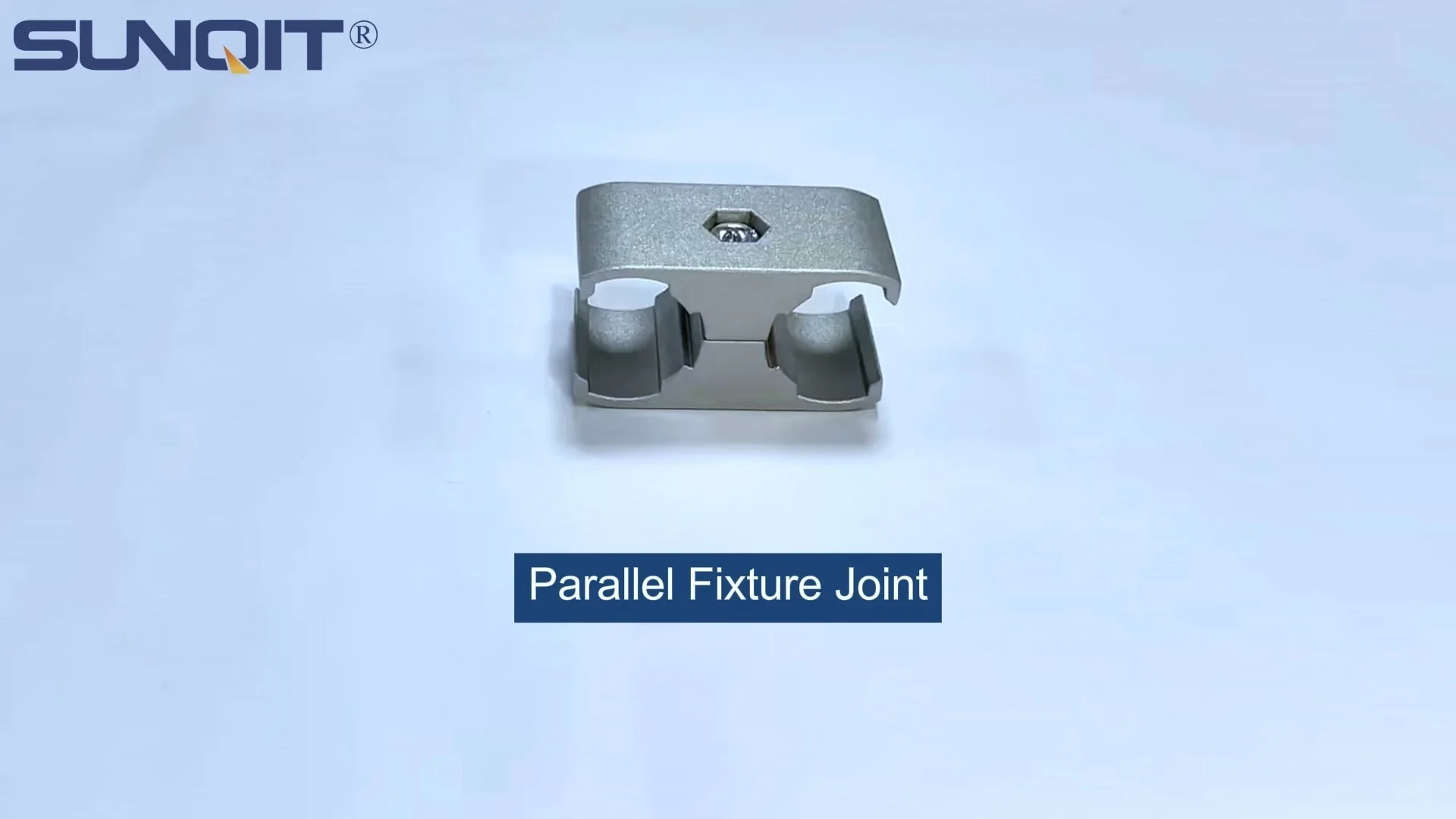
Parallel Fixation Aluminum Pipe Joint
Aluminum parallel joint for two pcs 28mm aluminum pipe connected by parallel direction.
In today's fast-paced manufacturing landscape, the ability to adapt quickly isn't just a competitive advantage—it's a necessity. Production lines shift, product designs evolve, and team workflows change overnight. Yet for decades, many workshops and factories have been held back by rigid, one-size-fits-all workstations: welded steel frames that take days to reconfigure, heavy wooden benches that can't be adjusted, and material racks that become obsolete the moment a new part comes into production. What if there was a way to build workstations that grow, change, and evolve right alongside your business? Enter parallel fixation aluminum pipe joints—a quiet revolution in workstation design that's redefining flexibility, efficiency, and cost-effectiveness in shops worldwide.
At first glance, they might seem like simple hardware: small, unassuming connectors that link aluminum pipes and profiles. But beneath that simplicity lies a powerful idea: that workstations shouldn't be permanent structures, but dynamic tools that adapt to your needs. Whether you're assembling electronics on a tight timeline, kitting parts for automotive production, or organizing a warehouse for faster order fulfillment, these joints turn static workspaces into agile ecosystems. In this article, we'll dive into the design principles, practical applications, and real-world impact of parallel fixation aluminum pipe joints, exploring how they're not just building workstations—they're building the factories of the future.
What Are Parallel Fixation Aluminum Pipe Joints?
Before we jump into design ideas, let's start with the basics: What exactly are parallel fixation aluminum pipe joints, and why do they matter? At their core, these joints are precision-engineered connectors designed to join aluminum pipes or profiles in parallel configurations—think of them as the "building blocks" of modular workstations. Unlike traditional welded joints or even basic screws, they're built for two key purposes: to hold structures firmly in place under daily use, and to allow for quick, tool-free adjustments when needs change.
Made from high-grade aluminum alloy, these joints are lightweight yet surprisingly strong. Most feature a clamp-style design: a base that attaches to one pipe, a rotating or sliding arm that locks onto a parallel pipe, and a tightening mechanism (often a hand-cranked bolt or lever) that secures the connection without drilling or welding. This design ensures that once locked, the joint can withstand the vibrations of machinery, the weight of heavy tools, and the wear of daily operations—yet loosen in seconds when you need to reposition a shelf, extend a workbench, or disassemble a structure entirely.
What truly sets them apart, though, is their compatibility with aluminum profiles. Aluminum profiles—extruded aluminum beams with T-slots along their length—are the perfect partner for these joints. The T-slots allow for easy attachment of accessories: shelves, tool hooks, monitor arms, even roller tracks for material flow. When paired with parallel fixation joints, aluminum profiles become a modular system where every component works in harmony. Need to add a second shelf to your workbench? Slide a joint into the T-slot, lock it in place, and attach a new profile. Want to reangle a material rack to fit a new part? Loosen the joint, adjust, and tighten—no cutting, no welding, no waiting for a contractor.
Core Design Principles: Building Workstations That Work With You
Flexible workstations built with parallel fixation aluminum pipe joints aren't just about "being adjustable"—they're about designing spaces that align with how your team actually works. To get the most out of this system, it helps to start with a few core design principles. These aren't rigid rules, but guidelines to ensure your workstation doesn't just exist in your space, but enhances it.
1. Modularity: Start Small, Scale Later
One of the biggest mistakes in workstation design is overbuilding. A team might invest in a massive, custom-built bench "just in case" they need the extra space, only to have half of it go unused for months. Parallel fixation joints thrive on modularity—building in smaller, interchangeable sections that can be added or removed as needed. For example, start with a single 6-foot workbench with a basic shelf. As your team grows, add a second section using parallel joints to connect the two, extending the surface area without rebuilding from scratch. If a new project requires a taller shelf, swap out the short vertical pipes for longer ones, using the same joints to lock them in place. This "build-as-you-go" approach cuts down on upfront costs and ensures you're never paying for space you don't need.
2. Adaptability: Design for the "What If?"
The best workstations anticipate change. What if your team switches from assembling small circuit boards to larger mechanical parts? What if a new ergonomic study suggests raising work surfaces by 6 inches? Parallel fixation joints turn these "what ifs" into "no problem." Unlike fixed wooden or steel benches, which require saws, drills, or welders to modify, aluminum profile workstations with parallel joints let you adjust heights, widths, and depths in minutes. For instance, many joints feature multiple locking positions, so you can raise a shelf from 18 inches to 24 inches by simply loosening a bolt, sliding the joint, and retightening. Some even allow for angled adjustments—tilting a work surface slightly to reduce wrist strain, or angling a material rack to make parts easier to reach. In a world where production demands shift overnight, this adaptability isn't just convenient—it's critical.
3. Ergonomics: Workstations That Fit People , Not the Other Way Around
A workstation that's hard to use is a workstation that holds your team back. Awkwardly placed shelves cause strain, poorly positioned tools lead to wasted motion, and fixed heights force workers into uncomfortable postures. Parallel fixation joints put ergonomics at the center of design by letting you tailor every inch of the workstation to your team's needs. Need a taller bench for a 6'4" assembler? Swap out the 30-inch legs for 36-inch ones. Want to add a footrest under a seated workbench? Attach it using parallel joints at the perfect height. Even small touches—like angling a tool board so frequently used items are at eye level—can reduce fatigue and boost productivity. When workers don't have to fight their workspace, they focus on what matters: getting the job done right, and getting it done fast.
4. Durability: Lightweight, but Built to Last
There's a common misconception that "flexible" equals "flimsy." That couldn't be further from the truth with parallel fixation aluminum pipe joints. Aluminum, while lighter than steel, is surprisingly strong—especially when paired with the right joint design. Most joints are rated to hold hundreds of pounds per connection, meaning a properly built workstation can support heavy tools, stacks of materials, or even small machinery without wobbling or bending. And because aluminum resists rust and corrosion, these workstations hold up in harsh environments: from humid warehouses to shops with oil or chemical exposure. Unlike wooden benches that warp or steel frames that rust, aluminum profiles and parallel joints age gracefully—meaning your workstation will still look and function like new years after installation.

From Concept to Workspace: Practical Applications
Enough theory—let's get into the fun part: building actual workstations. Parallel fixation aluminum pipe joints shine in a variety of settings, from small workshops to large factories. Below are some of the most popular (and most effective) design ideas, each tailored to solve common workspace challenges.
1. Adjustable Assembly Workbenches: Where Precision Meets Flexibility
Assembly lines are the heartbeat of manufacturing, but they're also one of the most challenging spaces to design. Tasks change daily, tools come and go, and operators need surfaces that can handle everything from delicate electronics to heavy machinery parts. A parallel fixation aluminum pipe joint workbench solves this by putting control in your hands.
Start with a basic frame: two parallel aluminum profiles for the front and back rails, connected by vertical legs (using parallel joints to keep them aligned). For the work surface, top it with a lightweight aluminum honeycomb panel—durable enough to resist scratches, yet easy to replace if it gets damaged. Then, customize with accessories: attach a shelf above the bench using parallel joints at 30 inches (perfect for bins of small parts), add a tool rail along the back with hooks for screwdrivers and pliers, and mount a monitor arm (for digital work instructions) using the T-slots in the profiles. Need to reconfigure? Loosen the joints, slide the shelf up to 40 inches to make room for taller parts, or add a second tier for extra storage. Even better, if the line switches to a new product, you can disassemble the entire bench in under an hour and rebuild it to the new specs—no contractors, no downtime.
One electronics manufacturer in Ohio recently made the switch from wooden benches to this design. They reported cutting reconfiguration time from 8 hours (with a team of two) to just 45 minutes (with one person and a wrench). "We used to dread product launches because we'd have to shut down the line for a full day to rebuild benches," said their production manager. "Now, we can adjust on the fly—even mid-shift if we need to."
2. Dynamic Material Racks: Streamlining the Flow of Parts
A disorganized material rack is more than just an eyesore—it's a productivity killer. Workers waste precious minutes hunting for parts, shelves get overloaded and collapse, and fragile components get damaged in the chaos. A modular material rack built with parallel fixation joints fixes this by letting you design storage that matches your exact inventory.
For example, consider a three-tier rack for small to medium parts. Use vertical aluminum profiles as the main supports, then attach horizontal rails using parallel joints at 18-inch, 36-inch, and 54-inch heights. For each tier, add roller track (a key accessory here) to turn static shelves into dynamic lanes: parts glide forward as they're used, so the next item is always at the front. Use parallel joints to adjust the width of each tier—wider for bulkier items, narrower for small bins. Need to add a fourth tier? Simply loosen the joints holding the top rail, slide it up, and insert a new rail below. If you switch to larger parts, swap out the roller track for solid shelves (attached via T-slot brackets) in minutes.
A automotive parts supplier in Michigan used this design to organize their fastener inventory. Previously, they'd relied on plastic bins stacked on wooden shelves, leading to frequent spills and lost parts. After installing a parallel joint rack with roller track, they reduced part retrieval time by 40% and cut down on lost inventory by nearly 70%. "The best part? When we added a new line of bolts, we didn't have to buy a whole new rack," said their warehouse supervisor. "We just added a few more rails and kept going."
3. Mobile Workstations: Taking Flexibility on the Go
Not all work stays in one place. Sometimes, you need a workstation that can roll right to the action—whether it's a tool cart for maintenance, a kitting station that follows the assembly line, or a mobile packing bench for peak shipping seasons. Parallel fixation joints make mobile workstations easy to build and even easier to use.
Start with a compact frame: 24x36 inches is a good sweet spot for maneuverability. Use parallel joints to connect the vertical legs, then add heavy-duty casters (lockable, for stability when in use) to the bottom. Top with a work surface, and add a small shelf below for tools or supplies. For extra utility, attach a fold-down side table using hinges (another T-slot accessory) that can be locked into place when needed. When the job moves, simply unlock the casters and roll—no heavy lifting, no disassembly. One aerospace repair shop even built a mobile workstation with a built-in power strip (mounted via T-slot brackets) so technicians can take their tools and electricity right to the aircraft.
The key here is balance: aluminum's lightweight nature means the workstation is easy to move, while parallel joints ensure it stays stable when in use. Unlike steel carts that require two people to push, these aluminum frames glide smoothly—even over shop floors with small cracks or unevenness.

Traditional vs. Modular: The Case for Aluminum
Still on the fence about making the switch? Let's put it all into perspective. Below is a comparison of traditional workstation setups vs. aluminum profile workstations with parallel fixation joints. The results might surprise you.
| Aspect | Traditional Workstations (Steel/Wood) | Aluminum Profile with Parallel Fixation Joints |
|---|---|---|
| Assembly Time | 8–12 hours (requires welding, drilling, or heavy tools) | 1–2 hours (tool-free, no special skills needed) |
| Reconfiguration Cost | High (often requires new materials; labor-intensive) | Low (reuse existing parts; adjust in minutes) |
| Weight | Heavy (50–100+ lbs for a basic bench) | Lightweight (20–40 lbs for a comparable bench) |
| Durability | Prone to rust (steel) or warping (wood) | Rust-resistant, weatherproof, and scratch-resistant |
| Customization | Limited (fixed dimensions; hard to add accessories) | Unlimited (T-slots, adjustable joints, modular accessories) |
| Long-Term Value | Depreciates quickly (becomes obsolete with workflow changes) | Appreciates (adapts to new needs; lasts 10+ years) |
The numbers speak for themselves: modular workstations built with parallel fixation aluminum pipe joints aren't just more flexible—they're often more cost-effective in the long run. While the upfront cost might be slightly higher than a basic wooden bench, the ability to reuse parts, avoid downtime, and adapt to change means they pay for themselves in as little as 6–12 months.

The Future of Workstations: Lean, Green, and Ready to Grow
As manufacturing continues to evolve, so too will the tools we use to build it. Parallel fixation aluminum pipe joints are more than a trend—they're part of a larger shift toward lean manufacturing principles: reducing waste, maximizing efficiency, and empowering teams to work smarter, not harder. By building workstations that adapt to your needs, you're not just saving time and money—you're creating a workspace that values agility, creativity, and continuous improvement.
And the future looks even brighter. New innovations in aluminum extrusion (thinner walls with higher strength, for example) and joint design (quick-release levers for even faster adjustments) are making these systems even more versatile. Some manufacturers are even integrating smart technology: sensors in the joints that track usage and alert teams when parts need tightening, or QR codes on profiles that link to digital assembly guides for quick reconfigurations.
At the end of the day, though, the most exciting thing about parallel fixation aluminum pipe joints isn't the technology—it's the freedom they give. Freedom to experiment, to adapt, to build a workspace that works for you , not the other way around. So whether you're a small shop owner looking to upgrade your bench or a plant manager redesigning an entire production line, remember: the best workstations aren't built to last forever. They're built to evolve.