- Company Articles
- Products and Technology
- Product knowledge
- Parallel Fixation Aluminum Pipe Joints in 3C Assembly: Key Applications & Benefits

Parallel Fixation Aluminum Pipe Joints in 3C Assembly: Key Applications & Benefits
Related Product
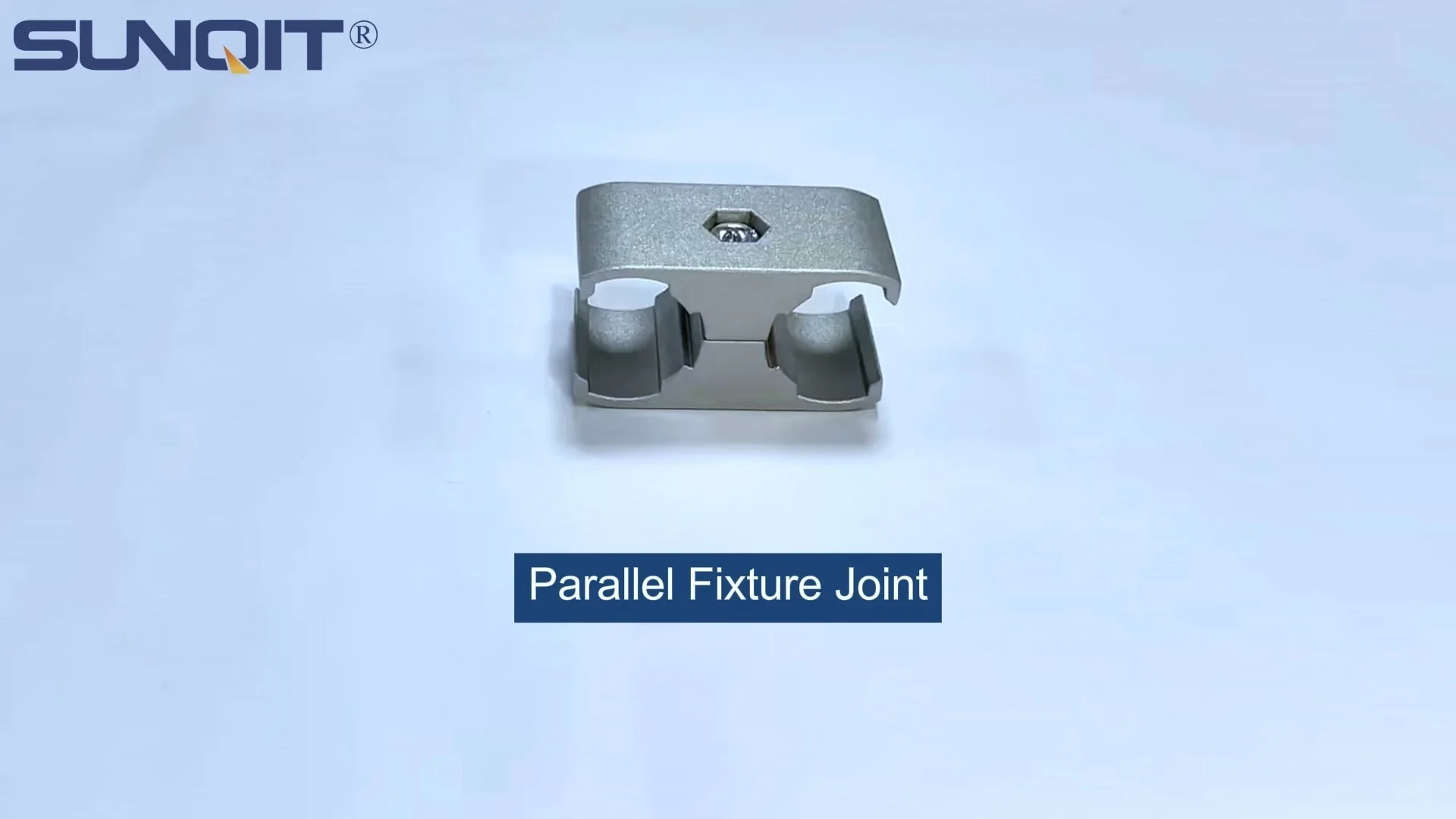
Parallel Fixation Aluminum Pipe Joint
Aluminum parallel joint for two pcs 28mm aluminum pipe connected by parallel direction.
In the fast-paced world of 3C manufacturing—where smartphones, laptops, and wearables evolve faster than the seasons—every second on the assembly line counts. Engineers and line workers alike know the struggle: rigid production setups that can't keep up with new models, clunky adjustments that eat into downtime, and the constant pressure to balance precision with speed. But what if the solution to these headaches was hiding in the very bones of the assembly line itself? Enter parallel fixation aluminum pipe joints—a humble yet revolutionary component that's quietly transforming how 3C products go from blueprint to finished device.
These unassuming joints, often paired with aluminum lean pipe, are the unsung heroes of modern assembly floors. They're not just metal connectors; they're the reason a factory can reconfigure a workbench for a new smartphone model in hours instead of days, or why a roller track can seamlessly adapt to fragile circuit boards one week and sturdy casings the next. Let's dive into how these joints work, where they shine brightest, and why they've become a must-have for any 3C manufacturer aiming to stay agile in a cutthroat industry.
What Are Parallel Fixation Aluminum Pipe Joints, Anyway?
Before we jump into their applications, let's get clear on what these joints are. At their core, parallel fixation aluminum pipe joints are modular connectors designed to link aluminum lean pipes (lightweight, durable tubes) into stable, customizable structures. Unlike traditional welded steel joints or rigid plastic connectors, these aluminum joints are engineered for flexibility: they clamp onto pipes with precision, allowing for quick adjustments, disassembly, and reassembly without specialized tools. Think of them as the "Lego blocks" of the manufacturing world—strong enough to support heavy components, yet nimble enough to rearrange on a whim.
What sets "parallel fixation" apart? These joints are specifically designed to secure pipes in parallel alignment, ensuring stability even under the constant vibration of assembly line machinery. Whether you're building a workbench, a material rack, or a roller track, parallel fixation joints keep everything straight, level, and rock-solid—no wobbly shelves or misaligned conveyors here. And because they're made from high-grade aluminum, they're lightweight, corrosion-resistant, and (bonus for 3C environments) often compatible with ESD (electrostatic discharge) protection—a critical feature when handling sensitive electronics.
Key Applications in 3C Assembly: Where These Joints Make Their Mark
Now, let's get practical. How do these joints actually improve day-to-day operations on the 3C factory floor? Let's break down their most impactful applications, from workbenches to roller tracks, and see how they solve real-world problems.
1. Workbenches: The Heart of the Assembly Line
Walk into any 3C assembly plant, and you'll see workbenches everywhere—each one a hub of activity where workers install screens, solder components, or test circuit boards. These workbenches need to be sturdy (to support tools and parts), adjustable (to fit workers of different heights), and adaptable (to switch between product models). This is where parallel fixation aluminum pipe joints truly shine.
Traditional workbenches are often built with fixed steel frames. Want to lower the height by 6 inches for a new ergonomic standard? You'll need a welder and hours of downtime. Need to add a shelf for extra tools? That means drilling holes and hoping you don't weaken the frame. With aluminum pipe joints, though, reconfiguration is a breeze. The joints clamp onto aluminum lean pipe with a simple twist of a wrench, so adjusting the height, adding shelves, or even repositioning the entire bench takes minutes, not hours. Line supervisors don't have to wait for maintenance crews—they can make tweaks themselves between shifts.
Take, for example, a mid-sized smartphone manufacturer that recently launched a new model with a larger screen. Their old steel workbenches had fixed tool rails that were now too low for workers to comfortably reach the top of the device. By switching to an aluminum pipe system with parallel fixation joints, they reconfigured 20 workbenches in a single evening. Each bench got a raised tool rail and an extra shelf for screen protectors—all without disrupting production the next day. The result? Happier workers (less strain on their shoulders) and a 15% faster assembly rate for the new model.
A Day in the Life: Maria's Workbench
Maria, a 3C assembly line worker with 5 years of experience, used to dread model changeovers. "Before the aluminum joints, switching to a new phone model meant our workbench was 'out of order' for half a day," she says. "The steel frame was so rigid—if the new screen required a different angle, we'd prop up wooden blocks just to make it work. Now? My supervisor adjusts the height and adds a side shelf in 10 minutes. I can focus on assembling, not fighting with the bench."
2. Roller Tracks: Smooth Material Flow, No More Jams
In 3C manufacturing, parts and semi-finished products need to move quickly and smoothly from one station to the next. That's where roller tracks come in—they're the highways of the assembly line, carrying everything from circuit board trays to finished phone cases. But if a roller track is misaligned, even by a fraction of an inch, parts can jam, leading to scratched components or halted production. Parallel fixation aluminum pipe joints ensure these tracks stay perfectly aligned, even under constant use.
Roller tracks built with these joints are lightweight but incredibly stable. The parallel fixation design keeps the aluminum lean pipe rails straight, so rollers spin freely and parts glide without snags. And when production needs change—say, you need to widen the track to fit larger component trays or add a curve to route parts around a new machine—the joints make adjustments simple. Unlike traditional bolted steel tracks, which require removing and re-drilling bolts, aluminum joints let you loosen a clamp, reposition the pipe, and tighten it back up. No more wasted time, no more stripped bolts, no more jams.
One laptop manufacturer learned this the hard way. They'd been using plastic roller tracks with glued joints that often cracked under the weight of metal component trays. After switching to aluminum pipe tracks with parallel fixation joints, they saw a 90% drop in jams. "We used to have a worker stationed at each track just to unjam parts," says Raj, the plant's operations manager. "Now, those workers are back on the assembly line, and the tracks run smoothly 24/7. It's like night and day."
3. ESD Workstations: Protecting Sensitive Electronics
3C products are packed with delicate electronics—microchips, sensors, and circuit boards that can be destroyed by a single static discharge. That's why ESD (electrostatic discharge) workstations are non-negotiable. These workstations need to ground static electricity, preventing it from damaging parts. But here's the catch: ESD protection can't sacrifice flexibility. Enter parallel fixation aluminum pipe joints, which pair seamlessly with ESD-safe materials to create workstations that are both protective and adaptable.
Aluminum itself is a conductor, which means when paired with ESD mats and grounded casters, an aluminum pipe workstation can channel static away from sensitive components. And because the joints allow for quick reconfiguration, manufacturers can add ESD-safe accessories—like grounded tool hooks or anti-static bins—without overhauling the entire setup. For example, a smartwatch manufacturer recently needed to add ESD wristband holders to their workstations for a new line of fitness trackers. With aluminum joints, they attached the holders in minutes, ensuring every worker could ground themselves properly without slowing down.
4. Material Racks: Organizing Parts, Reducing Waste
A cluttered assembly line is a slow assembly line. Workers waste precious time hunting for parts, and disorganized racks lead to misplaced components (and costly reorders). Material racks built with parallel fixation aluminum pipe joints solve this by keeping parts visible, accessible, and easy to reorganize.
These racks are lightweight enough to move around the floor (thanks to casters that attach via—you guessed it—aluminum joints) but strong enough to hold heavy bins of screws, connectors, or batteries. Need to add a shelf for a new part? Just clamp on a few more pipes. Want to separate bins by priority (e.g., "urgent" vs. "backup" parts)? Rearrange the shelves in minutes. And because the aluminum pipes are corrosion-resistant, there's no risk of rust staining delicate plastic components—a common issue with steel racks in humid factory environments.

The Benefits: Why 3C Manufacturers Can't Afford to Ignore These Joints
By now, you're probably seeing a pattern: parallel fixation aluminum pipe joints aren't just "better" than traditional connectors—they're transformative. But let's formalize their benefits, so you can see exactly why they're becoming a staple in 3C manufacturing.
1. Unmatched Flexibility
In 3C, product cycles are short—sometimes as little as 6 months for a new smartphone model. Rigid assembly lines can't keep up. Aluminum pipe joints let manufacturers pivot quickly, reconfiguring workbenches, roller tracks, and racks in hours instead of days. This agility isn't just convenient; it's competitive. Companies that can adapt faster launch products sooner, beat competitors to market, and win more contracts.
2. Cost Savings (Yes, Really)
At first glance, aluminum pipe systems might seem pricier than steel or plastic. But factor in the long-term costs: no more paying welders for reconfigurations, no more downtime during model changes, no more replacing cracked plastic joints or rusted steel frames. Over time, aluminum joints save manufacturers money. One study by a leading 3C industry association found that companies using aluminum pipe systems reduced assembly line reconfiguration costs by 40% and maintenance costs by 30% compared to traditional setups.
3. Durability That Lasts
Aluminum is tough. It resists corrosion, stands up to daily wear and tear, and doesn't weaken when adjusted repeatedly (unlike plastic, which can crack, or steel, which can bend). Parallel fixation joints are built to last too—their clamping mechanism stays strong even after hundreds of adjustments. This durability means manufacturers don't have to replace components every few years, saving even more money in the long run.
4. ESD Compatibility
As we mentioned earlier, 3C electronics can't risk static damage. Aluminum's conductive properties, paired with ESD accessories, make aluminum pipe systems a natural fit for ESD workstations. This compatibility isn't an afterthought—it's built into the design, ensuring sensitive parts stay safe without extra hassle.
5. Ergonomics for Happier, Faster Workers
Happy workers are productive workers. Rigid workbenches and awkwardly positioned tools lead to fatigue, strain, and even injuries. Aluminum pipe joints let manufacturers tailor workstations to their team—adjusting heights, adding footrests, or angling tool rails to reduce strain. The result? Less absenteeism, faster assembly times, and a more motivated team. As Maria puts it: "When my workbench fits me, I can focus on doing my job well. It sounds small, but it makes a huge difference."

Traditional vs. Aluminum: A Side-by-Side Comparison
Still on the fence? Let's put traditional assembly line components head-to-head with systems built using parallel fixation aluminum pipe joints. The difference is clear:
| Feature | Traditional Steel/Plastic Systems | Aluminum Pipe Joint Systems | Key Advantage |
|---|---|---|---|
| Reconfiguration Time | Hours to days (requires welding/drilling) | Minutes (clamp-and-adjust joints) | 40% faster model changeovers |
| Durability | Steel rusts; plastic cracks under weight | Aluminum resists corrosion; joints stay tight after 1000+ adjustments | 50% longer lifespan |
| ESD Compatibility | Requires expensive add-ons (e.g., grounded mats) | Aluminum conducts static; built-in ESD support | 30% fewer static-related part failures |
| Ergonomic Adjustments | Fixed; hard to modify for worker comfort | Height, angle, and shelf positions adjustable on the fly | 25% reduction in worker fatigue reports |
| Maintenance Costs | High (welding, replacing cracked parts) | Low (no special tools; joints rarely need replacement) | 30% lower annual maintenance spend |

The Future of 3C Assembly: Lean, Flexible, and Built to Adapt
In the 3C industry, standing still means falling behind. As products get smarter, assembly lines need to get faster, more precise, and more adaptable. Parallel fixation aluminum pipe joints aren't just a trend—they're a foundational shift in how manufacturers build their production lines. They put power back in the hands of the people on the floor, letting them tweak, adjust, and innovate without waiting for expensive overhauls.
Whether you're building workbenches that keep pace with worker needs, roller tracks that glide without jams, or ESD workstations that protect delicate electronics, these joints deliver. They're not just connectors—they're the key to a leaner, more efficient, and more human-centered assembly line. And in an industry where every second counts, that's the difference between leading the pack and playing catch-up.
So the next time you pick up a smartphone or laptop, take a moment to appreciate the invisible work happening behind the scenes. Chances are, somewhere on that assembly line, parallel fixation aluminum pipe joints are hard at work—quietly, reliably, and flexibly—helping bring that device to life.