- Company Articles
- Products and Technology
- Product knowledge
- Parallel Fixation Aluminum Pipe Joints in 3C Product Assembly: Precision Requirements

Parallel Fixation Aluminum Pipe Joints in 3C Product Assembly: Precision Requirements
Related Product
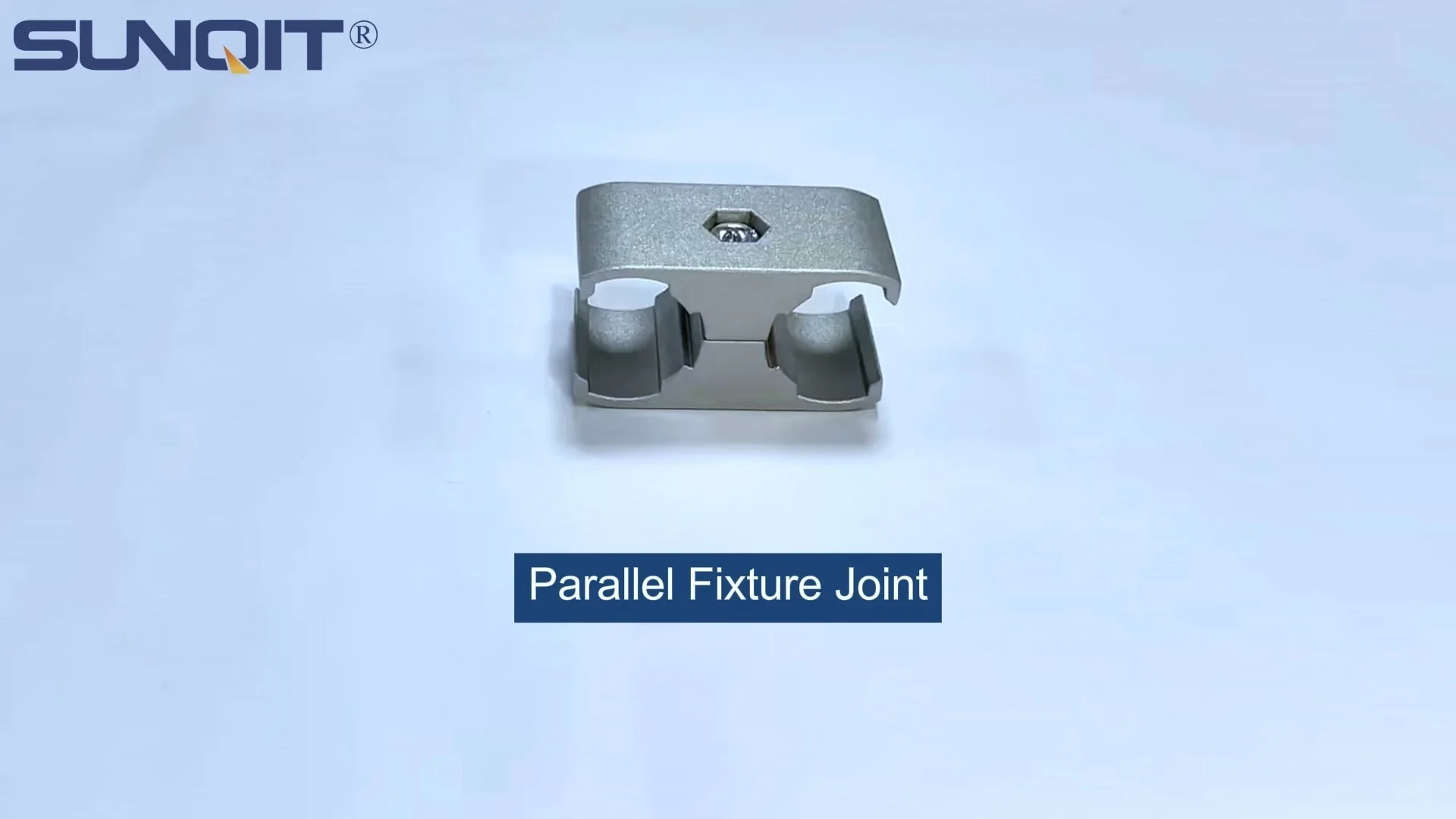
Parallel Fixation Aluminum Pipe Joint
Aluminum parallel joint for two pcs 28mm aluminum pipe connected by parallel direction.
Walk into any modern 3C manufacturing plant—where smartphones, laptops, and smartwatches take shape—and you'll be met with a symphony of order: conveyor belts gliding silently, robotic arms moving with millimeter-perfect accuracy, and workers hunched over workbenches, their fingers deftly manipulating components smaller than a grain of rice. It's a world where even the tiniest misstep—a shelf that sags, a track that jams, a joint that slips—can derail production, delay shipments, and erode trust in the final product. Yet amid this chaos of precision, there's a quiet workhorse keeping everything stable: the
parallel fixation aluminum pipe joint
. These unassuming connectors, often overlooked, are the backbone of the flexible, efficient assembly lines that power today's 3C industry. In this article, we'll dive into why precision matters in these joints, how they shape the future of manufacturing, and why choosing the right
lean system supplier
can mean the difference between smooth operations and costly disruptions.
The 3C Assembly Challenge: Why Precision Isn't Optional
3C products—computers, communications devices, and consumer electronics—are getting smaller, smarter, and more complex by the day. A modern smartphone, for example, packs over 1,000 components into a space smaller than a deck of cards, with tolerances as tight as 0.01mm for camera lenses or battery connectors. To assemble these marvels at scale, manufacturers can't rely on rigid, one-size-fits-all production lines. They need flexibility: the ability to reconfigure workbenches for new models, adjust roller tracks to accommodate slimmer components, or repurpose material racks for seasonal demand spikes. This is where lean systems shine—and at the heart of these systems are modular structures built from aluminum profiles and parallel fixation joints.
Consider this scenario:
A factory in Shenzhen is ramping up production for a new smartwatch. The assembly line needs to switch from assembling 42mm watches to 45mm models—only a 3mm difference, but enough to require adjusting the height of workbenches, the angle of roller tracks, and the spacing of component bins. If the joints connecting the aluminum profiles of these workbenches are imprecise, loosening when adjusted or failing to lock into place, the line supervisor faces a nightmare: workers waste time readjusting wobbly shelves, components slide off misaligned tracks, and quality checks flag more defects. In a factory churning out 10,000 units daily, even a 1% dip in efficiency translates to 100 lost units—and thousands in revenue. Precision here isn't just about "getting it right"; it's about keeping the entire operation viable.
So what exactly is a parallel fixation aluminum pipe joint? At its core, it's a connector designed to join two or more
aluminum profiles
in parallel, creating stable, load-bearing structures like workbenches, roller tracks, or material racks. Unlike rigid welds or permanent fasteners, these joints are adjustable—you can loosen a screw, reposition the profile, and lock it back in place in minutes. But this flexibility comes with a catch: if the joint itself isn't precision-engineered, that adjustability becomes a liability. A joint with poor dimensional accuracy might fit loosely, causing the structure to wobble. One with weak load distribution could bend under the weight of tools or components. And one that fails to resist corrosion might rust in humid factory environments, seizing up when you need to reconfigure it most.
The Anatomy of Precision: What Makes a Parallel Fixation Joint Reliable?
Precision in parallel fixation aluminum pipe joints isn't a single feature—it's a combination of design, materials, and manufacturing rigor. Let's break down the key requirements that separate a "good" joint from a "great" one.1. Dimensional Accuracy: The "Perfect Fit" for Aluminum Profiles
Aluminum profiles come in standardized sizes—2020 (20mm x 20mm), 3030, 4040, and so on—each with specific groove widths and wall thicknesses. For a joint to work, its internal diameter, groove engagement, and locking mechanism must align perfectly with these profiles. Even a 0.1mm mismatch can spell trouble. Imagine trying to fit a square peg into a round hole, but on a microscopic scale: the joint might "sort of" work, but it will never lock securely, leading to gradual slippage over time. High-quality joints are machined to tolerances of ±0.05mm, ensuring they grip the aluminum profile snugly without damaging it. This precision starts with the raw material: aluminum profile suppliers use high-purity aluminum alloys (often 6063-T5, known for its strength and machinability) to minimize warping during manufacturing. The joints themselves are then CNC-machined, with laser-measured tools ensuring every thread, notch, and groove is consistent across thousands of units. A reputable lean system supplier will even provide dimensional certificates, proving their joints meet these tight specs.2. Load Distribution: Bearing Weight Without Buckling
A workbench in a 3C factory isn't just a table—it's a multitasking station. It might hold a 20kg precision screwdriver, a bin of 5kg circuit boards, and a monitor displaying assembly instructions. Multiply that by the length of the bench, and the joints holding it together need to distribute that weight evenly. A weak joint will bend or twist under load, causing the bench to sag in the middle. Over time, this sagging can misalign tools, leading to uneven screw depths or cracked screens—costly defects that eat into profits. To avoid this, parallel fixation joints are engineered with load-bearing in mind. Many feature reinforced ribs or internal braces that spread weight across the entire joint, not just a single point of contact. For example, a joint rated for 80kg per connection might use a dual-screw locking mechanism, where two screws (instead of one) clamp down on the aluminum profile, reducing stress on any single part. Lean system supplier s often test their joints to failure, publishing load charts that show exactly how much weight they can handle before deforming—critical data for factory planners designing workbenches or material racks.3. Stability Under Stress: Vibration, Adjustment, and Wear
3C factories are noisy places. Conveyor belts hum, robots whir, and air compressors thump—all generating constant vibration. Over time, this vibration can loosen even well-made joints, turning a stable workbench into a wobbly hazard. Add in the need for frequent adjustments (as production lines retool for new models), and joints must withstand repeated tightening and loosening without stripping threads or wearing down. The solution? Smart design. Many modern joints use friction-based locking systems, where a metal-to-metal grip (instead of just screws) holds the profile in place. Some even include nylon washers or rubber gaskets that dampen vibration, preventing the joint from working itself loose. For joints that need to rotate (e.g., to adjust the angle of a roller track), internal bearings or ball detents ensure smooth movement without play. And for high-wear applications, joints are anodized—coated with a thin layer of oxidized aluminum—to resist corrosion and reduce friction during adjustments. A good rule of thumb: if a joint feels "gritty" when you adjust it, it's probably not built to last.4. Compatibility: Playing Well With Others
No factory uses just one type of aluminum profile. A single assembly line might have 2020 profiles for light-duty component racks, 4040 for heavy workbenches, and 3030 for roller tracks. A parallel fixation joint that only works with one profile is useless in this environment. Instead, the best joints are modular, with interchangeable parts or adjustable clamps that fit multiple profile sizes. A lean system supplier worth their salt will offer a range of joint types—straight, angled, swivel—to connect profiles in parallel, perpendicular, or even diagonal orientations, giving factories the freedom to design custom setups without reinventing the wheel.
Real-World Impact: How Precision Joints Transform 3C Assembly Lines
To understand why precision matters, let's look at two critical applications of parallel fixation aluminum pipe joints in 3C manufacturing: workbench stability and roller track efficiency.Workbenches: Where Precision Meets Productivity
The workbench is the factory worker's office—a place where focus, comfort, and reliability matter. In 3C assembly, workers often spend 8+ hours a day at these benches, performing repetitive tasks like soldering microchips or attaching screens. If the bench is unstable, their hands shake; if the height is off, their backs ache; if the component bins are misaligned, they fumble for parts. Parallel fixation joints ensure the bench stays level, even after months of use and adjustments. Take, for example, a "Workbench E (Single Deck—Without Caster)" (a common model from lean system catalogs). This bench uses 4040 aluminum profiles for the frame, connected by parallel fixation joints at each corner. The top deck, often an aluminum honeycomb panel for lightness and rigidity, is secured to the frame with additional joints. If the joints are precise, the deck sits flat, with no rocking or creaking. If not, the deck might tilt, causing small screws or components to roll off. A study by a leading electronics manufacturer found that switching to high-precision joints reduced "component loss" (parts falling off benches) by 40% and worker fatigue complaints by 25%—simply because the bench stayed stable all shift long.Roller Tracks: Keeping Components Moving Smoothly
Roller tracks are the arteries of 3C assembly lines, carrying circuit boards, screens, and casings from station to station. For these tracks to work, the rollers must spin freely, and the track itself must be perfectly level. Even a slight dip or bump can cause a component to jam, stopping the line. Parallel fixation joints play a key role here, securing the track to its support frame and ensuring alignment. Consider a "Material Rack B (3 Row and 3 Floor)" setup, where roller tracks are mounted on aluminum profiles to create multi-tiered storage. The joints connecting the tracks to the frame must hold them at a precise angle (usually 3–5 degrees for gravity-fed flow) and keep them parallel to avoid bottlenecks. If one joint slips, the track tilts too steeply, and components slide too fast, crashing into the next station. If another joint is too loose, the track wobbles, causing components to jam between rollers. High-precision joints eliminate this risk, with locking mechanisms that hold angles steady and tolerances that keep tracks aligned within 0.5mm over 2 meters—a difference you can't see with the naked eye, but one that keeps the line moving.| Application | Precision Requirement | Impact of Poor Precision | Result of High Precision |
|---|---|---|---|
| Workbench Stability | ±0.1mm alignment; 80kg load capacity per joint | Wobbling tools, component loss, worker fatigue | 40% fewer dropped parts, 25% less fatigue |
| Roller Track Alignment | ±0.5mm straightness over 2m; 5kg/linear meter load | Jammed components, line stoppages, damaged parts | 99.9% track uptime, 15% faster component flow |
| Material Rack Adjustability | Repeated adjustments without thread wear | Stripped threads, loose shelves, safety hazards | 50% faster reconfiguration for new product models |

Choosing the Right Lean System Supplier: What to Look For
Not all parallel fixation aluminum pipe joints are created equal—and neither are their suppliers. In a market flooded with low-cost, low-quality options, how do you separate the reliable partners from the ones that will leave you with wobbly workbenches and missed deadlines? Here are the key traits to seek in a lean system supplier:1. Dimensional Consistency Across Batches
A supplier that produces joints with "good enough" tolerances for one batch might cut corners on the next, leading to inconsistent performance. Ask for batch-testing reports: reputable suppliers will test a sample from every production run, measuring critical dimensions (diameter, thread depth, groove width) and sharing the results. Some even use automated vision systems to inspect 100% of joints, flagging any that fall outside specs before they ship.2. Material Traceability
The quality of the aluminum used in joints matters. Low-grade alloys with impurities are prone to cracking or bending under load. A trustworthy supplier will source aluminum from certified mills and provide material certificates, detailing the alloy composition, heat treatment, and mechanical properties (tensile strength, yield strength) of each batch. This isn't just about quality—it's about accountability. If a joint fails, you can trace it back to the raw material and fix the issue at the source.3. Engineering Support, Not Just Parts
Designing a lean assembly line isn't just about buying joints and profiles—it's about optimizing flow, reducing waste, and maximizing flexibility. The best lean system suppliers don't just sell components; they offer engineering support. They'll send a technical team to your factory to assess your needs, suggest custom configurations (e.g., a workbench with integrated roller tracks), and even help with 3D modeling to ensure the design works before you buy. This level of partnership can save months of trial and error—and prevent costly mistakes.4. After-Sales Service
Even the best joints can fail if installed incorrectly. A supplier that stands behind its products will offer training for your maintenance team, explaining how to properly tighten joints, adjust profiles, and spot early signs of wear. They'll also have a responsive customer service team, replacing defective parts quickly and without hassle. Avoid suppliers that treat you like a one-time sale; look for those that view you as a long-term partner.