- Company Articles
- Products and Technology
- Application Cases
- Parallel Fixation Aluminum Pipe Joints in Automotive Assembly Lines: Practical Uses

Parallel Fixation Aluminum Pipe Joints in Automotive Assembly Lines: Practical Uses
Related Product
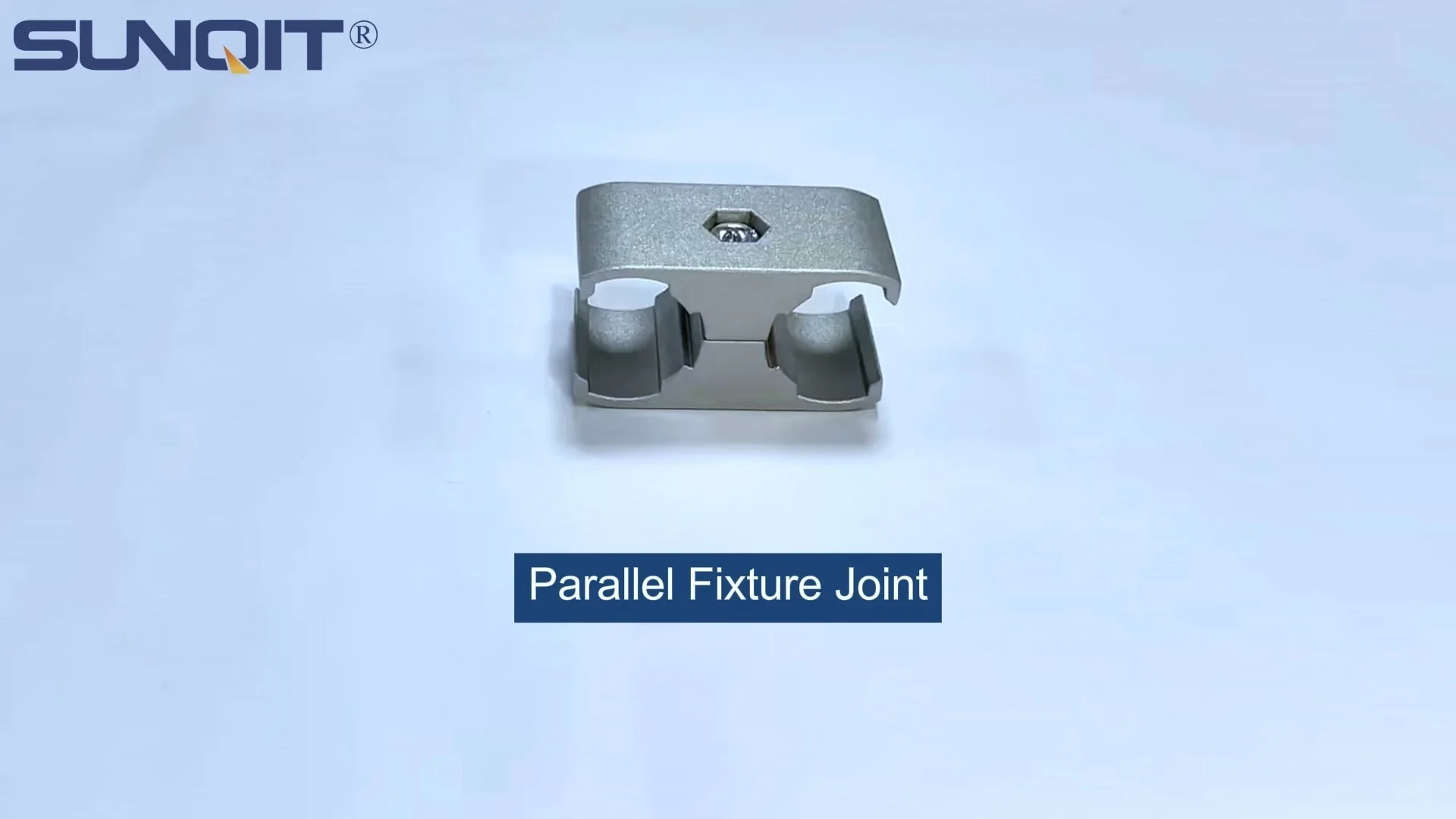
Parallel Fixation Aluminum Pipe Joint
Aluminum parallel joint for two pcs 28mm aluminum pipe connected by parallel direction.
Walk into any modern automotive assembly plant, and you'll be met with a hive of activity: robots welding frames, technicians installing dashboards, and conveyor belts carrying half-assembled cars from station to station. But amid this complexity, there's a quiet backbone holding everything together—modular structures built with aluminum pipes, profiles, and joints. Among these components, parallel fixation aluminum pipe joints stand out as unsung workhorses. These small, unassuming connectors play a critical role in creating flexible, durable, and adaptable workspaces that keep production lines running smoothly, even as car models, technologies, and demands evolve.
In an industry where every minute counts and downtime costs thousands, the ability to reconfigure workstations, adjust material flows, and scale operations quickly is non-negotiable. Parallel fixation aluminum pipe joints aren't just "parts"—they're enablers of the agility that modern automotive manufacturing demands. Let's dive into what makes these joints so essential, how they're used on the factory floor, and why they've become a cornerstone of efficient assembly line design.
What Are Parallel Fixation Aluminum Pipe Joints?
Before we explore their uses, let's break down what these joints are. At their core, parallel fixation aluminum pipe joints are specialized connectors designed to secure two or more aluminum pipes in a parallel arrangement. Unlike 90-degree joints (which connect pipes at right angles) or swivel joints (which allow rotation), these joints excel at keeping pipes aligned side-by-side, creating stable, linear structures. Think of them as the "glue" that holds together parallel rails, shelves, or frames—without the mess of actual glue, and with the added benefit of being reusable and adjustable.
Most are made from high-grade aluminum alloys, like 6063-T5, chosen for its winning combo of lightness, strength, and corrosion resistance. This matters in automotive plants, where spills, humidity, and constant use can take a toll on lesser materials. The joints typically feature clamping mechanisms—often with screws or levers—that grip the pipes tightly, ensuring a secure hold even under vibration or heavy loads. Some designs include rubberized gaskets to prevent slippage, while others have reinforced edges to distribute weight evenly across the pipes.
But what truly sets them apart is their simplicity. No welding, no drilling, no specialized tools required. A technician with a basic wrench can attach or detach a joint in minutes, making on-the-fly adjustments possible. In an industry where production lines are often retooled for new car models or updated processes, this simplicity is gold.
Practical Uses in Automotive Assembly Lines
Now, let's get to the heart of the matter: how are these joints actually used on the factory floor? From workbenches where precision work happens to material racks that keep parts organized, parallel fixation aluminum pipe joints turn basic aluminum pipes into functional, custom structures. Here are the key applications:
1. Building Sturdy Workbenches for Assembly Tasks
Every automotive assembly line has workbenches—stations where technicians install components like wiring harnesses, sensors, or interior panels. These workbenches need to be rock-solid (to avoid shaking while using precision tools), customizable (to fit different tasks), and durable (to withstand daily use). Parallel fixation joints are the secret to making this possible.
Consider an engine assembly workbench. Technicians here need easy access to tools, parts bins, and computer screens that display assembly instructions. Using aluminum profile frames connected by parallel fixation joints, manufacturers can build workbenches with:
- Parallel side rails to mount tool hooks or LED task lights
- Adjustable shelves (held up by parallel pipe frames) for parts storage
- Parallel crossbars to support heavy equipment, like torque wrenches or diagnostic scanners
When a new car model requires a taller shelf or a wider work surface, the joints can be loosened, pipes repositioned, and joints retightened—no need to replace the entire bench. For example, when Tesla retooled its Model Y line to accommodate a new battery design, many workbenches were modified using these joints, saving time and reducing waste compared to building new ones from scratch.
2. Supporting Roller Tracks for Smooth Material Flow
Automotive assembly lines thrive on roller tracks —conveyor-like systems that move parts (think: door panels, engine blocks, or brake calipers) from one station to the next. These tracks need to be perfectly aligned to prevent jams, and their frames must be rigid enough to support the weight of moving parts. Enter parallel fixation aluminum pipe joints.
Roller tracks are often built with two parallel aluminum pipes as their base, with the rollers themselves mounted between them. The joints secure these parallel pipes to the track's frame, ensuring they stay evenly spaced. This alignment is critical: if the pipes shift, the rollers could bind, slowing down production or damaging parts. Parallel fixation joints eliminate this risk by locking the pipes in place, even when heavy parts (like a 200-pound transmission) roll over them.
Take a door assembly line, for example. Door panels arrive at the line via roller track, gliding from the painting station to the fitting station. The track's parallel pipes, held by these joints, keep the panels moving straight and steady, so technicians can focus on attaching handles and wiring without worrying about parts getting stuck. And if the track needs to be extended (to accommodate a longer production run) or rerouted (to bypass a maintenance area), the joints make it easy to add new pipe sections or adjust the frame.
3. Constructing Material Racks for Organized Storage
Automotive plants are awash in parts—thousands of different bolts, brackets, gaskets, and components, each needed at specific times. Disorganized storage leads to lost time (technicians hunting for parts) and errors (wrong parts installed). Material racks —shelving units designed to hold bins of parts—are the solution, and parallel fixation joints are key to building them.
These racks often feature vertical posts connected by horizontal parallel pipes, which support the shelves. The joints ensure the horizontal pipes stay parallel and level, so shelves don't tilt or sag under the weight of heavy bins. For instance, a rack holding brake components might have 10 shelves, each supported by two parallel pipes per level, all locked in place by these joints.
What happens when a new part is added to the production line, requiring an extra shelf? Instead of buying a new rack, the joints can be adjusted to add a new set of parallel pipes and a shelf. This flexibility is a cornerstone of lean system principles, which focus on minimizing waste (like excess storage space) and maximizing efficiency. By reusing existing racks and modifying them with joints, plants reduce costs and keep the floor clutter-free.
4. Reinforcing Ergonomic Workstations
Automotive manufacturing isn't just about machines—it's about people. Technicians spend hours on their feet, performing repetitive tasks, so ergonomics (designing workspaces to reduce strain) is a top priority. Parallel fixation aluminum pipe joints help here, too, by enabling the creation of adjustable, human-centered workstations.
Consider a workstation where technicians install seats into car frames. The ideal height for the seat (to avoid bending or reaching) varies based on the technician's height and the car model. Using parallel pipes and joints, manufacturers can build height-adjustable platforms: the platform's frame uses parallel pipes connected by joints, which can be raised or lowered by adjusting the pipe lengths and resecuring the joints. Similarly, armrests for tools or footrests for comfort can be attached to parallel pipe rails, positioned exactly where the technician needs them.
At Ford's Michigan Assembly Plant, ergonomic workstations with adjustable parallel pipe frames have reduced worker fatigue by 30%, according to internal reports. When employees are more comfortable, they're more productive—and safer. These joints make that comfort possible without sacrificing the workstation's stability.

Why Aluminum? The Material Advantage
You might be wondering: why aluminum, and not steel or plastic? The answer lies in aluminum's unique properties, which make it perfect for automotive assembly lines—and why parallel fixation joints made from aluminum are a cut above the rest.
- Lightweight, but strong: Aluminum is about 1/3 the weight of steel, making structures easier to move and reconfigure. A technician can adjust a workbench frame with aluminum pipes and joints alone, whereas steel would require a team. Yet, aluminum alloys like 6063-T5 have a tensile strength of ~210 MPa—strong enough to support heavy tools and parts.
- Corrosion-resistant: Automotive plants see oil, coolant, and cleaning agents—all of which can rust steel. Aluminum forms a natural oxide layer that resists corrosion, so joints and pipes last longer, even in messy environments.
- Cost-effective: While aluminum is pricier than plastic, it's more durable, so it doesn't need frequent replacement. Over time, the savings add up, especially when combined with the reusability of the joints.
When paired with aluminum profile (extruded aluminum with T-slots for easy mounting), these joints become even more versatile. The T-slots let you add accessories like hooks, brackets, or monitors directly to the profile, turning basic frames into fully functional workspaces—all without drilling holes or welding.

Comparing Joint Types: Why Parallel Fixation Stands Out
To truly appreciate parallel fixation joints, it helps to see how they stack up against other common joint types used in assembly lines. The table below compares them across key metrics:
| Joint Type | Primary Use | Load Capacity | Flexibility (Reconfigurability) | Best For |
|---|---|---|---|---|
| Parallel Fixation | Securing parallel pipes/shelves/rails | High (up to 500 lbs per joint) | High (easily adjustable with basic tools) | Workbenches, roller tracks, material racks |
| 90-Degree Joint | Connecting pipes at right angles | Medium-High (up to 400 lbs per joint) | Medium (adjustable, but limited to 90-degree angles) | Corner frames, vertical supports |
| Swivel Joint | Allowing rotation (e.g., swinging shelves) | Low-Medium (up to 200 lbs per joint) | Very High (rotates 360 degrees) | Tool holders, swing-out bins |
| Flange Joint | Permanent, rigid connections | Very High (up to 1000 lbs per joint) | Low (requires welding or bolts; hard to reconfigure) | Heavy machinery bases, fixed conveyor frames |
The takeaway? Parallel fixation joints strike a rare balance of strength and flexibility, making them indispensable for structures that need to be both sturdy and adaptable—exactly what automotive assembly lines demand.
Case Study: How Toyota Uses Parallel Fixation Joints to Embrace "Kaizen"
Toyota, a pioneer of lean manufacturing (the philosophy of continuous improvement, or "kaizen"), is a big user of parallel fixation aluminum pipe joints. At its Tsutsumi Plant in Japan, where the Camry and RAV4 are built, the assembly line floor is dotted with modular structures—workbenches, parts carts, and roller tracks—all built with aluminum pipes and these joints.
One notable example is the plant's "quick-change" parts delivery system. To minimize waste, Toyota uses a "just-in-time" approach, where parts arrive at the line exactly when needed. To support this, they use material racks built with parallel fixation joints. When production shifts from the Camry to the RAV4 (which uses slightly larger door panels), the racks are modified in under an hour: joints are loosened, shelves are adjusted to fit the bigger panels, and joints are retightened. No new racks, no downtime, no waste.
Toyota estimates that using these joints has reduced the time needed to reconfigure its assembly line by 40% compared to traditional welded steel structures. It's a small change that adds up to big savings in a plant that produces over 500,000 cars per year.

Why Every Automotive Plant Needs Parallel Fixation Joints
By now, it's clear these joints are more than just components—they're a strategic asset. Here's why they've become a must-have for automotive manufacturers:
- Speed: No welding, no waiting for glue to dry. Assemble or reconfigure structures in minutes, not days.
- Cost Savings: Reuse existing pipes and joints instead of buying new structures. Reduce waste from discarded, outdated equipment.
- Agility: Adapt quickly to new car models, production increases, or process changes.
- Safety: Secure, stable structures mean fewer accidents from collapsing shelves or jammed roller tracks.
- Sustainability: Aluminum is recyclable, and reusing joints reduces the carbon footprint of manufacturing new parts.
Conclusion: The Quiet Force Behind Efficient Assembly Lines
Parallel fixation aluminum pipe joints may not get the same attention as robots or 3D printers, but they're every bit as critical to modern automotive manufacturing. They're the reason assembly lines can adapt to new models overnight, why workbenches can be adjusted to fit any technician, and why material racks never run out of space. In a world where automotive plants are under pressure to produce faster, safer, and more sustainably, these joints deliver on all fronts.
So the next time you see a car rolling off the lot, take a moment to appreciate the invisible infrastructure that helped build it. Behind that shiny exterior lies a network of aluminum pipes, held together by parallel fixation joints—quietly working to make automotive manufacturing smarter, more flexible, and ready for whatever the road ahead brings.