- Company Articles
- Products and Technology
- Product knowledge
- Parallel Fixation Aluminum Pipe Joints in Computer Peripheral Assembly Lines

Parallel Fixation Aluminum Pipe Joints in Computer Peripheral Assembly Lines
Related Product
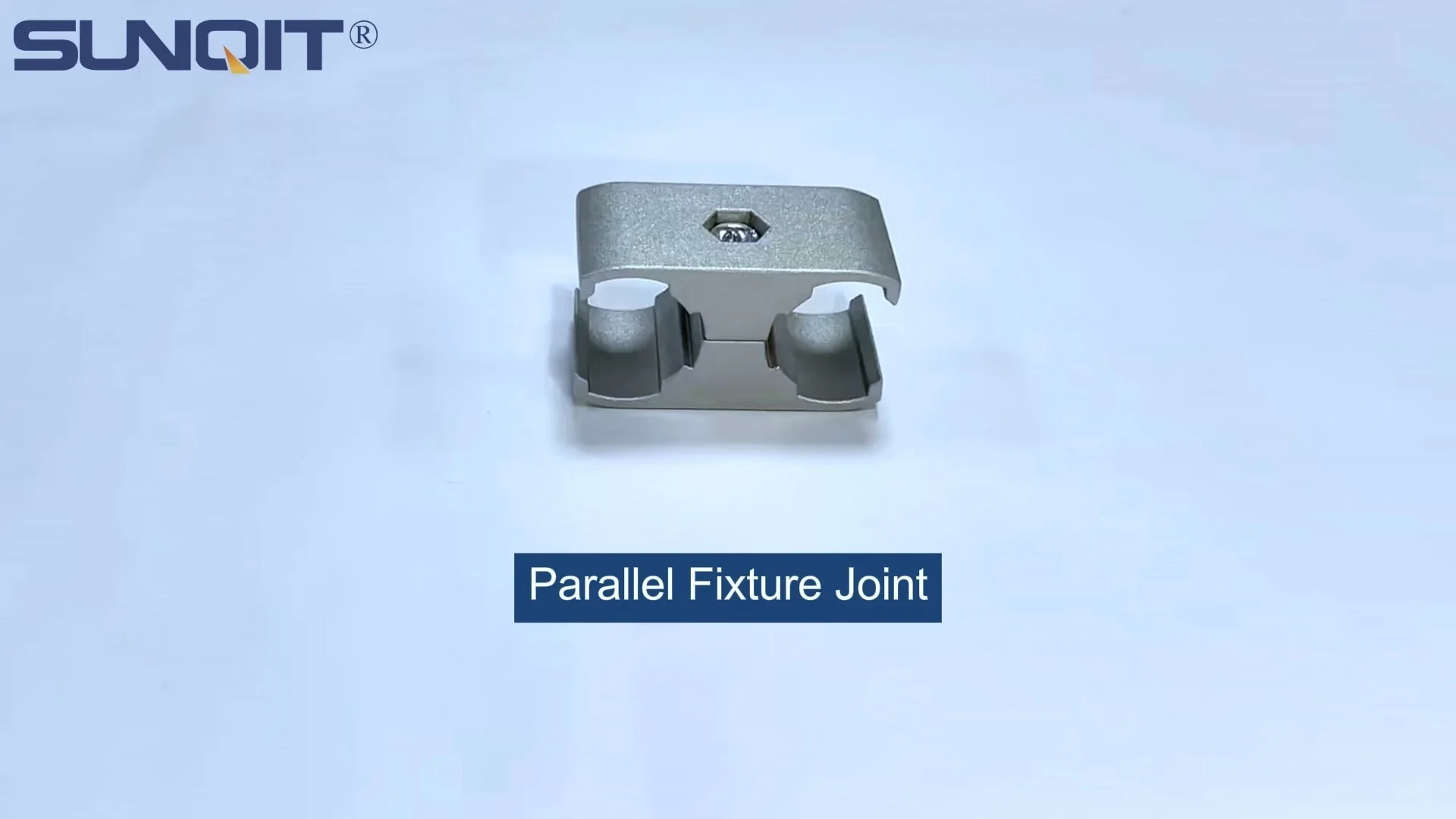
Parallel Fixation Aluminum Pipe Joint
Aluminum parallel joint for two pcs 28mm aluminum pipe connected by parallel direction.
Walk into any computer peripheral assembly plant, and you'll hear the hum of precision. Keyboards click under testing fingers, mice glide across sensor pads, and printers whir as they their first test pages. Behind this symphony of productivity lies an unsung hero: the infrastructure that holds it all together. Assembly lines for computer peripherals—devices we often take for granted—demand more than just skilled workers and advanced robotics. They require a physical backbone that's flexible enough to adapt to new models, sturdy enough to handle daily wear, and smart enough to reduce waste at every turn. In this world of fast-paced manufacturing, one component stands out for its quiet reliability: the parallel fixation aluminum pipe joint.
In this article, we'll dive into how these unassuming joints have become the cornerstone of modern computer peripheral assembly lines. We'll explore their design, their role in lean systems, and how they work hand-in-hand with aluminum profiles, workbenches, and roller tracks to keep production flowing. Whether you're a manufacturing manager looking to optimize your line or simply curious about what makes your keyboard or printer possible, this deep dive will show you why parallel fixation aluminum pipe joints are more than just "parts"—they're the glue that turns chaos into efficiency.
1. The Demands of Computer Peripheral Assembly: Why Infrastructure Matters
Computer peripherals may seem simple, but their assembly is a masterclass in precision. A single wireless mouse, for example, contains over 40 components: circuit boards, batteries, plastic casings, springs, and sensors, each requiring careful handling. Multiply that by thousands of units per day, and you've got a system that leaves no room for error. Assembly lines must balance three critical demands: speed, adaptability, and durability.
Speed is non-negotiable. In a market where new models launch every few months, delays in production mean missed deadlines and lost revenue. A line that assembles 500 keyboards per hour might need to ramp up to 600 when a back-to-school sale hits—or slow down to 300 when a design flaw is discovered. Infrastructure that can't keep pace becomes a bottleneck.
Adaptability is equally crucial. Consider a manufacturer that produces both budget and premium keyboards. The budget model might require a simple assembly process with 10 stations, while the premium, mechanical keyboard needs 15 stations with specialized tools. Traditional assembly lines, built with welded steel frames and fixed workbenches, would require days of reconfiguration—if they could be reconfigured at all. Modern lines, however, need to switch between products in hours, not days.
Durability ensures consistency. Assembly lines run 8–12 hours a day, 5–6 days a week. Parts are dropped, tools are leaned on, and workers bump into structures. Flimsy infrastructure leads to wobbly workbenches, misaligned conveyor belts, and components that shift mid-assembly—all of which cause defects. For computer peripherals, even a 0.5mm misalignment in a keyboard's keycap can make it unresponsive, turning a sellable product into scrap.
These demands have pushed manufacturers toward lean systems —a philosophy centered on minimizing waste and maximizing value. At the heart of lean systems is modularity: building infrastructure from interchangeable parts that can be rearranged, added, or removed as needed. And this is where aluminum profiles, roller tracks, and parallel fixation aluminum pipe joints enter the picture.
2. Lean Systems and Modular Infrastructure: The Shift to Smart Manufacturing
Lean manufacturing isn't just a buzzword—it's a revolution in how we think about production. Born from Toyota's "Toyota Production System" in the 1950s, lean focuses on eliminating seven types of waste: overproduction, waiting, transportation, defects, inventory, motion, and overprocessing. In computer peripheral assembly, waste often creeps in through rigid infrastructure. A fixed workbench that's too low forces workers to hunch (waste of motion). A conveyor belt that can't adjust to a new printer size leads to parts piling up (waste of waiting). A steel frame that rusts after months of use requires frequent replacements (waste of inventory and transportation).
Modular infrastructure solves these problems by treating assembly lines as "building blocks" rather than permanent structures. Aluminum profiles—extruded aluminum beams with T-slots for easy attachment—form the skeleton. Roller tracks, which move parts between stations, act as the circulatory system. Workbenches, customized for each task, are the muscle. And holding it all together? Joints that connect these components quickly and securely. Among these joints, parallel fixation aluminum pipe joints have emerged as a favorite for one key reason: they excel at keeping components aligned, even under stress.
Real-World Waste: The Cost of Rigid Infrastructure
A mid-sized printer manufacturer in Malaysia once relied on welded steel workbenches for its assembly line. When it launched a new compact printer model, the existing workbenches were too tall for the smaller components, forcing workers to bend over for hours. Within weeks, ergonomic complaints spiked, and defect rates rose by 12% as tired workers made mistakes. The company spent $40,000 replacing the steel workbenches with aluminum modular ones—equipped with parallel fixation joints that let them adjust heights in minutes. Within a month, defect rates dropped back to 2%, and worker absences due to back pain fell by 40%.

3. Parallel Fixation Aluminum Pipe Joints: Design, Function, and Why They Matter
At first glance, a parallel fixation aluminum pipe joint looks simple: a small, cylindrical piece of aluminum with holes for pipes and screws for tightening. But its design is the result of decades of engineering refinements. Let's break down what makes these joints indispensable.
What Are Parallel Fixation Aluminum Pipe Joints?
Simply put, these joints are designed to connect two or more aluminum pipes in a parallel configuration. Unlike 90° joints (which connect pipes at right angles) or swivel joints (which allow rotation), parallel fixation joints lock pipes into straight, side-by-side alignment. They're typically made from high-grade aluminum alloy (often 6063-T5, known for its strength and corrosion resistance) and feature precision-machined holes that match standard aluminum pipe diameters (16mm, 20mm, or 28mm are common in assembly lines).
The "fixation" in their name refers to their locking mechanism. Most use a combination of set screws and friction: insert the pipes into the joint, tighten the screws, and the joint grips the pipes securely. Some models add a lever or cam for tool-free adjustment, letting workers reconfigure the line without wrenches. This balance of security and flexibility is what sets them apart from rigid welded joints or flimsy plastic connectors.
Design Features That Solve Assembly Line Pain Points
-
Alignment Precision:
Computer peripheral parts—like the tiny springs in a keyboard's key switches—require precise positioning. Parallel fixation joints ensure that pipes (and the workbenches/roller tracks they support) stay perfectly parallel, with less than 0.2mm of deviation. This prevents parts from shifting during assembly.
-
Weight Capacity:
Aluminum might seem lightweight, but these joints are surprisingly strong. A single parallel fixation joint can support up to 75kg of vertical load, making them ideal for workbenches stacked with tools or roller tracks carrying printer bases.
-
Corrosion Resistance:
Assembly lines are often dusty or humid (especially in electronics manufacturing, where static control requires controlled humidity). Aluminum's natural oxide layer resists rust, and many joints add an anodized coating for extra protection.
-
Compatibility:
They play well with others. Parallel fixation joints work with standard aluminum profiles, roller tracks, and even plastic components like tool holders. This compatibility means manufacturers don't have to replace their entire infrastructure—just add or swap parts.

4. How Parallel Fixation Joints Power Key Assembly Line Components
To understand the impact of parallel fixation aluminum pipe joints, let's look at how they integrate with three critical assembly line components: aluminum profiles, workbenches, and roller tracks. Each partnership solves a specific problem and drives efficiency.
4.1 Aluminum Profiles: The Skeleton Gets Stronger
Aluminum profiles are the "bones" of modular assembly lines. These long, extruded beams have T-slots running their length, allowing accessories (like shelves, lights, or tool hooks) to be attached anywhere. But profiles alone can't form complex structures—they need joints to connect them. Parallel fixation joints excel at linking profiles in parallel, creating sturdy frames for workbenches, material racks, or safety barriers.
For example, a material rack holding keyboard casings might use two parallel aluminum profiles as uprights, connected by horizontal crossbars. Parallel fixation joints ensure the uprights stay perfectly vertical and spaced evenly, even when the rack is loaded with 200kg of casings. Without these joints, the profiles might bow or shift, causing the casings to tip over. With them, the rack remains stable for years.
4.2 Workbenches: Customization Without Compromise
Workbenches are where the magic happens. An assembler attaching keycaps to a keyboard needs a flat, stable surface, with tools (tweezers, screwdrivers, adhesive dispensers) within arm's reach. Parallel fixation joints turn generic aluminum profiles into custom workbenches that adapt to the task.
Consider a workbench for assembling wireless mice. The base might use 40mm aluminum profiles connected by parallel fixation joints to form a frame. The top is a wooden or aluminum panel, attached via brackets that slide into the profiles' T-slots. Above the bench, a shelf for instruction manuals is held up by two parallel vertical profiles—again, secured by parallel fixation joints. If the mouse design changes and requires a larger circuit board, workers can loosen the joints, adjust the shelf height, and re-tighten in 10 minutes. No welding, no new parts—just flexibility.
Even better, these workbenches can grow with the line. Adding a second shelf? Just slide two more profiles into the parallel fixation joints and lock them in. Need to widen the bench for a team assembly task? Swap out the crossbars for longer ones. This adaptability turns workbenches from static furniture into dynamic tools that evolve with the product.
4.3 Roller Tracks: Keeping the Flow Smooth
Roller tracks are the assembly line's "conveyor belts," moving parts from station to station. A keyboard might start at Station 1 (casing assembly), move to Station 2 (circuit board installation), then to Station 3 (keycap attachment), and so on. If the roller track is misaligned, the keyboard could get stuck, causing a domino effect of delays. Parallel fixation joints ensure the track stays straight and level, even when carrying heavy parts.
Most roller tracks consist of a metal frame with plastic or steel rollers. The frame is built from aluminum profiles, connected end-to-end and side-to-side with joints. Parallel fixation joints are used to secure the side rails, keeping them parallel and preventing the track from "bowing" in the middle. This alignment is critical: even a 1mm dip can cause a plastic casing to catch, jamming the track and halting production.
In high-speed lines, where parts move at 1 meter per second, stability is even more vital. Parallel fixation joints, with their tight grip on the aluminum profiles, ensure the track doesn't vibrate or shift—keeping parts moving smoothly, cycle after cycle.

5. Comparing Joints: Why Parallel Fixation Beats the Alternatives
Not all joints are created equal. To understand why parallel fixation aluminum pipe joints are so popular, let's compare them to three common alternatives: welded steel joints, plastic snap-fit joints, and 90° aluminum profile connectors. The table below breaks down their performance across key metrics.
| Metric | Parallel Fixation Aluminum Pipe Joint | Welded Steel Joint | Plastic Snap-Fit Joint | 90° Aluminum Profile Connector |
|---|---|---|---|---|
| Reconfiguration Time | 5–10 minutes (tool-free or with basic tools) | 8–12 hours (requires cutting/welding) | 2–3 minutes (snap on/off) | 15–20 minutes (requires aligning holes, tightening screws) |
| Max Load Capacity (Vertical) | 50–75kg per joint | 100+kg (but permanent) | 10–15kg (risk of snapping under stress) | 30–40kg per joint |
| Corrosion Resistance | High (aluminum oxide layer + anodized coating) | Low (prone to rust without paint) | High (plastic resists moisture) | High (same as parallel fixation) |
| Alignment Precision | ±0.2mm (critical for parallel components) | ±0.5mm (depends on welder skill) | ±1.0mm (plastic flexes over time) | ±0.3mm (good for angles, less precise for parallel) |
| Cost (Per Unit) | $8–$15 (mid-range) | $5–$10 (but requires labor for welding) | $3–$7 (cheap but short lifespan) | $10–$18 (more expensive for angle use) |
| Best For | Parallel structures (workbench frames, roller track rails) | Permanent, heavy-duty structures (rare in modern lines) | Light, temporary setups (prototyping, low-volume production) | Right-angle connections (shelves, corner supports) |
The table tells a clear story: parallel fixation joints strike a balance between strength, flexibility, and precision that's hard to beat for parallel structures. Welded joints are stronger but permanent; plastic joints are cheap but flimsy; 90° connectors work for angles but lack the parallel precision. For computer peripheral assembly lines, which need to be both adaptable and precise, this balance is everything.
6. Future Trends: Parallel Fixation Joints in the Age of Smart Factories
The future of manufacturing is smart. Factories are adding sensors, IoT connectivity, and AI-driven analytics to predict maintenance needs and optimize workflows. Where do parallel fixation aluminum pipe joints fit into this? They're evolving to become smarter, too.
One emerging trend is integrated sensors . Imagine a parallel fixation joint with a built-in strain gauge that measures how much weight it's supporting. If a workbench is overloaded, the sensor sends an alert to the factory's management system, preventing a collapse. Another idea is RFID tags embedded in the joints, letting workers scan a structure with a tablet to see its assembly history, load limits, or maintenance schedule.
Material science is also advancing. New aluminum alloys, reinforced with carbon fiber, could make joints lighter and stronger. Self-lubricating coatings might reduce friction in adjustable joints, making reconfiguration even faster. And 3D printing could allow custom joint designs for niche applications—like a parallel fixation joint shaped to hold a specific printer component.
Perhaps most exciting is the potential for these joints to support collaborative robots (cobots) . Cobots work alongside humans, handling repetitive tasks like picking and placing components. Their bases need to be lightweight but stable—exactly the sweet spot for aluminum profiles and parallel fixation joints. A cobot arm mounted on a modular frame could shift positions in minutes, thanks to these joints, making human-robot collaboration more flexible than ever.
7. Conclusion: The Quiet Revolution in Your Peripheral
The next time you type on your keyboard or click your mouse, take a moment to appreciate the assembly line that brought it to life. Behind that sleek device is a world of precision engineering—and at the heart of that world are parallel fixation aluminum pipe joints. They may not have flashy features or viral marketing campaigns, but they're the reason your peripheral works reliably, was made efficiently, and can evolve with new technology.
For manufacturers, these joints are more than a component—they're a strategic advantage. They turn rigid assembly lines into adaptable ecosystems, reduce waste, and empower workers to do their best. For the rest of us, they're a reminder that innovation often happens in the details: the small, unassuming parts that hold the big ideas together.
As computer peripherals grow smarter and more complex, the infrastructure that builds them will need to keep pace. Parallel fixation aluminum pipe joints, with their blend of strength, flexibility, and precision, are ready to lead the way. The future of manufacturing is modular, adaptable, and lean—and it's held together by joints that know how to stay aligned.