- Company Articles
- Products and Technology
- Product knowledge
- Parallel Fixation Aluminum Pipe Joints in Consumer Electronics Manufacturing

Parallel Fixation Aluminum Pipe Joints in Consumer Electronics Manufacturing
Related Product
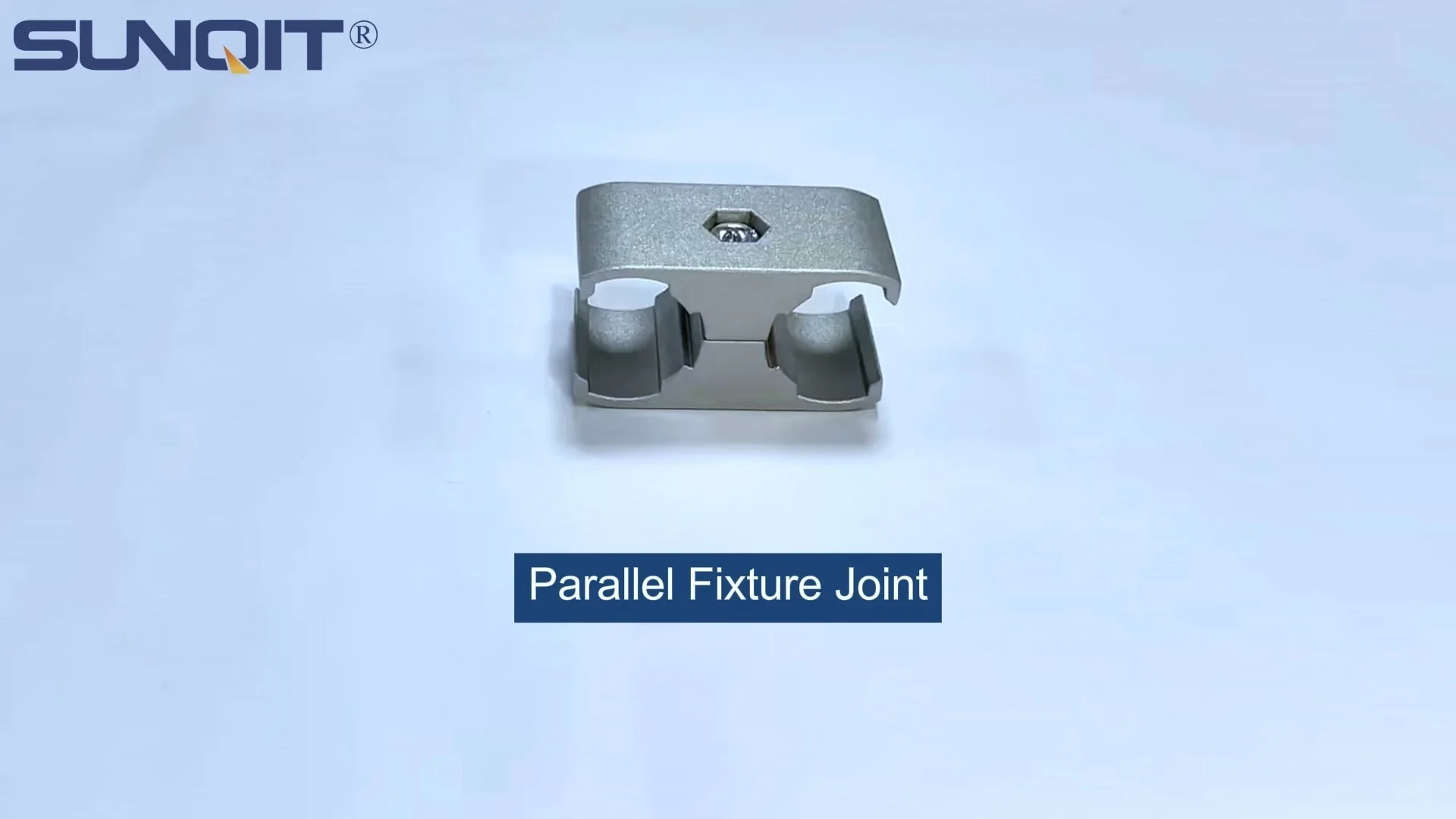
Parallel Fixation Aluminum Pipe Joint
Aluminum parallel joint for two pcs 28mm aluminum pipe connected by parallel direction.
Walk into any consumer electronics factory today, and you'll likely be struck by two things: the quiet hum of precision machinery and the seamless flow of components moving from one station to the next. From smartphones with nanometer-scale chips to smartwatches that track heart rates with medical-grade accuracy, the devices we on daily are born from environments where every millisecond and every millimeter matters. But behind this precision lies a less glamorous yet equally critical element: the physical infrastructure that holds it all together. Enter parallel fixation aluminum pipe joints—unassuming components that play a starring role in building the flexible, efficient workspaces that power modern electronics manufacturing.
The Backbone of Modern Manufacturing: Lean Systems
In an industry where product cycles shrink from years to months (and sometimes weeks), manufacturers can't afford rigid, one-size-fits-all setups. This is where lean systems come in. Rooted in the principles of minimizing waste, maximizing efficiency, and adapting to change, lean manufacturing has become the gold standard for consumer electronics producers. At its core, a lean system isn't just about cutting costs—it's about creating workspaces that respond to needs: reconfiguring assembly lines for a new phone model, adjusting workbenches to accommodate taller operators, or retooling flow racks to handle smaller components for a smart speaker upgrade.
But lean systems don't run on principles alone. They rely on tangible tools: workbenches that can be adjusted in minutes, flow racks that guide components effortlessly from storage to assembly, and aluminum profiles that form the skeleton of these structures. And connecting all these pieces? Joints. Not just any joints, but ones that balance strength, flexibility, and speed. This is where parallel fixation aluminum pipe joints step into the spotlight.
What Are Parallel Fixation Aluminum Pipe Joints?
Let's start with the basics. Parallel fixation aluminum pipe joints are mechanical connectors designed to link aluminum pipes or profiles in a way that keeps them aligned parallel to each other—hence the "parallel fixation" part. Unlike traditional steel joints, which are often heavy and require welding or complex tools to adjust, these joints are lightweight, modular, and tool-friendly (think Allen wrenches, not blowtorches). They're typically made from high-grade aluminum alloy, chosen for its winning combination of strength (to support heavy equipment), lightness (to keep structures easy to move), and corrosion resistance (critical in factories where humidity or cleaning agents are present).
The "fixation" in their name refers to how they secure pipes: by clamping onto the aluminum profile's T-slot (a groove running along the length of the pipe) with precision-machined bolts or pins. This design ensures a tight, wobble-free connection that can withstand the vibrations of assembly tools or the constant movement of components on roller tracks. But what truly sets parallel fixation joints apart is their versatility . Unlike fixed-angle joints that lock pipes at 90° or 45°, parallel fixation joints allow pipes to run side-by-side, creating stable, multi-level structures—perfect for workbenches with shelving, flow racks with multiple lanes, or aluminum profiles that need to support heavy panels (like ESD-safe work surfaces for circuit board assembly).

Why They Matter in Consumer Electronics Manufacturing
Consumer electronics manufacturing isn't just about building devices—it's about building consistently high-quality devices, even as designs change. Let's break down why parallel fixation aluminum pipe joints have become indispensable in this context.
1. Precision That Protects Delicate Components
drop a microchip, and you might as well throw away a day's work. In electronics manufacturing, components are tiny, fragile, and expensive. Workbenches and flow racks must keep them stable, even when operators are rushing to meet production targets. Parallel fixation joints excel here. By securing aluminum profiles in perfect parallel alignment, they eliminate the "play" (looseness) that can cause shelves to wobble or roller tracks to misalign. For example, when assembling a laptop motherboard, an operator needs their tools and components within arm's reach, on a workbench that doesn't shift. Parallel fixation joints ensure the bench's aluminum frame stays rigid, so the operator can focus on soldering 0.1mm-wide connections instead of steadying the table.
2. Flexibility to Keep Up with Change
Remember that smartphone model upgrade we mentioned earlier? When a manufacturer shifts from a 6.1-inch to a 6.7-inch screen, everything from the assembly line's workbenches to the flow racks holding display panels needs to adjust. Traditional steel joints would require cutting, welding, or replacing entire sections—costing time and money. Parallel fixation aluminum joints, however, are designed for reusability . Loosen the bolts, slide the aluminum profiles to the new position, retighten, and you're done. A workbench that once held a small phone assembly kit can now accommodate a larger tablet chassis in under an hour. For a factory producing 5+ device models a year, this flexibility isn't just convenient—it's competitive.
3. Lightweight Strength for Safer, Smarter Workspaces
Aluminum is about one-third the weight of steel, but it's still strong enough to support heavy loads (think: a flow rack stacked with 50-pound boxes of lithium-ion batteries). When paired with parallel fixation joints, aluminum profiles create structures that are both sturdy and maneuverable. This is a game-changer for "cell-based" manufacturing, where small teams work on dedicated sections of a product. A turnover trolley built with aluminum pipes and parallel joints can be pushed by a single operator, even when loaded with components, reducing the risk of strain injuries. In a factory with hundreds of such trolleys moving daily, this lightweight design cuts down on workplace accidents and speeds up material transport.
4. ESD Safety for Sensitive Electronics
Electrostatic discharge (ESD) is the silent killer of electronics manufacturing. A single static shock can fry a $500 microchip or render a sensor useless. Many aluminum alloys are naturally conductive, and when paired with ESD-safe accessories (like black ESD wheels on roller tracks or anti-slip mats on workbenches), parallel fixation aluminum systems can ground static electricity, protecting components. Unlike plastic joints, which can build up static charge, aluminum joints conduct electricity away from sensitive parts, making them a staple in cleanrooms and ESD-controlled zones. For example, a flow rack used to transport printed circuit boards (PCBs) will often use aluminum roller tracks with parallel fixation joints, ensuring the PCBs glide smoothly without picking up static.

Applications in the Factory: From Workbenches to Flow Racks
Parallel fixation aluminum pipe joints aren't just theoretical—they're hard at work on factory floors worldwide. Let's take a closer look at two of their most common applications: workbenches and flow racks.
Workbenches: Where Precision Meets Productivity
The workbench is the heart of any assembly station. Whether it's a single-deck workbench (without casters) for detailed soldering or a double-deck bench with tool hangers for assembly, the frame's stability directly impacts operator efficiency. Parallel fixation joints are the reason these workbenches can be customized to fit people , not just processes. Need a shelf 18 inches above the main deck for your microscope? Add two aluminum profiles and secure them with parallel joints. Want to mount a LED task light overhead? Attach it to the bench's frame using the same joints. Even accessories like monitor arms or anti-fatigue mat holders can be added or removed without altering the bench's core structure.
Consider a workbench used for testing smartwatch displays. The operator sits for 8-hour shifts, so the bench height must align with their elbows to prevent shoulder strain. With parallel fixation joints, the bench's legs (aluminum pipes) can be adjusted in 1-inch increments, ensuring a perfect fit for operators of all heights. Over time, as team members rotate, the bench adapts—no need to buy new furniture.
Flow Racks: Guiding Components with Zero Waste
Flow racks are the arteries of a lean factory, using gravity or rollers to move components from "staging" (storage) to "pick" (assembly). A well-designed flow rack minimizes the steps an operator takes to grab parts, cutting down on "motion waste"—a key lean principle. Parallel fixation aluminum joints ensure the roller tracks (another critical component) are perfectly aligned. If tracks are even slightly askew, components can jam, causing delays. By securing the aluminum profiles that hold the tracks, parallel joints keep the path smooth. For example, a 3-row, 3-floor material rack (like "Material Rack B" in many factory setups) uses parallel joints to align each row of roller tracks. This ensures that boxes of screws, capacitors, and connectors glide down to the pick face at a consistent speed, so operators never have to reach, stretch, or wait for stuck components.

Traditional Joints vs. Parallel Fixation Aluminum Joints: A Comparison
| Feature | Traditional Steel Joints | Parallel Fixation Aluminum Pipe Joints |
|---|---|---|
| Installation Time | 2–4 hours (requires welding/cutting) | 15–30 minutes (bolts only, no special tools) |
| Reconfigurability | Low (permanent welds; difficult to adjust) | High (loosen bolts, reposition, retighten) |
| Weight | Heavy (increases structure weight by 300%) | Lightweight (30% of steel joint weight) |
| ESD Compatibility | Requires additional grounding (steel conducts but is prone to rust) | Natural conductivity (no rust; easy to ground) |
| Cost Over Time | Higher (replacement/modification costs add up) | Lower (reusable; minimal maintenance) |
Installation and Maintenance: Keeping It Simple
You might think a component this versatile would be complicated to install, but parallel fixation aluminum pipe joints are designed for the factory floor, not the engineering lab. Most come with standard hex bolts that fit common Allen wrenches, and the aluminum profiles have pre-drilled holes or T-slots that guide alignment. Here's a quick breakdown of the process:
- Measure and cut: Aluminum profiles are cut to length using a standard miter saw (many suppliers also offer pre-cut lengths).
- Align and attach: Slide the parallel fixation joint onto the end of one profile, then align the second profile parallel to it. insert the bolt into the joint's T-slot and tighten until snug (over-tightening can strip the threads, so a torque wrench is optional but recommended).
- Test for rigidity: Gently shake the connected profiles to ensure no wobble. If there's movement, check alignment and retighten the bolt.
Maintenance is equally straightforward. Aluminum resists rust, so a quick wipe with a damp cloth removes dust or oil. Over time, bolts may loosen from vibration—simply retighten them during routine equipment checks. Unlike steel joints, which can corrode or seize up, parallel fixation aluminum joints rarely need replacement, even after years of use.
Case Study: A Day in the Life of a Smartphone Assembly Line
To see parallel fixation aluminum pipe joints in action, let's step into a mid-sized electronics factory producing 1 million smartphones annually. The factory runs two shifts, with each shift assembling 3 models: a budget phone, a flagship, and a foldable. Here's how the joints impact daily operations:
7:00 AM: The night shift hands over the line. Today, the foldable team needs to switch from the 5.8-inch inner screen to a 6.2-inch version. The assembly workbench, built with aluminum profiles and parallel fixation joints, is reconfigured in 45 minutes: the side shelves are moved outward by 3 inches, and a new aluminum guide rail is added to support the larger screen. No welding, no new parts—just repositioning the existing joints.
10:30 AM: A batch of camera modules arrives, but the boxes are taller than expected. The flow rack feeding the camera assembly station was designed for shorter boxes, causing jams. The line lead grabs a few extra aluminum profiles and parallel joints, adds a new "floor" to the flow rack (increasing vertical space), and has the modules flowing again in 20 minutes. With traditional steel joints, this would have taken 2 hours and a maintenance crew.
2:15 PM: An operator reports wrist strain from reaching for tools on a high shelf. The team adjusts the workbench's upper shelf height by loosening the parallel joints, sliding the aluminum profiles down 6 inches, and retightening. The operator is back to work in 5 minutes, and productivity rebounds.
8:00 PM: End-of-shift metrics show the factory hit 105% of its daily target. The plant manager notes that setup time for model changes is down 40% since switching to aluminum profiles and parallel fixation joints 6 months ago. Waste from scrapped components due to ESD has dropped by 25%, thanks to the conductive aluminum structure.
Future Trends: Where Parallel Fixation Joints Are Headed
As consumer electronics manufacturing leans into Industry 4.0 (smart factories with IoT sensors and automation), parallel fixation aluminum pipe joints are evolving too. Here are three trends to watch:
1. Smart Joints with Built-In Sensors
Imagine a joint that alerts maintenance when it's loose. Emerging designs integrate tiny strain gauges or RFID tags into parallel fixation joints, sending real-time data to the factory's IoT system. If a joint's bolt torque drops below a threshold (indicating loosening), the system flags it before a shelf wobbles or a roller track misaligns. This predictive maintenance cuts downtime and prevents component damage.
2. Sustainable Materials and Circular Design
Aluminum is already 100% recyclable, but manufacturers are pushing further. Some suppliers now offer parallel fixation joints made from recycled aluminum, with minimal packaging and carbon-neutral shipping. Factories are also designing "closed-loop" systems where old joints are returned, refurbished, and reused—reducing waste and lowering costs.
3. Modular Kits for Rapid Prototyping
Startups and small-batch manufacturers need flexible setups too. Suppliers are launching "lean pipe and accessories" kits: pre-cut aluminum profiles, parallel fixation joints, casters, and roller tracks that can be assembled into workbenches, flow racks, or trolleys in minutes—no tools required. These kits let small teams adopt lean principles without investing in custom infrastructure.
Conclusion: The Unsung Hero of Efficient Manufacturing
In the grand scheme of consumer electronics manufacturing, parallel fixation aluminum pipe joints might seem. They don't have the flash of a robotic arm or the precision of a laser cutter. But without them, the flexible, efficient, and safe workspaces that build our favorite devices would simply fall apart—literally. They are the connective tissue that turns static factories into dynamic, adaptive ecosystems capable of keeping up with the fastest-moving industry on the planet.
For manufacturers looking to stay ahead, the message is clear: investing in the right infrastructure—starting with the joints that hold it all together—isn't just about tools. It's about building a factory that can grow, change, and innovate alongside the products it creates. And in a world where the next big device is always just around the corner, that adaptability is the ultimate competitive edge.