- Company Articles
- Products and Technology
- Product knowledge
- Parallel Fixation Aluminum Pipe Joints in Flexible Production Lines: Reconfiguration Tips

Parallel Fixation Aluminum Pipe Joints in Flexible Production Lines: Reconfiguration Tips
Related Product
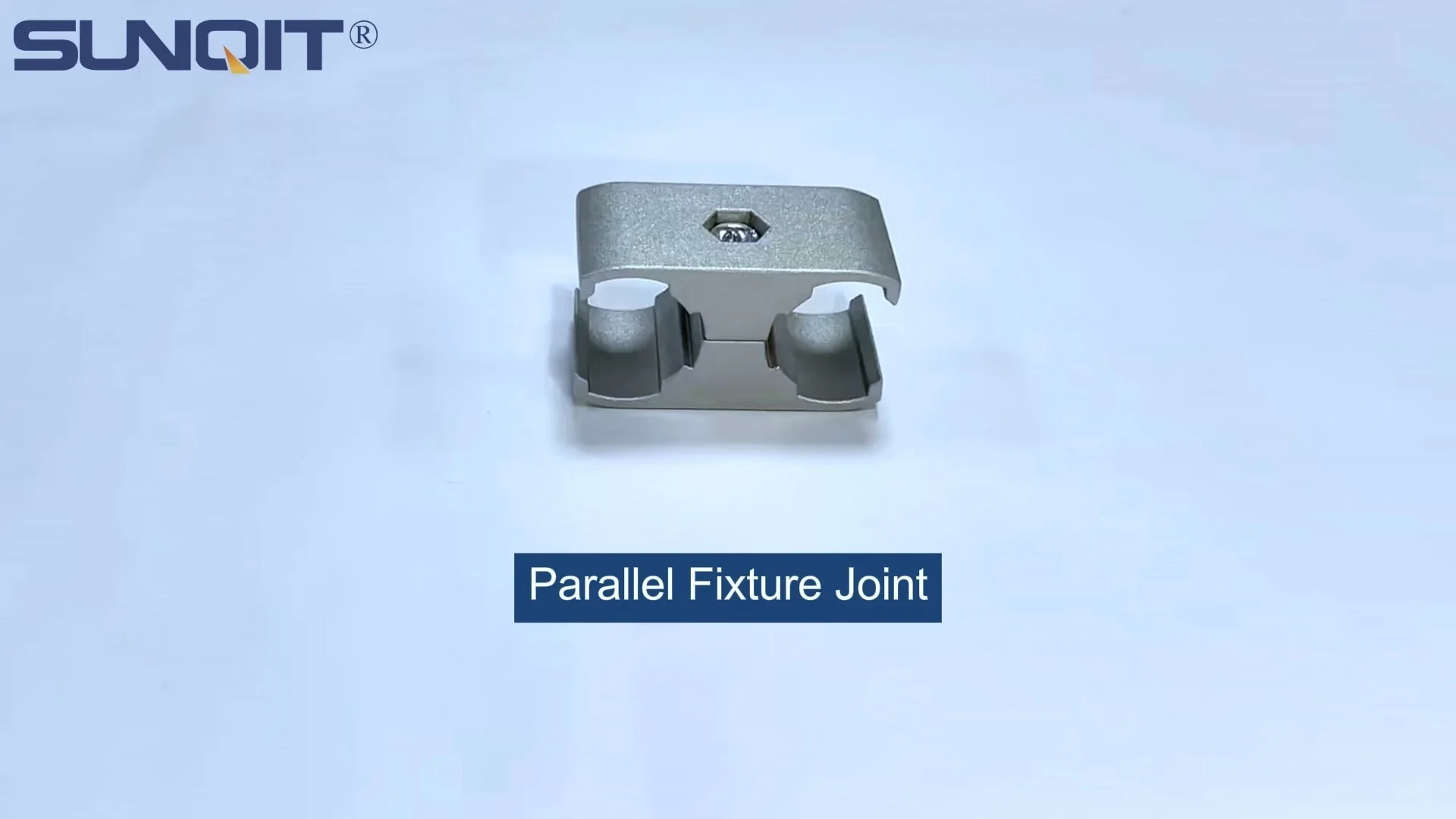
Parallel Fixation Aluminum Pipe Joint
Aluminum parallel joint for two pcs 28mm aluminum pipe connected by parallel direction.
Ever stood in front of a production line that felt more like a straightjacket than a workspace? Maybe you needed to shift a workbench six inches to the left to accommodate a new machine, but the bolts were rusted tight. Or perhaps a sudden surge in orders meant your flow rack was overflowing, but adding a shelf required a trip to the hardware store and two hours of wrestling with tools. If that frustration feels familiar, you're not alone. In manufacturing, rigidity isn't just a buzzword—it's a daily barrier to getting things done. But what if your production line could be as adaptable as your team? Enter parallel fixation aluminum pipe joints: the quiet revolution changing how factories, warehouses, and assembly floors stay agile.
What Are Parallel Fixation Aluminum Pipe Joints, Anyway?
Let's start with the basics. Imagine building with a set of blocks that never lock you into one shape. That's the idea behind parallel fixation aluminum pipe joints. These connectors are designed to work seamlessly with aluminum profiles—lightweight, strong, and resistant to the dings and scrapes of daily use—to create everything from workbenches to roller tracks. Unlike traditional welded joints or clunky bolts, these aluminum joints slide onto the profiles, lock into place with a simple twist or clamp, and stay put until you decide to rearrange. They're the reason a single team can disassemble a material rack at 9 a.m., rebuild it as a mobile workstation by noon, and have it back as a flow rack by the end of the day—no welders, no special tools, just a few minutes and a little know-how.
But why aluminum? Steel is strong, sure, but it's heavy and prone to rust. Plastic is lightweight but not built for heavy loads. Aluminum hits that sweet spot: durable enough to support tools, parts, and even small machinery, yet light enough that one person can reposition a entire workbench without straining. And when paired with parallel fixation joints—engineered to distribute weight evenly and resist slipping—it becomes a material that doesn't just hold things up, but holds onto your ability to adapt.
Why Flexibility Matters (Spoiler: It's About More Than Just Speed)
Let's talk about lean system principles for a minute. At its core, lean is about eliminating waste—whether that's wasted time, wasted space, or wasted effort. But here's the thing: rigid production setups are waste magnets. A workbench that can't be adjusted to a worker's height leads to fatigue (and wasted energy). A flow rack that can't expand when orders spike leads to bottlenecks (and wasted time). A roller track that's bolted to the floor becomes obsolete the second your workflow changes (and wasted money). Parallel fixation aluminum pipe joints attack that waste at the source by turning "this is how it is" into "this is how we need it today."
Take Maria, a production supervisor at a small electronics plant I visited last year. Her team builds custom circuit boards, and every order is a little different. "Before we switched to aluminum profiles and parallel joints, we had three separate workbenches—one for soldering, one for testing, one for packaging," she told me. "If a big order came in, we'd have people tripping over each other trying to use the same space. Now? We take the packaging bench apart, reattach the legs to make it taller, add a roller track section, and suddenly we've got a dual testing station. It takes 15 minutes, and everyone's back to work. No more waiting, no more frustration." That's the human impact of flexibility: it turns stress into confidence, and delays into momentum.

Reconfiguration Tips: Making the Most of Your Parallel Fixation Joints
So you've got your aluminum profiles, your parallel fixation joints, and a vision for a more flexible space. Now what? Reconfiguring isn't just about taking things apart and putting them back together—it's about doing it efficiently, safely, and in a way that lasts. Here are actionable tips to make your next setup (or re-setup) a breeze:
| Do's | Don'ts |
|---|---|
| Start with a "sketch first, build later" approach. Even a rough drawing (yes, on a napkin counts) helps you visualize how joints and profiles will connect, saving time on trial-and-error. | Rush the disassembly. Take 30 seconds to label parts with masking tape (e.g., "left leg," "roller track section") so you don't forget where they go. |
| Use a rubber mallet for gentle adjustments. If a joint feels stuck, tapping it lightly (not pounding!) helps it slide into place without damaging the aluminum. | Over-tighten joint clamps. Most parallel fixation joints lock with a ¼-turn or a set screw—cranking them too hard can strip threads or warp the profile. |
| Test weight capacity before full deployment. Stack a few boxes or tools on your new setup to ensure joints don't shift under load—better to catch a weak spot in the shop than during production. | Mix metal types. If you're using aluminum profiles, stick with aluminum joints—mixing with steel can cause galvanic corrosion (a fancy term for "rust that eats your setup from the inside out"). |
| Involve the team using the space. The assemblers, packers, or technicians who work at the station every day will have the best ideas for height, shelf spacing, and roller track angles. | Ignore wear and tear. Check joint tightness monthly—vibration from machinery can loosen connections over time. A quick once-over with a hex key takes 5 minutes and prevents accidents. |
Pro Tip: Modularize Your "Go-To" Setups
If your team uses the same three or four configurations regularly (e.g., "morning assembly line," "afternoon packaging station"), create modular "kits." For example, keep a labeled bin with the joints, profiles, and roller track sections needed for each setup. When it's time to switch, you're not hunting for parts—just grab the kit and go. One warehouse manager I worked with called this their "flexibility first aid kit." "It's like having spare band-aids," they said. "You hope you don't need them, but when you do, you're glad they're there."

From Workbench to Roller Track: Real-World Applications
Parallel fixation aluminum pipe joints aren't just for one-size-fits-all solutions—they shine in the messy, specific, "we need this weird thing to work" scenarios that pop up in real production. Let's dive into a few common (and not-so-common) ways teams are using them:
1. The Adaptable Workbench
Workbench E (single deck, no casters) is a staple in many shops, but with parallel fixation joints, it becomes a chameleon. Need a taller surface for standing work? Swap the 30-inch legs for 42-inch ones using the same joints. Adding a monitor arm? Attach a small aluminum profile to the back with a T-joint. Suddenly, it's not just a workbench—it's a command center. And when the project ends? Take off the monitor arm, shorten the legs, and it's back to basics. No need to buy a new bench; just reimagine the one you have.
2. The Dynamic Flow Rack
Material Rack B (3 rows, 3 floors) is great for storage, but what if you need parts to "flow" to the assembly line instead of sitting idle? By replacing the solid shelves with roller track sections (using parallel joints to attach them to the rack posts), you turn static storage into a gravity-fed system. Parts glide down to the front, workers grab what they need, and the rack refills from the back—no more bending or reaching. And if your parts change size? Adjust the shelf height in minutes by loosening the joints and sliding them up or down. It's like having a storage system that grows with your inventory.
3. The Mobile Roller Track Conveyor
Roller tracks are workhorses for moving parts, but fixed tracks limit where you can send them. Enter parallel fixation joints: attach a roller track to a base with casters (using swivel caster wheels and joint adapters), and suddenly you've got a mobile conveyor. Need to move parts from the warehouse to the assembly line? Roll it over. Production line bottleneck at station 3? Reposition the track to feed parts directly to station 4. One automotive supplier I know uses this trick to handle seasonal spikes—they store extra roller track sections on a shelf, then link them together with joints to create longer conveyors when orders jump. No more waiting for a contractor to install permanent tracks; they build it themselves, on the fly.

The Bottom Line: Flexibility Isn't a Luxury—It's Your Team's Superpower
At the end of the day, parallel fixation aluminum pipe joints aren't just tools—they're enablers. They enable workers to take control of their space, managers to respond to change without panic, and teams to turn "we can't" into "we'll figure it out." In a world where manufacturing demands are always shifting—smaller batches, faster turnarounds, more customization—rigidity is a liability. Flexibility? That's your competitive edge.
So the next time you look at your production line, see beyond the metal and the machines. See the people who use it, the ideas they have, and the problems they could solve if they weren't stuck in a box. Then ask: What would happen if your workspace was as adaptable as they are? With parallel fixation aluminum pipe joints, the answer is simple: anything.