- Company Articles
- Products and Technology
- Technology Sharing
- Parallel Fixation Aluminum Pipe Joints in Mechanical Manufacturing: Process Optimization

Parallel Fixation Aluminum Pipe Joints in Mechanical Manufacturing: Process Optimization
Related Product
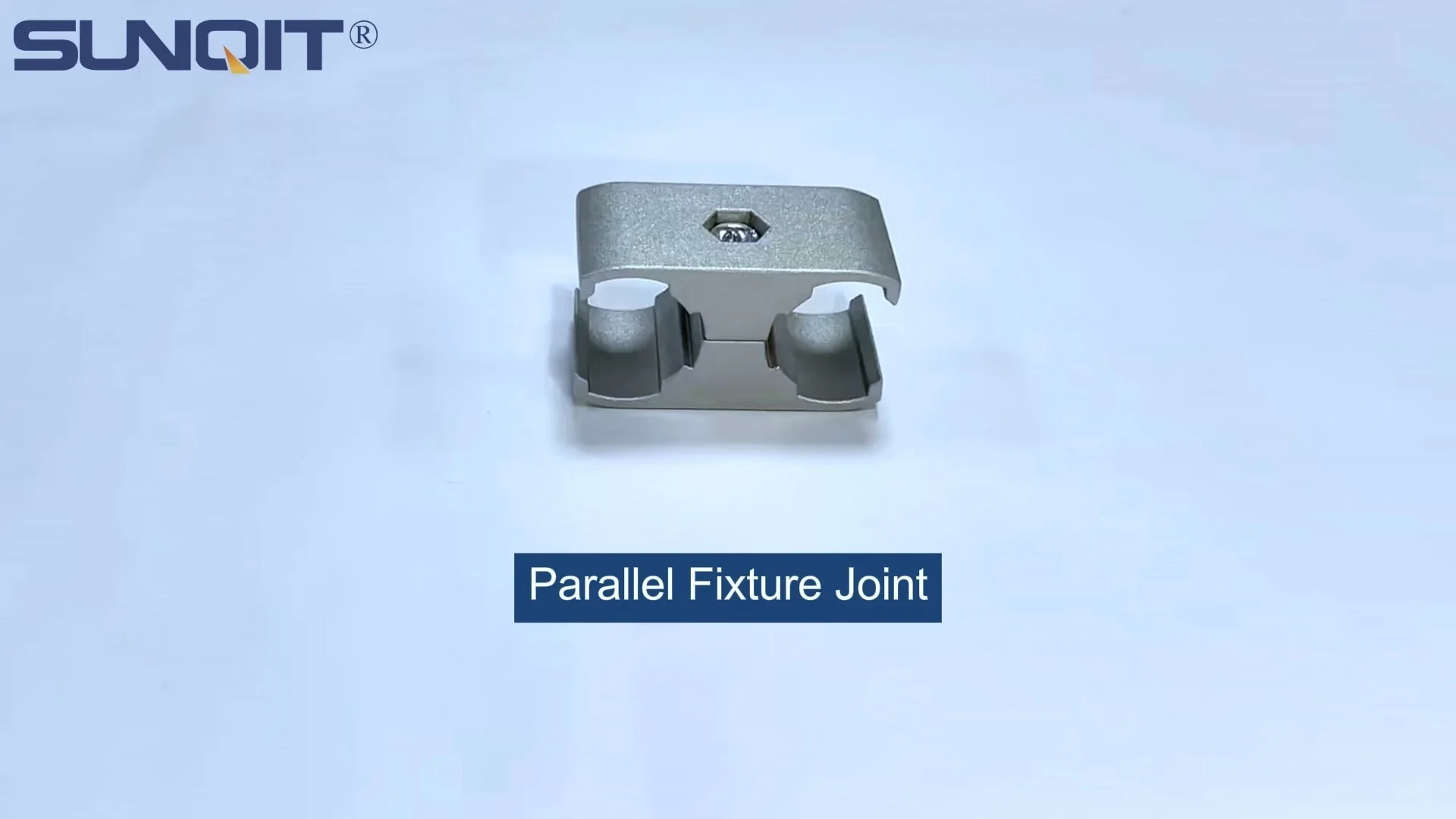
Parallel Fixation Aluminum Pipe Joint
Aluminum parallel joint for two pcs 28mm aluminum pipe connected by parallel direction.
Picture this: A bustling electronics assembly plant, where workers huddle around workbenches, carefully placing microchips onto circuit boards. The air hums with the steady whir of machinery, but beneath the surface, there's a quiet tension. A technician pauses, frowning at the workbench—one of its legs has started to shift, causing the surface to tilt slightly. "Again?" she mutters, reaching for a wrench to tighten a loose joint. Nearby, a material handler struggles to push a turnover trolley loaded with components; its frame, held together by rigid steel connectors, creaks with every turn. These small, daily disruptions aren't just annoyances—they're productivity killers. They add up to missed deadlines, increased waste, and a workforce that's constantly firefighting instead of innovating. This is where parallel fixation aluminum pipe joints step in: not as flashy new tech, but as a foundational shift in how we build the tools that build our world.
In the fast-paced realm of mechanical manufacturing, adaptability isn't just a buzzword—it's survival. Traditional systems, built with fixed steel pipes and welded joints, lock facilities into rigid configurations that can't keep up with shifting production needs, product redesigns, or efficiency goals. Parallel fixation aluminum pipe joints, by contrast, are the ultimate problem-solvers. They're designed to turn aluminum lean pipes into flexible, durable structures that can be assembled, adjusted, and reconfigured in hours, not days. But to truly appreciate their impact, we need to dive into what they are, how they work, and why they're becoming the backbone of modern lean systems.
What Are Parallel Fixation Aluminum Pipe Joints?
Let's start with the basics. Parallel fixation aluminum pipe joints are precision-engineered connectors that secure aluminum pipes—specifically aluminum lean pipes—in parallel alignment. Unlike generic joints that might only handle a single angle or require complex tools to install, these joints are built for stability and simplicity. Imagine two aluminum pipes running side by side under a workbench surface. A parallel fixation joint clamps onto both pipes, creating a bond that's tight enough to resist vibration (critical in manufacturing settings) but loose enough to allow for if the structure needs to be adjusted later. They're often made from high-grade aluminum alloys, which strike the perfect balance between strength and weight—strong enough to support heavy loads, light enough to make assembly a one-person job.
What sets them apart from older alternatives? Traditional steel joints, for example, are bulky and prone to rust, which weakens their grip over time. Plastic joints, while lightweight, lack the durability to withstand the daily wear and tear of a factory floor. Parallel fixation aluminum joints, however, combine the best of both worlds: the corrosion resistance of aluminum, the precision of engineered design, and the flexibility to work with a range of aluminum profile accessories. They're also modular, meaning a single joint design can often work with multiple pipe diameters and configurations—a huge plus for facilities trying to standardize their equipment without limiting creativity.
Aluminum Lean Pipe: The Foundation of Flexible Systems
You can't talk about parallel fixation joints without talking about their partner in crime: aluminum lean pipe. Aluminum lean pipe—sometimes called "lean tube"—is the building block of these systems. It's not your average hardware store aluminum pipe; it's specially extruded to have a smooth, consistent surface that pairs perfectly with joint connectors. Most aluminum lean pipes have a hollow core, which reduces weight without sacrificing strength, and a t-slot design along their length (hence the term "t-slot aluminum pipe") that allows accessories like brackets, shelves, or tool holders to be attached without drilling or welding.
Why aluminum? For starters, it's inherently resistant to corrosion, which is a game-changer in environments where spills, humidity, or chemicals are common (think automotive plants or food processing facilities). Steel pipes, even when coated, eventually rust, leading to weakened joints and unsightly, unhygienic buildup. Aluminum also conducts heat and electricity poorly compared to steel, making it safer for use around sensitive electronics or in workbenches where static control is critical (hello, ESD workstations). And let's not forget weight: Aluminum lean pipe is roughly 30% lighter than steel, which makes assembling structures like material racks or turnover trolleys far easier. A worker can carry a 10-foot length of aluminum pipe without straining, whereas steel would require a second person—another small efficiency gain that adds up.
But the real magic happens when aluminum lean pipe meets parallel fixation joints. Together, they form a system that's as strong as it is adaptable. Need to raise a workbench by 6 inches to accommodate taller workers? Loosen the joints, adjust the pipes, retighten—done. Want to add a third shelf to a material rack to store new components? Slide in two more aluminum pipes, secure them with parallel fixation joints, and you're set. This flexibility is the cornerstone of lean manufacturing, where the goal is to eliminate waste (including the waste of rigid systems that can't evolve).

The Role of Aluminum Profile Accessories in System Integrity
A joint is only as good as the accessories that support it. Aluminum profile accessories are the unsung heroes that turn a collection of pipes and joints into a fully functional structure. Take, for example, the "roller track placon mount for aluminum profile flat"—a small bracket that attaches roller tracks to aluminum profiles, creating a smooth surface for materials to glide across. When paired with parallel fixation joints, these mounts ensure the roller track stays perfectly aligned with the aluminum pipes, preventing jams or misfeeds that could bring a production line to a halt.
Another key accessory: the aluminum guide rail. These rails, often used alongside roller tracks, keep materials (like bins or trays) moving in a straight line. When secured to aluminum pipes with parallel fixation joints, they eliminate the "wobble" that plagues less precise systems. Imagine a flow rack in a warehouse, where boxes need to slide from the back to the front as stock is picked. If the guide rails are even slightly misaligned, boxes can get stuck, leading to delays and frustrated pickers. With parallel fixation joints holding the aluminum pipes (and thus the guide rails) steady, the flow is seamless—no more stopping to free a jammed box.
Then there are the small but critical components: caster wheels, end caps, and leveling feet. Casters, when attached to a trolley frame built with aluminum lean pipe and parallel fixation joints, need to swivel smoothly and lock securely. Since the joints ensure the frame is square and stable, the casters can do their job without wobbling, reducing the effort needed to move heavy loads. End caps, which fit over the ends of aluminum pipes, prevent debris from getting inside and protect workers from sharp edges—simple, but essential for safety and longevity. And leveling feet? They're a lifesaver in older factories with uneven floors. Paired with parallel fixation joints, they let workers individual legs of a workbench or rack until the surface is perfectly level, eliminating the tilting that causes tools or components to slide off.
The beauty of these accessories is that they're designed to work together. A parallel fixation joint isn't just a connector for pipes—it's a hub that integrates with brackets, rails, casters, and more. This interoperability is what turns a pile of parts into a system that can be customized for almost any task, from a simple workbench to a complex automated conveyor setup.

Process Optimization: How Parallel Fixation Joints Transform Manufacturing
Now, let's get to the heart of the matter: process optimization. How exactly do parallel fixation aluminum pipe joints make manufacturing more efficient? Let's break it down into three key areas: speed, adaptability, and reliability.
Speed: From Days to Hours
Traditional manufacturing setups often require custom-built structures. Need a new workbench? Call a welder, wait for them to cut steel pipes, weld the frame, grind down the edges, and paint it. That could take a week or more. With parallel fixation joints and aluminum lean pipe, the same workbench can be assembled in a morning. No welding, no cutting (pipes can be easily cut to length with a standard hacksaw or pipe cutter), no waiting for paint to dry. Workers can follow a simple diagram, hand-tighten the joints with an Allen wrench, and have the structure ready for use by lunch. This speed isn't just about convenience—it's about responding to urgent needs. If a production line suddenly needs a new material rack to accommodate a rush order, parallel fixation systems let facilities adapt on the fly, without derailing the entire schedule.
Adaptability: Built for Change
Manufacturing isn't static. Products change, production volumes fluctuate, and new technologies (like collaborative robots or automated inspection tools) get integrated into workflows. Rigid systems can't keep up. A workbench built with welded steel pipes that's perfect for assembling smartphones might be useless when the company starts making larger tablets. With parallel fixation joints, though, that same workbench can be disassembled, and the pipes can be reused to build a taller, wider structure. Or, if the production line switches from batch manufacturing to continuous flow, the old static racks can be reconfigured into dynamic flow racks with roller tracks, all using the same aluminum pipes and joints. This adaptability reduces waste—no more throwing away perfectly good structures because they're no longer the right size or shape—and cuts down on capital expenses, since facilities don't need to buy new equipment every time their needs change.
Reliability: Less Downtime, More Consistency
In manufacturing, downtime is the enemy. A single loose joint can cause a workbench to fail, a conveyor to jam, or a trolley to tip over—all of which halt production and cost money. Parallel fixation joints are engineered for reliability. Their clamping mechanism distributes pressure evenly across the aluminum pipe, creating a grip that stays tight even under constant vibration (common in plants with heavy machinery). They're also less prone to wear and tear than threaded or welded joints, which can loosen over time or corrode. And because they're made from aluminum, they won't rust, ensuring that the joint's strength doesn't degrade in humid or wet environments. The result? Structures that stay stable longer, fewer unexpected breakdowns, and a workforce that can focus on production, not repairs.

Real-World Impact: Workbenches and Lean Systems in Action
To put this into perspective, let's look at a real-world example: a mid-sized automotive parts manufacturer that switched to parallel fixation aluminum pipe joints for their workbenches and material racks. Before the switch, their assembly line used steel workbenches with welded frames. When they introduced a new, larger part, the old workbenches were too short, so they had to order custom replacements—a process that took six weeks and cost $15,000. Worse, the steel racks they used to store components were prone to rust, which contaminated some parts and led to quality control issues.
After researching alternatives, they invested in aluminum lean pipe, parallel fixation joints, and a set of aluminum profile accessories (including roller tracks and leveling feet). Within two days, their maintenance team had assembled new, height-adjustable workbenches using the aluminum system. The total cost? $8,000—less than half the price of the custom steel benches, and ready in a fraction of the time. The new workbenches were also lighter, making them easier to reposition when the assembly line layout changed. As for the material racks? They built them with roller tracks secured by parallel fixation joints, allowing components to slide forward as they were used, reducing the need for workers to bend or reach. Rust became a non-issue, and quality control rejects dropped by 12% in the first month. And when the company later decided to add a second shift, they simply reconfigured the existing racks and workbenches instead of buying new ones—saving another $10,000.
This isn't an isolated case. From electronics manufacturing to food packaging, facilities that adopt parallel fixation aluminum pipe joints consistently report improvements in productivity, flexibility, and worker satisfaction. Workers appreciate that the structures are stable and easy to adjust, and managers love the cost savings and faster response times. It's a win-win that aligns perfectly with lean manufacturing principles—eliminating waste, optimizing flow, and empowering teams to improve their own workspaces.
Traditional vs. Parallel Fixation: A Comparison
Still not convinced? Let's put parallel fixation aluminum pipe joints head-to-head with traditional steel joints in a side-by-side comparison. The table below highlights key factors that matter most in manufacturing settings:
| Feature | Traditional Steel Joints | Parallel Fixation Aluminum Joints |
|---|---|---|
| Installation Time | 4-6 hours for a basic workbench (requires welding/cutting) | 1-2 hours for the same workbench (no welding; hand tools only) |
| Weight | Heavy (requires 2+ people to assemble) | Lightweight (assembled by 1 person) |
| Corrosion Resistance | Poor (prone to rust; requires regular coating) | Excellent (aluminum resists rust; no coating needed) |
| Flexibility | Fixed (cannot be reconfigured without cutting/welding) | Highly flexible (easily disassembled and reconfigured) |
| Long-Term Cost | Higher (replacement costs for reconfigurations; maintenance for rust) | Lower (reusable components; minimal maintenance) |
| Compatibility with Accessories | Limited (requires custom brackets for most accessories) | Wide (works with standard aluminum profile accessories like roller tracks, casters) |
Challenges and Solutions: Overcoming the Learning Curve
Of course, no new system is without challenges. One common concern we hear from manufacturers is the initial cost. Aluminum lean pipe and parallel fixation joints can be more expensive upfront than generic steel pipes and basic joints. But as the earlier example shows, the long-term savings—from faster assembly, reusability, and lower maintenance—more than offset the initial investment. Think of it as buying a high-quality tool that lasts 10 years versus a cheap one that breaks after 2.
Another challenge is training. Workers used to building with steel and welding may be hesitant to switch to a new system. The solution? Start small. Instead of overhauling the entire facility at once, pick one area—a single workbench or material rack—and build it with parallel fixation joints. Let the team see how easy it is to assemble and adjust. Many suppliers also offer free training sessions or online tutorials to help teams get comfortable with the new components. Once workers experience the benefits firsthand, resistance often fades.
Finally, there's the issue of standardization. Some facilities worry that switching to a modular system will lead to a hodgepodge of structures with inconsistent designs. But in reality, parallel fixation joints and aluminum lean pipe promote standardization. By choosing a few pipe diameters and joint types, facilities can ensure that components are interchangeable across all structures, making assembly and maintenance simpler. Plus, many suppliers offer design templates for common structures (like workbenches or flow racks), so teams don't have to reinvent the wheel every time they build something new.
The Future: Where Aluminum Pipe Technology is Headed
As manufacturing continues to evolve, so too will the tools that power it. Parallel fixation aluminum pipe joints are just the beginning. Looking ahead, we're seeing trends like integrated smart technology—joints with built-in sensors that monitor tension or vibration, alerting maintenance teams if a joint starts to loosen. There's also a push for even more sustainable materials; some suppliers are experimenting with recycled aluminum alloys that maintain strength while reducing environmental impact. And as automation becomes more widespread, we'll likely see aluminum lean pipe systems designed to work seamlessly with robots—structures that can be adjusted automatically via programmable joints, adapting to new tasks with minimal human intervention.
Perhaps most exciting is the potential for these systems to democratize manufacturing. Smaller facilities, which might not have the budget for custom-built steel structures, can now access professional-grade, flexible systems at a fraction of the cost. This levels the playing field, allowing innovators and startups to compete with larger companies by optimizing their processes from day one.
Conclusion: Building for the Future, One Joint at a Time
Parallel fixation aluminum pipe joints may not grab headlines like AI-powered robots or 3D printers, but they're quietly revolutionizing mechanical manufacturing. They're the unsung heroes that turn chaos into order, rigidity into flexibility, and wasted time into productivity. By pairing aluminum lean pipe with precision-engineered joints and versatile aluminum profile accessories, manufacturers are building systems that can keep up with the demands of modern production—systems that are strong, adaptable, and built to last.
So, the next time you walk through a manufacturing plant, take a closer look at the workbenches, the racks, the trolleys. If they're sturdy, clean, and seem to fit the space perfectly—even as the line around them changes—chances are, parallel fixation aluminum pipe joints are hard at work. They're not just building structures; they're building the future of manufacturing. And in a world where efficiency and adaptability are everything, that's a game-changer.