- Company Articles
- Products and Technology
- Product knowledge
- Parallel Fixation Aluminum Pipe Joints in Solar Panel Production Lines

Parallel Fixation Aluminum Pipe Joints in Solar Panel Production Lines
Related Product
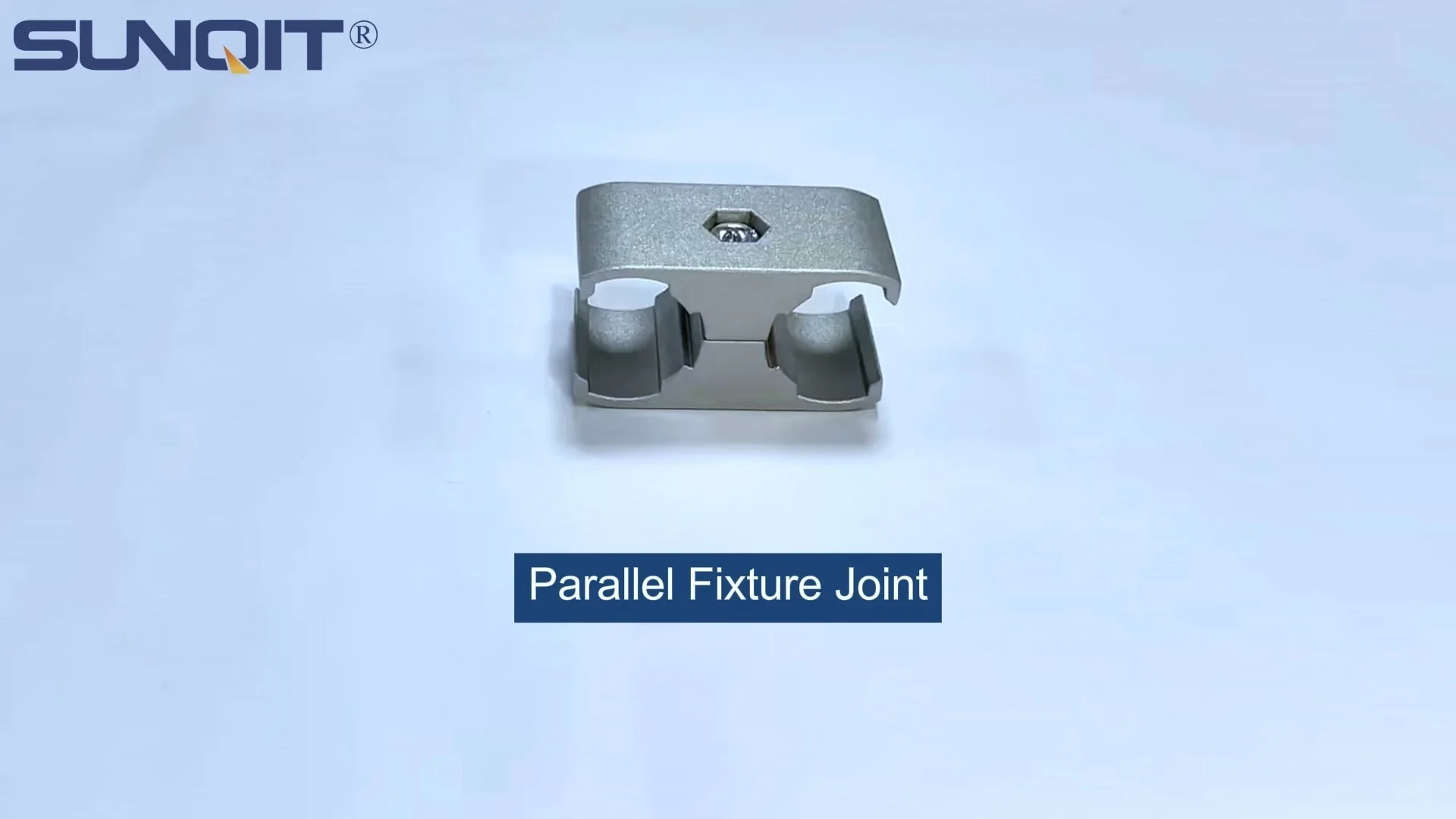
Parallel Fixation Aluminum Pipe Joint
Aluminum parallel joint for two pcs 28mm aluminum pipe connected by parallel direction.
Walk into any modern solar panel production facility, and you'll notice a rhythm—a synchronized dance of machinery, materials, and workers moving with precision. Every component, from the thinnest silicon wafer to the sturdiest frame, relies on a production line that's not just efficient, but adaptable. In an industry where technology evolves overnight and consumer demand shifts with the seasons, rigidity is the enemy. That's where the unsung heroes of these facilities come into play: the structural frameworks that hold everything together. And at the heart of these frameworks? Parallel fixation aluminum pipe joints. These small but mighty connectors are quietly revolutionizing how solar panel lines are built, maintained, and reimagined—offering a level of flexibility, durability, and cost-effectiveness that traditional steel or plastic joints simply can't match.
The Backbone of Solar Production: Why Aluminum Profiles Matter
Solar panel production isn't just about assembling parts; it's about creating an environment where precision meets productivity. The lines themselves need to withstand constant use, support heavy loads (think stacks of glass panels or rolls of backsheet material), and adapt quickly when a new panel design hits the drawing board. For decades, manufacturers leaned on steel structures—sturdy, yes, but heavy, prone to rust, and notoriously hard to modify. Then came aluminum extrusion profiles: lightweight, corrosion-resistant, and infinitely customizable. Today, aluminum profiles form the backbone of most modern production lines, from workbenches where technicians inspect cells to material racks that feed components to assembly stations. But even the best aluminum profile is only as good as the joints that hold it together. Enter parallel fixation aluminum pipe joints: the critical link that turns static frames into dynamic, flexible systems.
Unlike generic joints, parallel fixation aluminum pipe joints are engineered for the unique demands of solar manufacturing. They're designed to connect aluminum profiles at precise angles, distribute weight evenly, and withstand the vibrations of conveyor belts and robotic arms. What truly sets them apart, though, is their ability to balance strength with adaptability. In a industry where a single production line might need to switch from producing residential panels to commercial ones (or even experimental prototypes) in a matter of weeks, this flexibility isn't just a nice-to-have—it's a business necessity.
Inside the Design: What Makes Parallel Fixation Joints Stand Out
To understand why these joints are game-changers, let's break down their design. Parallel fixation aluminum pipe joints—sometimes called "parallel aluminum joint a" or "parallel fixation aluminum pipe joints" in supplier catalogs—feature a dual-clamp mechanism that grips aluminum profiles from two sides, creating a connection that's both tight and adjustable. Unlike welded joints (which are permanent) or basic bolt-on connectors (which loosen over time), these joints use a combination of T-slot compatibility and high-tension fasteners to lock profiles in place. This means workers can assemble a frame in hours, not days, and reconfigure it just as quickly when needs change.
Take, for example, a workbench on a solar cell sorting line. Traditional workbenches might be built with fixed steel legs and a wooden top—sturdy, but impossible to adjust if a new machine requires a higher surface or a wider layout. With parallel fixation joints, the same workbench can be disassembled, reconfigured, and reassembled in under an hour. Need to add a shelf for tools? Just slide an aluminum profile into the joint's T-slot and tighten the clamp. Want to lower the height by 6 inches? Loosen the joint, adjust the legs, and lock it back in. No welding, no drilling, no specialized tools—just a hex key and a few minutes of work.

From Workbench to Warehouse: Real-World Applications in Solar Lines
Parallel fixation aluminum pipe joints aren't just theoretical—they're hard at work in solar facilities around the world, solving everyday challenges. Let's take a walk through a typical production line and see where these joints make their mark:
1. Assembly Workbenches: The heart of any solar line, workbenches need to be stable enough for precision tasks (like soldering busbars) and flexible enough to accommodate new tools. A workbench built with aluminum profiles and parallel fixation joints can be outfitted with adjustable shelves, anti-static mats (critical for protecting sensitive electronics), and even integrated lighting—all without compromising structural integrity. When a new soldering robot is added, workers can simply reposition the bench's legs or add an extension using the same joints, avoiding the cost of buying a workbench.
2. Material Racks and Trolleys: Solar production generates a lot of materials—glass sheets, aluminum frames, junction boxes—and these need to move from storage to the line efficiently. Material racks built with aluminum profiles and parallel fixation joints are lightweight enough to be moved by hand (or with casters) but strong enough to hold hundreds of pounds of inventory. For example, a "material rack b (3 row and 3 floor)" design, common in solar facilities, uses these joints to connect vertical supports and horizontal shelves. If a facility starts stocking larger frames, workers can adjust the shelf heights in minutes by loosening the joints and sliding the profiles to new positions.
3. Conveyor Systems: Conveyors are the arteries of production lines, moving panels through lamination, testing, and framing. The guides and supports that keep conveyors aligned rely on sturdy joints. Parallel fixation aluminum pipe joints excel here because they maintain alignment even under the stress of constant vibration. Unlike plastic joints, which can warp or crack over time, aluminum joints keep conveyor tracks straight, reducing jams and minimizing damage to delicate panels.
4. Cleanroom Partitions: Many solar manufacturing steps (like silicon wafer processing) require cleanroom environments to prevent dust from ruining panels. Aluminum profiles with parallel fixation joints are ideal for building temporary or permanent cleanroom partitions. They're easy to disinfect, resistant to chemicals used in cleaning, and can be quickly reconfigured if the cleanroom needs to expand or shrink.

Why Traditional Joints Fall Short: A Side-by-Side Comparison
To truly appreciate the value of parallel fixation aluminum pipe joints, it helps to see how they stack up against the alternatives. Let's compare them to two common options: traditional steel welded joints and plastic snap-fit joints.
| Feature | Parallel Fixation Aluminum Pipe Joints | Traditional Steel Welded Joints | Plastic Snap-Fit Joints |
|---|---|---|---|
| Assembly Time | 30 minutes for a basic frame (no welding or drilling) | 4+ hours (requires skilled welders and curing time) | 15 minutes (quick snap-on, but prone to loosening) |
| Adjustability | Highly adjustable—loosen clamps, reposition, and retighten | Permanent—requires cutting and rewelding to modify | Limited—snap-fit tabs can break if adjusted frequently |
| Durability | Resistant to corrosion, rust, and temperature swings; lasts 10+ years | Prone to rust in humid environments; welds weaken over time | Degrades in UV light and high temperatures; lasts 1–2 years |
| Weight | Lightweight (50% lighter than steel joints) | Heavy (adds significant load to structures) | Lightweight, but low load capacity |
| Cost Over Time | Higher upfront cost, but lower long-term costs (no replacement/rewelding) | Low upfront cost, but high maintenance (rust treatment, rewelding) | Low upfront cost, but frequent replacement needed |
| Safety | Smooth edges, no sharp weld spurs; lightweight reduces injury risk during adjustments | Sharp weld spurs; heavy structures increase injury risk if moved | Can crack or shatter, creating sharp plastic fragments |

The Role of Aluminum Pipe Accessories: Completing the System
Parallel fixation aluminum pipe joints don't work alone—they're part of a larger ecosystem of aluminum pipe accessories that turn basic profiles into fully functional systems. These accessories, from end caps to T-slot nuts, enhance the joints' versatility and make customization even easier. For example, "aluminum profile rubber strips" can be inserted into T-slots to reduce noise from vibrating components or protect delicate materials from scratches. "Aluminum profile end caps" cover sharp edges, improving safety, while "internal rotatary aluminum joints" add swivel functionality for parts like workbench shelves that need to pivot.
One accessory that's particularly valuable in solar production is the "caster and accessories" set. Adding casters to a material rack or workbench (using parallel fixation joints to secure them to the frame) turns a stationary structure into a mobile one. This is a game-changer for facilities where floor space is limited—workers can roll racks out of the way during maintenance or reposition workbenches to accommodate new machinery. Even better, these casters are easy to swap out if they wear down, thanks to the same joint system that holds the rack together.
Another key accessory is the "aluminum honeycomb panel," often used as a workbench top. These panels are lightweight but incredibly strong, and they attach to aluminum profiles using—you guessed it—parallel fixation joints. The result? A workbench that's stable enough for precision tasks, lightweight enough to move, and customizable enough to add tool hooks, bins, or cable management systems via the T-slots.
Case Study: How One Solar Manufacturer Cut Costs and Boosted Flexibility
Let's look at a real-world example of how parallel fixation aluminum pipe joints transformed a solar production line. GreenHorizon Solar, a mid-sized manufacturer in Arizona, was struggling with a common problem: their production line was built with steel welded frames that couldn't keep up with their growing product lineup. When they introduced a new 72-cell panel (larger than their standard 60-cell model), their existing material racks were too short, their workbenches too narrow, and their conveyor guides misaligned. Rebuilding the entire line with new steel frames would have cost $150,000 and taken six weeks—time they couldn't afford with a tight launch deadline.
Instead, GreenHorizon turned to aluminum extrusion profiles and parallel fixation aluminum pipe joints. They purchased pre-cut profiles and a set of joints, then trained their existing maintenance team to assemble the new system. The results were staggering: the new line was up and running in just 10 days, at a cost of $45,000 (a 70% savings). But the benefits didn't stop there. A few months later, when they won a contract for a custom bifacial panel with unique dimensions, they reconfigured the same line in just two days by adjusting the joints and adding new accessories. "We went from dreading product launches to actually looking forward to them," said Maria Gonzalez, GreenHorizon's production manager. "The flexibility these joints give us means we can take on more projects without worrying about our line's limits."
Choosing the Right Supplier: What to Look For
Not all parallel fixation aluminum pipe joints are created equal. To get the most value, it's important to choose a reputable supplier that specializes in aluminum profile systems for industrial use. Here are a few key factors to consider:
Future Trends: Where Parallel Fixation Joints and Solar Production Are Headed
The solar industry isn't slowing down—and neither are the innovations in production line design. As panels become thinner, more efficient, and more affordable, production lines will need to become even more flexible and precise. Parallel fixation aluminum pipe joints are poised to play a central role in this evolution, thanks to a few emerging trends:
Modular Production: The future of manufacturing is modular—building lines from interchangeable "blocks" that can be swapped in or out as needed. Parallel fixation joints are perfect for this, as they allow modules (like a lamination station or a testing bench) to be connected, disconnected, and reconnected with minimal effort.
Sustainability: Solar manufacturers are under increasing pressure to reduce their carbon footprints. Aluminum is 100% recyclable, and aluminum profiles with parallel fixation joints are designed to be disassembled and reused, reducing waste. Unlike steel, which requires energy-intensive welding, aluminum joints save on electricity and labor, further lowering a facility's environmental impact.
Integration with Automation: As more solar lines adopt robotics and AI-driven systems, structural frameworks need to support sensors, cameras, and robotic arms. Parallel fixation joints make it easy to mount these technologies to aluminum profiles—whether it's a vision system above a conveyor or a robotic gripper on a workbench.
Final Thoughts: Small Joints, Big Impact
In the grand scheme of solar panel production, parallel fixation aluminum pipe joints might seem like small potatoes. They're not flashy like a new laser cutting machine or as headline-grabbing as a breakthrough in battery technology. But anyone who's struggled with a rigid, outdated production line knows: the difference between meeting a deadline and missing it, between profiting on a project and losing money, often comes down to the details. These joints are one of those details—a quiet innovation that empowers manufacturers to build lines that grow with their business, adapt to new technologies, and keep pace with an industry that waits for no one.
So the next time you see a solar panel powering a home or business, take a moment to appreciate the journey it took to get there. Behind that panel is a production line built on flexibility, durability, and ingenuity—and at the heart of that line? Parallel fixation aluminum pipe joints, holding it all together, one connection at a time.