- Company Articles
- Products and Technology
- Application Cases
- Parallel Fixation Aluminum Pipe Joints in Warehousing: Logistics Rack Applications

Parallel Fixation Aluminum Pipe Joints in Warehousing: Logistics Rack Applications
Related Product
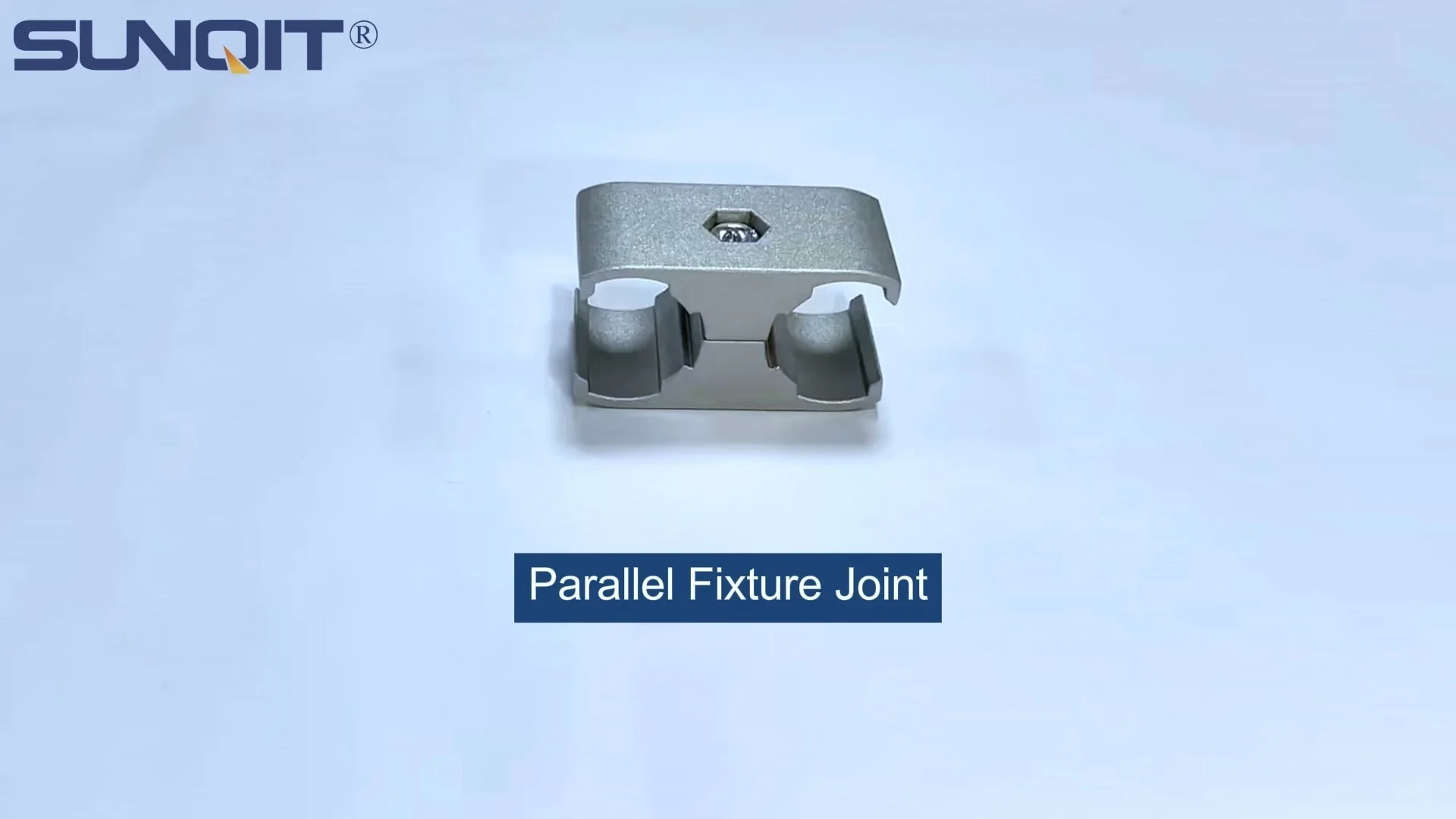
Parallel Fixation Aluminum Pipe Joint
Aluminum parallel joint for two pcs 28mm aluminum pipe connected by parallel direction.
How modular aluminum solutions are transforming efficiency, flexibility, and durability in modern logistics
The Unsung Hero of Modern Warehousing: Why Joints Matter
Walk into any bustling warehouse, and your eyes might first be drawn to the towering racks, the hum of conveyor belts, or the forklifts zipping between aisles. But behind that organized chaos lies a critical, often overlooked component: the joints that hold everything together. For logistics managers, a wobbly rack or a loose connection isn't just a minor annoyance—it's a risk to safety, a drain on productivity, and a threat to meeting tight delivery deadlines.
In recent years, the push for leaner operations, faster turnaround times, and adaptable workspaces has led to a quiet revolution in material handling: the rise of aluminum-based modular systems. At the heart of this revolution? The parallel fixation aluminum pipe joint . This unassuming component is redefining what logistics racks can do, blending strength with flexibility in a way that traditional steel or plastic joints simply can't match.
Whether you're managing a small distribution center or a sprawling manufacturing facility, the right joints can turn a static, one-size-fits-all racking system into a dynamic asset that grows with your business. Let's dive into how parallel fixation aluminum pipe joints are solving real-world warehousing challenges—and why they might just be the upgrade your logistics operation needs.
What Are Parallel Fixation Aluminum Pipe Joints, Anyway?
Let's start with the basics. A parallel fixation aluminum pipe joint is a specialized connector designed to link aluminum pipes (or aluminum profiles ) together in a parallel configuration—think of it as the "hinge" that lets you build sturdy, customizable structures without welding or complex tools. Unlike rigid steel joints that require bolts and heavy equipment, these aluminum joints are engineered for speed, precision, and adaptability.
Made from high-grade aluminum alloy, they're lightweight yet surprisingly strong, able to support heavy loads while resisting corrosion—a must in warehouses where humidity, spills, or temperature fluctuations are common. But what really sets them apart is their "parallel fixation" design: they lock pipes into place horizontally or vertically with minimal play, ensuring stability even when racks are loaded with boxes, parts, or tools.
Imagine assembling a shelf: with traditional joints, you might spend hours aligning holes, tightening nuts, or calling in a maintenance crew to weld pieces together. With a parallel fixation aluminum joint, it's as simple as sliding the joint onto the pipe, adjusting the angle, and securing it with a quick-turn knob or a hex key. No sparks, no heavy lifting, no downtime. That's the power of modular design.

5 Key Features That Make Parallel Fixation Joints a Game-Changer
Not all joints are created equal. What makes parallel fixation aluminum pipe joints stand out in a crowded market of connectors and fasteners? Let's break down their most impactful features:
- Load-Bearing Prowess Without the Weight: Aluminum's strength-to-weight ratio is legendary, and these joints leverage that. A typical parallel fixation joint can support up to 200kg per connection, making them ideal for heavy-duty logistics racks holding pallets, bulk materials, or industrial parts. Yet, they're light enough that a single worker can carry a box of joints and assemble a rack solo—no need for a team or heavy machinery.
- Zero Corrosion, Maximum Longevity: Warehouses are tough environments. From chemical spills in manufacturing facilities to damp conditions in cold storage, traditional steel joints rust and weaken over time. Aluminum joints, however, form a natural oxide layer that resists corrosion. Pair them with stainless steel hardware, and you've got a joint that lasts for years, even in harsh settings.
- Tool-Free Adjustments (Mostly): Need to reconfigure a rack to fit taller boxes? Or shorten a shelf to make space for a new conveyor? Parallel fixation joints let you disassemble and rebuild in minutes. Many models use quick-release levers or cam locks, so you don't need a toolbelt full of wrenches. This is a lifesaver during peak seasons when warehouse layouts change weekly to keep up with demand.
- Compatibility with Aluminum Pipe Accessories : These joints aren't one-trick ponies. They work seamlessly with a range of aluminum pipe accessories —think caster wheels for mobile racks, roller tracks for sliding bins, or side guides to prevent items from falling off. This modularity means you can build everything from a simple material shelf to a complex picking station using the same base components.
- ESD-Friendly Options for Sensitive Industries: In electronics manufacturing or pharmaceutical warehousing, static electricity can damage products or compromise safety. Many parallel fixation joints come with ESD (electrostatic discharge) coatings, ensuring they dissipate static charges and keep sensitive items protected.

Logistics Rack Applications: Where Parallel Fixation Joints Shine
Now, let's get practical. How do these joints translate to real-world warehouse setups? From basic storage racks to specialized workstations, their versatility makes them indispensable across multiple applications:
1. Material Racks: Sturdy, Stackable, and Customizable
Consider a material rack B (3 row and 3 floor) —a common setup for storing small parts, tools, or inventory bins. With traditional steel racks, each shelf is fixed; if you need to adjust the height between levels, you're looking at drilling new holes or replacing the entire frame. With parallel fixation aluminum joints, each shelf is a modular unit. Need to raise a level to fit taller bins? Loosen the joints, slide the pipes up, and lock them in place. Done. This flexibility is a game-changer for warehouses with ever-changing inventory—no more wasting space or cramming items into ill-fitting shelves.
2. Mobile Turnover Trolleys: From Static to Dynamic Storage
Turnover trolleys are the workhorses of warehouse logistics, shuttling goods from receiving to shipping or from production lines to storage. But a trolley with wobbly wheels or loose joints is a hazard—imagine a load of fragile electronics tipping over because a joint gave way. Parallel fixation joints solve this by creating a rigid frame that stays stable even when the trolley is moving. Add caster wheels (another aluminum accessory) with locking brakes, and you've got a mobile storage solution that's both safe and easy to maneuver.
3. Workbenches: Where Function Meets Comfort
Warehouse workbenches aren't just tables—they're command centers for packing, labeling, or assembling products. A workbench built with parallel fixation joints can be customized to fit the task: add a roller track for sliding boxes, attach tool hooks, or adjust the height to reduce worker strain. Since aluminum is lightweight, the bench can be moved if the workflow changes, but it's stable enough to support heavy tools or machinery. For example, a single-deck workbench without casters (like "Workbench E" in many catalogs) can be bolted to the floor for permanence, or fitted with casters later if mobility is needed—all thanks to the joint's adaptable design.
4. Lean Manufacturing Cells: Aligning with Kaizen Principles
Lean manufacturing is all about eliminating waste and streamlining workflows. Parallel fixation joints align perfectly with this philosophy. In a lean cell, where workers assemble products in a tight, efficient line, racks and workstations need to be positioned with pinpoint accuracy. These joints let teams reconfigure the cell on the fly—adding a shelf here, moving a conveyor there—without disrupting production. It's "just-in-time" assembly for the workspace itself.

Traditional vs. Parallel Fixation: A Head-to-Head Comparison
Still on the fence about switching from traditional steel or plastic joints? Let's put them side by side. The table below compares parallel fixation aluminum pipe joints with common alternatives, focusing on the factors that matter most to warehouse managers:
| Feature | Parallel Fixation Aluminum Joints | Steel Welded Joints | Plastic Snap-On Joints |
|---|---|---|---|
| Assembly Time | 5-10 minutes per connection (tool-free or minimal tools) | 30-60 minutes per connection (requires welding equipment) | 2-5 minutes per connection (easy snap-on, but less secure) |
| Load Capacity | Up to 200kg per joint (high-grade aluminum alloy) | Up to 300kg per joint (but heavier overall structure) | Up to 50kg per joint (prone to cracking under heavy loads) |
| Reconfigurability | High: disassemble and rebuild in minutes | Low: welded joints are permanent; requires cutting and rewelding | Medium: can be snapped off, but plastic weakens after multiple uses |
| Corrosion Resistance | High (natural oxide layer + optional ESD coating) | Low (prone to rust; requires painting or galvanizing) | High (resistant to moisture, but UV-sensitive) |
| Cost Over Time | Medium upfront cost, low long-term cost (reusable, no maintenance) | High upfront cost (welding labor), high long-term cost (repairs, replacement) | Low upfront cost, high long-term cost (frequent replacement) |
As the table shows, parallel fixation aluminum joints strike a balance between strength, flexibility, and cost that's hard to beat. They're not the cheapest upfront, but their reusability and durability make them a smarter investment for warehouses looking to scale or adapt over time.
Installation 101: Tips for Getting the Most Out of Your Joints
Even the best joints won't perform well if they're installed incorrectly. Here's a quick guide to ensuring your parallel fixation aluminum pipe joints deliver maximum stability and longevity:
1. Start with Clean, Straight Pipes
Dents, bends, or debris on your aluminum pipes can throw off the joint's alignment. Before assembly, inspect pipes for damage and wipe them clean with a dry cloth. For extra precision, use a pipe cutter to ensure straight, even ends—this prevents gaps between the pipe and joint that could weaken the connection.
2. Don't Over-Tighten (or Under-Tighten)
Most parallel fixation joints use a cam lock or a hex bolt to secure the pipe. Over-tightening can strip the threads or warp the joint; under-tightening leaves the connection loose. Follow the manufacturer's torque guidelines—usually, a "firm but not forceful" turn is enough. If the joint has a quick-release lever, listen for a "click" to confirm it's locked.
3. Use the Right Accessories
Pairing joints with compatible aluminum pipe accessories is key. For example, if you're building a mobile rack, use heavy-duty casters rated for the total load (joints + pipes + inventory). For ESD-sensitive areas, opt for ESD-coated joints and conductive casters to prevent static buildup.
4. Test Before Full Deployment
Once your rack or workstation is assembled, give it a stress test. Load it with weighted boxes (gradually increasing the weight) and check for wobbling, creaking, or shifting. Tighten any loose joints and recheck. It's better to catch issues in the assembly area than after the rack is in use.
Real-World Impact: A Case Study
From Chaos to Order: How a 3PL Provider Cut Downtime by 40% with Aluminum Joints
The Challenge: A third-party logistics (3PL) company in the Midwest was struggling with its seasonal e-commerce rush. Their old steel racks were fixed in place, so they couldn't expand storage quickly. Workers were wasting time searching for items in overcrowded shelves, and loose steel joints had led to two minor accidents in six months. The warehouse manager needed a solution that could handle peak loads, adapt to changing inventory, and improve safety—all without shutting down operations for a week.
The Solution: The company replaced 20 steel racks with aluminum modular systems using parallel fixation joints. They opted for material rack B (3 row and 3 floor) designs, which could be adjusted to fit different box sizes, and added mobile turnover trolleys with caster wheels for faster order picking.
The Results: Within three months:
- Assembly time for new racks dropped from 8 hours (steel welding) to 90 minutes (aluminum joints).
- Worker downtime due to rack adjustments or repairs fell by 40%.
- Accidents related to unstable racks decreased to zero.
- The warehouse could reconfigure 50% of its racking in a single day to handle holiday inventory spikes.
Warehouse Manager Quote: "We used to dread peak season—now we look forward to it. The aluminum joints let us be agile. If a client needs more space for their products, we just adjust the racks. No more waiting for welders or dealing with rusted bolts. It's like having a warehouse that can grow with us."
The Future of Warehousing: What's Next for Modular Aluminum Systems?
As warehouses embrace automation, IoT, and sustainability, parallel fixation aluminum pipe joints are evolving to keep pace. Here's what to watch for in the coming years:
Smart Joints with Built-In Sensors
Imagine a joint that alerts you when it's loose or overloaded. Some manufacturers are experimenting with embedded sensors that track load weight, vibration, and temperature. Paired with warehouse management software, these "smart joints" could predict failures before they happen, reducing downtime and improving safety.
Recyclable and Eco-Friendly Designs
Aluminum is already 100% recyclable, but future joints may use even more sustainable materials—like recycled aluminum alloys or plant-based lubricants for moving parts. This aligns with the growing demand for green warehousing practices and corporate sustainability goals.
Integration with Automation
As robots and automated guided vehicles (AGVs) become more common, racks and workstations need to be precise. Parallel fixation joints with laser-etched alignment marks or magnetic guides could help AGVs navigate more accurately, reducing collisions and improving efficiency.
Final Thoughts: Why Parallel Fixation Joints Are More Than Just "Parts"
At the end of the day, parallel fixation aluminum pipe joints are more than just connectors—they're enablers. They enable warehouses to be faster, safer, and more adaptable. They turn static storage spaces into dynamic ecosystems that respond to customer demands, seasonal shifts, and industry trends.
For logistics managers, the choice is clear: invest in rigid, outdated systems that hold your operation back, or embrace modular aluminum solutions that grow with you. The next time you walk through your warehouse, take a closer look at the joints holding up those racks. If they're rusted, wobbly, or impossible to adjust, it might be time for an upgrade.
After all, in warehousing, success isn't just about what you store—it's about how you build the foundation to store it. And with parallel fixation aluminum pipe joints, that foundation has never been stronger, smarter, or more ready for whatever the future brings.