- Company Articles
- Products and Technology
- Product knowledge
- Parallel Fixation Aluminum Pipe Joints: Powder Coating vs. Anodizing Finish

Parallel Fixation Aluminum Pipe Joints: Powder Coating vs. Anodizing Finish
Related Product
Parallel Fixation Aluminum Pipe Joint
Aluminum parallel joint for two pcs 28mm aluminum pipe connected by parallel direction.
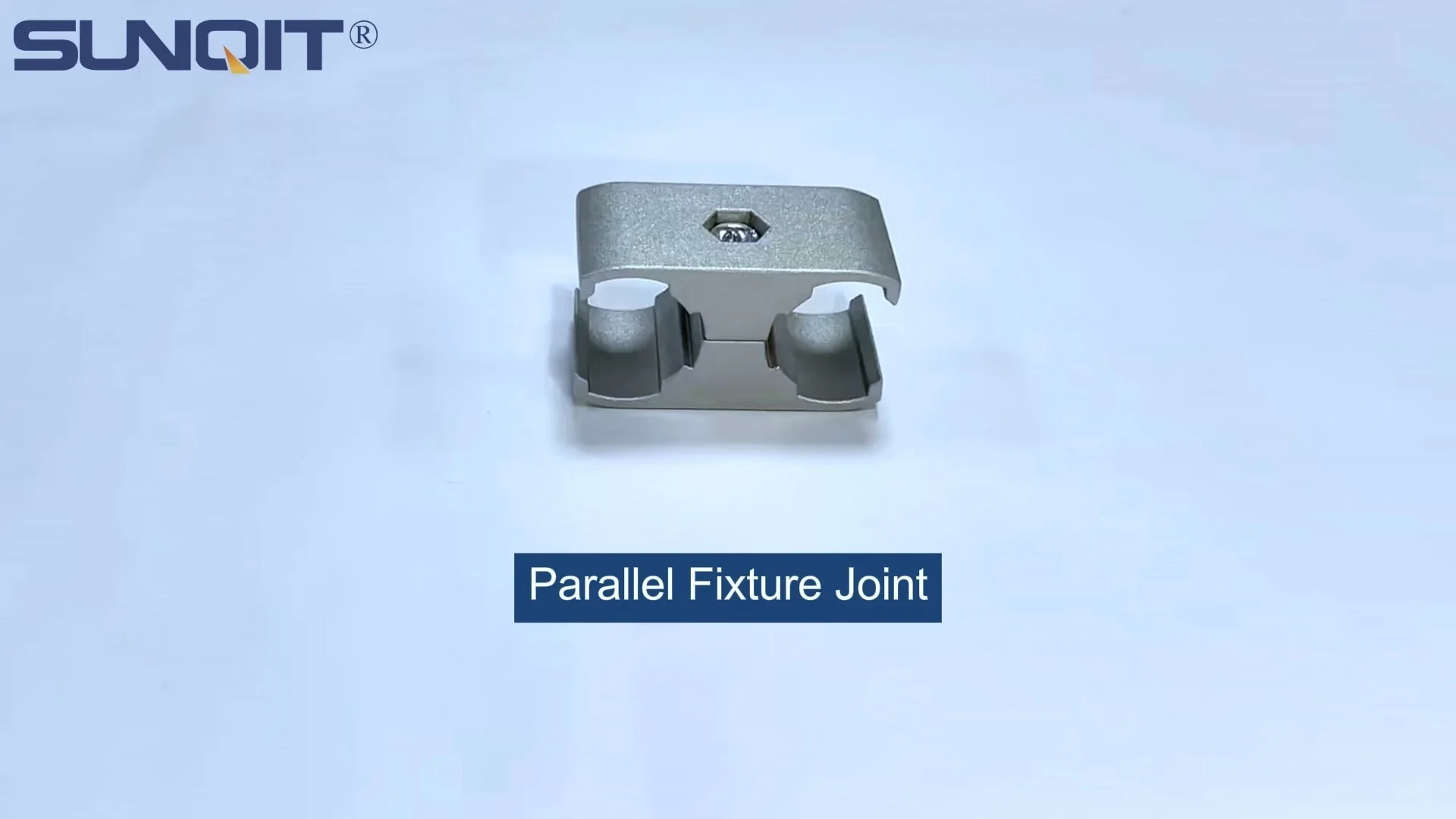
Walk through any modern manufacturing facility, and you'll notice a silent network holding everything together: aluminum structures. From workbenches where technicians assemble delicate electronics to material racks stacked with components, these systems rely on precision, durability, and adaptability. At the heart of this network lie the unsung heroes: parallel fixation aluminum pipe joints . These small but critical components are the glue that turns basic aluminum pipes and profiles into functional, flexible workspaces. But what often gets overlooked is the surface finish that protects and enhances these joints. Today, we're diving into two of the most popular finishes for parallel fixation aluminum pipe joints: powder coating and anodizing. Which one is right for your lean system ? Let's break it down.
Understanding Parallel Fixation Aluminum Pipe Joints
Before we compare finishes, let's get clear on what parallel fixation aluminum pipe joints are and why they matter. These joints are designed to connect aluminum pipes or aluminum profiles in parallel configurations, creating stable frameworks for everything from workbenches to conveyor systems. Unlike rigid welding, they allow for quick assembly, disassembly, and reconfiguration—key traits for lean manufacturing, where adaptability can make or break production efficiency.
Think about a typical lean system scenario: a factory needs to retool a production line to accommodate a new product. With parallel fixation joints, workers can adjust the height of a workbench, add extra shelves to a material rack, or reposition a conveyor—all without cutting or welding. This flexibility reduces downtime, cuts costs, and keeps operations agile. But for these joints to perform, their surface finish must stand up to daily wear: scratches from tools, exposure to oils or chemicals, and the constant stress of holding heavy loads. That's where powder coating and anodizing come in.
Why Surface Finishes Matter for Aluminum Joints
Aluminum is naturally resistant to corrosion, thanks to a thin oxide layer that forms when it reacts with oxygen. But in industrial settings, this layer can be easily damaged. Moisture, chemicals, and friction from moving parts can wear it away, leading to rust (yes, aluminum can corrode!) or reduced grip between joints. A quality surface finish acts as an extra barrier, protecting the aluminum while also enhancing other properties: color coding for workflow organization, improved grip to prevent slipping, or even just a clean, professional look for customer-facing areas.
For parallel fixation joints, the finish isn't just about aesthetics—it's about performance. A joint with a chipped or worn finish might not grip as well, leading to loose connections and safety hazards. In food processing or pharmaceutical settings, finishes must also meet hygiene standards, resisting bacteria growth and standing up to frequent cleaning with harsh detergents. So whether you're choosing powder coating or anodizing, the finish directly impacts the joint's lifespan, safety, and functionality.

Powder Coating: The Colorful Workhorse
How Powder Coating Works
Powder coating is a dry finishing process that has been around since the 1960s, but it's still a favorite for industrial components like parallel fixation joints. Here's how it works: fine powder particles (typically made of polyester, epoxy, or a blend) are electrostatically charged and sprayed onto the aluminum joint. The charged powder adheres to the metal, and the joint is then baked in an oven (usually at 350–400°F) to melt and cure the powder, forming a hard, continuous coating.
The result? A thick, durable layer that's tightly bonded to the aluminum. Unlike liquid paints, powder coating contains no solvents, so it's more environmentally friendly and produces less waste. It also offers near-unlimited color options—from bold yellows for hazard zones to subtle grays for cleanroom environments—and can be textured (matte, glossy, or even rough for better grip).
Advantages of Powder Coated Parallel Fixation Joints
1. Durability Against Impact and Scratches : Powder coating forms a thick layer (usually 2–6 mils, or 50–150 microns) that can withstand bumps from tools, drops from conveyor belts, and the general rough-and-tumble of factory life. In tests, powder-coated surfaces often outperform painted ones in impact resistance, making them ideal for joints that see heavy use.
2. Color Variety and Customization : Need to color-code your lean system? Powder coating has you covered. Whether you want your assembly line workbenches to match your brand colors or use red joints to mark high-traffic areas, the options are endless. You can even mix textures—for example, a glossy finish for visible parts and a textured finish for handles or grips.
3. Cost-Effective for Large Batches : Once the powder coating setup is calibrated for a specific color, applying it to hundreds of joints is fast and efficient. This makes it a budget-friendly choice for manufacturers ordering bulk aluminum pipe accessories , as the per-unit cost drops with volume.
4. Resistance to Chemicals and Moisture : Most powder coatings are resistant to oils, greases, and mild solvents—common in manufacturing environments. They also repel water, reducing the risk of corrosion in humid or damp settings (though they're not invincible; prolonged exposure to harsh chemicals like acids can still damage them).
Disadvantages of Powder Coated Joints
1. Thickness Can Affect Fit : The thick coating layer (remember, 2–6 mils) might seem like a plus, but it can cause issues with precision-fit components. If your parallel fixation joints need to slide into tight-fitting aluminum profile slots, a thick powder coat could make assembly difficult or even impossible without sanding.
2. Prone to Chipping at Edges : While powder coating is tough against impacts, the edges of joints are vulnerable. A sharp knock from a metal tool can chip the coating, exposing the aluminum underneath. Once chipped, moisture can seep in, leading to corrosion over time.
3. Limited Repair Options : If a powder-coated joint gets damaged, touching it up isn't easy. You can't just apply a new layer of powder to a small area; the joint would need to be stripped, cleaned, and re-coated—costly and time-consuming for a single component.

Anodizing: The Natural Protector
How Anodizing Works
Anodizing is a electrochemical process that transforms the surface of aluminum into a hard, porous oxide layer. Unlike powder coating (which is a separate layer applied on top), anodizing actually modifies the aluminum itself. Here's the breakdown: the joint is submerged in an electrolyte bath (usually sulfuric acid), and an electric current is passed through it. The aluminum acts as the anode, causing oxygen ions to bond with its surface, forming aluminum oxide (Al₂O₃). This oxide layer is integrated into the metal, not just coating it, and its thickness can be controlled (typically 0.5–3 mils, or 12–75 microns).
After anodizing, the porous surface can be dyed (using organic dyes) to add color, or sealed (with hot water or nickel acetate) to close the pores and enhance corrosion resistance. The result is a finish that's as much a part of the metal as the aluminum itself.
Advantages of Anodized Parallel Fixation Joints
1. Thin, Integral Layer : At just 0.5–3 mils thick, anodizing won't interfere with precision fits. This is a game-changer for parallel fixation joints that need to slide into aluminum profile channels or connect with tight-tolerance components. The finish becomes part of the metal, so there's no risk of it peeling or flaking off.
2. Superior Corrosion Resistance : Anodized aluminum is legendary for its ability to resist corrosion. The sealed oxide layer acts as a barrier, and if it does get scratched, the underlying aluminum will naturally re-form a thin oxide layer (though not as thick as the anodized one) to protect itself. This makes anodized joints ideal for humid environments, outdoor use, or settings with exposure to mild chemicals.
3. Natural Aesthetics : Anodizing preserves aluminum's natural metallic look, with options for subtle dyes (black, gold, silver, or even blue) that enhance rather than hide the metal's texture. For lean systems where a clean, industrial aesthetic is preferred—think tech manufacturing or aerospace—this is a major plus.
4. Better Heat and Wear Resistance : The aluminum oxide layer has a higher melting point than the base aluminum, making anodized joints more resistant to heat (though they're not meant for extreme temperatures). They also stand up well to friction, so if your joints are part of a sliding or rotating mechanism (like conveyor rollers), anodizing can extend their lifespan.
Disadvantages of Anodized Joints
1. Limited Color Options (and Fading Risk) : While anodized joints can be dyed, the color range is narrower than powder coating—think earth tones and metallics, not neon pink or bright orange. What's more, dyed anodized finishes can fade over time if exposed to UV light, making them less ideal for outdoor use without additional UV protection.
2. Higher Cost for Small Batches : Anodizing is a more complex process than powder coating, requiring specialized equipment and careful control of the electrolyte bath. For small orders (say, 10–20 joints), the setup costs drive up the per-unit price, making it less economical than powder coating.
3. Less Impact Resistance : The anodized layer is hard but brittle. A heavy impact (like dropping a joint from a height onto concrete) can crack or chip the oxide layer, exposing the aluminum. While the metal will self-heal slightly, the damaged area will be more vulnerable to corrosion.

Powder Coating vs. Anodizing: A Head-to-Head Comparison
| Factor | Powder Coating | Anodizing |
|---|---|---|
| Finish Type | Applied layer (polymer resin) | Integral oxide layer (aluminum oxide) |
| Thickness | 2–6 mils (50–150 microns) | 0.5–3 mils (12–75 microns) |
| Color Options | Unlimited (solids, metallics, textures) | Limited (dyed metallics, earth tones; prone to UV fading) |
| Durability | Good impact resistance; prone to edge chipping | Hard but brittle; better corrosion resistance |
| Fit with Precision Components | May interfere with tight fits | No interference (thin, integral layer) |
| Cost (Bulk Orders) | Lower per unit | Higher per unit |
| Repairability | Difficult (requires full re-coating) | Self-heals minor scratches (limited) |
| Best For | Color-coded lean systems, bulk orders, low-precision fits | Precision components, humid environments, natural aesthetics |
Real-World Scenarios: Which Finish Wins?
To make this tangible, let's look at two hypothetical but common lean system setups and see which finish makes sense.
Scenario 1: Electronics Assembly Line Workbenches
A consumer electronics manufacturer needs 50 parallel fixation joints to build workbenches for its assembly line. The workbenches will be used daily by technicians handling circuit boards, and the factory has strict color-coding protocols: red for high-voltage zones, blue for static-sensitive areas. The environment is climate-controlled (low humidity), and the joints won't be exposed to harsh chemicals—just occasional cleaning with isopropyl alcohol.
Best Fit: Powder Coating . The color variety is essential for safety coding, and the controlled environment means corrosion risk is low. Since they're ordering 50 joints, the bulk discount on powder coating will keep costs down. The workbenches don't require ultra-tight precision fits, so the thicker finish won't be an issue.
Scenario 2: Food Processing Conveyor System
A food packaging plant needs parallel fixation joints for a conveyor system that moves frozen vegetables. The conveyor operates in a cold, humid environment (near-freezing temperatures, condensation), and the joints must be easy to clean with sanitizing solutions. The plant also wants the conveyor to have a sleek, modern look that aligns with its quality standards.
Best Fit: Anodizing . Corrosion resistance is critical here—humidity and sanitizers would quickly eat away at a powder coat. Anodizing's thin, integral layer won't trap bacteria (unlike a textured powder coat), making cleaning easier. The natural metallic finish also fits the plant's aesthetic goals. While the per-unit cost is higher, the long-term durability justifies the investment.
Choosing the Right Finish: Key Questions to Ask
Still on the fence? Here are five questions to guide your decision:
1. What's the environment like? If it's humid, wet, or chemical-heavy, anodizing's corrosion resistance is likely worth the extra cost. For dry, controlled environments, powder coating may be sufficient.
2. Do you need color coding? If safety or workflow organization depends on bright, specific colors, powder coating is the way to go. If you prefer a natural metal look, anodizing is better.
3. How precise are your fits? If your parallel fixation joints must connect with tight-tolerance aluminum profile components, anodizing's thin layer avoids fit issues. For looser fits, powder coating is fine.
4. What's your budget and order size? Small batches (under 20 joints) may be cheaper with anodizing (since powder coating setup costs are high). Large batches favor powder coating for per-unit savings.
5. How will the joints be used? If they'll be bumped, dropped, or handled roughly, powder coating's impact resistance may be better. If they're stationary and exposed to the elements, anodizing's durability shines.
Maintaining Your Finished Joints
Whichever finish you choose, proper maintenance will extend your joints' lifespan. Here's how to care for each:
Powder Coated Joints
- Clean with mild soap and water; avoid abrasive sponges (they can scratch the finish).
- Touch up small chips with a matching spray paint (it won't be perfect, but it will prevent corrosion).
- Avoid prolonged exposure to harsh chemicals (bleach, acids) or extreme heat.
Anodized Joints
- Clean with a soft cloth and mild detergent; avoid alkaline cleaners (they can dissolve the oxide layer).
- If scratched, apply a thin layer of clear nail polish to seal the area and prevent corrosion.
- For outdoor use, choose a UV-stable dye to minimize fading.
Final Thoughts: It's About Your Lean System's Needs
Powder coating and anodizing both have their strengths, but there's no one-size-fits-all answer. Powder coating is the colorful, cost-effective workhorse for controlled environments and bulk orders. Anodizing is the premium, corrosion-resistant choice for precision fits and harsh conditions. The key is to align the finish with your lean system 's unique demands—whether that's color coding, durability, or cost.
At the end of the day, parallel fixation aluminum pipe joints are the backbone of your lean system. They deserve a finish that keeps them strong, functional, and ready to adapt as your operations evolve. So take the time to assess your environment, budget, and goals—and choose the finish that will keep your system running smoothly for years to come.