- Company Articles
- Products and Technology
- Product knowledge
- Parallel Fixation Aluminum Pipe Joints: Supporting Circular Economy in Manufacturing

Parallel Fixation Aluminum Pipe Joints: Supporting Circular Economy in Manufacturing
Related Product
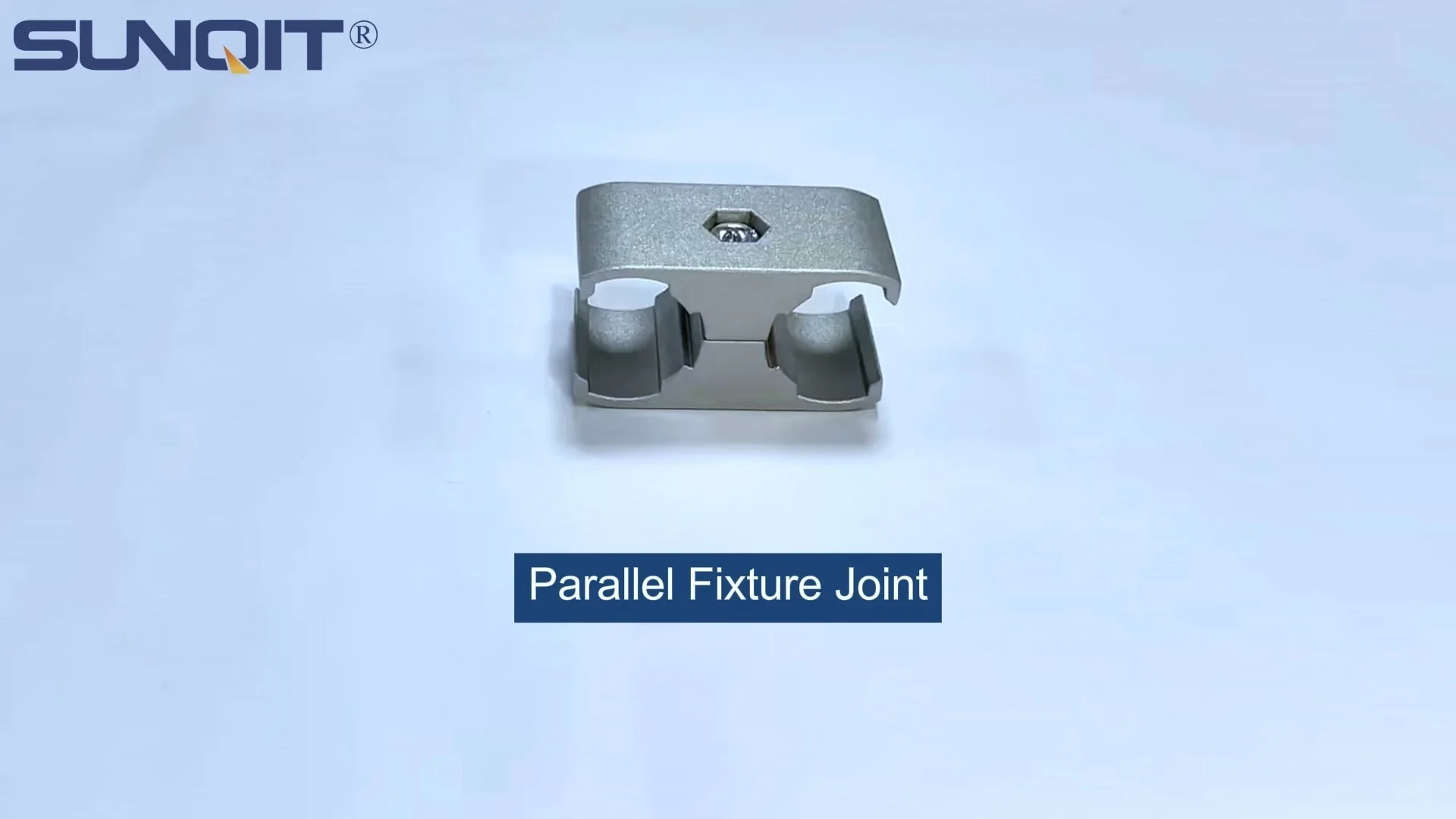
Parallel Fixation Aluminum Pipe Joint
Aluminum parallel joint for two pcs 28mm aluminum pipe connected by parallel direction.
In the bustling world of manufacturing, where every second counts and every resource matters, the industry is at a crossroads. For decades, the "take-make-waste" linear model has dominated—raw materials extracted, products assembled, and once they outlive their purpose, discarded. But today, a new narrative is emerging: the circular economy. It's a shift from depletion to regeneration, from waste to resourcefulness, and it's reshaping how factories, assembly lines, and supply chains operate. At the heart of this transformation? Surprisingly, it's often the smallest components that make the biggest difference. Enter parallel fixation aluminum pipe joints—unassuming yet powerful connectors that are quietly revolutionizing sustainable manufacturing. These unheralded heroes, paired with aluminum profiles and lean system principles, are proving that circularity isn't just a buzzword; it's a practical, everyday reality for manufacturers ready to adapt.
What Are Parallel Fixation Aluminum Pipe Joints, Anyway?
Let's start with the basics. Imagine walking into a modern factory: rows of workbenches, material racks gliding with precision, conveyor systems weaving through the space. Behind this organized chaos is a framework of aluminum pipes and profiles, held together by joints. But not just any joints—parallel fixation aluminum pipe joints. These aren't your average hardware store connectors. Designed with modularity in mind, they're engineered to secure aluminum pipes in parallel configurations, creating stable, flexible structures that can be reimagined, reconfigured, and reused time and time again.
Picture this: a workbench in an electronics assembly plant. It needs to hold delicate components, tools, and testing equipment. With traditional steel frames, changing the layout would mean welding, cutting, or even replacing the entire bench—wasting time, materials, and money. But with parallel fixation aluminum pipe joints, the process is different. Loosen a few bolts, adjust the aluminum profiles, re-tighten the joints, and suddenly, that workbench is taller, wider, or fitted with new shelves. No welding, no cutting, no waste. It's like building with giant, industrial-grade Legos, but with the strength to support heavy machinery and the flexibility to grow with your business.
What makes these joints special? Their design prioritizes two key things: stability and adaptability. Made from high-grade aluminum, they're lightweight yet durable, resistant to corrosion, and built to withstand the wear and tear of daily factory life. The "parallel fixation" part means they excel at holding pipes side by side, creating flat surfaces, shelves, or frames that stay rigid under pressure. And because they're compatible with a range of aluminum pipe accessories—from clamps to brackets—they fit seamlessly into existing systems, making upgrades or overhauls less of a headache and more of a strategic move.
Bridging Lean Systems and Circular Economy
If you've spent any time in manufacturing, you've probably heard of "lean systems." Lean is all about eliminating waste—whether that's wasted time, wasted materials, or wasted effort. It's about doing more with less, and doing it better. Now, pair that with circular economy, which is all about keeping resources in use for as long as possible, extracting maximum value from them, and then recovering and regenerating products and materials at the end of their service life. On the surface, they might seem like two separate concepts, but they're actually two sides of the same sustainability coin. And parallel fixation aluminum pipe joints? They're the glue that holds them together.
Let's break it down. In a lean system, flexibility is king. Production lines need to adapt quickly to changing demand—shifting from making 100 units of Product A to 500 units of Product B overnight. Traditional rigid structures (think welded steel frames) can't keep up. They're fixed in place, so any change requires a complete overhaul. That's wasteful, both in terms of time and materials. But with aluminum profiles and parallel fixation joints, you're not stuck. A material rack that once held automotive parts can be reconfigured to hold medical devices in a matter of hours. A conveyor system that moved boxes can be adjusted to transport smaller components. This flexibility reduces "downtime waste" and "overproduction waste," two of the classic lean wastes, while also aligning with circular economy principles by extending the life of the equipment.
Then there's the issue of material waste. In the linear model, when a structure is no longer needed, it's scrapped. Steel frames might end up in a landfill, or if they're lucky, recycled—but recycling steel requires a lot of energy. Aluminum, on the other hand, is a recycling superstar. It can be recycled infinitely without losing quality, and recycling aluminum uses just 5% of the energy needed to produce new aluminum. So, when a workbench or material rack built with parallel fixation joints reaches the end of its current use, the aluminum profiles and joints can be disassembled, sorted, and recycled into new products. No waste, no guilt—just a closed loop that keeps resources in play.
But it's not just about the end of life. It's about the entire lifecycle. Parallel fixation aluminum pipe joints are designed to last. Unlike plastic connectors that crack under stress or cheap steel joints that rust, these aluminum joints stand the test of time. That means fewer replacements, less frequent purchasing, and less material entering the waste stream in the first place. It's lean thinking (reducing replacement waste) meeting circular economy (maximizing resource lifespan). It's a win-win, and it's why forward-thinking manufacturers are swapping out old systems for aluminum-based frameworks.

Key Features Driving Circular Economy Impact
So, what exactly makes parallel fixation aluminum pipe joints such a powerhouse for circular economy? Let's dive into their standout features and how each one contributes to a more sustainable manufacturing model.
1. Modularity: The Art of Reconfiguration
Modularity is the name of the game here. These joints are designed to be taken apart and put back together—easily. No special tools, no specialized labor, just a wrench or a screwdriver and a few minutes. This might sound simple, but it's revolutionary. Think about a small manufacturing business that starts with a single workbench. As they grow, they need more workspace, so they add another section using the same joints and aluminum profiles. A year later, they expand into a new product line and need a material rack instead of extra bench space. Instead of buying a brand-new rack, they disassemble the extra bench sections and rebuild them into a rack. The joints? They're reused. The profiles? They're reused. The only new parts might be a few additional accessories, but the core structure lives on.
This kind of modularity cuts down on "construction waste"—the scraps, offcuts, and unused materials that come with building something custom. In traditional manufacturing setups, if you need a new shelf, you might order a prefab unit that comes with excess packaging or doesn't quite fit, leading to modifications and waste. With modular aluminum systems, you build exactly what you need, when you need it, and if your needs change, you reconfigure instead of replace. It's like having a wardrobe that grows with you, instead of buying a new one every time you gain a few inches or change your style.
2. Durability: Built to Outlast Trends
Circular economy isn't just about recycling—it's about making products that last. Why? Because the longer a product is in use, the fewer resources are needed to replace it. Parallel fixation aluminum pipe joints are built to last. Aluminum is naturally resistant to rust and corrosion, so even in humid factory environments or areas with exposure to chemicals, these joints hold up. They're also designed to handle heavy loads—think hundreds of pounds of materials on a rack or machinery on a workbench—without bending or breaking. This durability means they don't need to be replaced every few years, reducing the demand for new materials and the energy used to produce them.
Compare this to plastic joints, which can degrade under UV light or crack under heavy use, or low-quality steel joints that rust and weaken over time. Those end up in landfills, requiring new joints to be manufactured, shipped, and installed—each step adding to the carbon footprint. Aluminum joints, on the other hand, can stay in use for decades. Some manufacturers report using the same set of joints for 10+ years, moving them from project to project as needs evolve. That's 10 years of avoiding new production, 10 years of keeping materials out of landfills, and 10 years of saving money on replacements. It's durability with a purpose.
3. Recyclability: Closing the Loop
Aluminum is one of the most recyclable materials on the planet. In fact, nearly 75% of all aluminum ever produced is still in use today. That's a staggering statistic, and it's a big reason why aluminum profiles and joints are so circular. When a joint or profile finally reaches the end of its useful life (which, with proper care, could be decades), it can be melted down and recycled into new aluminum products with minimal energy input. Unlike plastic, which degrades in quality when recycled (downcycling), aluminum can be recycled infinitely without losing strength or durability. This means that the aluminum in a parallel fixation joint today could be part of a new joint, a car part, or even a soda can tomorrow—without skipping a beat.
For manufacturers, this recyclability adds a safety net. Even if a structure is beyond reconfiguration, the materials themselves aren't wasted. Many aluminum suppliers offer take-back programs, where old profiles and joints are collected, recycled, and turned into new products. It's a closed loop that aligns with corporate sustainability goals and reduces the reliance on virgin aluminum ore (bauxite), which requires extensive mining and processing—both resource-intensive and environmentally damaging activities.
4. Compatibility: Playing Well with Others
What good is a modular system if it only works with one brand or type of product? Parallel fixation aluminum pipe joints are designed to be compatible with a wide range of aluminum pipe accessories and aluminum profiles. Whether you need a specific bracket, a caster wheel for mobility, or a specialized clamp, chances are there's an accessory that fits. This compatibility means you don't have to replace your entire system if you need a new feature. Want to add a roller track to your material rack? Just attach the track to your existing aluminum profiles using compatible brackets. Need to make a workbench mobile? Screw on some caster wheels designed for your joint system. This interoperability reduces waste by extending the functionality of existing structures, keeping them relevant and useful for longer.

Real-World Impact: A Case Study
Let's put this all into perspective with a real-world example. Meet GreenTech Manufacturing, a mid-sized electronics assembly company based in the Midwest. Five years ago, GreenTech was struggling with a linear manufacturing setup: fixed steel workbenches, custom-built material racks, and a conveyor system that couldn't keep up with changing production demands. Their waste audit showed they were throwing away nearly 20% of their steel scrap from modifications, and they were replacing workbenches every 3-4 years due to rust or damage. Their sustainability team was pushing for change, and their operations team was tired of constant downtime for reconfigurations.
That's when they discovered parallel fixation aluminum pipe joints and aluminum profiles. They started small: replacing two aging steel workbenches with aluminum-based ones. The results were immediate. The new workbenches were lighter, easier to clean, and when they needed to add a tool shelf, they did it in an hour instead of a day. Encouraged, they expanded to their material racks, swapping out wooden and steel shelves for aluminum frameworks held together by parallel fixation joints. Within a year, they'd converted 80% of their factory floor to aluminum-based systems.
The impact? Let's look at the numbers:
| Metric | Before (Steel Systems) | After (Aluminum Joint Systems) | Improvement |
|---|---|---|---|
| Workbench Replacement Cycle | 3-4 years | Still in use after 5+ years | Extended lifespan by ~40% |
| Material Waste from Reconfigurations | 20% scrap rate | 2% scrap rate (mostly packaging) | 90% reduction in waste |
| Downtime for Layout Changes | 8-12 hours per change | 1-2 hours per change | 80% reduction in downtime |
| Carbon Footprint (Manufacturing Setup) | High (steel production, welding, transport) | 35% lower (recycled aluminum, modularity) | 35% reduction in emissions |
But the benefits went beyond numbers. GreenTech's employees reported higher satisfaction—no more struggling with heavy steel benches or waiting for maintenance to modify workspaces. The sustainability team hit their 5-year waste reduction goal in just 3 years. And when the company pivoted to producing medical devices during the pandemic, they reconfigured their entire assembly line in a weekend using their existing aluminum systems, allowing them to meet urgent demand without delays. "We used to see our factory as a fixed space," said GreenTech's Operations Manager. "Now we see it as a canvas. The aluminum joints and profiles let us paint whatever picture we need, and we never have to throw away the canvas—just mix new colors."
This isn't an isolated case. From automotive plants to food processing facilities, manufacturers are sharing similar stories. The common thread? Parallel fixation aluminum pipe joints aren't just tools—they're enablers. They enable businesses to be more agile, more sustainable, and more profitable, all while contributing to a circular economy that benefits everyone.

Environmental and Economic Benefits: Why It Matters
We've talked about how these joints support circular economy, but let's break down the tangible benefits—both for the planet and for your bottom line. Because at the end of the day, sustainability needs to make business sense too, and parallel fixation aluminum pipe joints deliver on both fronts.
Environmental Wins
• Reduced Raw Material Use: By reusing joints and profiles, you cut down on the need for new aluminum production. Since aluminum recycling uses 95% less energy than producing new aluminum, this translates to lower greenhouse gas emissions and less strain on natural resources.
• Less Waste in Landfills: Durable, modular systems mean fewer products end up as trash. GreenTech's example showed a 90% reduction in material waste—imagine scaling that across an industry.
• Lower Carbon Footprint: Lighter aluminum structures mean less fuel used in transport (for both initial delivery and any relocations). Plus, the energy savings from recycling and reduced manufacturing add up to a smaller carbon footprint overall.
• Reduced Chemical Use: Aluminum's corrosion resistance means less need for paints, coatings, or treatments that can leach chemicals into the environment. It's a cleaner, greener material from start to finish.
Economic Wins
• Lower Replacement Costs: When your workbenches and racks last 5+ years instead of 3-4, you're not spending money on replacements. Over time, this adds up to significant savings.
• Faster Reconfigurations = Less Downtime: Time is money, and with aluminum joints, reconfiguring a workspace takes hours instead of days. That means more time spent producing goods and less time waiting for construction.
• Scalability Without Overspending: Start small and grow as you need to, without investing in oversized systems upfront. This is especially valuable for small businesses or startups with limited capital.
• Improved Brand Reputation: Consumers and investors are increasingly prioritizing sustainability. Adopting circular economy practices—powered by tools like aluminum joints—can boost your brand's image and open doors to new partnerships or markets.
It's clear: these joints aren't just good for the planet—they're good for business. They're a rare example of a sustainability solution that doesn't require sacrificing performance or profitability. In fact, they enhance both.
Future Trends: Where Circular Manufacturing is Headed
As manufacturing continues to evolve, so too will the role of parallel fixation aluminum pipe joints. Here are a few trends to watch that will further amplify their impact on circular economy:
1. Smart Integration with Industry 4.0
Industry 4.0—think IoT sensors, automation, and data-driven manufacturing—is transforming factories. In the future, we'll see aluminum profiles and joints integrated with smart technology. Imagine a workbench that uses sensors to track weight distribution, alerting you when it's overloaded. Or a material rack with built-in RFID tags that track inventory levels, automatically triggering a reconfiguration when stock changes. These "smart structures" will make reconfigurations even more efficient, ensuring resources are used optimally and waste is minimized.
2. Advanced Recycling and Material Innovation
Aluminum recycling is already impressive, but researchers are working on ways to make it even better. New processes aim to recycle aluminum with even less energy, or to recover and reuse the alloys used in joints and profiles more effectively. We might also see the development of aluminum composites—mixing aluminum with recycled plastics or other materials—to create joints that are even lighter, stronger, or more cost-effective, without sacrificing recyclability.
3. Circular Supply Chains
Manufacturers won't just focus on their own operations—they'll look upstream and downstream to create fully circular supply chains. This means suppliers of aluminum joints and profiles will offer take-back programs for old systems, recycling them into new products and passing the savings (and sustainability benefits) along to customers. It's a closed loop that spans the entire lifecycle of the product, from raw material to end-of-life recycling.
Conclusion: Small Joints, Big Impact
In the grand scheme of manufacturing, parallel fixation aluminum pipe joints might seem like small players. But as we've explored, their impact is anything but small. They're the building blocks of a circular economy in manufacturing—enabling modularity, durability, and recyclability in a way that traditional materials never could. They bridge the gap between lean systems and sustainability, proving that efficiency and environmental responsibility can go hand in hand.
For manufacturers looking to reduce waste, cut costs, and future-proof their operations, the message is clear: it's time to think about the joints holding your factory together. Are they trapping you in a linear "take-make-waste" cycle, or are they empowering you to build a circular, sustainable future? The answer could be the difference between falling behind and leading the pack.
As GreenTech's story shows, the transition doesn't have to be overwhelming. Start small, test the waters with a single workbench or rack, and watch as the benefits—both environmental and economic—unfold. Because in the end, circular economy isn't about grand gestures. It's about the everyday choices, the small components, and the willingness to reimagine how things are done. And with parallel fixation aluminum pipe joints, that reimagining is easier than ever.