- Company Articles
- Products and Technology
- Product knowledge
- Parallel Fixation Aluminum Pipe Joints: The Backbone of Flexible Manufacturing Systems

Parallel Fixation Aluminum Pipe Joints: The Backbone of Flexible Manufacturing Systems
Related Product
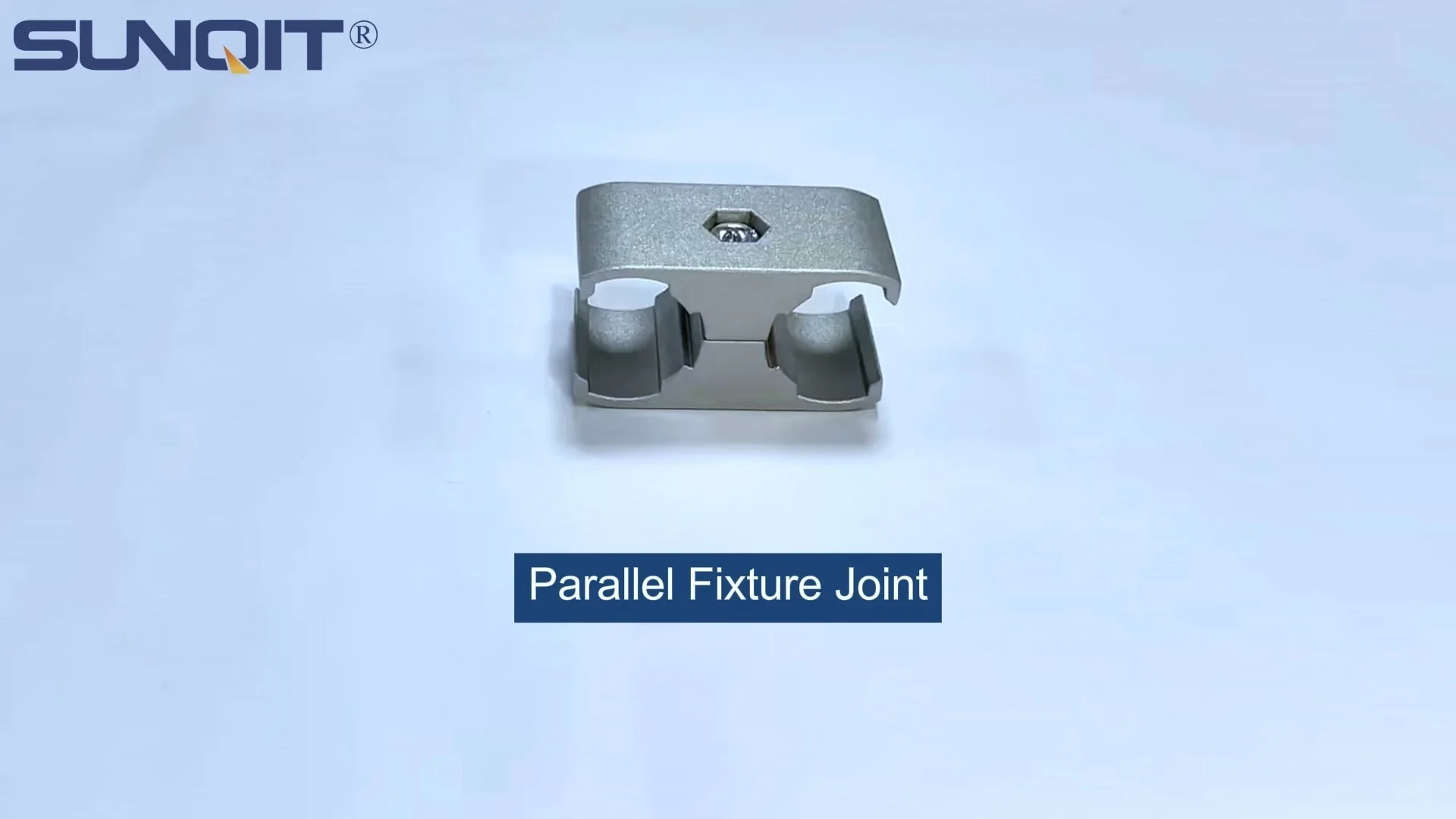
Parallel Fixation Aluminum Pipe Joint
Aluminum parallel joint for two pcs 28mm aluminum pipe connected by parallel direction.
How modular components are reshaping efficiency and adaptability on the factory floor
The Manufacturing Revolution No One Saw Coming
Walk into any modern factory today, and you'll notice something different. Gone are the days of rigid, bolted-down production lines that took weeks to reconfigure. Instead, you'll find workstations that shift shape overnight, material racks that expand with a few twists of a joint, and roller tracks that reroute in hours—all to keep up with the demands of mass customization, shorter product cycles, and ever-changing consumer preferences. At the heart of this quiet revolution? A surprisingly simple component: the parallel fixation aluminum pipe joint.
Manufacturing has always been about solving problems—how to make more, faster, better. But today's problem is different. It's not just about scale; it's about agility. A electronics plant might need to switch from assembling smartwatches to fitness trackers in a matter of days. A automotive supplier might have to adjust a component line to fit three new car models by next quarter. In this world, flexibility isn't a luxury—it's survival. And that's where parallel fixation aluminum pipe joints come in. They're the unsung heroes holding together the modular systems that let factories adapt, evolve, and thrive.
What Are Flexible Manufacturing Systems, Anyway?
Before we dive into the nuts and bolts of parallel fixation joints, let's clarify what we mean by "flexible manufacturing systems" (FMS). At their core, FMS are production setups designed to handle multiple product types with minimal downtime. They're built on the idea that change shouldn't disrupt operations—instead, it should be seamless. Think of it like a Lego set for factories: components that snap together, come apart, and reconfigure to build something new, without needing to rebuild the entire structure from scratch.
Traditional manufacturing systems, by contrast, are more like a brick wall. They're sturdy, but once built, altering them means breaking bricks, mixing new mortar, and hoping the whole thing doesn't collapse. That's why, in the past, retooling a production line could take months and cost a small fortune. FMS flips that script by using modular components—like aluminum profiles, roller tracks, and yes, parallel fixation joints—to create systems that are both strong and adaptable. The goal? To reduce waste, cut lead times, and let manufacturers respond to market changes at the speed of business.

Meet the Building Blocks: Modular Components in FMS
Modularity is the magic word here. And when it comes to modular manufacturing, aluminum is king. Aluminum profiles—those lightweight, T-slotted tubes you see in everything from workbenches to material racks—are the backbone of these systems. They're strong enough to support heavy loads, light enough to move by hand, and their T-slots make it easy to attach accessories like shelves, hooks, or roller tracks. But aluminum profiles alone can't create flexibility. You need a way to connect them quickly, securely, and in a way that allows for future changes. That's where parallel fixation aluminum pipe joints enter the picture.
Aluminum pipe accessories, including these joints, are the glue that holds modular systems together. Unlike traditional welds or bolts, which are permanent (and messy), parallel fixation joints are designed for quick assembly and disassembly. They clamp onto aluminum profiles with precision, creating a tight, stable connection that can still be adjusted or removed when needed. Imagine building a bookshelf where you can add a shelf, move a partition, or even take the whole thing apart and rebuild it as a desk—all without a single screwdriver. That's the level of adaptability these joints bring to the factory floor.

Parallel Fixation Aluminum Pipe Joints: The Unsung Heroes
Let's get technical— but not too technical. What exactly is a parallel fixation aluminum pipe joint? At its simplest, it's a connector designed to join two or more aluminum profiles in parallel (side by side) or at specific angles, while allowing for easy adjustments. Most are made from high-grade aluminum or steel, with a clamping mechanism that tightens around the profiles. Some use set screws, others use levers, but the best ones can be adjusted by hand, no tools required. This "tool-free" design is a game-changer for factory workers who need to reconfigure a workstation during a shift change or between production runs.
What makes these joints special isn't just their ease of use—it's their reliability. A well-designed parallel fixation joint can support hundreds of pounds without slipping or bending. That's critical in manufacturing, where unstable workbenches or wobbly material racks can lead to accidents, damaged products, or downtime. And because they're made from aluminum, they're resistant to corrosion, which is a big plus in environments where moisture or chemicals are present (like automotive or food processing plants).
But perhaps their biggest advantage is versatility. Need to build a workbench with adjustable height? Use parallel fixation joints to connect the legs to the tabletop frame, and tweak the height by sliding the joints up or down the profiles. Want to add a roller track to a material rack to speed up part delivery? Attach the track to the rack using these joints, and reposition it later if the workflow changes. The possibilities are endless, and that's exactly what makes them indispensable in lean systems—manufacturing setups focused on eliminating waste and maximizing efficiency.

Why Factories Can't Live Without Them: Key Benefits
Let's break down the benefits of parallel fixation aluminum pipe joints in plain English. These aren't just "nice-to-have" components—they're cost-saving, time-saving, future-proofing tools that directly impact a manufacturer's bottom line.
1. Setup Time That's Measured in Hours, Not Weeks
Traditional production lines require welding, drilling, and bolting—processes that take skilled labor and time. With parallel fixation joints, a team of two workers can assemble a basic workbench in under an hour. Need to build a 20-foot material rack with roller tracks? Maybe half a day. Compare that to the days or weeks it would take to weld and paint a steel equivalent, and the time savings alone justify the investment.
2. Adaptability That Keeps Pace With Change
Remember that electronics plant switching from smartwatches to fitness trackers? With traditional systems, they'd need new workbenches, new material racks, and new tool holders—each custom-built. With modular systems using parallel fixation joints, they can reconfigure existing setups. Lower a workbench height, add dividers to a material rack, or reroute a roller track—all in a fraction of the time. This adaptability means manufacturers can take on smaller production runs, test new products, and pivot quickly when market demand shifts.
3. Cost Savings That Add Up Over Time
Modular systems with parallel fixation joints might cost more upfront than cheap, welded steel setups. But over time, they're far more economical. When you don't have to replace an entire workstation because you need an extra shelf, or rebuild a material rack because a product size changes, you save money. Plus, aluminum is lightweight, so shipping and handling costs are lower. And because these joints are reusable, you can disassemble a system at the end of a project and rebuild it for something else—no waste, no new materials needed.
4. Maintenance That Doesn't Disrupt Production
Welded joints corrode, bolts loosen, and traditional connectors wear out. When they do, you're looking at downtime while a technician cuts, drills, or rewelds. Parallel fixation joints are designed for easy maintenance. If a joint gets loose, just tighten the clamp. If it wears out, swap it out in 5 minutes—no special tools, no production halts. This "plug-and-play" maintenance keeps lines running and workers productive.
Real-World Impact: How Factories Are Using These Joints Today
Let's look at a concrete example. A mid-sized automotive parts manufacturer in Michigan was struggling to keep up with changing orders from its clients (major car companies). Their old production line, built with welded steel workbenches and fixed material racks, took 6 weeks to reconfigure for new part sizes. By switching to a modular system using aluminum profiles, parallel fixation joints, and roller tracks, they cut reconfiguration time to 3 days. That meant they could take on smaller, more frequent orders, increasing their revenue by 25% in the first year. And when a client needed a last-minute design change, they adjusted the workbench heights and rerouted the roller track in a single shift—no overtime, no missed deadlines.
Another example: a medical device manufacturer in California. They needed workstations that could be easily cleaned (critical for FDA compliance) and reconfigured for different device sizes. Traditional wooden workbenches were hard to sanitize and impossible to adjust. They switched to aluminum workbenches assembled with parallel fixation joints. Now, they can take apart the workbenches for deep cleaning, add or remove shelves as needed, and even move workstations between cleanrooms—all while maintaining the stability required for precise assembly work.
How They Fit With Other Components: A System Approach
Parallel fixation joints don't work in isolation. They're part of a larger ecosystem of modular components that together create flexible manufacturing systems. Let's see how they integrate with some key players:
Aluminum Profiles: The Foundation
Aluminum profiles are the "bones" of the system. Parallel fixation joints connect these profiles to form frames for workbenches, material racks, or even entire production cells. The T-slots in the profiles let you attach accessories like tool holders or bins directly, but the joints ensure the frame itself can be adjusted.
Roller Tracks: Keeping Materials Moving
Roller tracks are essential for moving parts and products along the production line. By attaching roller tracks to aluminum profile frames using parallel fixation joints, manufacturers can adjust the track's angle, height, or direction to optimize material flow. Need to speed up delivery to a workstation? Tilt the track slightly. Need to reroute parts to a new assembly area? Loosen the joints, move the track, and retighten.
Workbenches: The Heart of the Factory Floor
Workbenches are where the magic happens—assembly, testing, packaging. With parallel fixation joints, workbenches become customizable workspaces. Add a shelf for tools, attach a monitor arm, or even split a large workbench into two smaller ones. And because the joints allow for height adjustments, workers of different sizes can set their workbenches to ergonomic levels, reducing fatigue and improving productivity.
Traditional vs. Modular: A Comparative Look
| Aspect | Traditional Manufacturing Systems | Modular Systems with Parallel Fixation Joints | Key Advantage |
|---|---|---|---|
| Setup Time | Weeks to months (welding, drilling, painting) | Hours to days (tool-free assembly) | 90% reduction in lead time for new lines |
| Adaptability | Fixed; requires rebuilding for changes | Adjustable; reconfigurable in shifts | Can handle 5+ product changes per year vs. 1-2 traditionally |
| Cost Over Time | High (rebuilding, wasted materials) | Low (reusable components, minimal waste) | 30-40% lower total cost of ownership over 5 years |
| Maintenance | Complex (requires skilled welders/mechanics) | Simple (hand-adjustable joints, replaceable parts) | 50% reduction in maintenance downtime |
| Scalability | Limited (difficult to expand without disrupting existing lines) | Unlimited (add components incrementally) | Can scale production up/down by 20% in a week |
The Future of Manufacturing: Leaner, Faster, More Flexible
As manufacturing continues to evolve, the demand for flexibility will only grow. Industry 4.0—with its smart factories, IoT sensors, and AI-driven production—relies on systems that can adapt to real-time data. A machine learning algorithm might detect a bottleneck and suggest rerouting a roller track; a sudden spike in orders might require adding a new workstation overnight. Parallel fixation aluminum pipe joints make these scenarios possible by providing the physical flexibility to match the digital agility of modern manufacturing.
And it's not just about big factories. Small and medium-sized manufacturers (SMEs) stand to gain the most. For SMEs, which often operate on tighter budgets and smaller spaces, modular systems let them compete with larger players by being more nimble. A small electronics shop can now take on custom orders that would have been impossible with a traditional setup, all thanks to affordable, adaptable tools like aluminum profiles and parallel fixation joints.
Final Thoughts: The Backbone of the Factory of the Future
Parallel fixation aluminum pipe joints might not be the most glamorous technology in manufacturing, but they're among the most essential. They're the quiet innovators that turn rigid production lines into flexible ecosystems, allowing manufacturers to build, adapt, and grow without being held back by their own infrastructure. In a world where change is the only constant, they're the backbone of the factory of the future—strong, adaptable, and ready for whatever comes next.
So the next time you walk through a factory, take a closer look at those aluminum workbenches, those adjustable material racks, those roller tracks that seem to flow so smoothly. Chances are, there's a parallel fixation joint holding them together—silently enabling the efficiency, flexibility, and innovation that define modern manufacturing. And that's a story worth celebrating.