- Company Articles
- Products and Technology
- Product knowledge
- Parallel Fixation Aluminum Pipe Joints vs. Snap-On Joints: Cost & Performance

Parallel Fixation Aluminum Pipe Joints vs. Snap-On Joints: Cost & Performance
Related Product
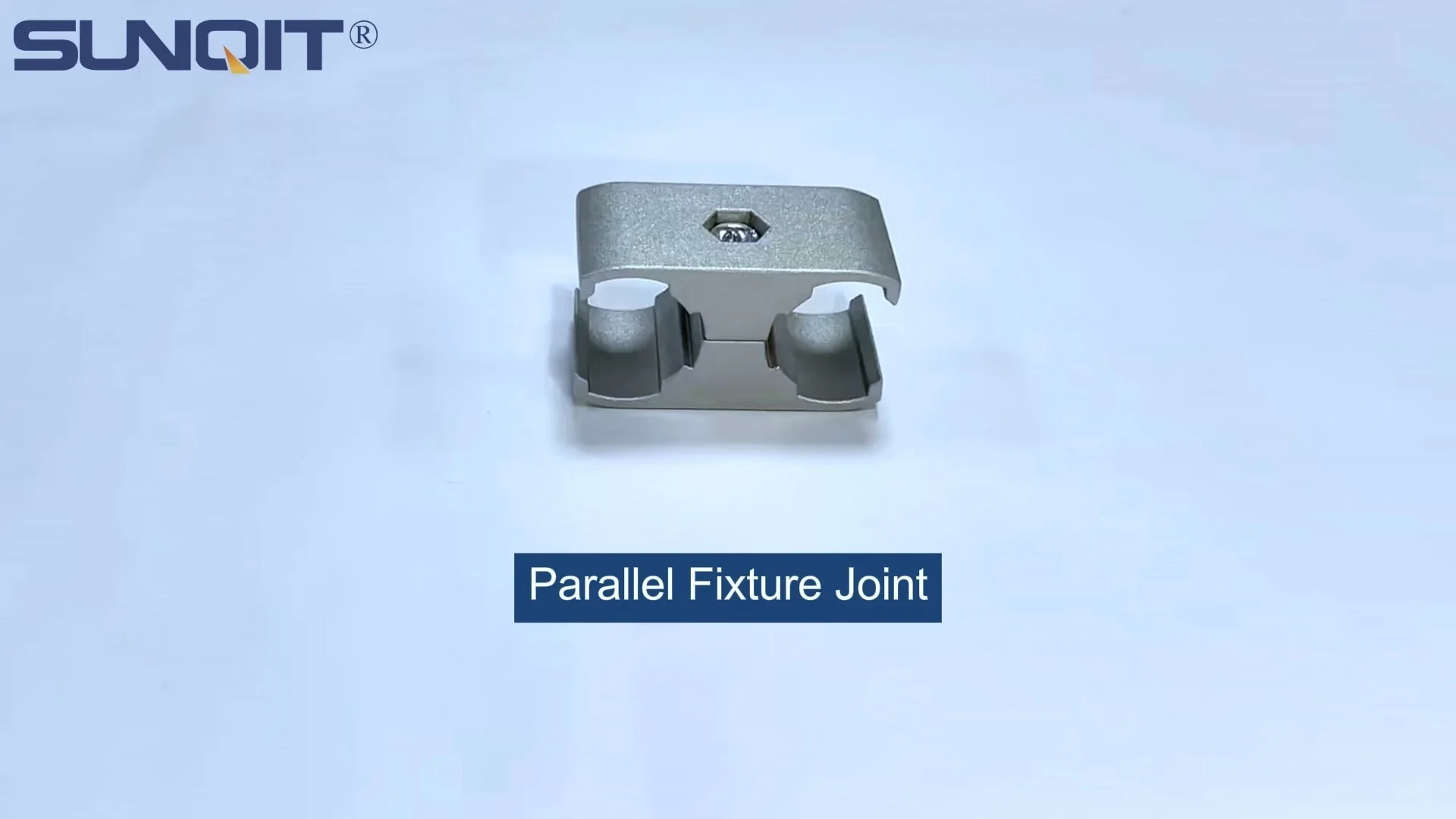
Parallel Fixation Aluminum Pipe Joint
Aluminum parallel joint for two pcs 28mm aluminum pipe connected by parallel direction.
Walk into any modern manufacturing plant, warehouse, or workshop, and you'll likely spot a common thread: aluminum pipe systems. From sturdy workbenches and material racks to flow racks and turnover trolleys, these systems are the backbone of lean operations. But here's the thing—none of these setups work without the unsung heroes holding them together: the joints. Today, we're diving into two popular types of joints in the aluminum lean pipe world: parallel fixation aluminum pipe joints and snap-on joints. If you've ever wondered which one offers better value, lasts longer, or fits your workflow, you're in the right place. Let's break down their cost, performance, and real-world use cases to help you make the smartest choice for your space.
First Things First: What Are We Actually Comparing?
Before we jump into the nitty-gritty, let's make sure we're on the same page. Both parallel fixation joints and snap-on joints are part of the broader family of
aluminum profile accessories
—the small but critical parts that turn basic aluminum pipes into functional systems. They might look similar at first glance, but their designs, how they're installed, and how they perform are worlds apart. Let's start by getting to know each one.
Parallel Fixation Aluminum Pipe Joints: The "Sturdy Workhorse"
Picture this: You're building a heavy-duty material rack to hold steel components in a automotive factory. The last thing you want is a wobbly structure that shifts under load. Enter parallel fixation aluminum pipe joints. These joints are designed for one primary goal:
stability
.
So, what makes them tick? Parallel fixation joints—sometimes called "rigid lock joints"—use a combination of clamping mechanisms and hardware to secure two or more aluminum pipes in a parallel (or sometimes perpendicular) arrangement. Most are made from high-grade aluminum alloy, often with steel or stainless steel internal components for added strength. Installation typically requires a hex key or Allen wrench to tighten set screws or bolts, which bite into the pipe's surface to create a tight, non-slip connection.
Think of them like the bolts on a bike frame: once tightened, they don't budge unless you intentionally loosen them. This rigidity is their superpower. For example, if you're assembling a
workbench e (single deck-without caster)
that needs to support heavy machinery, parallel fixation joints ensure the legs and frame stay aligned, even when tools are dropped or parts are stacked.
But it's not just about strength. These joints are also built to last. The aluminum construction resists corrosion, making them suitable for humid environments like food processing plants or outdoor workshops. And because they rely on mechanical clamping rather than plastic tabs or friction, they hold up better to repeated stress—like the vibrations from nearby conveyor belts or the daily loading/unloading of materials.

Snap-On Joints: The "Quick-Change Artist"
Now, let's shift gears to snap-on joints. If parallel fixation joints are the workhorses, snap-on joints are the sprinters. These joints are all about speed and flexibility. As the name suggests, they "snap" onto aluminum pipes without the need for tools—just a firm push or twist, and they lock into place.
Most snap-on joints are made from durable plastic (like reinforced nylon) or lightweight aluminum. Their design features internal ridges or clips that grip the pipe's surface when pressure is applied. Some even have release buttons or levers to unlock them, making disassembly just as easy as assembly.
Imagine you run a small electronics workshop where you're constantly reconfiguring workstations for new product prototypes. One week, you need a U-shaped flow rack for circuit boards; the next, a straight-line material feeder for wiring harnesses. Snap-on joints let you tear down and rebuild in minutes, not hours. No hunting for tools, no fumbling with tiny screws—just snap, adjust, and get back to work.
Their flexibility also makes them popular for training environments or temporary setups. For example, a technical school teaching lean manufacturing principles might use snap-on joints so students can experiment with different rack designs without slowing down for tool-based assembly. And because they're often cheaper to produce than metal-clamped joints, they're a go-to for budget-conscious projects where heavy loads aren't a concern.

Cost Showdown: Which One Hits Your Wallet Harder?
Let's talk money—because at the end of the day, every purchase needs to justify its cost. When comparing parallel fixation and snap-on joints, the price tag isn't just about the joint itself; it's about
total cost of ownership
: initial purchase, installation labor, maintenance, and replacement over time. Let's break it down.
1. Initial Purchase Price
Right out of the gate, snap-on joints have a clear advantage here. On average, a single snap-on joint costs 30-50% less than a comparable parallel fixation joint. Why? Snap-on joints are often made from plastic, which is cheaper to mold than machining aluminum or steel components. They also have fewer parts—no screws, bolts, or internal metal clamps—simplifying production.
For example, a basic plastic snap-on T-joint might cost $2-3, while an aluminum parallel fixation T-joint could run $5-8. If you're building a small project with 10 joints, that's a difference of $20-50 upfront. For larger setups—say, a warehouse with 100+ joints—that gap grows to hundreds of dollars.
2. Installation Labor: Time = Money
But initial cost is only part of the story. Let's factor in labor. Installing parallel fixation joints takes longer. Each joint requires aligning the pipes, inserting screws, and tightening them with a tool—maybe 2-3 minutes per joint for someone familiar with the process. Snap-on joints? You can snap them into place in 10-15 seconds, even if you're new to the system.
Let's do the math. Suppose you're assembling a material rack with 20 joints. With parallel fixation: 20 joints x 2.5 minutes = 50 minutes of labor. At an average shop rate of $25/hour, that's ~$20.83 in labor. With snap-on: 20 joints x 0.25 minutes = 5 minutes of labor, costing ~$2.08. Over 10 racks, that's a labor savings of $187.50 with snap-on. Suddenly, that upfront cost difference starts to shrink.
3. Maintenance and Replacement Costs
Now, let's fast-forward a year. How do these joints hold up over time?
Parallel fixation joints are low-maintenance. The only upkeep needed is occasional retightening of screws (maybe once every 6-12 months) if they loosen from vibration. Since they're metal, they rarely break—unless you overload them far beyond their rated capacity. Replacement costs here are almost nonexistent unless a joint is damaged by misuse (e.g., hit with a forklift).
Snap-on joints, on the other hand, have a shorter lifespan. The plastic clips or ridges that grip the pipe can wear down over time, especially if the joint is frequently snapped on and off. In high-stress applications—like a rack holding 50kg boxes that's loaded daily—the plastic may fatigue, leading to a loose fit. A loose joint might not fail catastrophically, but it can cause the entire structure to wobble, increasing the risk of parts falling or workers straining to stabilize the rack.
How often do they need replacement? In a busy workshop, you might replace 10-15% of snap-on joints annually, depending on usage. At $3 per joint, that's $30-45 per 100 joints per year. Over 5 years, that adds up to $150-225—easily erasing the upfront savings. And don't forget the labor to replace them: even at 15 seconds per joint, replacing 15 joints takes ~4 minutes, costing another $1.67 per year.
4. The Hidden Cost: Downtime
Here's where parallel fixation joints really pull ahead:
downtime
. If a snap-on joint fails unexpectedly—say, a plastic clip breaks during a shift—the entire structure might need to be shut down while you replace it. In a production environment, even 10 minutes of downtime can cost hundreds of dollars in lost output.
Parallel fixation joints, with their mechanical clamping, rarely fail unexpectedly. When they do loosen, it's gradual—you'll notice the wobble before a full failure, giving you time to tighten them during a scheduled break. For example, a food packaging plant using parallel fixation joints on their conveyor guides reported 98% uptime for their material handling systems, compared to 89% when they previously used snap-on joints (per a 2023 industry survey). That 9% difference translated to thousands in extra production annually.

Performance: How Do They Stack Up in Real Life?
Cost is important, but performance is where the rubber meets the road. Let's compare how these joints perform in key areas like load capacity, adjustability, and resistance to environmental factors. To make it easy, I've put together a quick comparison table:
| Performance Metric | Parallel Fixation Joints | Snap-On Joints |
|---|---|---|
| Max Load Capacity (per joint) | 150-300 kg (depending on size) | 30-100 kg (plastic) / 50-150 kg (aluminum) |
| Adjustability | Low: Requires tools to reposition; best for permanent setups | High: Tool-free, can be repositioned in seconds; ideal for frequent changes |
| Vibration Resistance | Excellent: Clamping mechanism prevents slippage under vibration | Poor to Fair: Friction-based grip can loosen over time with vibration |
| Corrosion Resistance | Excellent (aluminum/steel construction) | Good (plastic) to Excellent (aluminum), but plastic may degrade in UV light |
| Reusability | High: Can be reused indefinitely if not damaged | Medium: Plastic joints may wear out after 10-20 snaps; aluminum better but still limited |
Let's unpack a few of these metrics. Take load capacity: A parallel fixation joint rated for 200 kg can easily support a stack of 20kg boxes on a material rack, while a plastic snap-on joint might start to slip at 50 kg. That's a big difference if you're working with heavy parts.
Then there's adjustability. If you're running a small workshop that builds custom furniture, you might reconfigure your workbench weekly. Snap-on joints let you do that without stopping to find tools. But if you're building a permanent assembly line in a factory, adjustability takes a backseat to stability—and parallel fixation joints are the better bet.
Vibration resistance is another sleeper issue. In plants with nearby machinery, constant shaking can loosen snap-on joints over time, leading to misaligned racks or wobbly workbenches. Parallel fixation joints, with their tight clamping, stay put even in noisy, high-vibration environments.
When to Choose Which? Real-World Use Cases
At this point, you might be thinking, "Which one is better?" The answer, as with most things in engineering, is:
it depends
. Here are some scenarios where one joint clearly outperforms the other.
Choose Parallel Fixation Joints If…
- You're building heavy-duty structures: Think material racks, workbenches for machinery, or load-bearing frames.
- Stability is non-negotiable: For example, in precision assembly (like electronics or medical devices), where even small shifts can ruin a product.
- Your setup is permanent or rarely changes: A warehouse storage rack that stays the same for years doesn't need quick adjustability.
- You're in a harsh environment: Humidity, chemicals, or vibrations would degrade plastic snap-on joints over time.
Choose Snap-On Joints If…
- You need frequent reconfigurations: Prototyping labs, small workshops, or event setups (like trade show displays) benefit from quick changes.
- Loads are light: Holding lightweight items like paperwork, small parts bins, or tools.
- You're on a tight upfront budget: If you can't afford the higher initial cost of parallel fixation, snap-on gets you up and running cheaper.
- Tool-free assembly is a priority: For teams without dedicated maintenance staff or for training purposes (like teaching students about lean systems).
The Verdict: It's About Balance
At the end of the day, parallel fixation aluminum pipe joints and snap-on joints aren't enemies—they're tools for different jobs. If you need strength, durability, and stability, parallel fixation is worth the extra upfront cost. If flexibility, speed, and low initial investment are your priorities, snap-on joints will serve you well.
And here's a pro tip: You don't have to choose one or the other. Many workshops mix and match. For example, use parallel fixation joints for the heavy, permanent parts of a system (like the base of a material rack) and snap-on joints for the upper shelves, which might need occasional reconfiguration. This hybrid approach lets you balance cost and performance without compromise.
No matter which you choose, remember that both are part of the larger
aluminum lean pipe
ecosystem—a system designed to make your workflow more efficient, organized, and adaptable. The key is to understand your needs first: What's the maximum load? How often will you reconfigure? What's your long-term budget? Answering these questions will guide you to the joint that's right for you.
Wrapping Up: Your Turn to Decide
Whether you're a seasoned plant manager or a small business owner setting up your first workshop, the joints you choose for your aluminum pipe system will impact everything from safety to productivity. Parallel fixation joints offer the sturdiness of a workhorse, while snap-on joints bring the speed of a sprinter.
So, take a minute to assess your space: Are you building something that needs to stand the test of time, or something that needs to adapt on the fly? Do you prioritize upfront savings, or long-term reliability? There's no wrong answer—only the right answer for
your
workflow.
And if you're still unsure, talk to your
lean pipe joint
supplier. Most will let you test a few joints in your setup before committing to a bulk order. After all, the best way to know which joint works is to see it in action.
Here's to building better, more efficient spaces—one joint at a time.