- Company Articles
- Products and Technology
- Product knowledge
- Parallel Lean Pipe Joint Chrome: A Guide to Choosing Between Standard & Custom Sizes

Parallel Lean Pipe Joint Chrome: A Guide to Choosing Between Standard & Custom Sizes
Related Product
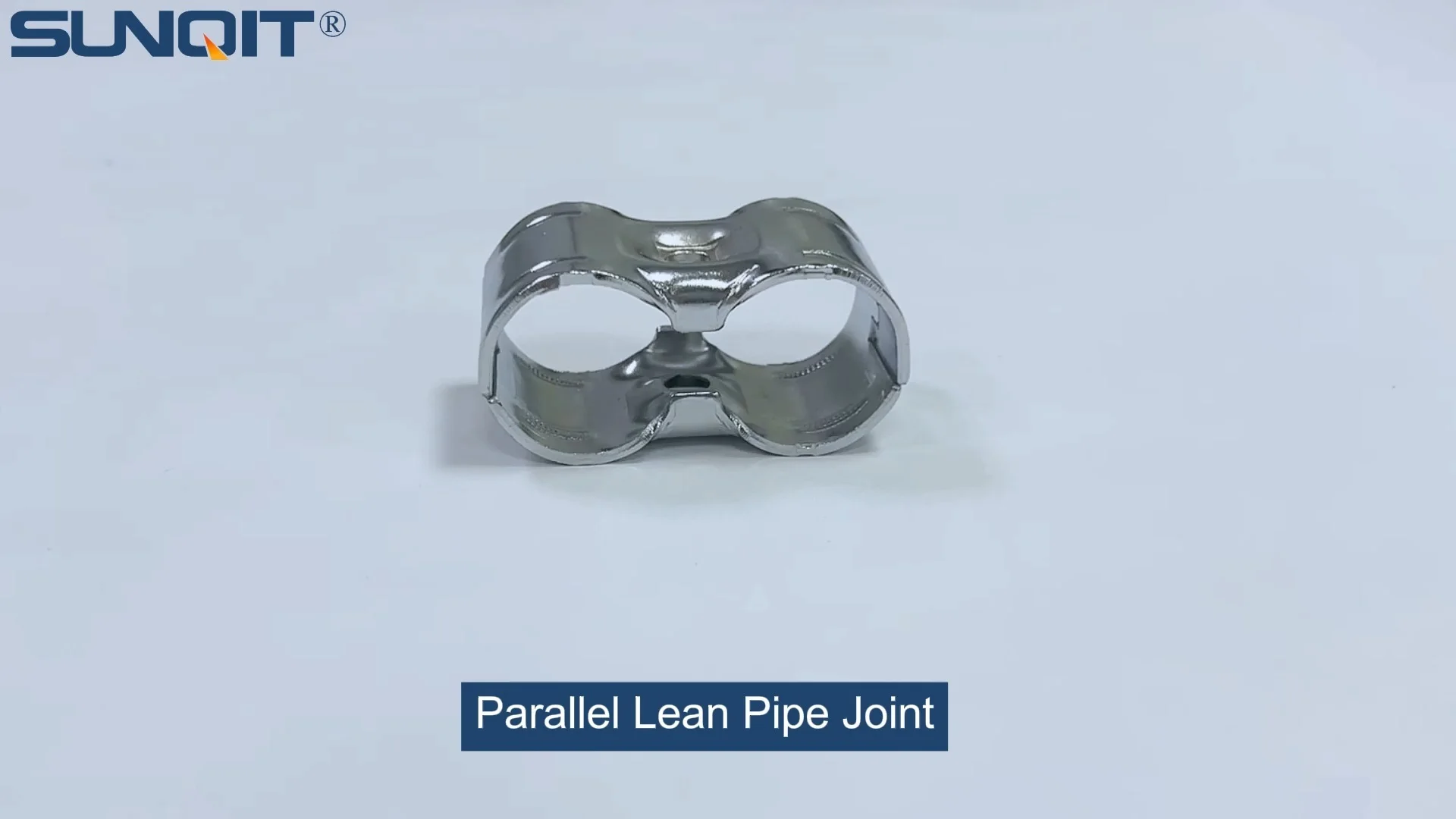
Parallel Lean Pipe Joint Chrome
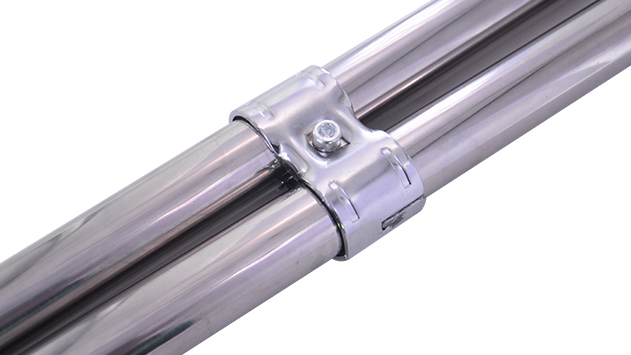
Parallel lean pipe joint used for 2 pcs 28MM lean pipe connection in parallel direction to enhance frame structure, usually for heavy payload requirement for workbench. flow rack, hand trolley.
In the world of lean manufacturing and workspace optimization, it's often the smallest components that make the biggest difference. Whether you're setting up a new assembly line, revamping a warehouse, or building a custom workbench, the way you connect and support your structures can directly impact efficiency, safety, and adaptability. One such unsung hero? The parallel lean pipe joint chrome. These unassuming connectors are the backbone of countless lean systems, quietly holding together everything from simple material racks to complex production workstations. But when it comes to choosing between standard and custom sizes, how do you decide which is right for your project? Let's dive in.
What Are Parallel Lean Pipe Joints Chrome, Anyway?
Before we jump into sizes, let's make sure we're all on the same page about what these joints actually are. Parallel lean pipe joint chrome are specialized connectors designed to link lean pipes—those lightweight, durable tubes used in lean manufacturing setups—in parallel configurations. Think of them as the "elbows" or "joints" of your workspace skeleton, ensuring that pipes run straight, stable, and perfectly aligned, even when supporting heavy loads or complex structures.
The "chrome" in their name isn't just for show. Chrome plating adds a layer of protection against corrosion, scratches, and wear, making these joints ideal for environments where durability matters—like factories, warehouses, or busy workshops. They're typically made from high-grade steel, giving them the strength to handle the daily grind of material handling, tool storage, and assembly work. And because they're part of the broader family of lean pipe and accessories , they're designed to work seamlessly with other components, from aluminum lean pipes to casters, roller tracks, and workbench surfaces.
But why "parallel"? Unlike some joints that connect pipes at angles or in T-shapes, parallel joints are all about alignment. They keep two or more pipes running side by side, maintaining equal spacing and preventing sagging or shifting over time. This is critical for structures like conveyor rails, multi-level material racks, or workbenches with parallel support beams—applications where precision and stability can't be compromised.
Standard Sizes: The Reliable Workhorses of Lean Setups
If you've ever walked into a hardware store or browsed a lean pipe supplier 's catalog, you've probably noticed that most components come in "standard" sizes. These are pre-engineered, mass-produced options designed to fit the most common needs of businesses and manufacturers. When it comes to parallel lean pipe joint chrome, standard sizes are the go-to choice for most projects—and for good reason.
Common Standard Sizes and Their Sweet Spots
Standard parallel lean pipe joints chrome typically come in a handful of sizes, each tailored to fit the most widely used lean pipe diameters. The most common options you'll encounter are designed for 28mm, 30mm, and 40mm pipes—dimensions that have become industry standards over decades of lean manufacturing practice. Let's break them down:
28mm Joints: These are the smallest standard size, often used for lightweight structures. Think small workbenches, tool carts, or turnover trolleys that don't need to support heavy loads. They're compact, easy to handle, and perfect for tight spaces where maneuverability is key.
30mm Joints: The middle ground, 30mm joints are the workhorses of most lean setups. They strike a balance between strength and flexibility, fitting 30mm aluminum lean pipes (a popular choice for its lightweight yet sturdy properties) and supporting moderate loads—think medium-sized workbenches, 3-row material racks, or conveyor systems for small to medium parts.
40mm Joints: For heavier-duty applications, 40mm joints are the way to go. They're built to handle larger pipes and higher weight capacities, making them ideal for industrial workbenches, heavy material racks (like 3-row, 3-floor designs), or roller track systems that move bulky items. If your project involves frequent transport of heavy parts or tools, 40mm joints are likely your best bet.
Why Standard Sizes Make Sense for Most Projects
So, why would you choose a standard size over something custom? Let's start with availability. Since these joints are mass-produced, your local lean pipe supplier probably has them in stock, meaning you can get your hands on them within days (or even hours) of placing an order. No waiting for manufacturing lead times—critical if you're on a tight deadline to set up a new workspace.
Cost is another big factor. Standard sizes are cheaper to produce in bulk, so suppliers can pass those savings on to you. If you're working with a limited budget, standard joints let you stretch your dollars further, especially for large projects where every component adds up. And because they're widely used, replacement parts are easy to find—no hunting down a specialty manufacturer if a joint wears out or gets damaged.
Compatibility is also a huge plus. Standard joints are designed to work with standard pipes, which means you won't have to worry about mismatched components. If you're using 30mm aluminum lean pipe, for example, a standard 30mm parallel joint will fit perfectly, with no gaps or loose connections. This reduces the risk of structural instability and makes it easy to expand or modify your setup later—just add more pipes and joints, and you're good to go.
Take a small electronics manufacturer, for instance. They need a few simple workbenches for assembly, a couple of material racks for components, and a turnover trolley to move parts between stations. Standard 30mm parallel lean pipe joints chrome would be perfect here. They're affordable, available immediately, and compatible with the aluminum lean pipes they already have in stock. No need to overcomplicate things with custom sizes—standard gets the job done, and done well.
Custom Sizes: When One Size Doesn't Fit All
Of course, not every project fits neatly into the "standard" box. Maybe you're building a specialized workbench for a unique manufacturing process, or you need a material rack that can handle oversized parts. Perhaps your workspace has unusual dimensions, or you're working with non-standard pipes (like thicker stainless steel or custom aluminum extrusion profiles). In these cases, standard parallel lean pipe joint chrome might not cut it—and that's where custom sizes come in.
When to Consider Custom Parallel Lean Pipe Joints
Custom sizes are exactly what they sound like: joints engineered to your specific dimensions, rather than off-the-shelf options. They're typically made to order by a lean pipe supplier with the capability to fabricate components from scratch, using your project's unique requirements as a blueprint. But when is the extra time and cost worth it?
Unique Pipe Diameters: If you're using non-standard pipes—say, 35mm aluminum lean pipe for a project that needs extra strength without the bulk of 40mm—standard joints won't fit. Custom joints can be tailored to match any pipe diameter, ensuring a snug, secure connection.
Heavy-Duty Loads: Some projects require joints that can support more weight than standard options allow. Maybe you're building a material rack for automotive parts, where each shelf needs to hold 500+ pounds. Custom joints can be reinforced with thicker steel or additional support brackets to meet those load requirements.
Specialized Angles or Spacing: Parallel joints usually keep pipes evenly spaced, but what if your project needs pipes to be 15cm apart instead of the standard 10cm? Or maybe you need joints that can connect three parallel pipes instead of two? Custom designs can accommodate unique spacing, multiple pipes, or even slight angles (while still maintaining parallel alignment).
ESD or Cleanroom Requirements: In industries like electronics manufacturing or pharmaceuticals, workspaces often need to be ESD-safe (to prevent static electricity damage) or meet strict cleanroom standards. Custom joints can be treated with specialized coatings (like anti-static finishes) or made from materials that resist dust and corrosion, ensuring compliance with industry regulations.
The Upsides (and Tradeoffs) of Custom Sizes
The biggest advantage of custom parallel lean pipe joint chrome is precision. When you order a custom joint, it's built to your exact specifications, so there's no guesswork or compromising. Your structure will fit your space perfectly, support your loads safely, and integrate seamlessly with other custom components—like a workbench with a non-standard surface or a conveyor system with unique roller track spacing.
Custom joints also open up design possibilities that standard sizes can't match. For example, a furniture manufacturer building a custom assembly line for large wooden panels might need parallel joints that fit 50mm pipes and connect to specialized roller track guide rails. Standard joints would fail here, but custom ones can be engineered to handle the size and stress, ensuring the line runs smoothly.
But custom sizes aren't without tradeoffs. The most obvious is cost: custom manufacturing means higher per-unit prices, especially for small orders. Mass-produced standard joints spread the cost of tooling and setup across thousands of units; custom joints require unique tooling, design time, and quality checks, all of which add up.
Lead time is another consideration. Standard joints are ready to ship, but custom ones can take weeks (or even months, for highly complex designs) to manufacture. If you're on a tight deadline, this could be a dealbreaker. Finally, there's the risk of miscommunication: if your specifications are unclear, the final product might not match what you need, leading to delays and extra costs to fix the issue.

Standard vs. Custom: A Side-by-Side Comparison
Still on the fence? Let's put standard and custom parallel lean pipe joints chrome head-to-head. The table below breaks down the key factors to consider, so you can weigh your options based on your project's unique needs:
| Factor | Standard Sizes | Custom Sizes |
|---|---|---|
| Cost | Lower per unit; bulk pricing available. | Higher per unit; design and tooling fees add up. |
| Lead Time | Immediate to 1-3 business days (in stock). | 2-6 weeks (varies by complexity and supplier). |
| Availability | Widely available from most lean pipe suppliers. | Limited to suppliers with custom manufacturing capabilities. |
| Application Fit | Best for standard projects (small to medium workbenches, common material racks). | Best for unique projects (heavy loads, non-standard pipes, specialized environments). |
| Compatibility | Guaranteed to fit standard pipes and accessories. | Compatible only with your specific design (may not work with off-the-shelf components). |
| Flexibility for Future Changes | Easy to modify or expand (replacements and additions are readily available). | Harder to modify; changes may require new custom joints. |
How to Choose: A Step-by-Step Guide
Deciding between standard and custom parallel lean pipe joint chrome isn't about picking "better" or "worse"—it's about picking what works for your project. To make the right call, walk through these steps:
Step 1: Define Your Project's Requirements
Start by asking the basics: What are you building? (A workbench? A material rack? A conveyor system?) How much weight does it need to support? What size pipes are you using? Do you have any special requirements (ESD safety, cleanroom compatibility, unique spacing)? Jotting these down will help you narrow down whether standard sizes can meet your needs or if custom is necessary.
Step 2: Check Standard Size Compatibility
Next, cross-reference your requirements with standard sizes. If you're using 30mm aluminum lean pipe and building a medium workbench that supports 100kg, a standard 30mm parallel joint will almost certainly work. If you're using 45mm pipes and need to support 800kg, standard sizes won't cut it—time to consider custom.
Step 3: Evaluate Your Timeline and Budget
Standard sizes are fast and affordable; custom sizes are slow and costly. If you need your project up and running in two weeks, custom might not be feasible. If you have a flexible timeline and budget, custom could be worth the investment for a perfect fit.
Step 4: Talk to Your Lean Pipe Supplier
This might be the most important step. A reputable lean pipe supplier has seen it all—they can review your requirements, suggest standard options you might not have considered, or guide you through the custom process if needed. They'll also help you avoid common pitfalls, like over-ordering custom joints when a standard size with a simple modification (like adding a spacer) would work.
Real-World Scenarios: When to Go Standard vs. Custom
Sometimes, examples help clarify the decision. Let's look at a few hypothetical (but realistic) scenarios to see how the choice plays out:
Scenario 1: A Small Bakery Needs a New Prep Station
A local bakery wants to build a small workbench for decorating cakes. They need it to be 1.2m long, 0.6m deep, and support a few mixing bowls and decorating tools (max load: 50kg). They plan to use 30mm aluminum lean pipe for the frame, which is lightweight and easy to clean. For this project, standard 30mm parallel lean pipe joints chrome are perfect. They're affordable, in stock at their local supplier, and will fit the pipes perfectly. No need for custom here—standard gets the job done.
Scenario 2: An Automotive Plant Expands Its Assembly Line
An automotive manufacturer is adding a new line to assemble engine components. The line needs a material rack that can hold heavy engine blocks (each weighing 200kg) and fit 45mm steel pipes (for extra strength). Standard joints only go up to 40mm, so they need custom 45mm parallel joints. They work with their lean pipe supplier to design joints with reinforced brackets, ensuring they can handle the load. The lead time is 4 weeks, but the investment is worth it for safety and efficiency.
Scenario 3: A Startup Electronics Company Sets Up Shop
A new electronics startup needs ESD-safe workbenches for assembling circuit boards. They're on a tight budget and timeline but need the benches to be 1.8m long (slightly longer than standard) and fit 30mm aluminum lean pipes. Their supplier suggests using standard 30mm parallel joints with extension brackets to reach the longer length—no custom joints needed. This saves them time and money while still meeting their requirements.
Wrapping Up: The Right Joint for the Right Job
At the end of the day, choosing between standard and custom parallel lean pipe joint chrome comes down to one question: What does your project need? Standard sizes are reliable, affordable, and ready to go—perfect for most lean setups, from small workbenches to medium material racks. Custom sizes, on the other hand, are the solution when precision, unique requirements, or heavy loads demand a tailored approach.
Remember, there's no "one size fits all" answer—but with a clear understanding of your project's needs, a little research, and a chat with your lean pipe supplier, you'll be able to choose joints that keep your structure stable, your workflow efficient, and your budget on track. After all, in lean manufacturing, every component counts—even the small ones that hold it all together.
So, whether you're reaching for a standard 30mm joint or designing a custom 50mm solution, here's to building a workspace that works as hard as you do.