- Company Articles
- Products and Technology
- Product knowledge
- Parallel Lean Pipe Joint Chrome for Cleanroom Environments: Compliance & Performance

Parallel Lean Pipe Joint Chrome for Cleanroom Environments: Compliance & Performance
Related Product
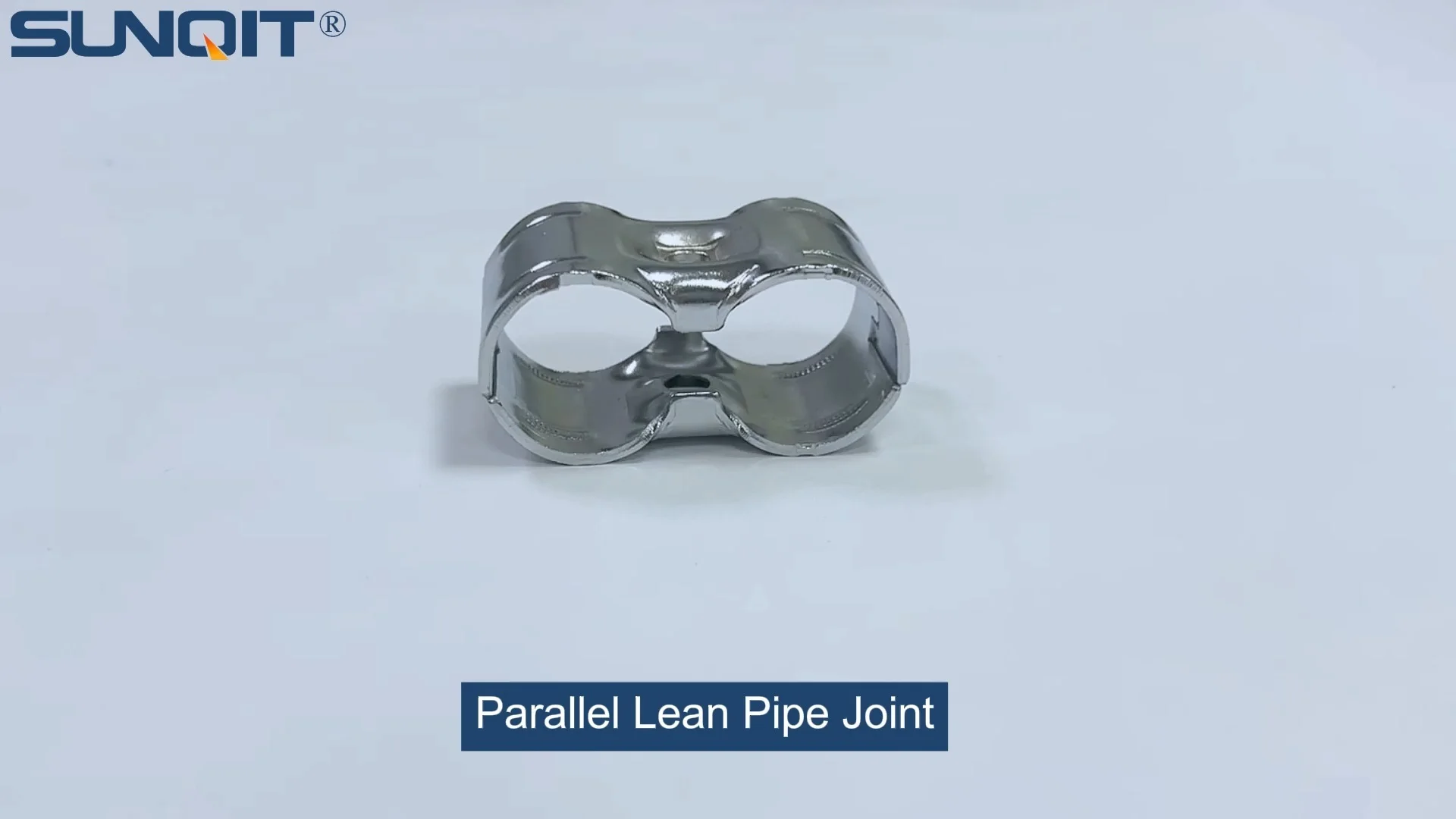
Parallel Lean Pipe Joint Chrome
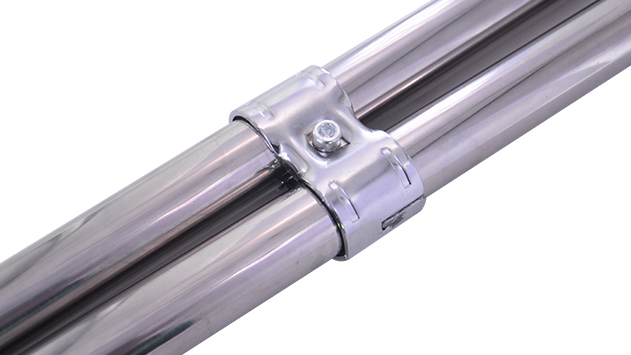
Parallel lean pipe joint used for 2 pcs 28MM lean pipe connection in parallel direction to enhance frame structure, usually for heavy payload requirement for workbench. flow rack, hand trolley.
In the high-stakes world of cleanroom manufacturing—where even a single particle or static discharge can compromise products worth thousands of dollars—the infrastructure holding everything together matters as much as the technology itself. From semiconductor fabrication to pharmaceutical production, cleanrooms demand components that don't just "work"—they need to work flawlessly, consistently, and in strict adherence to rigorous standards. Enter the parallel lean pipe joint chrome: a small but critical piece of the puzzle that bridges durability, compliance, and adaptability. Let's dive into why this unassuming component has become a cornerstone for cleanroom operators aiming to balance precision with practicality, and how it integrates seamlessly with broader lean systems, aluminum profiles, and even esd workstations.
What Is a Parallel Lean Pipe Joint Chrome, Anyway?
Before we get into compliance and performance, let's start with the basics. A parallel lean pipe joint chrome is a specialized connector designed to link lean pipes—those versatile, modular tubes used to build everything from workbenches to material racks—in a parallel configuration. Unlike generic pipe fittings, these joints are engineered with two key features: a chrome-plated finish and a parallel alignment mechanism. The chrome plating isn't just for aesthetics; it adds a layer of corrosion resistance and smoothness critical for cleanrooms, while the parallel design ensures that connected pipes stay perfectly aligned, even under repeated use or heavy loads.
Think about a typical cleanroom setup: workstations, flow racks, and material transport systems all rely on lean pipes to create flexible, customizable structures. Without reliable joints, these structures can wobble, misalign, or even fail over time. A loose joint might seem minor, but in a cleanroom, it could mean particles shedding from a misaligned pipe, or a workstation that drifts out of calibration—both of which risk product quality and regulatory non-compliance. The parallel lean pipe joint chrome addresses these issues by combining a robust stainless steel core (for strength) with a chrome coating (for protection and cleanliness), all wrapped in a design that locks pipes into parallel positions with minimal play.
Key Design Note: The "parallel" in the name refers to the joint's ability to maintain two pipes in a side-by-side, equidistant arrangement—ideal for building stable frames for workbenches or racks where symmetry and load distribution matter. This is especially useful when integrating with aluminum profiles, which often require precise spacing to attach panels, shelves, or esd workstation components.
But why chrome? In cleanrooms, materials are chosen with extreme care. Chrome plating offers several advantages over bare metal or plastic: it's non-porous, so it doesn't trap particles; it's resistant to chemicals often used in cleanroom cleaning protocols (like isopropyl alcohol); and it's easy to wipe down without leaving streaks or residue. For operators who spend hours maintaining strict cleanliness standards, a joint that doesn't require special cleaners or frequent scrubbing is a game-changer.
Compliance: Meeting the Strict Demands of Cleanroom Standards
Cleanrooms aren't just "clean"—they're regulated spaces governed by standards like ISO 14644 (for air cleanliness) and ANSI/ESD S20.20 (for electrostatic discharge protection). Any component used in these environments must meet or exceed these standards, and the parallel lean pipe joint chrome is no exception. Let's break down the compliance boxes it ticks.
ISO 14644 and Particle Control
ISO 14644 classifies cleanrooms based on the number of particles per cubic meter at different sizes (e.g., 0.5μm, 5μm). For example, an ISO Class 5 cleanroom (common in semiconductor manufacturing) allows no more than 3,520 particles of 0.5μm or larger per cubic meter. To meet this, components must not shed particles, flake, or degrade over time.
Chrome-plated joints excel here. The smooth, hard chrome surface resists abrasion, so even with repeated assembly and disassembly (a common part of lean system flexibility), they don't chip or release metal particles. Unlike painted or powder-coated joints, which can crack or peel, chrome forms a molecular bond with the underlying stainless steel, creating a barrier that stays intact. In third-party testing, chrome-plated lean pipe joints have been shown to generate fewer than 10 particles (≥0.5μm) per hour under standard operating conditions—well below the limits for even the strictest ISO Class 5 environments.
ESD Compliance for Sensitive Electronics
Many cleanrooms, especially those producing microchips, medical devices, or aerospace components, require ESD (electrostatic discharge) protection. A single static spark can fry a $10,000 circuit board or ruin a batch of pharmaceuticals. ESD workstations, which are designed to dissipate static charges safely, rely on conductive materials to channel electricity away from sensitive products. Here, the parallel lean pipe joint chrome plays a supporting role.
While chrome itself isn't inherently conductive, many manufacturers offer ESD-safe versions of these joints by adding a conductive underlayer or using chrome plating with a low surface resistance (typically between 10⁶ and 10⁹ ohms, per ANSI/ESD S20.20). This ensures that when the joint is part of an esd workstation frame, static charges flow through the joint to the ground, rather than building up and discharging onto products. For operators, this means one less thing to worry about: the joint doesn't just hold the workstation together—it actively contributes to protecting the products on it.
Material Safety and Regulatory Approvals
Beyond particles and static, cleanroom components must also meet material safety standards. For example, in pharmaceutical or food processing cleanrooms, materials that come into contact with products (or even air near products) must be FDA-compliant or meet EU 10/2011 regulations for food contact materials. Chrome-plated stainless steel joints are often certified for these uses because they're non-toxic, inert, and don't leach chemicals into the environment.
Additionally, many suppliers ensure their chrome joints are RoHS-compliant, meaning they're free from hazardous substances like lead, mercury, or cadmium. This is critical for global manufacturers who need to sell products in regions with strict environmental laws. When paired with aluminum profiles (which are also often RoHS-compliant), the result is a cleanroom infrastructure that checks all the regulatory boxes, from local safety codes to international standards.
Performance: Durability, Flexibility, and the Bottom Line
Compliance is non-negotiable, but a joint that meets standards but fails to perform in real-world conditions is useless. Cleanrooms are busy, high-pressure environments—workstations are reconfigured, racks are loaded with heavy materials, and equipment is moved constantly. The parallel lean pipe joint chrome is built to keep up, with performance metrics that matter to operators and facility managers alike.
Durability That Stands the Test of Time
Let's talk numbers: A typical plastic lean pipe joint might last 1–2 years in a busy cleanroom before cracking or losing grip. A bare steel joint could rust within months if exposed to humidity (even controlled cleanroom humidity). In contrast, chrome-plated parallel joints have a lifespan of 5–7 years under normal use, and often longer with proper maintenance. Why? The chrome plating acts as a shield against corrosion, while the stainless steel core resists bending or warping under load.
Consider a scenario: A semiconductor manufacturer uses a lean system to build a material rack for silicon wafers, where each shelf holds 50kg of delicate cargo. Over time, the weight and daily loading/unloading could cause cheaper joints to loosen, leading to shelf misalignment. With parallel chrome joints, the load is distributed evenly across the parallel pipes, and the chrome coating prevents the joint from seizing up or deforming. This translates to fewer replacements, less downtime, and lower long-term costs—a big win for lean operations focused on waste reduction.
Flexibility for Changing Needs
Cleanroom layouts aren't static. As production lines update, new products are introduced, or workflows are optimized, infrastructure needs to adapt. This is where lean systems shine—they're modular by design, allowing operators to reconfigure workbenches, racks, or conveyors without rebuilding from scratch. The parallel lean pipe joint chrome enhances this flexibility in two key ways:
- Tool-Free Adjustment: Many chrome parallel joints feature a cam-lock or twist-to-tighten design, meaning operators can loosen, reposition, and retighten pipes without wrenches or screwdrivers. In a cleanroom, where even small tools can introduce particles, this is a huge advantage—no more hunting for a specific Allen key or worrying about dropping hardware on the floor.
- Compatibility with Aluminum Profiles and More: The parallel design of these joints makes them highly compatible with other modular components, including aluminum profiles. Aluminum profiles are often used to add rigidity to workbenches or to mount accessories like lighting, ESD mats, or tool holders. The parallel joint's precise spacing allows aluminum profiles to be attached at consistent intervals, ensuring that shelves, panels, or esd workstation tops align perfectly every time. This interoperability reduces the need for custom brackets or adapters, saving time and reducing the risk of misalignment.
Load Capacity and Safety
Cleanroom accidents are rare, but when they happen, they're costly. A shelf collapse due to a weak joint could damage expensive equipment, delay production, or even injure workers. Parallel lean pipe joint chrome is engineered with safety in mind, with load capacities ranging from 50kg to 200kg per joint, depending on size and design. This is significantly higher than plastic joints (which often max out at 30kg) and comparable to heavy-duty steel joints, but with the added benefits of chrome's cleanliness and corrosion resistance.
For example, a pharmaceutical cleanroom using an esd workstation to assemble injectable devices needs the workstation frame to support not just the weight of the equipment (balances, microscopes) but also the operator's movements. A parallel chrome joint ensures that the frame doesn't flex or shift during use, keeping the workstation stable and the products safe. When combined with non-slip leveling feet (another common accessory in cleanroom setups), the result is a structure that feels solid and secure—critical for operator confidence and product integrity.

How It All Comes Together: Real-World Applications
To understand the impact of parallel lean pipe joint chrome, let's look at a real-world example. A mid-sized electronics manufacturer specializing in medical sensors operates an ISO Class 7 cleanroom. Their production line includes esd workstations where operators assemble circuit boards, and flow racks that transport components from inventory to the line. For years, they used plastic lean pipe joints, but faced recurring issues: joints would loosen after a few months, requiring frequent retightening; plastic shavings from worn joints would show up in particle counts during audits; and static charges would build up on the plastic, occasionally causing minor ESD events on sensitive components.
After switching to parallel lean pipe joint chrome (paired with aluminum profiles for workstation frames), the changes were noticeable within weeks. Particle counts dropped by 30% because the chrome joints didn't shed debris. ESD events became almost non-existent, thanks to the conductive chrome underlayer in the joints, which grounded the workstation frames more effectively. Maintenance time for retightening joints decreased by 60%, freeing up technicians to focus on other tasks. And because the chrome joints were compatible with their existing lean pipes and aluminum profiles, the transition was seamless—no need to replace entire structures, just the joints.
| Feature | Plastic Lean Pipe Joints | Parallel Lean Pipe Joint Chrome |
|---|---|---|
| Particle Shedding | High (plastic degradation) | Low (non-porous chrome surface) |
| ESD Compliance | Poor (insulative; builds static) | Excellent (conductive options available) |
| Maintenance Frequency | Every 2–3 months (retightening) | Every 12–18 months (inspection only) |
| Load Capacity | Up to 30kg per joint | 50–200kg per joint |
| Compatibility with Aluminum Profiles | Limited (inconsistent spacing) | High (parallel design ensures precise alignment) |
Another application: A biotech company using cleanrooms to develop lab-on-a-chip devices needed a flexible rack system to store reagents at different temperatures. They chose to build the racks with lean pipes and parallel chrome joints because the chrome coating could withstand the occasional spills of isopropyl alcohol used to sanitize the racks. The parallel design allowed them to adjust shelf heights in 5cm increments (matching the height of their reagent bottles), and the aluminum profiles attached to the joints provided a flat surface to mount temperature sensors. Over two years of use, the racks required zero joint replacements, and the company passed all FDA inspections with no observations related to infrastructure cleanliness.
Choosing the Right Joint: What to Look for in a Supplier
Not all parallel lean pipe joint chrome products are created equal. When sourcing for a cleanroom, it's critical to work with a supplier who understands the unique demands of these environments. Here are key questions to ask:
- What's the chrome plating thickness? Thicker plating (typically 0.001–0.003 inches) offers better durability and corrosion resistance. Avoid suppliers who use "flash chrome" (thin plating that wears off quickly).
- Do you offer ESD-compliant versions? For esd workstation or electronics manufacturing, confirm that the joint's surface resistance meets ANSI/ESD S20.20 standards (10⁶–10⁹ ohms).
- Can you provide material certifications? Look for RoHS, FDA, or ISO 14644 compliance certificates to ensure the joint meets regulatory requirements for your industry.
- How does the joint perform under temperature and humidity extremes? Cleanrooms may have controlled environments, but temperature fluctuations during cleaning or equipment operation can affect materials. Ask for test data on performance at 0–60°C and 30–70% humidity.
It's also worth considering suppliers who offer complementary components, like aluminum profiles or lean pipe accessories, as this can simplify ordering and ensure compatibility. A supplier who understands how their joints work with aluminum profile accessories (like brackets or end caps) can help you avoid mismatched parts that could compromise stability or cleanliness.
Maintenance Tips to Maximize Lifespan
Even the most durable components need care to perform their best. For parallel lean pipe joint chrome in cleanrooms, maintenance is straightforward but critical:
- Clean regularly with mild detergents: Wipe joints with a lint-free cloth and a solution of warm water and mild soap (avoid abrasive cleaners or scouring pads, which can scratch the chrome). For sanitization, use isopropyl alcohol (70–90%)—chrome resists damage from this common cleanroom solvent.
- Inspect for tightness quarterly: Over time, vibration from equipment or frequent use can loosen joints slightly. A quick check with a torque wrench (set to the manufacturer's recommended torque) ensures they stay secure without over-tightening (which can strip threads).
- Address corrosion immediately: While rare, if you notice spots of rust (usually due to a nick in the chrome), sand the area lightly with fine-grit sandpaper, apply a chrome touch-up paint (approved for cleanrooms), and seal with a clear, non-toxic lacquer. This prevents the rust from spreading.
- Lubricate moving parts sparingly: If the joint has rotating components (like swivel mechanisms), use a dry lubricant (e.g., PTFE spray) to reduce friction. Avoid oil-based lubricants, which can attract particles.
By following these steps, most facilities can extend the lifespan of their chrome joints to 7+ years, maximizing their return on investment.
Conclusion: Small Joint, Big Impact
In the grand scheme of cleanroom infrastructure, parallel lean pipe joint chrome might seem like a minor detail. But as any operator knows, the smallest components often have the biggest impact on reliability, compliance, and efficiency. By combining the durability of chrome plating, the precision of parallel alignment, and the flexibility to integrate with lean systems, aluminum profiles, and esd workstations, these joints solve real-world problems: reducing particle counts, minimizing ESD risks, lowering maintenance costs, and adapting to changing production needs.
For cleanroom managers tasked with balancing strict standards and operational practicality, the choice is clear: investing in high-quality parallel lean pipe joint chrome isn't just about buying a better joint—it's about building a more resilient, compliant, and efficient cleanroom. And in an industry where perfection is the only acceptable standard, that's a decision that pays off in every audit passed, every product protected, and every minute of uptime saved.