- Company Articles
- Products and Technology
- Product knowledge
- Parallel Lean Pipe Joint Chrome for Custom Material Racks: Design Flexibility

Parallel Lean Pipe Joint Chrome for Custom Material Racks: Design Flexibility
Related Product
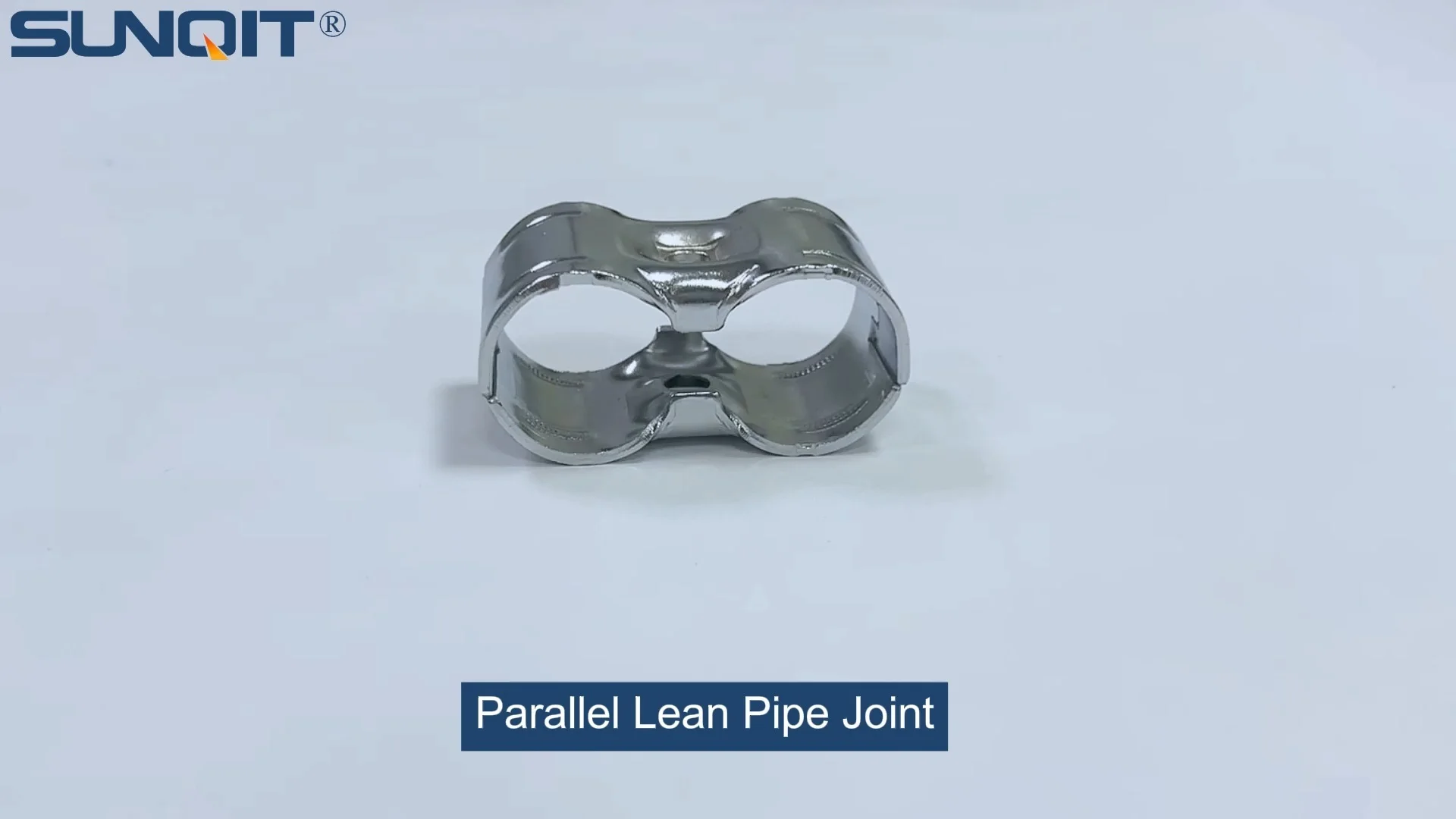
Parallel Lean Pipe Joint Chrome
Parallel lean pipe joint used for 2 pcs 28MM lean pipe connection in parallel direction to enhance frame structure, usually for heavy payload requirement for workbench. flow rack, hand trolley.
How a Simple Component Transforms Production Efficiency Through Adaptable Storage Solutions
The Hidden Backbone of Efficient Production: Material Racks That Keep Up
In the bustling world of manufacturing and assembly lines, every second counts. From the moment raw materials arrive to the final product rolling off the line, the flow of materials dictates the rhythm of productivity. Yet, one often overlooked hero in this dance is the material rack—the silent workhorse that organizes parts, reduces clutter, and ensures everything is within arm's reach when needed. But not all material racks are created equal. In an era where production lines shift, product designs evolve, and space constraints tighten, the rigid, one-size-fits-all racks of the past are quickly becoming relics. What today's factories need is flexibility—and that's where the Parallel Lean Pipe Joint Chrome steps in.
Imagine a production floor where a sudden order for a new product line demands a taller material rack to accommodate bulkier components. Or a scenario where seasonal demand spikes require reconfiguring storage to prioritize faster-moving parts. Traditional racks, welded from steel or bolted into fixed structures, would leave teams scrambling—hiring welders, purchasing new equipment, or wasting valuable floor space with temporary solutions. But with modular systems built around components like the Parallel Lean Pipe Joint Chrome, these challenges become opportunities to adapt, innovate, and stay ahead.
At its core, the Parallel Lean Pipe Joint Chrome is more than just a connector. It's a bridge between rigidity and adaptability, between fixed infrastructure and dynamic workflow. In this article, we'll explore how this unassuming component revolutionizes custom material rack design, why flexibility matters in modern manufacturing, and how integrating it with tools like lean pipe workbenches and flow racks can transform your production floor from a static space into a responsive, efficient ecosystem.
The Problem with "Set It and Forget It" Material Racks
For decades, manufacturing facilities relied on heavy, permanent material racks. Built from thick steel beams and welded into place, these structures were designed to last—often outliving the production lines they supported. But "lasting" isn't the same as "adapting," and in today's fast-paced industry, adaptability is king. Let's break down the limitations of traditional racks:
- Fixed Dimensions: A rack built to hold 12-inch boxes can't easily stretch to accommodate 18-inch components. This rigidity forces teams to either cram items awkwardly (risking damage) or invest in entirely new racks.
- High Replacement Costs: When product lines change, traditional racks often become obsolete. Replacing them means not just the cost of new materials, but also downtime for installation and disposal of old structures.
- Wasted Space: As production needs ebb and flow, fixed racks may leave gaps in storage or block pathways, reducing overall floor efficiency. What was once a perfectly sized rack can quickly become a space-consuming liability.
- Poor Ergonomics: Workers come in all heights, and tasks vary. A fixed rack that's too low or too high leads to strained backs, slower retrieval times, and increased risk of injury—all of which chip away at productivity.
Consider a small electronics manufacturer we worked with last year. They specialized in smartphone components, and their material racks were built to hold tiny, delicate parts in shallow bins. When they landed a contract for larger tablet components, their existing racks were suddenly too short and narrow. Rather than investing in new steel racks (which would have cost $15,000 and taken two weeks to install), they turned to a modular system using Parallel Lean Pipe Joint Chrome. Within three days, they'd reconfigured their existing lean pipes and joints to create taller, wider shelves—saving over $12,000 and avoiding production delays. That's the power of flexibility.
The key to solving these issues lies in modular design—a philosophy that prioritizes components that can be easily rearranged, extended, or repurposed. And at the heart of that modularity? The right connectors. Enter the Parallel Lean Pipe Joint Chrome.
Parallel Lean Pipe Joint Chrome: The Unsung Hero of Modular Design
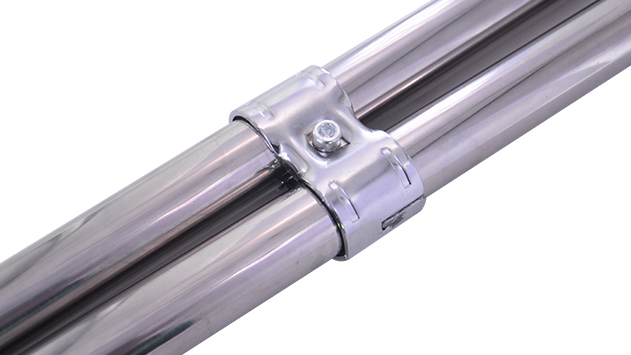
At first glance, the Parallel Lean Pipe Joint Chrome might seem like a simple piece of hardware: a small, chrome-plated connector with parallel ports for lean pipes. But its design is deceptively clever, engineered to balance strength, simplicity, and adaptability. Let's unpack what makes it unique:
Chrome Finish: Durability That Stands the Test of Time
The chrome plating isn't just for aesthetics (though it does add a clean, professional look to any rack). Chrome is resistant to corrosion, scratches, and wear—critical in industrial environments where racks are frequently bumped, loaded, and reconfigured. Unlike painted or plastic connectors, which can chip or degrade over time, chrome joints maintain their integrity even in dusty, humid, or high-traffic areas. This longevity means fewer replacements and lower long-term maintenance costs.
Parallel Design: Stability Without Sacrificing Flexibility
Most standard lean pipe joints feature perpendicular or angled ports, which work well for basic structures but can limit stability in parallel configurations (like horizontal shelves or vertical supports). The Parallel Lean Pipe Joint Chrome, as the name suggests, is designed with parallel ports that align pipes in straight, side-by-side arrangements. This creates a stronger, more rigid framework—perfect for heavy loads—while still allowing for easy disassembly and reconfiguration.
For example, when building a multi-tiered material rack, parallel joints ensure that horizontal shelves stay level, even under the weight of tools, boxes, or components. Traditional joints might require additional bracing to prevent sagging, but the parallel design distributes weight evenly across connected pipes, reducing the need for extra supports.
Tool-Free Assembly: Speed and Simplicity
One of the biggest pain points in modular systems is assembly time. Wrenches, bolts, and specialized tools can slow down setup, especially for teams without dedicated maintenance staff. The Parallel Lean Pipe Joint Chrome solves this with a friction-fit design (or quick-release bolts, depending on the model) that allows for tool-free installation. Simply insert the lean pipe into the joint, tighten the built-in knob or lever, and you're done. This means a team of two can assemble a basic material rack in under an hour—no prior experience required.
Even better, disassembly is just as fast. When it's time to reconfigure, loosen the knobs, remove the pipes, and rearrange. No cutting, welding, or drilling—just quick, hassle-free adjustments.

Building Blocks of Flexibility: How Parallel Joints Work with Other Components
The Parallel Lean Pipe Joint Chrome doesn't work in isolation. It's part of a larger ecosystem of lean manufacturing components, each designed to enhance adaptability. Let's explore how it pairs with key tools to create custom material racks that truly fit your needs:
Lean Pipes: The Foundation of Modularity
At the core of any modular system are the pipes themselves. Typically made from steel or aluminum (like aluminum profile ), lean pipes are lightweight yet strong, with a smooth surface that resists dents. The Parallel Lean Pipe Joint Chrome is compatible with standard 28mm or 30mm pipes, making it easy to source replacements or expand existing setups. Whether you need straight sections for vertical supports or curved pipes for ergonomic workbenches, the joints connect them seamlessly.
Flow Racks: Streamlining Material Movement
For facilities that rely on just-in-time (JIT) production, flow racks are a game-changer. These racks use gravity to feed materials from the back to the front, ensuring workers always access the oldest stock first (FIFO—First In, First Out). The Parallel Lean Pipe Joint Chrome excels here, as it can secure roller tracks (another key component) to the rack's frame. By adjusting the angle of the joints, you can control the flow speed—steeper for lightweight items, gentler for fragile components. And if you need to switch from a 3-row flow rack to a 5-row design? Simply add more pipes and joints—no need to rebuild from scratch.
Lean Pipe Workbenches: Merging Storage and Workspace
Material racks rarely exist in isolation; they're often paired with workbenches where assembly or inspection happens. The Parallel Lean Pipe Joint Chrome integrates seamlessly with lean pipe workbenches, allowing you to build racks directly onto the bench frame. Imagine a workbench where tools are stored on a vertical rack above, components on a flow rack to the side, and finished products on a lower shelf—all connected via parallel joints. When the workbench needs to move (to accommodate a new assembly line layout), the entire system moves with it, thanks to casters (another modular accessory) attached via the same joints.
Casters and Leveling Feet: Mobility When You Need It
Not all material racks need to be stationary. Mobile racks are ideal for transporting materials between stations or clearing floor space for deep cleaning. The Parallel Lean Pipe Joint Chrome can attach casters (with brakes for stability) to the base of a rack, turning it into a movable cart in minutes. And for racks that need to stay put, adjustable leveling feet (screwed into the joints) ensure stability on uneven floors—no more wobbling shelves or damaged components.
From Blueprint to Bench: Designing Custom Racks with Parallel Joints
So, how do you actually use the Parallel Lean Pipe Joint Chrome to build a custom material rack? Let's walk through a step-by-step example, using a common scenario: a small automotive parts manufacturer needing a rack for storing various-sized gaskets, bolts, and plastic covers.
Step 1: Assess Your Needs
Start by answering key questions: What items will the rack hold? How much do they weigh? How often will they be accessed? For our automotive example, the team needs shelves for small boxes (gaskets), medium bins (bolts), and larger trays (plastic covers). They also want the rack to be mobile (to move between two assembly stations) and adjustable (in case part sizes change next quarter).
Step 2: Choose Your Components
Based on the assessment, they'll need:
- Lean pipes (1.5mm thickness, 28mm diameter) for the frame.
- Parallel Lean Pipe Joint Chrome (12 units) for connecting horizontal and vertical pipes.
- Flow rack roller tracks (2 sets) for the small gasket boxes (to enable FIFO access).
- Flat shelves (plywood or metal, cut to size) for bolts and covers.
- Lockable casters (4 units) for mobility.
- Adjustable leveling feet (4 units) as a backup for when the rack needs to stay stationary.
Step 3: Assemble the Frame
Using the parallel joints, the team builds a rectangular base with four vertical supports (1.2m tall). The joints ensure the vertical pipes are perfectly aligned, preventing the rack from leaning. Next, they add horizontal pipes at 30cm, 60cm, and 90cm heights—creating three shelves. The parallel design keeps these shelves level, even when loaded with heavy bins.
Step 4: Add Specialized Features
On the top shelf (90cm height), they attach flow rack roller tracks using additional parallel joints. The tracks are angled slightly downward (adjusted via the joint's friction fit) to let gasket boxes slide forward as the front one is removed. The middle shelf (60cm) gets a flat plywood surface for bolt bins, while the bottom shelf (30cm) holds larger plastic cover trays. Finally, casters are bolted to the base joints, and leveling feet are stored nearby for when mobility isn't needed.
Step 5: Test and Adjust
Once assembled, the team loads the rack with actual components to test weight capacity and stability. They notice the middle shelf sags slightly under the heaviest bolt bins, so they add a cross-brace using two more parallel joints and a short pipe—strengthening the frame without compromising flexibility. A quick tweak, and the rack is ready for action.
The best part? Six months later, when the manufacturer introduces a new line of larger gaskets, they simply remove the top flow rack, adjust the middle shelf to 75cm, and add a taller vertical pipe section—all using the same Parallel Lean Pipe Joint Chrome components. No new rack, no downtime—just a 30-minute reconfiguration.
| Feature | Traditional Fixed Racks | Parallel Lean Pipe Joint Chrome Racks |
|---|---|---|
| Assembly Time | 4–8 hours (requires welding/tools) | 1–2 hours (tool-free, friction-fit) |
| Reconfiguration | Nearly impossible; requires rebuilding | Easy (15–30 minutes with basic tools) |
| Weight Capacity | High (but fixed; overloading risks collapse) | High (adjustable; add bracing as needed) |
| Cost (Initial + 5-Year Maintenance) | $500–$1,000 per rack (plus replacement costs) | $300–$600 per rack (no replacement needed) |
| Space Efficiency | Fixed; may waste space as needs change | Adaptable; reconfigure to fit space constraints |
| Ergonomics | Fixed height; may cause worker strain | Adjustable height; customizable to worker needs |
Case Study: How a Furniture Manufacturer Cut Costs by 40% with Parallel Joint Racks
The Challenge: A mid-sized furniture company in Ohio produced wooden chairs and tables. Their material racks, built from welded steel, were designed for chair legs (1.5-inch diameter) but struggled when they introduced a new line of dining tables with 3-inch thick legs. The existing racks couldn't accommodate the wider legs, and building new ones would cost $20,000 and take two weeks of production downtime.
The Solution: The team opted for a modular system using Parallel Lean Pipe Joint Chrome. They purchased 20 joints, 50 feet of lean pipe, and adjustable shelves—total cost: $6,000. Using their existing steel shelves (cut to size), they assembled 10 new racks in three days. The parallel joints allowed them to adjust shelf width from 2 inches to 4 inches, easily fitting the new table legs. They even repurposed some old steel racks by cutting the welded sections and attaching parallel joints, saving an additional $3,000.
The Result: The new racks reduced material retrieval time by 25% (thanks to adjustable heights), eliminated the need for a second storage room, and allowed the team to reconfigure the racks again six months later when they added a line of stools. Total savings: $17,000 (including downtime avoided) and a 40% reduction in storage-related costs.
Why Flexibility Translates to Bottom-Line Success
By now, it's clear that the Parallel Lean Pipe Joint Chrome offers tangible benefits in terms of adaptability and ease of use. But how does this translate to real business outcomes? Let's break down the ROI:
Reduced Downtime
Traditional rack replacement can take days or weeks. With parallel joints, reconfiguration happens in hours. For a factory running two shifts, even a single day of downtime costs tens of thousands of dollars in lost production. The ability to adapt quickly means fewer interruptions and more consistent output.
Lower Capital Expenditure
Modular systems cost less upfront than custom steel racks, and their reusability means you won't need to buy new racks every time your needs change. Over five years, the average manufacturer using parallel joints saves 30–50% on storage infrastructure costs compared to those using traditional systems.
Improved Worker Productivity
Ergonomic, accessible racks reduce the time workers spend searching for or retrieving materials. A study by the Manufacturing Institute found that well-organized, adaptable storage systems can boost pick rates by up to 18%. When tools and parts are within easy reach, tasks get done faster, and workers stay focused.
Scalability for Growth
As your business grows, so do your storage needs. Parallel joint systems scale with you—simply add more pipes and joints. This means you can start small (with a few basic racks) and expand gradually, rather than investing in a massive storage system upfront that may sit half-empty for years.
Sustainability Benefits
Welding, cutting, and disposing of old steel racks generate waste and carbon emissions. Modular systems, by contrast, are reusable and recyclable. Many manufacturers using parallel joints report reduced waste disposal costs and improved sustainability metrics—an increasingly important factor for customers and investors alike.
Choosing the Right Parallel Lean Pipe Joint Chrome: What to Look For
Not all parallel lean pipe joints are created equal. To ensure you're getting a component that delivers on its promise of flexibility and durability, keep these factors in mind:
Material Quality
Look for joints made from high-grade steel (preferably 1.5mm thickness or higher) with a chrome plating that meets industry standards (at least 0.0005 inches thick). Cheaper, thinner joints may bend under heavy loads, compromising rack stability.
Compatibility
Ensure the joint fits standard lean pipe sizes (28mm or 30mm diameter). Some manufacturers sell proprietary joints that only work with their pipes—avoid these, as they limit your ability to source replacement parts.
Load Capacity
Check the manufacturer's load rating (typically listed as kg per joint). For most material racks, a joint rated for 50kg+ per connection is sufficient, but heavy-duty applications (like storing metal sheets) may require higher ratings.
Ease of Adjustment
Opt for joints with quick-release mechanisms (like knobs or levers) over those requiring tools. The faster you can adjust the rack, the more time you save during reconfigurations.
Supplier Support
Choose a supplier that offers design assistance, replacement parts, and warranty coverage. A good supplier will help you plan your rack layout and troubleshoot issues—critical for first-time modular system users.
The Future of Material Storage: Flexibility as Standard
As manufacturing continues to evolve—with trends like automation, customization, and shorter product lifecycles—the need for flexible infrastructure will only grow. The Parallel Lean Pipe Joint Chrome is more than a tool for today; it's a foundation for tomorrow. Imagine a future where production lines reconfigure overnight, where storage systems adapt to AI-driven inventory changes, and where workers can adjust their immediate workspace to fit their needs—all made possible by modular components like parallel joints.
But even today, the benefits are clear. From small workshops to large factories, the Parallel Lean Pipe Joint Chrome is proving that flexibility isn't a luxury—it's a necessity. It transforms material racks from static obstacles into dynamic assets that grow with your business, reduce costs, and keep your team productive.
So, the next time you look at your production floor, ask: Are your material racks holding you back, or helping you move forward? With the Parallel Lean Pipe Joint Chrome, the answer can be the latter—today, tomorrow, and for years to come.