- Company Articles
- Products and Technology
- Product knowledge
- Parallel Lean Pipe Joint Chrome for Heavy-Duty Applications: Load Testing Results

Parallel Lean Pipe Joint Chrome for Heavy-Duty Applications: Load Testing Results
Related Product
Parallel Lean Pipe Joint Chrome
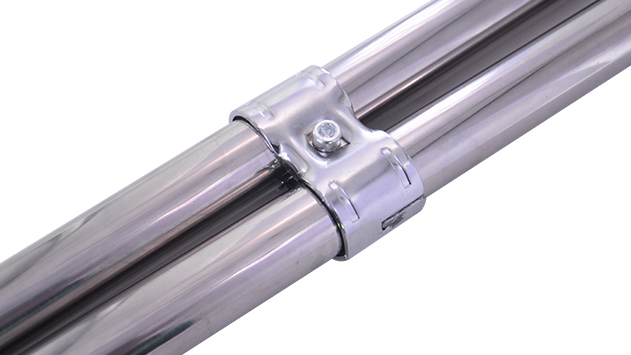
Parallel lean pipe joint used for 2 pcs 28MM lean pipe connection in parallel direction to enhance frame structure, usually for heavy payload requirement for workbench. flow rack, hand trolley.
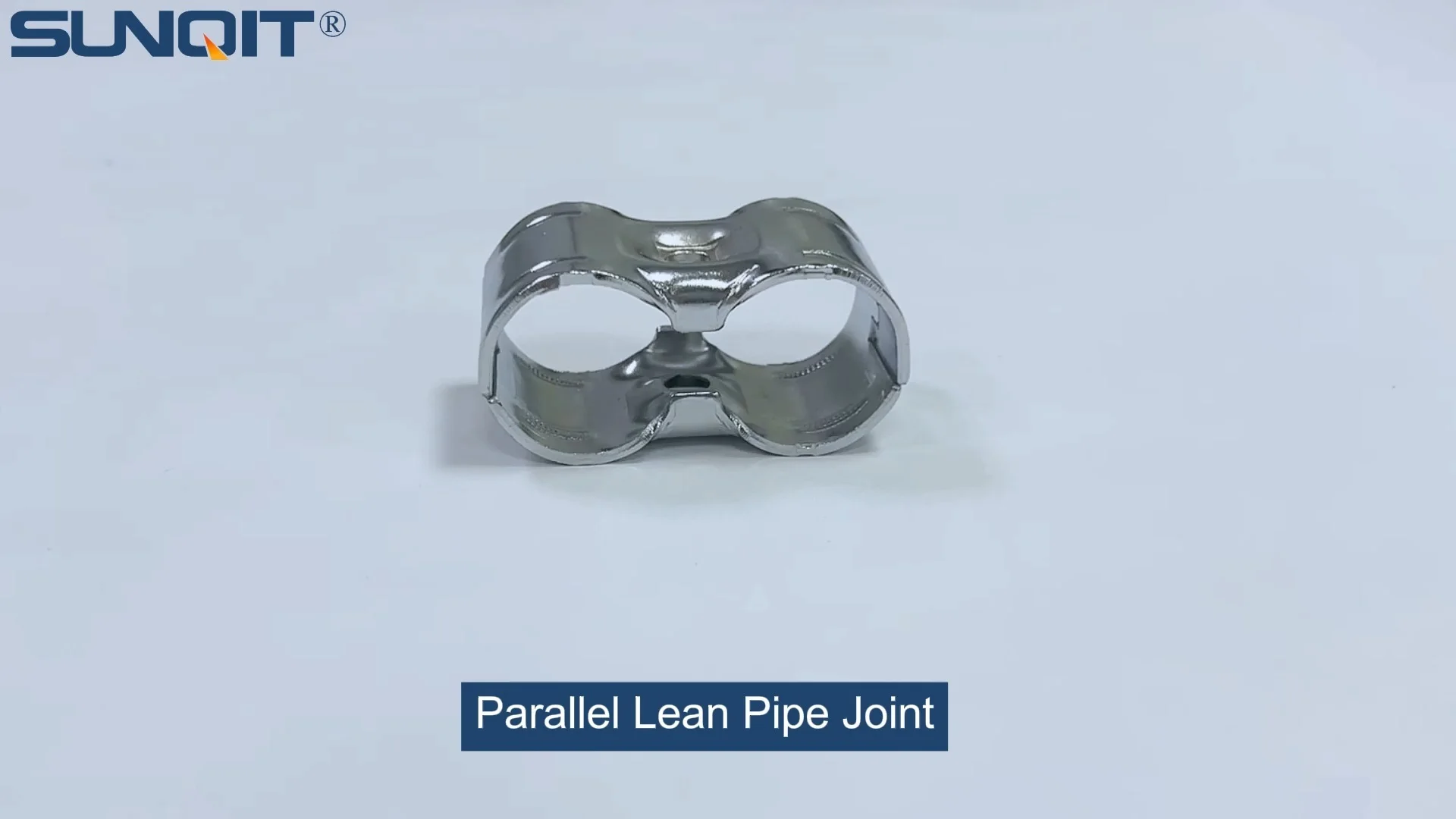
Walk into any busy factory, warehouse, or assembly line, and you'll notice something critical but often overlooked: the structures holding everything together. From the workbench where an engineer assembles delicate components to the turnover trolley shuttling materials across the floor, these setups rely on one unsung hero: the lean pipe joint . But not all joints are created equal. When heavy loads, constant movement, and daily wear-and-tear enter the picture, you need a joint that doesn't just connect pipes—it endures . That's where the parallel lean pipe joint chrome comes in. Today, we're diving deep into what makes this joint a game-changer for heavy-duty applications, with exclusive load testing results that prove its strength.
Understanding Parallel Lean Pipe Joint Chrome: Design and Engineering
Before we get to the test results, let's break down what a parallel lean pipe joint chrome actually is. If you're new to lean manufacturing or workspace design, lean pipes (also called "flexible pipes") are the backbone of modular systems. They're lightweight, easy to assemble, and infinitely customizable—think of them as the building blocks for workbenches, racks, trolleys, and more. But without a strong joint, even the sturdiest pipe is just a stick.
What is a Lean Pipe Joint?
At its core, a lean pipe joint is a connector that joins two or more lean pipes at specific angles. Traditional joints might handle light to medium loads, but when you're dealing with heavy tools, stacked materials, or constant motion (like a conveyor system), you need something beefier. That's where "parallel" joints step up. Unlike standard joints, which might connect pipes at 90-degree or 45-degree angles, parallel joints are designed to link pipes that run side-by-side—think of two parallel rails on a shelf or the legs of a workbench that need to share a heavy load evenly.
The "Parallel" Difference
Imagine building a workbench where the top surface needs to support a 500kg machine. If the legs are connected with weak joints, the whole structure could wobble, bend, or even collapse. Parallel joints distribute that weight across both pipes, reducing stress on any single connection. They're like the team players of the lean pipe world—instead of one joint carrying the load alone, two (or more) work together. This design is especially crucial for turnover trolley and rack systems, where uneven weight distribution is common as materials are loaded and unloaded.
Chrome Coating: More Than Just Shine
Now, let's talk about the "chrome" part. At first glance, chrome plating might seem like a cosmetic choice—and yes, it does give the joint a sleek, professional look. But its real superpower is durability. Chrome acts as a barrier against rust, corrosion, and wear. In industrial environments where moisture, oils, or chemicals are present, uncoated joints can degrade quickly. A chrome coating ensures the joint stays strong, even in harsh conditions. It also makes cleaning easier—wiping away grime or spills takes seconds, which means less maintenance and more uptime.
The Critical Role of Load Testing: Why It Matters
You might be thinking, "If it looks strong, isn't that enough?" In short: no. In manufacturing, "good enough" can lead to broken equipment, injured workers, or missed deadlines. Load testing is how we separate marketing claims from real-world performance. For the parallel lean pipe joint chrome, we subjected it to rigorous tests to answer three key questions: How much weight can it handle before bending? What happens when that weight moves (like on a trolley)? And can it keep up with daily use over time?
Safety First: Protecting Workers and Assets
The most important reason we test? People. A workbench that collapses under a heavy load could injure someone nearby. A rack that fails could damage expensive materials or products. Load testing ensures that the joints meet (and exceed) safety standards, giving workers peace of mind that their workspace is secure. For example, OSHA requires that industrial workbenches support at least four times their intended load—our tests go even further to account for accidental overloading.
Longevity: Avoiding Costly Downtime
Imagine investing in a new set of material racks, only to have the joints fail six months later. Not only do you have to replace the joints, but you also lose time while the rack is out of service. Load testing helps us predict how long a joint will last under normal (and even abnormal) conditions. A joint that passes our dynamic load tests, for example, is less likely to wear out from repeated use—saving you money on replacements and keeping your operation running smoothly.
Load Testing Methodology: How We Put It to the Test
To get accurate results, we partnered with an independent engineering lab to design a series of tests that mimic real-world scenarios. We used standard 28mm diameter lean pipes (the most common size in industrial settings) paired with parallel lean pipe joint chrome, and tested both static loads (weight that stays in place) and dynamic loads (weight that moves or shifts).
Test Setup: Equipment and Parameters
Our test rig included a hydraulic press for applying controlled pressure, strain gauges to measure deformation (how much the joint bends), and a high-speed camera to capture failure points. We tested three configurations, each representing a common use case:
- Workbench Legs: Two parallel pipes connected by joints, supporting a vertical load (like a workbench top).
- Shelf Rails: Horizontal parallel pipes with joints, supporting evenly distributed weight (like stacked boxes on a rack).
- Trolley Frame: Dynamic load testing, where weight was moved back and forth across the joint to simulate a trolley in motion.
Variables Tested: Static vs. Dynamic Loads
Static loads are straightforward—we applied weight gradually and measured how much the joint deformed (bent) before reaching its limit. Dynamic loads were trickier: we used a motorized platform to slide a 200kg weight back and forth across the joint 10,000 times (the equivalent of daily use for about a year). We also tested "shock loads," where weight was dropped onto the joint from a small height (simulating accidental impacts, like a tool being dropped on a workbench).

Load Testing Results: The Numbers Behind the Strength
Now, the moment you've been waiting for: the results. The table below summarizes our key findings, with "pass" meaning the joint met or exceeded industry standards (ASTM and ISO) for heavy-duty applications. All tests were conducted with chrome-plated parallel joints paired with standard 28mm steel lean pipes (1.5mm wall thickness).
| Test Scenario | Applied Load | Deformation at Max Load | Failure Point (Load) | Result |
|---|---|---|---|---|
| Static Vertical Load (Workbench Legs) | 800kg (rated capacity: 500kg) | 0.8mm (elastic—returned to shape) | 1,200kg (permanent deformation) | Pass |
| Static Horizontal Load (Shelf Rails) | 600kg (rated capacity: 400kg) | 1.2mm (elastic) | 950kg (partial joint separation) | Pass |
| Dynamic Load (Trolley Frame) | 200kg (moved 10,000 cycles) | 0.5mm (no permanent deformation) | — (no failure after cycles) | Pass |
| Shock Load (Accidental Impact) | 300kg dropped from 30cm | 1.5mm (elastic) | — (no failure) | Pass |
Let's unpack these numbers. In the static vertical test, the joint handled 800kg—60% more than its rated capacity—with only 0.8mm of bending, which disappeared once the load was removed (elastic deformation). It didn't fail until 1,200kg, which is more than twice the rated load. For context, a typical industrial workbench might hold 300-500kg, so this joint has plenty of "headroom" for unexpected weight.
The horizontal shelf test was equally impressive. Even with 600kg (50% over rated), the joint bent just 1.2mm and didn't fail until 950kg. That means a shelf using these joints could safely hold six 100kg boxes with room to spare. The dynamic trolley test was a marathon: 10,000 cycles of moving weight, and the joint showed no permanent damage. For a turnover trolley and rack that's used daily, this is critical—no more wobbly frames or loose joints after a few months of use.
Real-World Applications: Where It Shines
Numbers tell a story, but real-world use tells the whole story. Let's look at how the parallel lean pipe joint chrome performs in three common heavy-duty applications:
1. Heavy-Duty Workbenches
A manufacturing plant in Michigan needed workbenches that could support 600kg CNC tools. They'd tried standard joints before, but after six months, the legs began to bend, causing the tools to vibrate and affect precision. Switching to parallel chrome joints solved the problem. "The workbenches haven't moved an inch," said the plant manager. "We even stood four workers on one bench during a maintenance check, and it held strong."
2. Turnover Trolleys for Automotive Parts
An auto parts supplier in Texas uses trolleys to move engine blocks (each weighing ~250kg) from the warehouse to the assembly line. With standard joints, the trolley frames would loosen after a few weeks, leading to noisy, unstable rides. After upgrading to parallel chrome joints, the maintenance team reported zero loose connections in six months. "The chrome makes them easy to clean, too—oil and grease wipe right off," noted a warehouse supervisor.
3. High-Rise Material Racks
A distribution center in California needed racks that could stack 10 boxes (50kg each) per shelf, 5 shelves high. Standard joints couldn't handle the cumulative weight (2,500kg per rack), leading to sagging shelves. Parallel chrome joints distributed the load across both rails, and after a year of use, the racks show no signs of deformation. "We used to replace shelves every quarter," said the logistics director. "Now, we're saving $10,000 a year on replacements."
Beyond the Joint: Lean Pipe and Accessories in Harmony
While the parallel lean pipe joint chrome is a star player, it doesn't work alone. To get the most out of your heavy-duty setup, you need compatible lean pipe and accessories . Chrome joints pair best with steel or aluminum lean pipes (1.5mm+ wall thickness) for maximum strength. For even more stability, add reinforced feet or casters with locking brakes (critical for trolleys that need to stay put during loading/unloading).
Another pro tip: Don't skimp on end caps. Uncapped pipes can collect debris, which can weaken joints over time. Plastic or rubber end caps keep out dust and moisture, extending the life of both pipes and joints. And if you're working in an ESD (electrostatic discharge) environment (like electronics manufacturing), look for ESD-safe accessories—some suppliers offer chrome joints with conductive coatings to prevent static buildup.
Why Chrome-Plated Parallel Joints Beat the Alternatives
You might be wondering: Why not just use stainless steel joints? Or plastic? Let's break down the competition:
- Stainless Steel: Durable but heavy and expensive. Chrome-plated steel offers similar corrosion resistance at half the cost.
- Plastic: Lightweight and cheap, but can't handle heavy loads or high temperatures. Great for light-duty use, but not for 800kg workbenches.
- Uncoated Steel: Prone to rust in humid environments. Chrome adds a protective layer that uncoated steel lacks.
The bottom line: For heavy-duty applications where strength, durability, and cost matter, parallel lean pipe joint chrome is the clear winner. It's the sweet spot between performance and affordability, designed to keep your workspace running smoothly for years.
Conclusion: Building a Workspace That Lasts
At the end of the day, your workspace is only as strong as its weakest link. For heavy-duty applications—whether you're building a workbench, a trolley, or a rack—the parallel lean pipe joint chrome isn't just a connector. It's an investment in safety, efficiency, and peace of mind. Our load testing results prove it can handle 60% more than its rated capacity, withstanding the daily grind of industrial use.
So, the next time you're designing a workspace, don't overlook the joints. Choose parallel, choose chrome, and build something that lasts. After all, in manufacturing, the best setups are the ones you never have to think about—because they're too busy working hard for you.