- Company Articles
- Products and Technology
- Product knowledge
- Parallel Lean Pipe Joint Chrome for High-Volume Production Lines: Efficiency Boost

Parallel Lean Pipe Joint Chrome for High-Volume Production Lines: Efficiency Boost
Related Product
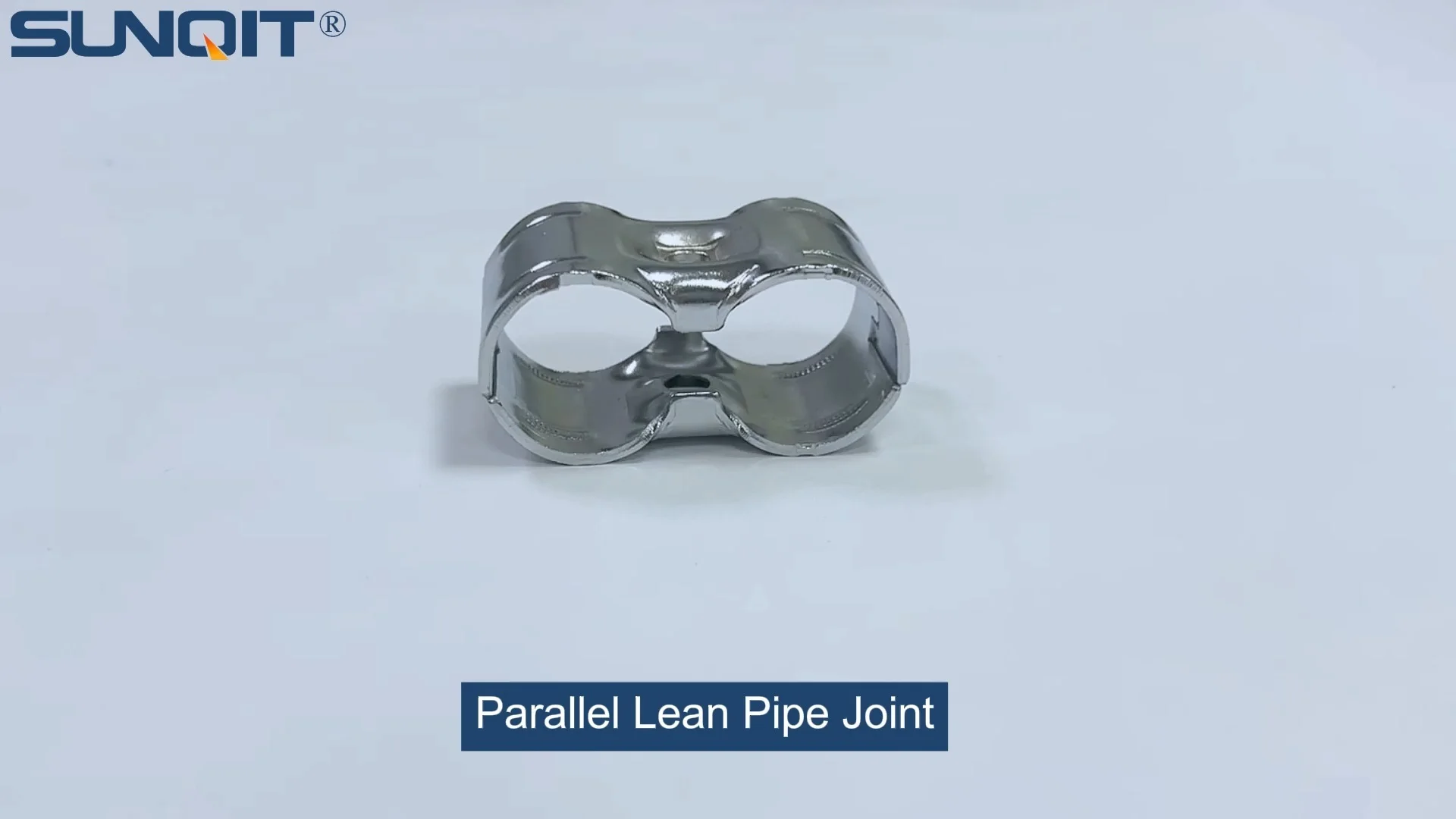
Parallel Lean Pipe Joint Chrome
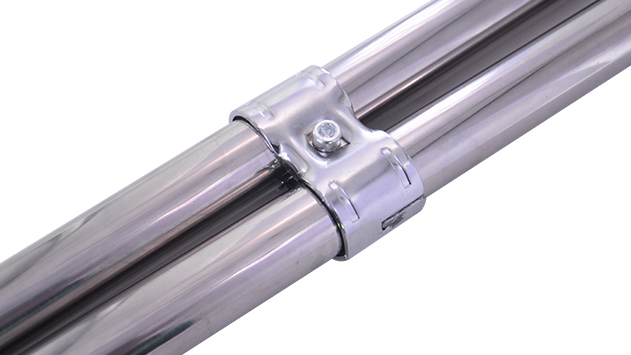
Parallel lean pipe joint used for 2 pcs 28MM lean pipe connection in parallel direction to enhance frame structure, usually for heavy payload requirement for workbench. flow rack, hand trolley.
Let's start with a scene many production managers know all too well: It's 9 a.m. on a Tuesday, and the factory floor is buzzing—though not in the way you'd hope. The third assembly line has ground to a halt again because the flow rack, crammed with components for the new smartphone model, is misaligned. Workers are stretching awkwardly to reach parts, and a few have already complained about back strain. Down the line, the workbench meant for final testing is too low for the new ergonomic standards, forcing operators to hunch over. By lunch, the team is already 50 units behind schedule, and the production manager is staring at a spreadsheet wondering how to explain the delays to upper management.
Sound familiar? In high-volume production, where seconds count and adaptability is everything, rigid, one-size-fits-all equipment isn't just inefficient—it's a bottleneck. But what if there was a component that could transform those clunky flow racks, static workbenches, and unyielding conveyors into flexible, responsive systems that keep up with your team's pace? Enter the parallel lean pipe joint chrome —a small but mighty tool that's quietly revolutionizing how factories build, adapt, and thrive in fast-moving environments.
What Exactly Is a Parallel Lean Pipe Joint Chrome?
At first glance, it might look like just another metal connector—but don't let its simplicity fool you. The parallel lean pipe joint chrome is a precision-engineered component designed to connect lean pipes (those sturdy, often powder-coated tubes that form the backbone of lean manufacturing setups) in parallel configurations. Unlike traditional welded joints or flimsy plastic connectors, this joint is built to balance two critical needs: stability and flexibility .
Let's break down its design. Made from high-grade steel, the joint features a chrome-plated finish that does more than just shine—it resists corrosion, scratches, and the daily wear and tear of a busy factory. The "parallel" aspect refers to its ability to link two pipes side-by-side, creating a sturdy frame that can support heavy loads (think stacks of circuit boards, automotive parts, or bulk materials) without bending or warping. But here's the kicker: despite its strength, it's completely tool-free to assemble and disassemble. No welding torches, no power drills, no waiting for a maintenance crew. Just a simple twist and lock mechanism that lets your team reconfigure a workstation, flow rack, or conveyor in minutes, not days.
Think of it as the Lego brick of manufacturing. Legos let kids build castles one day and spaceships the next; parallel lean pipe joints let your team build a flow rack for small parts in the morning and rework it into a turnover trolley by afternoon. And because it's compatible with standard lean pipes (both steel and aluminum), you don't have to scrap your existing setup to upgrade—just swap out old joints for these, and suddenly your entire system becomes adaptable.
Why It's a Game-Changer for Lean Systems
Lean manufacturing isn't just a buzzword—it's a philosophy centered on eliminating waste, streamlining processes, and empowering workers to drive continuous improvement. And in that philosophy, flexibility is king. A lean system that can't adapt to new products, shifting demand, or evolving ergonomic needs is like a race car with square wheels: it might look the part, but it's not going to win any races.
Here's where the parallel lean pipe joint chrome shines. Let's say your factory switches from producing 5-inch widgets to 7-inch gadgets. With traditional fixed infrastructure, you'd need to order new flow racks, rebuild workbenches, and possibly even reconfigure conveyors—costing time, money, and disrupting production. With these joints? Your team can adjust the height of workbench shelves, widen flow rack lanes, or angle conveyor tracks to accommodate the larger size in a fraction of the time. That's waste reduction in action—no more idle workers waiting for tools, no more overspending on custom equipment, and no more missed deadlines.
Another lean principle is "just-in-time" production, which relies on materials arriving exactly when they're needed—not too early (cluttering the floor) and not too late (stalling the line). The parallel joint helps here, too. By building modular flow racks with adjustable angles (using the joint to tilt shelves for gravity-fed material flow), components glide smoothly to workers exactly when they're ready to assemble. No more hunting for parts in a disorganized bin; no more excess inventory taking up space. It's lean, it's efficient, and it puts control back in the hands of the people on the floor.
The Top 5 Benefits for High-Volume Production Lines
Still not convinced this little joint can make a big difference? Let's dive into the tangible advantages it brings to high-volume environments, where every second and every dollar counts.
1. Lightning-Fast Setup and Reconfiguration
Traditional production line setups often involve welding, drilling, or hiring contractors to build custom workstations. That can take weeks. With parallel lean pipe joints, a team of two workers can assemble a basic flow rack in under an hour using just a hex key. Need to reconfigure it for a new product? Disassemble, rearrange the pipes, and lock the joints back in place—done in a morning. One electronics manufacturer we worked with reported cutting setup time for new lines by 75% after switching to these joints. That's not just faster—it's a game-changer for meeting tight product launch deadlines.
2. Durability That Stands Up to the Grind
High-volume lines mean heavy use. Components are constantly sliding, workers are leaning on workbenches, and carts are being rolled over joints day in and day out. The chrome-plated steel construction of these joints isn't just for show—it's built to handle abuse. We've seen joints in automotive plants that have been in use for 5+ years, still locking tightly and supporting loads of up to 200 lbs per linear foot. Compare that to plastic connectors, which crack under pressure, or welded joints, which rust and weaken over time. This durability translates to lower replacement costs and less downtime for repairs.
3. Ergonomic Flexibility for Happier, Healthier Teams
A production line is only as good as the people running it—and when workers are strained, sore, or frustrated, productivity plummets. The parallel joint lets you build workbenches and flow racks that adapt to people , not the other way around. Need a taller work surface for a 6'4" operator? Adjust the joint height. Want to angle a flow rack so parts slide to waist level instead of knee level? Tilt the pipes and lock the joint. One warehouse we consulted with saw a 30% drop in reported back injuries after reconfiguring their workstations with these joints. Happier workers mean less turnover, fewer sick days, and a team that's invested in keeping the line running smoothly.
4. Compatibility with Existing Systems
Upgrading equipment shouldn't mean starting from scratch. The parallel lean pipe joint chrome is designed to work with standard 28mm and 30mm lean pipes, which are already used in most factories. That means you can retrofit your current flow racks, workbenches, and even conveyors without replacing every pipe. For example, if you have a conveyor system that's fixed in place, adding these joints lets you attach side rails, tool holders, or diverters as needed—no need to buy a brand-new conveyor. It's a cost-effective way to breathe new life into old infrastructure.
5. Scalability for Growing Businesses
High-volume production isn't static—your needs today might be very different in six months. Maybe you're ramping up for the holiday season, or adding a new product line. The parallel joint grows with you. Need more storage? Add extra shelves to your flow rack using the same joints. Expanding to a new facility? Disassemble your current setup, truck the pipes and joints to the new location, and rebuild. It's modular, it's mobile, and it keeps you from sinking money into fixed infrastructure that becomes obsolete as your business evolves.

Real-World Applications: Where It Shines Brightest
Enough theory—let's look at how this joint transforms everyday production scenarios. From flow racks to workbenches, here are three common use cases where the parallel lean pipe joint chrome proves its worth.
Case 1: Flow Racks That Keep Up with Demand
Flow racks are the backbone of material handling, but fixed designs often lead to bottlenecks. Take a consumer goods plant that produces bottled sauces. Their old flow racks had fixed shelves at a 10-degree angle, which worked for large bottles but caused smaller condiment packets to get stuck. Workers had to stop and unjam packets 2-3 times per hour, costing precious minutes. After switching to parallel lean pipe joints, they adjusted the angle to 15 degrees for smaller packets and added roller tracks (using the joints to attach the tracks securely). Now, packets glide smoothly, unjams are down to zero, and the line has increased output by 12%.
Case 2: Workbenches That Adapt to Every Task
A medical device manufacturer was struggling with workbenches that were too narrow for their new line of surgical tools. The old benches were welded, so they couldn't be widened without replacing them entirely—costing $10,000 per bench. Instead, they used parallel lean pipe joints to add side extensions. By connecting additional pipes to the existing frame (using the joints to keep them parallel and stable), they widened each bench by 18 inches in under a day. Total cost? $300 per bench. Plus, when they need to switch back to smaller tools, they can remove the extensions and reuse the joints elsewhere. It's adaptability without the price tag.
Case 3: Conveyor Systems That Bend (Literally) to Your Needs
A furniture manufacturer had a straight conveyor line that worked for sofas but couldn't handle their new line of chairs, which required a 90-degree turn halfway through assembly. Rebuilding the conveyor would have taken a week and cost $20,000. Instead, they used parallel lean pipe joints to create a modular "elbow" section. By connecting short conveyor segments with the joints (adjusting angles with the joint's swivel feature), they built the turn in a day. Now, when they switch back to sofas, they just remove the elbow and rejoin the straight sections. No downtime, no huge expense—just smart, flexible engineering.
How It Stacks Up: Traditional Joints vs. Parallel Lean Pipe Joint Chrome
Still on the fence? Let's put it head-to-head with common alternatives. The table below compares the parallel lean pipe joint chrome to traditional welded joints and basic plastic connectors across key metrics.
| Feature | Traditional Welded Joints | Basic Plastic Connectors | Parallel Lean Pipe Joint Chrome |
|---|---|---|---|
| Installation Time | 2-4 hours (requires welding equipment) | 30 minutes (hand tools, but loose fit) | 10 minutes (hand tools, tight lock) |
| Reconfigurability | Impossible (permanent welds) | Possible, but joints weaken after 2-3 uses | Unlimited (can be reused 50+ times) |
| Load Capacity | High (but fixed) | Low (bends under >50 lbs) | High (supports up to 200 lbs/linear ft) |
| Durability | High (but prone to rust if uncoated) | Low (cracks, warps in heat/cold) | Very high (chrome resists rust, scratches, and impact) |
| Cost (Long-Term) | High (welding labor + replacement costs) | Medium (cheap upfront, but frequent replacements) | Low (one-time purchase, reusable) |
Pro Tips for Installation and Maintenance
Ready to start using parallel lean pipe joints? Here's how to get the most out of them, from setup to long-term care.
Installation Tips:
- Clean the pipes first: Dirt or grease on the pipe surface can prevent the joint from locking tightly. A quick wipe with a dry cloth ensures a snug fit.
- Don't overtighten: The joint's lock mechanism is designed to be hand-tight. Using a wrench can strip the threads—gentle pressure is all you need.
- Test for stability: After assembly, give the structure a gentle shake. If it wobbles, check that all joints are fully engaged. Sometimes a slight twist is all it takes to lock them in place.
Maintenance Tips:
- Wipe down chrome regularly: A damp cloth removes dust and grime, keeping the finish shiny and rust-free. For tough stains, use a mild soap—avoid abrasive cleaners that scratch the chrome.
- Lubricate the lock mechanism annually: A drop of machine oil on the joint's threads prevents sticking, making reconfiguration even easier.
- Inspect for wear: Check joints monthly for cracks or bent parts (though with steel construction, this is rare). replace any damaged joints immediately to avoid compromising the structure.
Choosing the Right Supplier: Why Quality Matters
Not all parallel lean pipe joints are created equal. To get the durability and performance you need, partner with a reputable lean pipe supplier that specializes in high-quality components. Look for suppliers who:
- Use high-grade steel and precision manufacturing (ask for material certifications).
- Offer a warranty (at least 1 year) on their joints.
- Provide technical support (help with design, installation questions).
- Stock a range of sizes and accessories (so you can get everything you need in one order).
Remember, this joint is the backbone of your system—skimping on quality now will cost you later in downtime, replacements, and lost productivity. Invest in a supplier who understands your needs and stands behind their products.
The Bottom Line: Small Joint, Big Impact
In the world of high-volume production, it's easy to focus on big-ticket items: new robots, state-of-the-art conveyors, fancy software. But sometimes, the most powerful innovations are the smallest ones. The parallel lean pipe joint chrome might not have the flash of a robotic arm, but it has something even more valuable: the ability to make your existing system smarter, faster, and more adaptable.
It's about giving your team the tools to solve problems on the fly, to reconfigure a line in hours instead of weeks, and to build a production floor that works with them, not against them. It's about turning rigid, frustrating setups into flexible, empowering workspaces where efficiency isn't just a goal—it's a reality.
So, the next time you're staring at a bottleneck, a misaligned flow rack, or a workbench that just doesn't fit, remember: the solution might be smaller than you think. It might just be a little chrome joint, ready to unlock a whole new level of efficiency.