- Company Articles
- Products and Technology
- Product knowledge
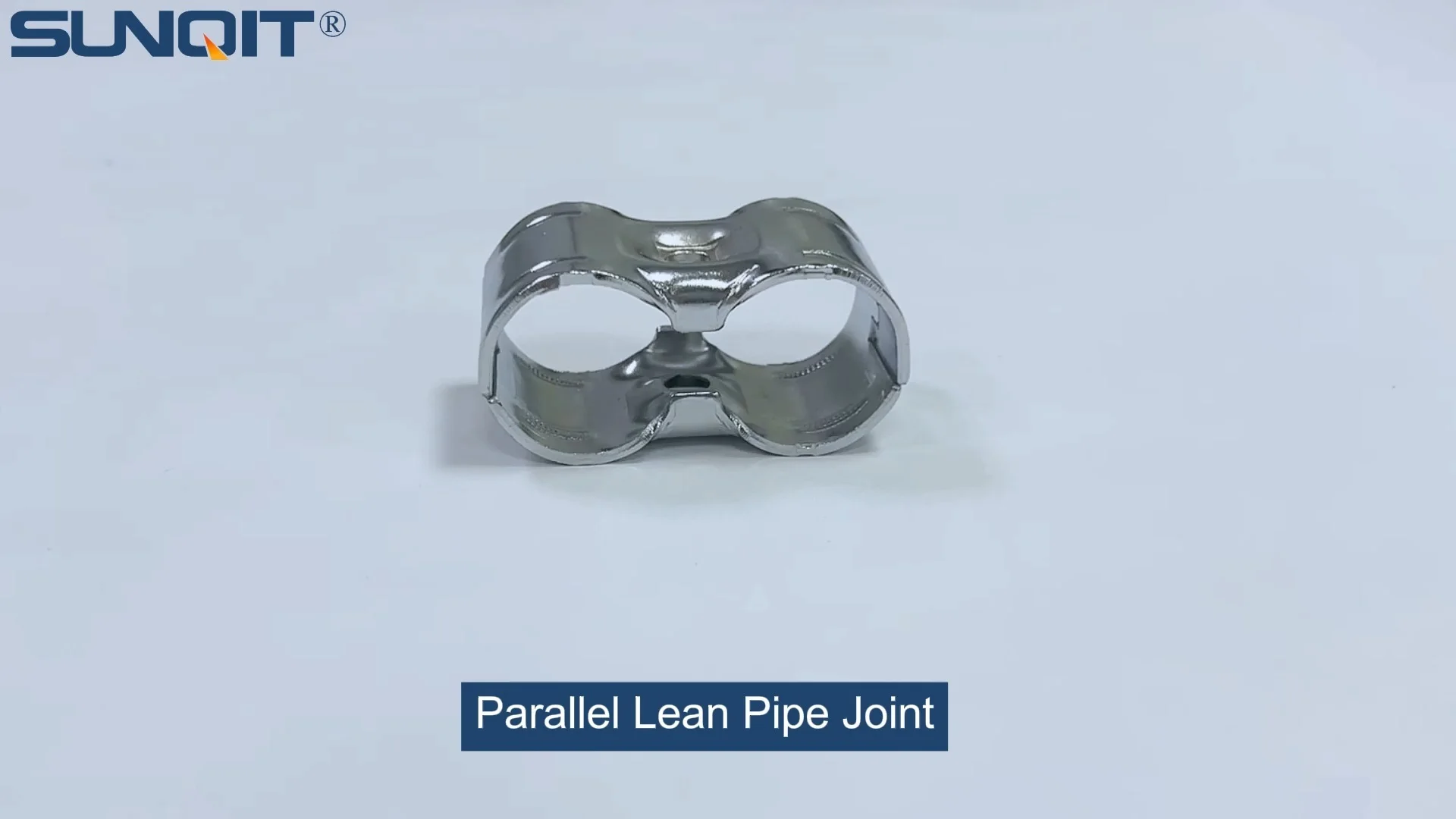
- Parallel Lean Pipe Joint Chrome for Lean Kaizen: Continuous Improvement Support

Parallel Lean Pipe Joint Chrome for Lean Kaizen: Continuous Improvement Support
Related Product
Parallel Lean Pipe Joint Chrome
Parallel lean pipe joint used for 2 pcs 28MM lean pipe connection in parallel direction to enhance frame structure, usually for heavy payload requirement for workbench. flow rack, hand trolley.
Imagine stepping onto a manufacturing floor where every tool, every workstation, and every process feels like it's been fine-tuned by a team that cares—where bottlenecks are rare, workers move with purpose, and even small adjustments lead to noticeable gains in efficiency. This isn't just a dream scenario; it's the result of
Lean Kaizen
in action. At the heart of this transformation? Often, it's the smallest components that make the biggest difference. Today, we're shining a light on one such unsung hero: the
Parallel Lean Pipe Joint Chrome
. It may not grab headlines, but for teams committed to continuous improvement, this unassuming joint is a game-changer. Let's dive into how it supports Lean systems, elevates workbenches, streamlines flow racks, and becomes the backbone of a culture that never stops getting better.
The Soul of Lean Kaizen: Why Small Components Drive Big Change
Lean Kaizen isn't just a methodology—it's a mindset. It's about asking, "How can we make this 1% better today?" Whether it's reducing waste in material handling, cutting setup time on a production line, or making a workstation more ergonomic, every tweak adds up. But here's the thing: you can't build a culture of continuous improvement with rigid, one-size-fits-all tools. That's where flexibility becomes non-negotiable.
Think about a typical
lean pipe workbench
. If it's bolted together with fixed brackets, reconfiguring it for a new product or a taller worker means drilling new holes, buying new parts, or even replacing the entire bench. That's not Kaizen—that's waste. Now, imagine a workbench built with modular components, where joints can be adjusted, pipes can be repositioned, and layouts can evolve in minutes. Suddenly, "1% better" isn't just a (slogan)—it's doable.
This is where the Parallel Lean Pipe Joint Chrome steps in. It's not just a connector; it's a enabler. By linking lean pipes, accessories, and structures with precision and adaptability, it turns static workspaces into dynamic ecosystems that grow with your team's needs. Let's break down why this matters.
Meet the Parallel Lean Pipe Joint Chrome: More Than Just a "Connector"
What Is It, Exactly?
At first glance, the Parallel Lean Pipe Joint Chrome looks simple: a metal joint with threaded holes, designed to connect two parallel lean pipes at a fixed distance. But don't let its simplicity fool you. Chrome-plated for durability, it's engineered to handle the daily grind of manufacturing floors—scratches, spills, and the constant wear of being adjusted and re-adjusted.
Unlike plastic joints that crack under heavy loads or uncoated steel that rusts in humid environments, the chrome finish adds a layer of protection. It resists corrosion, wipes clean easily, and stands up to the oils, coolants, and debris common in production settings. For teams that can't afford downtime, this longevity isn't a "nice-to-have"—it's critical.
The "Parallel" Advantage: Stability Meets Flexibility
What makes this joint "parallel," and why does it matter? Traditional lean pipe joints often connect pipes at angles (90°, 45°, etc.), which is great for building frames or corners. But when you need two pipes to run side-by-side—say, as the rails of a
flow rack
or the legs of a workbench—parallel joints ensure they stay perfectly aligned. No more wobbly shelves, no more uneven roller tracks, no more frustration when parts don't slide smoothly.
Here's a real-world example: A electronics assembly team was struggling with a flow rack where circuit boards kept getting stuck. The issue? The rack's side rails, held by generic clamps, had slowly drifted out of parallel, creating a "speed bump" in the roller track. After switching to Parallel Lean Pipe Joint Chrome, the rails stayed aligned for months. The result? A 20% reduction in time spent unjamming boards, and a team that could focus on assembling products instead of fixing equipment.
Building Better Lean Systems: How the Joint Integrates with Your Workspace
From Workbenches to Flow Racks: A Versatile Workhorse
The beauty of the Parallel Lean Pipe Joint Chrome is its versatility. It doesn't just work with one type of structure—it's the glue that holds entire
lean systems
together. Let's look at three common applications where it shines:
**1. Lean Pipe Workbenches: Ergonomics on Demand**
A workbench isn't just a table—it's where your team spends 8+ hours a day. If it's too low, too high, or cluttered, productivity and morale suffer. With parallel joints, you can adjust the height of the bench legs, add side shelves for tools, or mount a monitor arm—all without replacing the entire structure. For example, a automotive parts manufacturer used these joints to raise a workbench by 6 inches for taller workers, reducing back strain and cutting errors by 15% in just two weeks.
**2. Flow Racks: Smooth Material Flow, No Exceptions**
Flow racks rely on gravity to move materials from "in" to "out," but that only works if the roller tracks are perfectly level and parallel. Parallel joints ensure the rack's side rails stay spaced evenly, so bins glide smoothly instead of jamming. A food packaging plant once reported that after upgrading to chrome parallel joints, their flow rack downtime dropped by 30%—no more stopping production to fix misaligned rails.
**3. Turnover Trolleys: Durability for the Long Haul**
Trolleys take a beating—loaded with heavy parts, pushed across uneven floors, bumped into walls. Parallel joints add rigidity to the trolley's frame, preventing pipes from bending or twisting under load. A logistics team at a warehouse noted that trolleys built with these joints lasted 3x longer than those with plastic connectors, slashing replacement costs by 60% over two years.
A Table: Comparing Joints for Lean Systems
| Joint Type | Best For | Durability | Adjustability | Parallel Lean Pipe Joint Chrome Edge |
|---|---|---|---|---|
| Plastic Snap-On Joints | Light-duty shelving, temporary structures | Low (prone to cracking under load) | Medium (snaps can loosen over time) | Chrome resists wear; metal construction handles heavy loads |
| Uncoated Steel Angled Joints | Fixed frames, corners | Medium (rusts in humid environments) | Low (welded or bolted, hard to reposition) | Chrome finish prevents rust; designed for parallel alignment |
| Aluminum Adjustable Joints | Lightweight, corrosion-sensitive areas | Medium (softer metal dents easily) | High (tool-free adjustments) | Steel core offers higher load capacity for industrial use |
| Parallel Lean Pipe Joint Chrome | Workbenches, flow racks, trolleys, heavy-duty systems | High (chrome-plated steel resists scratches/corrosion) | High (reusable, tool-adjustable, maintains alignment) | Specialized for parallel pipes; balances flexibility and stability |
Why Chrome? The Finish That Adds Value
You might be wondering: Why chrome? Why not paint, powder-coat, or leave the steel bare? The answer lies in the unique demands of Lean environments.
First, chrome plating is
hard
. Harder than paint, harder than most powder coats, and way harder than bare steel. That means when a forklift bumps a flow rack, or a tool drops on a workbench leg, the chrome finish won't chip or scratch easily. Less damage = less downtime = more time for Kaizen.
Second, chrome is
non-porous
. In environments where oils, coolants, or cleaning agents are common (think automotive or electronics manufacturing), porous finishes trap liquids, leading to rust or bacterial growth. Chrome wipes clean with a cloth, making it ideal for maintaining a hygienic workspace—critical for industries like food processing or medical device assembly.
Third, it's
low-maintenance
. Unlike painted joints that fade or chip, chrome retains its finish for years with minimal care. A quick wipe with a damp cloth is usually all it takes to keep it looking (and performing) like new. For busy teams, this means one less thing to worry about.
Real Stories: How Teams Use Parallel Lean Pipe Joint Chrome to Drive Kaizen
Case Study 1: A Electronics Plant's Workbench Revolution
Let's head to a mid-sized electronics manufacturer that assembles circuit boards for smartphones. Their challenge? High turnover on the assembly line, partly due to ergonomic issues—workers complained that the fixed-height workbenches caused neck and shoulder strain. The team wanted to adjust bench heights for different operators but didn't want to replace 20+ workbenches.
Enter the Parallel Lean Pipe Joint Chrome. Working with their
lean pipe supplier
, they retrofitted existing benches with adjustable legs using these joints. Now, each worker could tweak their bench height in 2 minutes using a hex key. The result? Within a month, worker complaints dropped by 70%, and assembly speed increased by 12% as employees moved more comfortably. "It sounds small, but being able to set my bench to my height made me feel like the company cared," said one operator. "That's when I stopped looking for other jobs."
Case Study 2: A Automotive Supplier's Flow Rack Makeover
"We used to spend 2 hours a day unjamming parts on our flow racks. Now? Maybe 10 minutes. The parallel joints keep the rails straight, so parts just… flow." — Maintenance Supervisor, Automotive Parts Plant
This supplier produces plastic trim pieces for car interiors, and their flow racks were a constant headache. Parts would get stuck between misaligned rollers, causing backups and forcing workers to stop production to fix the jam. Their old joints were plastic, and over time, the weight of the parts had bent the rails out of parallel.
They switched to Parallel Lean Pipe Joint Chrome, reinforced the rack frames, and added new roller tracks. The difference was immediate. Not only did jams decrease by 90%, but the racks could now hold 30% more parts without bending, reducing the number of trips to restock materials. "We didn't just fix a problem—we made the whole line more resilient," the supervisor noted. "That's Kaizen in action."
Choosing the Right Partner: Why Your Lean Pipe Supplier Matters
You could have the best joint design in the world, but if it's poorly made, it won't deliver. That's why partnering with a reliable
lean pipe supplier
is just as important as choosing the joint itself. Here's what to look for:
**1. Quality Materials:** Not all chrome plating is created equal. A good supplier uses high-grade steel for the joint core and applies a thick, uniform chrome layer (at least 0.0005 inches) to ensure corrosion resistance. Ask for test reports—reputable suppliers will share data on load capacity, salt spray resistance, and durability.
**2. Consistency:** In Lean systems, precision matters. If one joint is slightly thicker than another, your parallel pipes will be off-kilter, leading to wobbly structures. Look for suppliers with strict quality control—machined parts, tight tolerances, and batch testing to ensure every joint performs the same.
**3. Support for Customization:** Kaizen often means thinking outside the box. Maybe you need a joint with extra holes for mounting tools, or a longer shaft for wider pipes. A good supplier will work with you to create custom solutions, not just push off-the-shelf products.
**4. Inventory Reliability:** There's nothing worse than halting a Kaizen project because you're waiting on parts. Choose a supplier with a robust inventory and fast shipping—preferably with local warehouses to minimize lead times.
The Future of Lean: Adaptability in a Fast-Changing World
Industries are evolving faster than ever—shorter product cycles, smaller batch sizes, and the rise of customization are the new norm. In this environment, rigid systems get left behind. Lean Kaizen isn't just about "improving" anymore; it's about "adapting."
The Parallel Lean Pipe Joint Chrome fits perfectly into this future. It's modular, so you can disassemble a flow rack today and rebuild it as a trolley tomorrow. It's durable, so it grows with your business instead of being replaced. And it's affordable, so even small teams can invest in continuous improvement without breaking the bank.
Imagine a world where your workspace is as flexible as your ideas—a world where "Can we do this?" is always met with "Yes, and here's how." That's the world this joint helps build.
Final Thoughts: Small Components, Big Impact
Lean Kaizen is about the belief that no detail is too small to improve. The Parallel Lean Pipe Joint Chrome embodies that belief. It's not flashy, but it's reliable. It's not complicated, but it's versatile. And for teams that refuse to settle for "good enough," it's the quiet partner that turns "we can try" into "we did it."
So the next time you walk your production floor, take a closer look at the joints holding your workbenches, flow racks, and trolleys together. Are they holding you back, or propelling you forward? For those committed to continuous improvement, the answer is clear: choose joints that grow with you. Choose the Parallel Lean Pipe Joint Chrome. Your team, your products, and your bottom line will thank you.