- Company Articles
- Products and Technology
- Product knowledge
- Parallel Lean Pipe Joint Chrome for Mobile Workstations: Stability & Mobility

Parallel Lean Pipe Joint Chrome for Mobile Workstations: Stability & Mobility
Related Product
Parallel Lean Pipe Joint Chrome
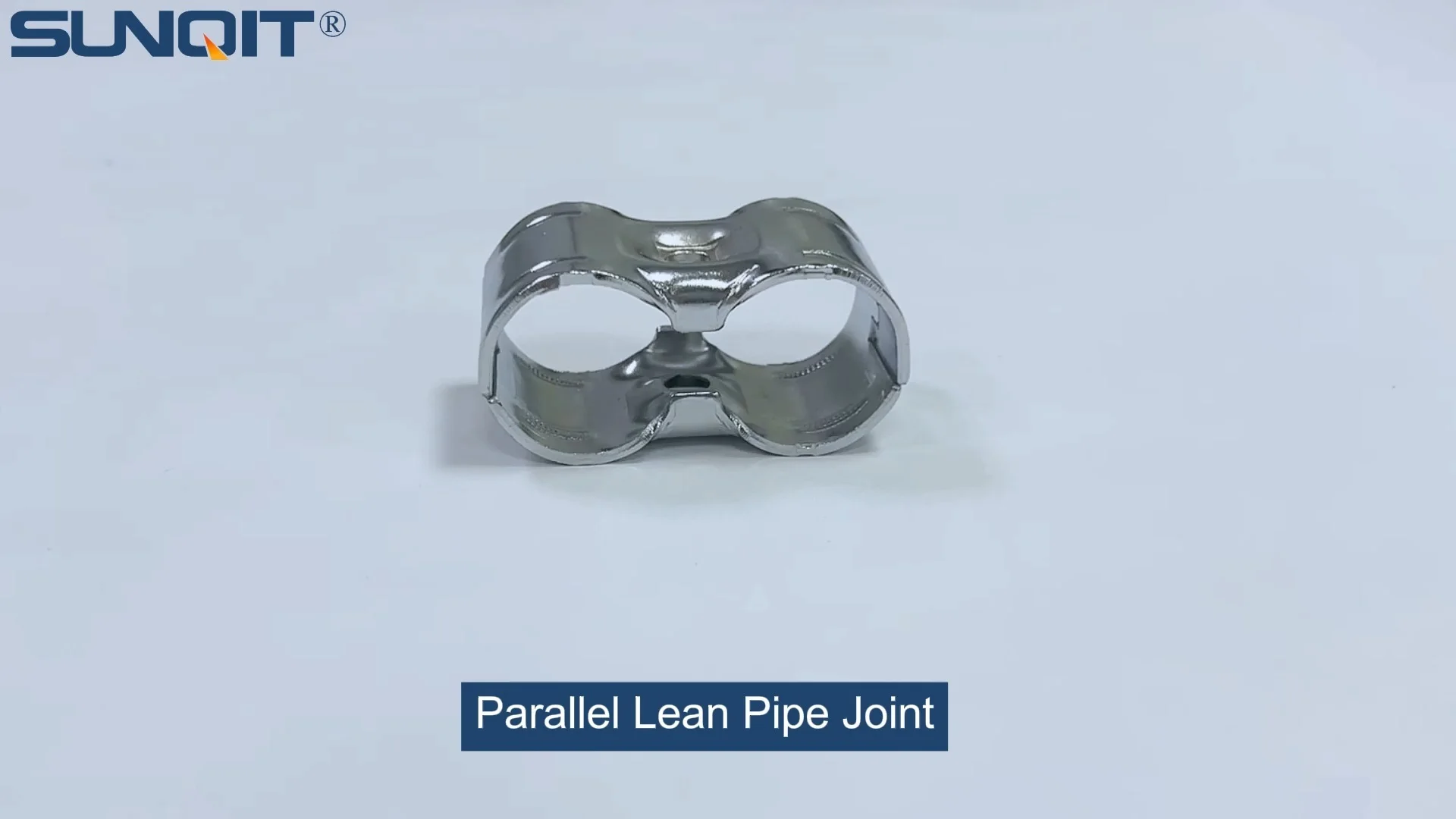
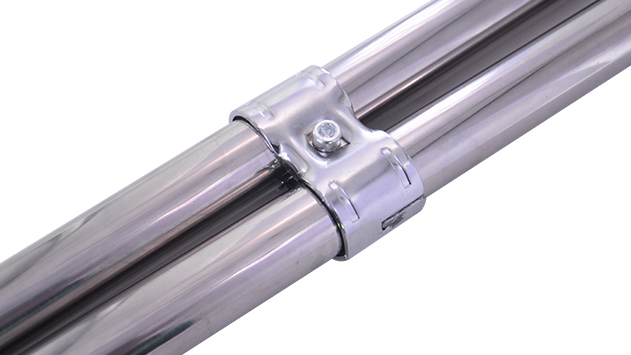
Parallel lean pipe joint used for 2 pcs 28MM lean pipe connection in parallel direction to enhance frame structure, usually for heavy payload requirement for workbench. flow rack, hand trolley.
The Frustration of Unreliable Workstations: A Common Factory Reality
On a typical Tuesday morning at Apex Assembly Solutions, a mid-sized electronics manufacturer in Ohio, Carlos, the production manager, stands at the edge of the shop floor with a clipboard in hand. His brow furrows as he watches a team of assemblers struggle with a mobile workbench. The bench, loaded with circuit boards and soldering tools, lurches unevenly as two workers push it toward the testing area. One caster wheel locks suddenly, causing the entire frame to tilt—just enough for a small box of resistors to slide off the side and scatter across the concrete. "That's the fourth spill this week," Carlos mutters, jotting a note. "And we're already 20 minutes behind schedule."
It's a scenario repeated in factories, warehouses, and workshops worldwide: workstations that promise mobility but deliver instability, frames that wobble under load, and joints that loosen after weeks of use. For managers like Carlos, the cost of these inefficiencies adds up—lost parts, wasted labor, and frustrated employees. But what if there was a component that could transform these unsteady workbenches into tools of precision and reliability? Enter the parallel lean pipe joint chrome, a small but mighty innovation that's quietly revolutionizing how mobile workstations perform.
What Is a Parallel Lean Pipe Joint Chrome, Anyway?
At first glance, a parallel lean pipe joint chrome might seem like just another metal connector. But look closer, and you'll see why it's become a favorite among manufacturers and facility managers. Made from high-grade steel with a chrome-plated finish, this joint is designed to connect lean pipes—those versatile, modular tubes used to build everything from workbenches to flow racks—in a parallel configuration. Unlike standard single-point joints that rely on a single bolt or clamp, the parallel design features two connection points spaced evenly apart, creating a stable "base" for joining pipes.
The chrome plating isn't just for show, either. It adds a layer of corrosion resistance, making the joint ideal for environments where moisture or chemicals are present—think automotive plants or food processing facilities. And because the joint is precision-cast, it forms a tight, rattle-free connection with lean pipes, eliminating the "play" that causes wobbling. For Carlos and his team at Apex, this means a workbench that stays steady even when loaded with 300 pounds of equipment, and wheels that roll smoothly without sudden jolts.
Stability: The Backbone of Efficient Workstations
Stability is the unsung hero of any productive workspace. A wobbly workbench doesn't just risk spills—it also forces workers to slow down, adjust their movements, and second-guess their setup. The parallel lean pipe joint chrome addresses this by focusing on three key factors: load distribution, connection integrity, and material durability.
First, load distribution. The parallel design of the joint ensures that weight is spread evenly across two points rather than.,,——,.,,,,.Apex,500,——30%.
Second, connection integrity. Anyone who's assembled furniture knows the frustration of a bolt that loosens over time. In industrial settings, this problem is magnified by constant vibration from machinery, frequent movement of workstations, and temperature fluctuations. The parallel lean pipe joint chrome fights back with a locking mechanism that stays tight even under stress. Its threaded bolts and precision-machined sockets create a friction fit that resists loosening, meaning fewer trips with a wrench to retighten joints. After six months of daily use at Apex, Carlos's team reported zero instances of loose joints—a stark contrast to the monthly tightening sessions required with their old workbenches.
Finally, material durability. Chrome-plated steel isn't just resistant to corrosion; it's also tough enough to withstand the bumps and scrapes of daily industrial life. When a forklift accidentally brushes against a workstation frame (a common mishap in busy facilities), the chrome finish resists dents and scratches, preventing rust from taking hold. For facilities like food processing plants, where cleanliness is critical, this durability means less downtime for repairs and a longer lifespan for equipment—saving money in the long run.

Mobility: When Stability Meets Smooth Movement
Stability is only half the equation. A workstation that stays rock-solid but can't be moved is useless in dynamic environments where production lines shift, layouts change, and tasks evolve. This is where the parallel lean pipe joint chrome truly shines: it doesn't just stabilize the frame—it enhances mobility by working seamlessly with caster wheels, the unsung heroes of moving workstations.
Caster wheels are the "feet" of mobile workstations, and their performance depends heavily on the stability of the frame they're attached to. A wobbly frame puts uneven pressure on casters, causing them to bind, lock, or wear unevenly. The parallel lean pipe joint chrome solves this by ensuring the frame remains rigid, so weight is distributed evenly across all four casters. At Apex, Carlos upgraded to workbenches fitted with these joints and high-quality swivel casters with brake locks. The result? Workers can now move a fully loaded workstation with one hand, and the casters roll in straight lines without veering off course. "It's like night and day," says Maria, an assembler with five years of experience. "Before, I needed help just to move the bench a few feet. Now, I can position it exactly where I need it in seconds."
But mobility isn't just about moving forward and backward—it's about adaptability. Many modern facilities use agile manufacturing principles, where workstations are reconfigured daily to meet changing production needs. The parallel lean pipe joint chrome supports this flexibility by allowing quick disassembly and reassembly. Unlike welded frames or permanent bolted joints, these chrome joints can be loosened, adjusted, and retightened in minutes, letting teams modify workbench heights, add shelves, or reconfigure layouts on the fly. For Carlos, this adaptability was a game-changer during a recent product launch, when his team needed to retool three workstations overnight to accommodate a new circuit board design. "With the old setup, that would have taken a full day and a crew of maintenance guys," he says. "With the parallel joints, two assemblers had it done by morning."
Beyond Workbenches: Real-World Applications
While mobile workbenches are a common use case, the parallel lean pipe joint chrome's benefits extend far beyond assembly lines. Let's take a look at how it's making an impact in other critical areas of industrial operations:
Flow Racks: In warehouses, flow racks use gravity to move products from the loading end to the picking end. A stable frame is essential here—any wobble can cause products to jam or slide off prematurely. By using parallel lean pipe joint chrome to construct flow rack frames, facilities like Regional Distribution Center (RDC) Logistics have reduced product jams by 45%. The joints' even weight distribution ensures the racks stay level, so boxes and totes glide smoothly along roller tracks.
Turnover Trolleys: These wheeled carts are workhorses in manufacturing, used to transport raw materials and finished goods between stations. A trolley with a wobbly frame risks damaging delicate parts or spilling liquids. At Precision Plastics, a medical device manufacturer, turnover trolleys fitted with parallel lean pipe joint chrome now carry sensitive injection molds without a single scratch. "The difference is in the corners," says Raj, the logistics coordinator. "When turning, the old trolleys would sway, but these stay steady—even at full speed."
ESD Workstations: In electronics manufacturing, electrostatic discharge (ESD) workstations protect sensitive components from static damage. These workstations require a stable, grounded frame to maintain ESD protection. The parallel lean pipe joint chrome's conductive properties (thanks to its steel core) help dissipate static electricity, making it a safe choice for ESD environments. At Apex, the team now uses these joints in their ESD workbenches, and static-related component failures have dropped by 25%.
How Does It Stack Up? A Comparison of Joint Types
To truly appreciate the value of the parallel lean pipe joint chrome, it helps to see how it compares to other common joint types used in workstation construction. Below is a breakdown of key factors like stability, mobility, durability, and cost:
| Joint Type | Stability (1-5) | Mobility Compatibility | Durability (Expected Lifespan) | Cost (Relative) |
|---|---|---|---|---|
| Parallel Lean Pipe Joint Chrome | 5 | Excellent (works with all caster types) | 10-15 years (chrome resists corrosion) | Moderate (higher upfront, lower long-term cost) |
| Standard Lean Pipe Joint (Unplated Steel) | 3 | Good (but prone to loosening) | 5-7 years (prone to rust in humid environments) | Low (cheaper upfront, higher replacement cost) |
| Aluminum Profile Joint | 4 | Fair (aluminum is lighter but less rigid) | 8-10 years (resists corrosion, but less impact-resistant) | High (expensive materials and machining) |
| Plastic Composite Joint | 2 | Poor (bends under heavy loads) | 2-3 years (not suitable for industrial use) | Very Low (disposable, not cost-effective long-term) |
As the table shows, the parallel lean pipe joint chrome stands out for its balance of stability, mobility, and durability. While it may cost more upfront than standard steel joints, its longer lifespan and reduced maintenance needs make it a smarter investment for facilities looking to minimize downtime.
Installation and Maintenance: Keeping It Simple
One of the biggest advantages of the parallel lean pipe joint chrome is its ease of use. Unlike welded joints or complex aluminum profile systems, these chrome joints require no special tools or training to install. A basic wrench is all you need to tighten the bolts and secure the joint to the lean pipes. For Carlos's team at Apex, this meant a quick transition—within a day, they were assembling new workstations without the need for a dedicated maintenance crew.
Maintenance is equally straightforward. The chrome finish resists dirt and grime, so a quick wipe with a damp cloth is usually enough to keep joints clean. For facilities with heavy debris (like woodworking shops or foundries), an occasional application of lubricant to the threads ensures smooth tightening and loosening. And because the joints are designed to be reusable, they can be disassembled and repurposed when workstations are reconfigured—reducing waste and saving money on replacement parts.
The Bottom Line: More Than a Joint—A Productivity Tool
Back at Apex Assembly Solutions, six months have passed since Carlos swapped out the old workbench joints for parallel lean pipe joint chrome. The difference is undeniable. Spills are a thing of the past, workstations glide across the floor with ease, and the team has shaved 15 minutes off their daily assembly time. "It's not just about the joints," Carlos says, watching a worker wheel a fully loaded bench to the testing area with one hand. "It's about how those joints make the whole operation run smoother. Our employees are happier, our output is up, and I'm finally able to focus on improving processes instead of fixing problems."
In the world of manufacturing and warehousing, where every detail matters, the parallel lean pipe joint chrome proves that even the smallest components can have a big impact. It's a reminder that stability and mobility don't have to be opposing forces—with the right design, they can work together to create workstations that are not just tools, but partners in productivity. For managers like Carlos, that's more than a win—it's a transformation.