- Company Articles
- Products and Technology
- Solution
- Parallel Lean Pipe Joint Chrome in 3C Manufacturing: Assembly Line Solutions

Parallel Lean Pipe Joint Chrome in 3C Manufacturing: Assembly Line Solutions
Related Product
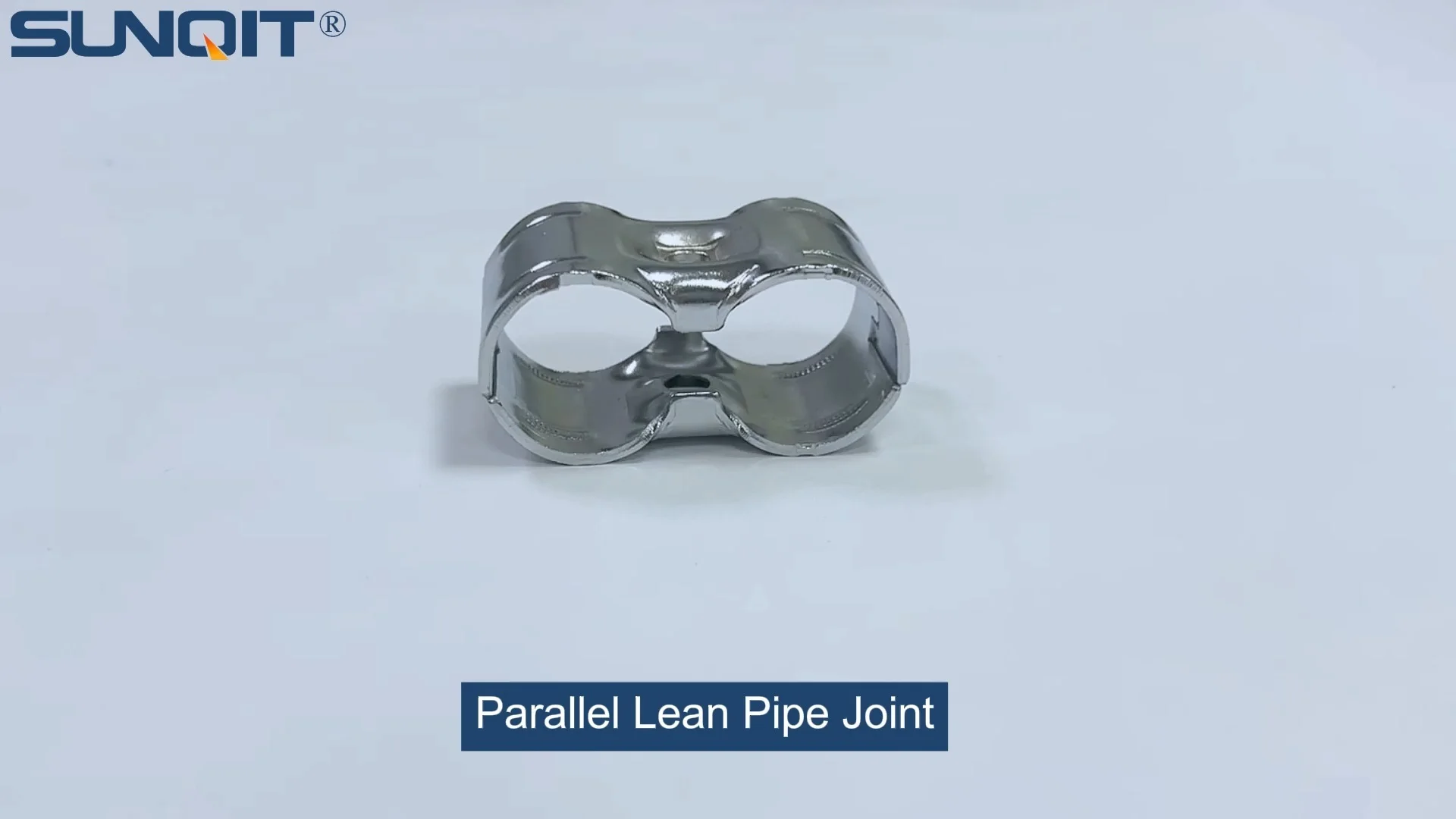
Parallel Lean Pipe Joint Chrome
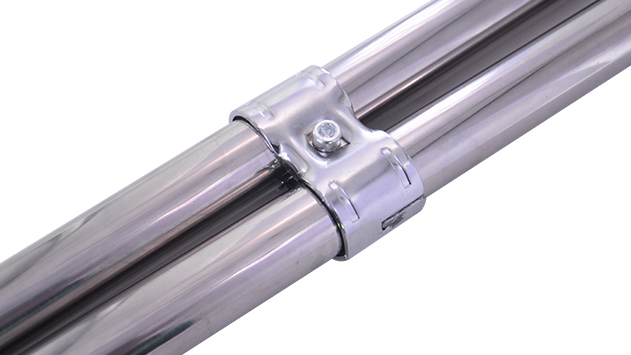
Parallel lean pipe joint used for 2 pcs 28MM lean pipe connection in parallel direction to enhance frame structure, usually for heavy payload requirement for workbench. flow rack, hand trolley.
In the fast-paced world of 3C manufacturing—where computers, communication devices, and consumer electronics fly off production lines at breakneck speed—every second counts. A single bottleneck, a wobbly workbench, or a stuck conveyor can disrupt timelines, delay shipments, and eat into profit margins. That's why forward-thinking factories are turning to lean systems, where efficiency isn't just a buzzword but a way of life. And at the heart of these systems? Components like the parallel lean pipe joint chrome—a small but mighty part that keeps assembly lines running smoothly, flexibly, and reliably.
This article dives into how parallel lean pipe joint chrome transforms 3C assembly lines, from workbenches to flow racks, and why it's become a go-to choice for manufacturers aiming to stay ahead in a competitive industry. We'll explore its design, benefits, real-world applications, and how it pairs with other components like aluminum profiles, roller tracks, and casters to create a seamless, waste-free workflow.
The 3C Manufacturing Challenge: Speed, Precision, and Adaptability
3C products—think smartphones, laptops, smartwatches—are defined by their short lifecycles. Today's top-selling model is tomorrow's outdated tech, which means factories must constantly retool to produce new designs. Add to that the demand for precision (a single misaligned component can render a device useless) and the need to scale production up or down quickly, and you've got a manufacturing puzzle that's hard to solve with rigid, one-size-fits-all equipment.
Traditional assembly lines, built with fixed steel structures, struggle here. They're expensive to modify, slow to reconfigure, and often lead to wasted space or inefficient workflows. Workers end up walking extra steps to retrieve parts, tools get misplaced, and retooling for a new product can take days—time that 3C manufacturers simply don't have. This is where lean manufacturing steps in, focusing on minimizing waste (muda) and maximizing value. And lean systems rely on modular, adaptable components that can be easily adjusted, expanded, or repurposed.
Lean Systems: The Backbone of Modern 3C Factories
Lean manufacturing isn't just about cutting costs—it's about creating systems that respond to change. At its core, a lean system is built on flexibility: the ability to rearrange workstations, adjust material flow, and adapt to new product specs without overhauling the entire line. This is where lean pipes, joints, and accessories come into play. Unlike fixed steel, lean pipes (often made of steel, aluminum, or stainless steel) are lightweight, modular, and compatible with a range of joints and connectors, making them ideal for building customizable workbenches, flow racks, conveyors, and trolleys.
But lean systems are only as strong as their weakest link. A joint that slips, a connector that rusts, or a component that can't handle heavy loads can bring the entire line to a halt. That's why choosing the right joints—like the parallel lean pipe joint chrome—matters. These small components are the glue that holds lean systems together, ensuring stability, durability, and flexibility when it matters most.
Parallel Lean Pipe Joint Chrome: What It Is and Why It Stands Out
At first glance, a parallel lean pipe joint chrome might seem unassuming. It's a small, often L-shaped or T-shaped connector, typically made of high-quality steel with a chrome-plated finish. But don't let its size fool you—its design is engineered for the unique demands of 3C manufacturing.
Chrome-Plated Durability: The chrome coating isn't just for aesthetics. It adds a layer of corrosion resistance, crucial in factories where humidity, oils, or cleaning agents are part of daily operations. Chrome also provides a smooth, low-friction surface, reducing wear and tear when joints are adjusted or repositioned. For 3C plants that require ESD (electrostatic discharge) protection to safeguard sensitive electronics, some chrome-plated joints even offer anti-static properties, preventing static buildup that could damage microchips.
Parallel Design for Stability: The "parallel" in its name refers to its ability to connect two or more lean pipes in parallel, creating a sturdy, balanced frame. Unlike basic fixed joints, which might only secure pipes at a single point, parallel joints distribute weight evenly, reducing wobble. This is a game-changer for workbenches where operators handle delicate components—imagine soldering a tiny circuit board on a shaky surface, and you'll understand why stability matters.
Universal Compatibility: Parallel lean pipe joint chrome is designed to work with standard lean pipes (often 28mm in diameter), as well as aluminum profiles and aluminum lean pipes. This versatility means factories don't have to invest in proprietary components; they can mix and match with existing systems, reducing costs and simplifying upgrades. Whether you're building a lightweight aluminum workbench or a heavy-duty stainless steel flow rack, these joints fit right in.

Applications in 3C Assembly Lines: Where Parallel Lean Pipe Joint Chrome Shines
Parallel lean pipe joint chrome isn't a one-trick pony. Its design makes it indispensable across various parts of the assembly line. Let's break down its most common uses in 3C manufacturing:
1. Workbenches: The Foundation of Precision Work
Workbenches are the heart of any assembly line, where operators spend hours assembling, testing, and inspecting components. In 3C manufacturing, these workbenches need to be stable (to prevent errors), adjustable (to accommodate workers of different heights), and customizable (to hold tools, bins, and ESD mats). Parallel lean pipe joint chrome makes this possible.
By connecting lean pipes or aluminum profiles in parallel, the joints create a rigid frame that supports heavy work surfaces—think aluminum honeycomb panels or anti-static ESD workbench tops. The parallel design ensures the bench doesn't twist or sag, even when loaded with tools, parts bins, and testing equipment. And because the joints are easy to disassemble and reconfigure, workbenches can be adjusted on the fly: add a shelf for extra storage, lower the height for seated work, or reposition the bench to align with a new conveyor layout.
Take, for example, a smartphone assembly line. A workbench built with parallel lean pipe joint chrome might feature a single-deck top (like the "workbench e (single deck-without caster)" model) with integrated tool holders and ESD wrist strap connections. If the factory switches to a larger phone model, operators can quickly add an extra shelf or extend the bench using additional pipes and joints—no need for welding or heavy machinery.
2. Flow Racks & Roller Tracks: Keeping Materials Moving
In 3C manufacturing, materials—from circuit boards to display screens—need to flow smoothly from one workstation to the next. Delays here can back up the entire line. Flow racks and roller tracks solve this by using gravity or manual pushing to move parts along, but they rely on sturdy joints to keep the tracks aligned and stable.
Parallel lean pipe joint chrome is ideal for building flow racks, especially multi-tiered ones like "material rack b (3 row and 3 floor)." By connecting vertical and horizontal pipes in parallel, the joints create a rigid frame that supports the weight of stacked bins. When paired with roller track components—like "swivel roller balls 1 inch" or "plastic roller track guide rail yellow"—the rack becomes a seamless path for materials. The chrome plating ensures the joints don't rust, even in humid environments where metal components are prone to corrosion, and their smooth finish reduces friction when adjusting track angles for optimal flow.
Roller tracks themselves also benefit from parallel joints. For instance, "roller track placon mount for aluminum profile flat" connectors, used to attach tracks to aluminum profiles, often rely on parallel joints to keep tracks level. A misaligned track can cause parts to get stuck, but with parallel joints distributing pressure evenly, the track stays straight, and materials glide through without hiccups.
3. Turnover Trolleys & Mobile Racks: Flexibility on Wheels
In busy 3C factories, materials and finished products need to move between stations, warehouses, and shipping areas. Turnover trolleys and mobile racks make this possible, but they need to be durable enough to handle heavy loads and nimble enough to navigate tight aisles. Here, parallel lean pipe joint chrome pairs with casters to create reliable, mobile solutions.
Trolleys built with parallel joints are inherently stable. The parallel design prevents the frame from swaying when loaded with heavy components, while the chrome plating resists scratches from daily use. When equipped with "caster wheel" and "caster accessories"—like brake casters for stationary work—the trolleys become versatile tools: workers can roll parts directly to assembly stations, reducing walk time and minimizing the risk of dropping or damaging components.
For example, a "hand trolley a" used to transport laptop screens might feature a frame built with parallel lean pipe joint chrome, a flat aluminum top, and swivel casters for easy maneuvering. If the factory starts producing larger screens, the trolley can be modified by adding extra pipes and joints to widen the base—no need to buy a new trolley.
Beyond the Joint: Building a Complete Lean System
Parallel lean pipe joint chrome is powerful on its own, but its true potential shines when paired with other lean components. Let's take a look at how it works with key accessories to create a fully optimized 3C assembly line:
| Component | Role in the System | How It Pairs with Parallel Lean Pipe Joint Chrome |
|---|---|---|
| Aluminum Lean Pipe | Lightweight, corrosion-resistant pipes for frame building | Joints secure aluminum pipes in parallel, creating lightweight yet sturdy structures (e.g., workbenches, flow racks). |
| Roller Track Guide Rail | Channels that guide roller balls or wheels, ensuring smooth material flow | Joints align rails horizontally/vertically, preventing misalignment that causes jams. |
| ESD Workbench Top | Anti-static surfaces to protect sensitive electronics | Joints support the top, keeping it stable and level for precision work. |
| Aluminum Profile Accessories | Brackets, end caps, and connectors for aluminum profiles | Joints connect profiles to pipes, expanding design options (e.g., adding shelves to workbenches). |
| Caster Wheels with Brakes | Mobility and stability for trolleys/workbenches | Joints secure caster mounts to trolley frames, preventing wobble when moving heavy loads. |
Why 3C Manufacturers Choose Parallel Lean Pipe Joint Chrome: Key Benefits
It's clear that parallel lean pipe joint chrome is versatile, but what makes it stand out from other joints—like plastic or basic steel models—in 3C manufacturing? Let's break down the benefits:
Durability That Lasts: Chrome plating isn't just about looks. It's a protective barrier that resists rust, corrosion, and scratches. In 3C factories, where cleaning agents and humidity are common, this means joints last longer, reducing replacement costs and downtime.
Stability for Precision Work: The parallel design distributes weight evenly, minimizing wobble. For tasks like soldering, assembling tiny sensors, or testing circuit boards, a stable work surface is non-negotiable—and parallel joints deliver that.
Easy Reconfiguration: Unlike welded joints, parallel lean pipe joint chrome can be disassembled and reassembled in minutes. This is a lifesaver for 3C factories that need to retool lines for new products. No welding torches, no heavy tools—just a wrench and a few minutes.
Cost-Effective: By enabling modular, reusable systems, parallel joints reduce the need for custom-built equipment. Factories can repurpose existing frames, adding or removing pipes as needed, which cuts down on capital expenses.
Compatibility: Whether you're using steel lean pipes, aluminum profiles, or stainless steel components, parallel lean pipe joint chrome plays well with others. This compatibility means factories can mix materials to balance cost, weight, and durability.
Choosing the Right Supplier: What to Look for in a Lean Pipe Partner
A great component is only as good as the supplier behind it. For 3C manufacturers, partnering with a reliable lean pipe supplier is critical to ensuring consistent quality, on-time delivery, and access to the full range of components needed to build a complete system.
When evaluating suppliers, look for:
Quality Materials: Ensure the parallel lean pipe joint chrome is made from high-grade steel with a thick, uniform chrome plating. Ask for material certifications to verify durability and ESD compliance if needed.
Broad Product Range: A good supplier should offer not just joints, but also lean pipes, aluminum profiles, roller tracks, casters, and accessories. This one-stop shopping simplifies ordering and ensures components are compatible.
Customization Options: 3C factories often have unique needs. Suppliers that offer custom joint sizes or finishes (like ESD chrome plating) can provide tailored solutions that off-the-shelf products can't match.
Technical Support: Building lean systems can be complex. Look for suppliers that offer design assistance, installation guides, or even on-site support to help you optimize your assembly line layout.
Conclusion: The Small Joint That Drives Big Results
In the high-stakes world of 3C manufacturing, success hinges on the details. Parallel lean pipe joint chrome might not be the most glamorous component in the factory, but it's a workhorse that keeps assembly lines efficient, flexible, and reliable. Its durable chrome finish, stable parallel design, and compatibility with other lean components make it a cornerstone of modern lean systems—helping factories adapt to changing demands, reduce waste, and produce high-quality products at scale.
As 3C technology continues to evolve, the need for agile manufacturing solutions will only grow. Factories that invest in components like parallel lean pipe joint chrome today won't just keep up—they'll stay ahead, turning challenges into opportunities and inefficiencies into competitive advantages. After all, in a industry where every second counts, the right joint can make all the difference.