- Company Articles
- Products and Technology
- Application Cases
- Parallel Lean Pipe Joint Chrome in Consumer Electronics Assembly: Case Studies

Parallel Lean Pipe Joint Chrome in Consumer Electronics Assembly: Case Studies
Related Product
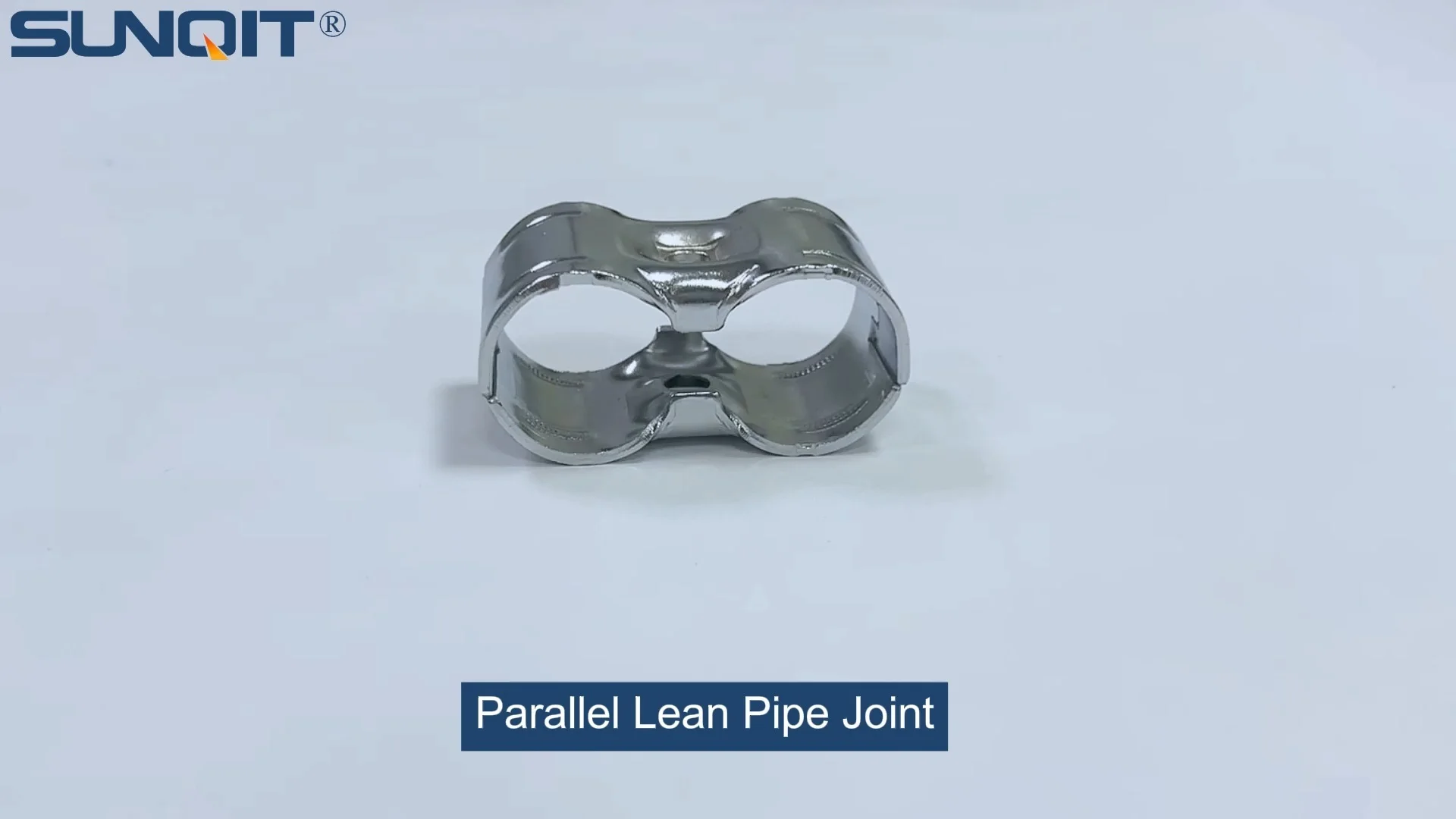
Parallel Lean Pipe Joint Chrome
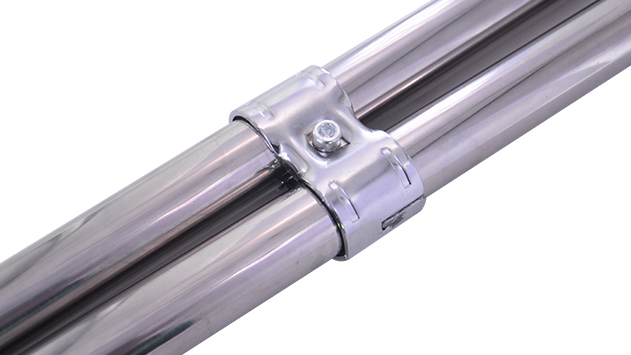
Parallel lean pipe joint used for 2 pcs 28MM lean pipe connection in parallel direction to enhance frame structure, usually for heavy payload requirement for workbench. flow rack, hand trolley.
How a small component is revolutionizing flexibility, efficiency, and adaptability on the factory floor
Introduction: The High-Stakes World of Consumer Electronics Assembly
Walk into any consumer electronics factory, and you'll be met with a symphony of precision: robotic arms placing microchips, operators assembling sleek smartphones, and conveyors gliding components from station to station. In this fast-paced environment, where product lifecycles shrink from years to months, and customization demands grow by the day, rigidity is the enemy. Assembly lines that once thrived on fixed, one-size-fits-all structures now gasp under the pressure to reconfigure, adapt, and scale—all while maintaining the razor-sharp precision that defines modern tech.
Enter lean manufacturing systems: the backbone of agile production. At their core lies a simple idea: eliminate waste, optimize flow, and empower teams to respond quickly to change. But lean systems are only as strong as their components. While flashy robots and advanced software grab headlines, it's often the smaller, unassuming parts that make the biggest difference. One such component? The Parallel Lean Pipe Joint Chrome —a deceptively simple connector that's quietly transforming how electronics manufacturers build, adapt, and optimize their assembly lines.
In this article, we'll dive into the role of the Parallel Lean Pipe Joint Chrome in consumer electronics assembly, exploring real-world case studies where this humble joint has turned inefficiency into opportunity, downtime into productivity, and rigidity into flexibility. We'll also unpack why choosing the right lean pipe supplier and prioritizing quality components like lean pipe workbenches , flow racks , and conveyors can mean the difference between falling behind and leading the pack.
The Unsung Hero: What Makes Parallel Lean Pipe Joint Chrome Essential?
Before we jump into case studies, let's take a closer look at the star of the show: the Parallel Lean Pipe Joint Chrome. At first glance, it's easy to mistake it for just another metal connector. But its design and material choice tell a story of intentionality—crafted to solve the unique challenges of electronics assembly.
Traditional lean pipe joints often struggle with two critical issues: durability and adaptability. In electronics factories, where humidity, occasional coolant spills, and constant handling are par for the course, uncoated or poorly coated joints can corrode, weaken, or seize up over time. Reconfiguring a workbench or flow rack then becomes a battle against rusted bolts and stuck connectors, eating into precious production time.
The chrome plating on the Parallel Lean Pipe Joint changes the game. Beyond its sleek, professional finish (important in cleanroom environments where aesthetics and hygiene matter), the chrome acts as a barrier, resisting corrosion and wear even in high-moisture or chemical-exposed areas. This means the joint stays tight, reliable, and easy to adjust—even after years of heavy use.
But durability is just one piece of the puzzle. The "parallel" design allows for secure, stable connections between lean pipes, making it ideal for building structures that need to support weight (like a lean pipe workbench holding heavy testing equipment) while remaining lightweight enough to reconfigure. Unlike rigid welded joints or complicated fasteners, these chrome joints can be tightened or loosened by hand with a simple hex key, letting teams rearrange workstations, add shelves to flow racks, or adjust conveyor heights in minutes—not hours.
In short, the Parallel Lean Pipe Joint Chrome bridges the gap between strength and flexibility—a must-have in an industry where today's smartphone assembly line might need to become tomorrow's smartwatch line.
Case Study 1: XYZ Electronics – Slashing Workbench Reconfiguration Time by 75%
The Challenge: Stuck in the Past with Fixed Workstations
XYZ Electronics, a mid-sized manufacturer specializing in budget smartphones, faced a familiar problem: their assembly line workstations were stuck in the past. Built with welded steel frames and fixed shelves, these workbenches were sturdy but inflexible. When the company launched a new smartphone model with a larger screen and rearranged internal components, the team realized their workstations were no longer fit for purpose. Operators strained to reach tools, parts bins overflowed, and reconfiguring a single bench took 4 hours—time that could have been spent assembling products.
"We were losing a full shift every time we launched a new model," recalls Maria Gonzalez, XYZ's Production Manager. "Our old workbenches were like concrete—strong, but impossible to reshape. We needed something that could grow with us, not hold us back."
The Solution: Lean Pipe Workbenches with Parallel Lean Pipe Joint Chrome
After researching options, XYZ partnered with a local lean pipe supplier to replace their fixed workbenches with modular lean pipe systems. The centerpiece? Workstations built using 28mm lean pipes and Parallel Lean Pipe Joint Chrome connectors. The team opted for chrome joints specifically for their corrosion resistance (XYZ's assembly line uses a water-based cleaning solution that had rusted previous steel joints) and ease of adjustment.
The transformation was dramatic. Instead of welded frames, the new workbenches featured pipes connected by the chrome joints, with adjustable shelves, tool hooks, and bins that could be moved, added, or removed in minutes. "The first time we reconfigured a bench for the new phone model, I timed it," Gonzalez says. "1 hour. That's it. Our operators couldn't believe it—they went from dreading changeovers to asking when the next one would be, just to test out new setups."
The Results: Flexibility, Ergonomics, and a 15% Boost in Line Efficiency
Within three months, the impact was undeniable:
- Reconfiguration time: Reduced from 4 hours per workbench to 1 hour—a 75% improvement.
- Operator ergonomics: Adjustable heights and tool placement cut down on reaching and bending, leading to a 30% drop in reported strains.
- Line efficiency: With faster changeovers and happier operators, overall line efficiency jumped by 15%.
"The Parallel Lean Pipe Joint Chrome wasn't just a part—it was a catalyst," Gonzalez adds. "It let us stop fighting our workbenches and start working with them. Now, when a customer asks for a custom phone variant, we don't panic. We just grab a hex key and adapt."

Case Study 2: ABC Tech – Flow Rack Optimization Cuts Material Handling Time by 30%
The Challenge: Bottlenecks in the "Material Maze"
ABC Tech, a manufacturer of tablet components, had a different problem: their material storage and retrieval system was a bottleneck. The company's flow racks —used to store and feed components like screens, batteries, and circuit boards to the assembly line—were a hodgepodge of old wooden shelves and rigid metal racks. Parts often got stuck in narrow channels, operators wasted time searching for the right component, and the racks couldn't be adjusted to fit varying component sizes (from small camera modules to large display panels).
"It was like a maze," says Raj Patel, ABC's Logistics Supervisor. "Our flow racks were supposed to make material flow smooth, but half the time, operators were climbing over shelves or digging through bins. We were losing 2-3 hours a day just on material handling."
The Solution: Modular Flow Racks with Chrome Joints and Conveyor Integration
ABC turned to a lean pipe supplier to redesign their flow rack system, focusing on three goals: adaptability, visibility, and integration with existing conveyors . The solution centered on modular flow racks built with lean pipes and Parallel Lean Pipe Joint Chrome connectors, paired with roller tracks (another key component in lean systems) to ensure smooth component flow.
The chrome joints allowed the racks to be built in sections, with adjustable shelf heights and widths. "We could now set a shelf for small camera modules at 6 inches, then right next to it, a shelf for 12-inch displays at 18 inches—all with the same pipes and joints," Patel explains. The racks were also integrated with the factory's conveyors, so components rolled directly from the rack to the assembly line, eliminating manual carrying.
Perhaps the biggest win? Visibility. The open, modular design meant operators could see all components at a glance, and color-coded bins (attached via the chrome joints) reduced search time to seconds.
The Results: Faster Flow, Fewer Errors, and 25% Less Waste
After six months, the numbers spoke for themselves:
- Material handling time: Cut by 30%, freeing up 6-8 hours per day for value-added work.
- Error rate: 25% fewer misplaced or incorrect components, thanks to better visibility and organization.
- Space utilization: The modular racks took up 15% less floor space, allowing ABC to add a new assembly line without expanding the factory.
"The Parallel Lean Pipe Joint Chrome made the racks modular, but it also made them durable," Patel notes. "We've had components sliding through those racks 24/7, and the joints haven't loosened or rusted. They just work—day in, day out."
Case Study 3: Innovate Wearables – Lightening the Load with Aluminum Profile and Chrome Joints
The Challenge: Heavy Steel Structures Weighing Down Operators
Innovate Wearables, a startup building fitness trackers and smartwatches, faced a unique challenge: their assembly line was too heavy. The company had initially opted for steel lean pipes and traditional joints to build workbenches and turnover trolleys, assuming steel's strength was necessary. But with operators moving trolleys between stations dozens of times a day, the steel structures (some weighing over 100 lbs) became a liability. Fatigue set in, mobility slowed, and there were even a few near-misses as trolleys tipped during turns.
"We needed strength, but we also needed mobility," says Lina Chen, Innovate's Operations Director. "Our team is small—just 15 operators—and they were spending more energy moving equipment than assembling products. We had to find a way to lighten the load without sacrificing stability."
The Solution: Aluminum Profile Meets Parallel Lean Pipe Joint Chrome
After consulting with a lean pipe supplier specializing in lightweight solutions, Innovate made a switch: aluminum profile pipes paired with Parallel Lean Pipe Joint Chrome connectors. Aluminum offered the lightweight properties they needed (weighing 40-50% less than steel), while the chrome joints ensured the structures remained sturdy enough to hold sensitive assembly tools and components.
"The combination was perfect," Chen says. "The aluminum profiles are sleek and light, but the chrome joints lock them together so tightly, you'd never guess they're not steel. Our new workbenches are half the weight, and the turnover trolleys? Operators can push them with one hand now."
The switch wasn't just about weight. Aluminum's natural resistance to corrosion (paired with the chrome joints) meant the structures held up well in the factory's climate-controlled environment, and the modular design allowed Innovate to add small, custom touches—like built-in cable management for charging stations—without extra tools.
The Results: Lighter Work, Happier Teams, and 20% Faster Takt Times
Within two months, the impact was clear:
- Weight reduction: Workbenches and trolleys weighed 40% less, cutting operator fatigue and reducing the risk of injury.
- Mobility: Trolley movement time between stations dropped by 50%, from 2 minutes per trip to 1 minute.
- Takt time: With less time spent moving equipment, assembly takt time (the time between completing one unit and starting the next) improved by 20%.
"Our operators joke that the chrome joints are 'magic glue'—they make the aluminum feel solid, but without the bulk," Chen laughs. "And for a startup like us, that's been priceless. We can now scale up without scaling our workforce, just by working smarter."
Traditional vs. Chrome: A Comparison of Lean Pipe Joints
Wondering how the Parallel Lean Pipe Joint Chrome stacks up against traditional options? The table below breaks down key factors like durability, adjustability, and cost over time—based on data from XYZ Electronics, ABC Tech, and Innovate Wearables.
| Factor | Traditional Steel Joints | Parallel Lean Pipe Joint Chrome |
|---|---|---|
| Corrosion Resistance | Poor; prone to rust in humid/chemical environments | Excellent; chrome plating resists rust and wear |
| Reconfiguration Time | 2-4 hours per structure (due to stuck/rusted bolts) | 30-60 minutes per structure (easy hand adjustment) |
| Weight (when paired with aluminum) | Heavy (adds 30-50% to total structure weight) | Lightweight (minimal added weight, ideal for mobility) |
| Longevity | 1-2 years before signs of wear | 5+ years with regular use |
| Cost Over Time | Higher (frequent replacements, downtime costs) | Lower (one-time purchase, minimal maintenance) |
Choosing the Right Lean Pipe Supplier: What to Look For
As the case studies show, the right components can transform your assembly line—but only if they come from a reliable lean pipe supplier . Here's what to prioritize when choosing a partner:
- Quality of chrome plating: Ask for samples to test corrosion resistance. A good supplier will use high-quality chrome with a thickness of at least 0.0005 inches.
- Precision engineering: Joints should fit snugly with standard lean pipes (28mm, 30mm, etc.)—no wobbling or gaps, which can weaken structures.
- Accessory availability: Look for suppliers that offer a full range of lean pipe and accessories (rollers, shelves, bins, etc.) to avoid mismatched components.
- Customer support: A great supplier doesn't just sell parts—they help you design. Look for teams that offer layout advice, reconfiguration tips, and fast turnaround on replacement parts.
"We made the mistake of going with the cheapest supplier first," XYZ's Maria Gonzalez admits. "The joints looked the same, but after six months, they started rusting, and the supplier wouldn't return our calls. Now, we work with a supplier who sends a technician to check our setup quarterly. It's worth every penny."
Conclusion: Small Components, Big Impact
In the world of consumer electronics assembly, where every second and every cent counts, it's easy to overlook the small stuff. But as XYZ Electronics, ABC Tech, and Innovate Wearables have shown, components like the Parallel Lean Pipe Joint Chrome are the unsung heroes of lean manufacturing. They turn rigid workbenches into adaptable hubs, clunky flow racks into efficient material highways, and heavy steel structures into lightweight, operator-friendly tools.
At the end of the day, lean manufacturing isn't just about systems—it's about empowerment. It's about giving operators the tools to work smarter, not harder. It's about letting engineers reimagine assembly lines without being limited by fixed structures. And it's about letting manufacturers keep pace with a world that demands more, faster, better—all while staying profitable.
So the next time you pick up a smartphone or smartwatch, take a moment to appreciate the precision that went into building it. And remember: behind that precision, there's likely a humble chrome joint, holding it all together—one adjustment, one reconfiguration, one innovation at a time.