- Company Articles
- Products and Technology
- Product knowledge
- Parallel Lean Pipe Joint Chrome in Electronic Manufacturing: Static Control Considerations

Parallel Lean Pipe Joint Chrome in Electronic Manufacturing: Static Control Considerations
Related Product
Parallel Lean Pipe Joint Chrome
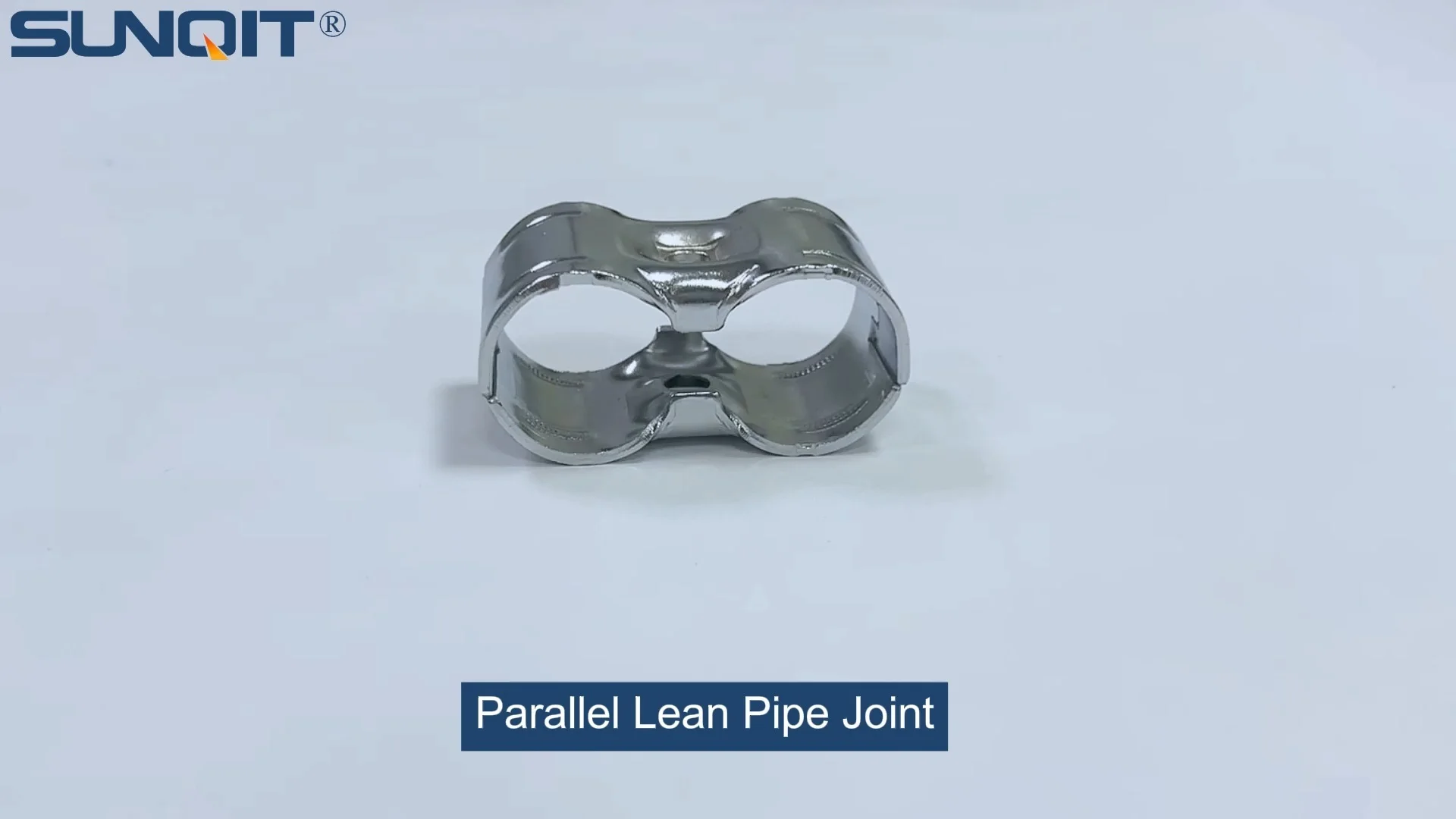
Parallel lean pipe joint used for 2 pcs 28MM lean pipe connection in parallel direction to enhance frame structure, usually for heavy payload requirement for workbench. flow rack, hand trolley.
In the hum of an electronic manufacturing facility, where precision is measured in micrometers and deadlines hang on the edge of every assembly line, there's a silent hero working behind the scenes: the Parallel Lean Pipe Joint Chrome . Walk through any plant where circuit boards, microchips, or sensitive semiconductors are crafted, and you'll see it—connecting aluminum profiles, securing roller tracks, and linking the framework of ESD workstations. It's not just a metal piece; it's the glue that holds together a system designed to protect the tiniest, most vulnerable components from a hidden enemy: static electricity.
For technicians like Maria, who's been assembling smartphone motherboards for eight years, the difference between a functional device and a $500 loss often comes down to whether that chrome joint is doing its job. "Last year, we had a batch of 200 boards fail ESD testing," she recalls, wiping her brow as she adjusts a caster wheel on her workstation. "Turned out a loose joint was breaking the ground path. We had to rework every single one. Now, we check those chrome joints twice a shift. They're small, but man—they matter."
This article dives into why the Parallel Lean Pipe Joint Chrome is more than just a hardware component in electronic manufacturing. We'll explore the critical role of static control, how this unassuming joint contributes to ESD safety, and how it integrates with tools like aluminum profiles, roller tracks, and ESD workstations to keep production lines running smoothly. Because in a world where a single static spark can erase hours of work, the details—like that shiny chrome joint—are what make or break a manufacturer's success.
The Invisible Threat: Why Static Control Matters in Electronics
Static electricity is the quiet saboteur of electronic manufacturing. It builds up when materials rub against each other—plastic bins sliding on aluminum profiles, technicians shuffling across the floor, even air moving over circuit boards. By the time you feel a static shock (around 3,000 volts), it's already too late for a microchip, which can be damaged by as little as 250 volts. "Imagine holding a butterfly in your hand," says Raj, an ESD compliance engineer with 15 years in the industry. "A gentle squeeze won't hurt you, but it crushes the butterfly. Static is that squeeze for a chip."
The cost of ignoring static control is staggering. According to the Electrostatic Discharge Association, static-related damages cost the electronics industry over $5 billion annually. These losses come from more than just destroyed components; they include rework, delayed shipments, and reputational damage when faulty devices reach consumers. "We had a client who shipped 10,000 smartwatches with intermittent battery issues," Raj adds. "Root cause? Static during assembly weakened the battery connectors. The recall cost them $2 million. All because their workbench joints weren't maintaining proper ground continuity."
This is where ESD standards come in. Organizations like ANSI/ESD S20.20 set strict guidelines for conductive paths, surface resistance (typically 10^6 to 10^9 ohms), and grounding systems. For manufacturers, compliance isn't optional—it's a lifeline. And at the heart of that compliance? Components like the Parallel Lean Pipe Joint Chrome, which ensure that every part of the production line—from the aluminum profile frame to the roller track carrying PCBs—stays grounded.
Anatomy of a Hero: What Makes the Parallel Lean Pipe Joint Chrome Unique?
At first glance, the Parallel Lean Pipe Joint Chrome looks like any other connector: a small, angular piece of metal with threads and holes for bolts. But zoom in, and you'll see why it's trusted in ESD-critical environments. Let's break down its design:
1. Chrome Plating: Conductivity Meets Durability
Unlike plastic or uncoated steel joints, the chrome plating on this joint serves two purposes. First, it's highly conductive, ensuring that static charges flow from the lean pipe through the joint and into the ground. Second, it resists corrosion—a must in factories where humidity levels are tightly controlled (often between 30-50% to mitigate static) but where condensation or cleaning chemicals can still take a toll. "We used to use nickel-plated joints," says Carlos, a maintenance supervisor. "They'd start rusting after six months. Chrome? We've had some in service for three years, and they still shine."
2. Parallel Design: Stability for High-Traffic Areas
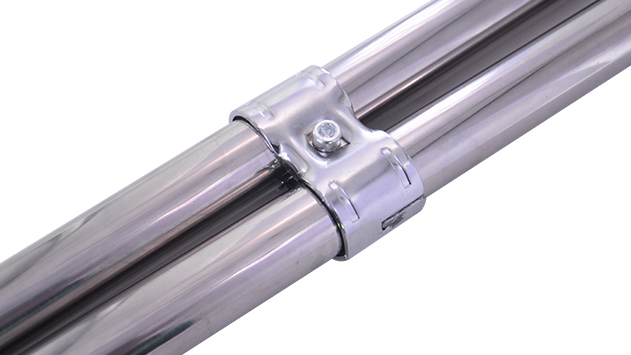
The "parallel" in its name refers to how it connects two lean pipes side-by-side, distributing weight evenly across the aluminum profile frame. This is crucial for roller tracks, which see constant movement as parts glide from station to station. A standard T-joint might wobble under the stress of 50-pound bins sliding over roller tracks, but the parallel design locks pipes into place, reducing vibration. "Vibration isn't just noisy," Carlos explains. "It loosens connections over time. A wobbly joint breaks the ESD path. Parallel chrome joints? They stay tight."
3. Compatibility: Playing Well With Others
In manufacturing, no component works alone. The Parallel Lean Pipe Joint Chrome is designed to integrate seamlessly with the tools Maria and her team use daily: aluminum profiles for workstation frames, roller tracks for material flow, and caster wheels for mobility. Its universal bolt pattern fits most standard lean pipe diameters (28mm, 30mm), and its low-profile design doesn't interfere with roller track guides or ESD matting. "We can swap out a plastic joint for this chrome one in five minutes," Maria says. "No drilling new holes, no custom parts. It just works."
| Joint Type | Conductivity (Ohms) | Corrosion Resistance | Weight Capacity | Best For |
|---|---|---|---|---|
| Parallel Lean Pipe Joint Chrome | ≤10^6 (ESD-compliant) | High (chrome plating) | Up to 200 lbs per joint | ESD workstations, roller tracks, aluminum profile frames |
| Plastic Lean Pipe Joint | 10^12 (non-conductive) | Medium (PVC) | Up to 75 lbs per joint | Non-ESD applications (e.g., storage racks) |
| Stainless Steel Joint (Unplated) | ≤10^6 (conductive) | Medium (prone to fingerprints/rust) | Up to 150 lbs per joint | Wet environments (not ideal for ESD due to surface oxidation) |
From Joint to System: Building an ESD-Safe Ecosystem
A chrome joint alone can't protect against static. It needs to be part of a holistic system—one where every component, from the aluminum profile to the caster wheel, works together to channel static away from sensitive parts. Let's walk through how the Parallel Lean Pipe Joint Chrome integrates with key elements of this ecosystem:
1. ESD Workstations: The Frontline Defense
An ESD workstation isn't just a table; it's a fortress. Its frame, often built from aluminum profiles, is grounded via a braided cable to the facility's earth ground. The Parallel Lean Pipe Joint Chrome connects those profiles, ensuring the entire frame has a continuous conductive path. On top sits an ESD mat, and below, caster wheels with conductive rubber tires—all linked through the joint. "If the joint is loose, the mat's ground wire might as well not exist," Raj explains. "Static from the technician's body would build up on the mat, then zap the board when they pick it up."
Maria's workstation is a case study in integration. "See this?" she says, tapping the chrome joint where the leg meets the tabletop. "This connects to the caster wheel's metal stem. So when I roll the workstation, the caster stays grounded through the joint, through the aluminum profile, and into the floor mat. No breaks, no sparks."
2. Roller Tracks: Moving Parts Without the Static
Roller tracks are the arteries of a manufacturing line, carrying PCBs from soldering to testing. But every time a board slides over a plastic roller, static builds up. Enter the Parallel Lean Pipe Joint Chrome: it secures the roller track to the aluminum profile frame, grounding the track itself. "We use steel roller tracks with ESD-safe wheels," Carlos says. "The chrome joint connects the track to the frame, so any static on the rollers drains right into the ground. No more shocks when a technician grabs a board off the track."
In high-speed lines, where boards move at 2 feet per second, even minor static buildup can cause issues. "We had a problem where ICs were failing after testing," Raj recalls. "Turns out the roller track's plastic guides were generating static. We switched to aluminum guides and used chrome joints to ground the track. Failures dropped by 90%."
3. Aluminum Profiles: The Backbone of Flexibility
Aluminum profiles are popular in lean manufacturing for their light weight and modularity—technicians can reconfigure workstations in minutes by adding or removing sections. But aluminum, while conductive, needs reliable connections to maintain ESD safety. The Parallel Lean Pipe Joint Chrome ensures that even when profiles are adjusted, the ground path stays intact. "Last month, we rearranged the entire line for a new product," Maria says. "We took apart 12 workstations, moved the aluminum profiles, and reconnected them with the same chrome joints. Post-rearrangement ESD tests? All green. No issues."

Installation & Maintenance: Keeping the Joints (and Your Line) Healthy
Even the best chrome joint fails if installed poorly. For Raj, the key to ESD compliance is a three-step mantra: Clean, Torque, Test .
Step 1: Clean the Connection Points
"Grease, dirt, or oxidation on the pipe or joint kills conductivity," Raj warns. Before installing, wipe the lean pipe and joint with isopropyl alcohol and a lint-free cloth. "We had a line where joints kept failing continuity tests. Turned out the aluminum profiles were shipped with a protective oil coating. Once we cleaned them, resistance dropped from 10^10 ohms to 10^6—right in spec."
Step 2: Torque to Spec (and Use Lock Washers)
Over-tightening strips threads; under-tightening creates gaps. Most manufacturers recommend 15-20 Nm of torque for M8 bolts. "We use torque wrenches, not impact drivers," Carlos says. "And we always add a star washer between the joint and the pipe. It bites into the metal, ensuring the connection stays tight even with vibration."
Step 3: Test Continuity Regularly
ESD compliance isn't a one-and-done check. Maria's team uses a handheld multimeter to test resistance across each joint monthly. "We connect one probe to the joint and the other to the ground point," she explains. "If it reads over 10^9 ohms, we tighten or replace the joint. It takes 10 minutes per workstation, but it's cheaper than reworking boards."
For high-traffic areas (like roller tracks near packing stations), Raj recommends quarterly inspections. "Joints loosen over time—casters rolling, people leaning on workstations. A quick check saves a lot of headaches."
Real-World Impact: How One Manufacturer Cut Defects by 40%
In 2023, a mid-sized electronics manufacturer in Texas (we'll call them "TechPro") was struggling with a 12% defect rate on their IoT sensor boards—most traced to ESD damage. Their old setup used plastic lean pipe joints and ungrounded roller tracks. "We were spending $120,000 a year on rework," says Mike, TechPro's plant manager. "Our QA team was ready to tear their hair out."
Mike's team partnered with a lean system supplier to upgrade their line. The plan? replace all plastic joints with Parallel Lean Pipe Joint Chrome, ground roller tracks via aluminum profiles, and add ESD caster wheels to workstations. "The total cost was $45,000—less than half a year's rework costs," Mike says.
The results were staggering: within three months, defect rates dropped to 7.2%, and ESD-related failures fell by 40%. "Our technicians noticed the difference immediately," Mike recalls. "No more random shocks when handling boards, no more mystery failures. The chrome joints were the unsung heroes here. They turned our line from a problem child into a top performer."
Today, TechPro's line runs 24/7, producing 5,000 sensor boards daily—all with the help of those small, shiny chrome joints. "We even added a 'Joint of the Month' award," Mike laughs. "The team nominates the workstation with the best-maintained joints. It's silly, but it keeps everyone focused. Those joints deserve the recognition."
Looking Ahead: The Future of ESD Safety and Lean Manufacturing
As electronics get smaller and more powerful—think 3nm semiconductors, flexible displays, and AI chips—static control will only grow more critical. Suppliers are already innovating: some are testing graphene-infused chrome plating for even better conductivity, while others are designing "smart joints" with built-in sensors that alert maintenance when resistance rises.
For Maria, though, the future is simple: "I just want joints that last. That don't loosen, don't rust, and keep my boards safe. If this chrome joint can do that for the next 10 years? I'm happy."
In the end, the Parallel Lean Pipe Joint Chrome is more than a component. It's a testament to the idea that in manufacturing, success lies in the details—the small, intentional choices that protect both products and the people who build them. So the next time you pick up your smartphone or power on your laptop, take a moment to thank that silent hero in the factory: the chrome joint that kept your device's heart beating, one static-free connection at a time.