- Company Articles
- Products and Technology
- Product knowledge
- Parallel Lean Pipe Joint Chrome in Furniture Manufacturing: Modular Design Support

Parallel Lean Pipe Joint Chrome in Furniture Manufacturing: Modular Design Support
Related Product
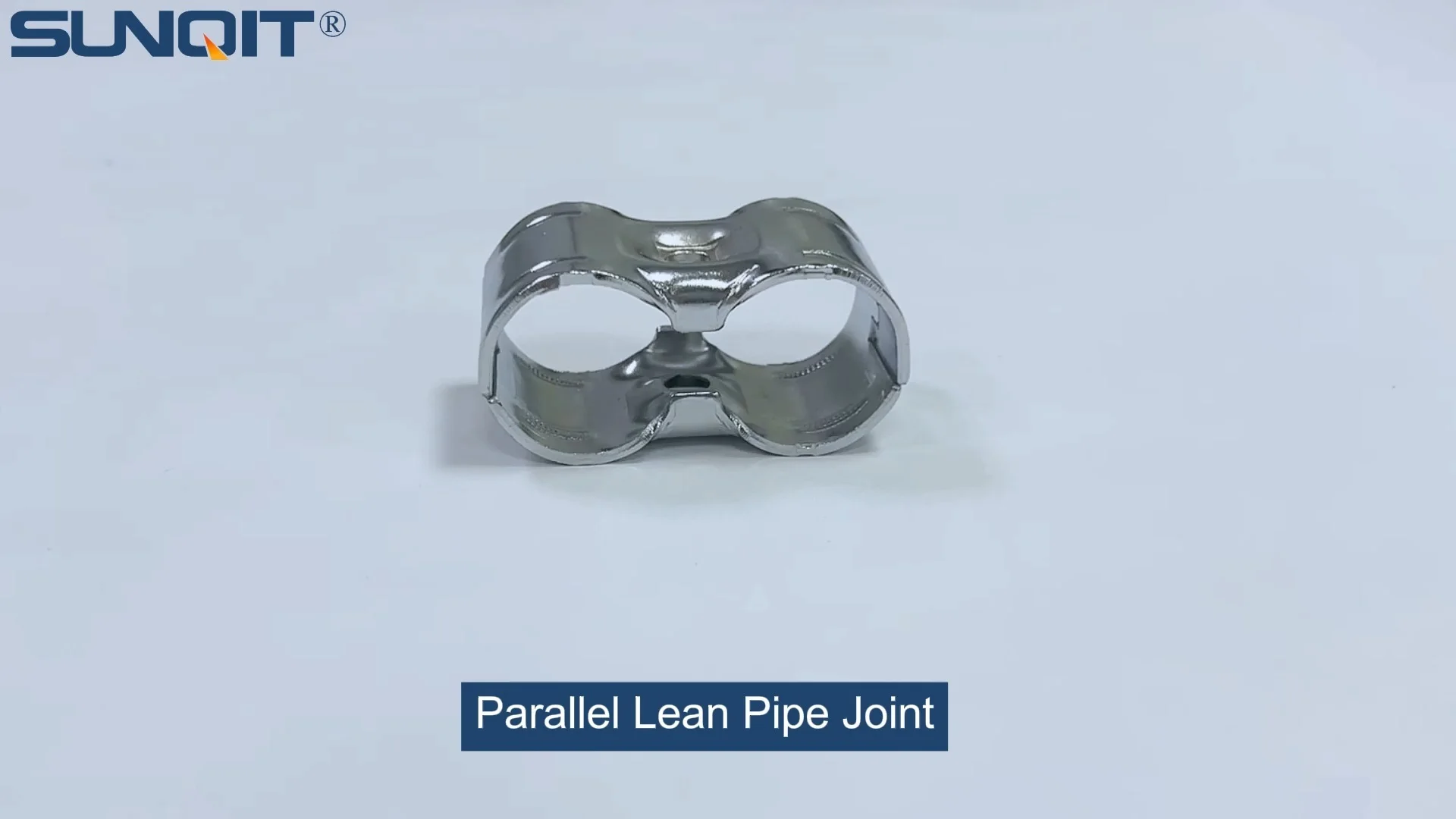
Parallel Lean Pipe Joint Chrome
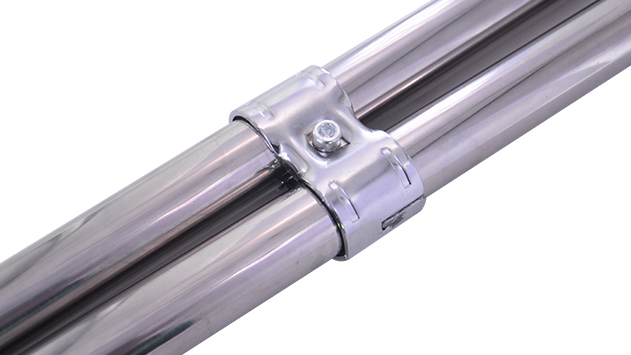
Parallel lean pipe joint used for 2 pcs 28MM lean pipe connection in parallel direction to enhance frame structure, usually for heavy payload requirement for workbench. flow rack, hand trolley.
Walk into any modern furniture store today, and you'll likely be met with a dizzying array of choices: a desk that adjusts to three heights, a shelf that expands from 3 feet to 6 feet, a rolling cart that doubles as extra counter space. Behind these customizable pieces lies a quiet revolution in manufacturing—one that's less about fancy tools and more about smart, flexible components. At the heart of this revolution? The parallel lean pipe joint chrome , a small but mighty part that's redefining how furniture is designed, built, and adapted to our ever-changing needs.
Furniture manufacturing has long grappled with a tough balancing act: mass production efficiency versus the demand for customization. Traditional methods often lock manufacturers into rigid, one-size-fits-all designs, leaving little room to tweak dimensions or add features without overhauling entire production lines. But as consumers increasingly crave furniture that fits their unique spaces—think home offices squeezed into closets or open-concept living areas that need multi-functional pieces—manufacturers are turning to modular design. And modularity, it turns out, hinges on components that can adapt, connect, and reconfigure with minimal hassle. Enter the parallel lean pipe joint chrome.
Modular Design: The Future of Furniture, One Joint at a Time
Modular design isn't just a buzzword—it's a practical solution to the chaos of modern manufacturing. At its core, it's about building furniture in "blocks" that can be mixed, matched, and modified. Want a longer workbench? Add another section. Need to move a shelf from the living room to the garage? Detach it and reattach it on casters. This flexibility doesn't just make furniture more user-friendly; it makes production smarter, too. Manufacturers can produce standardized components in bulk, then assemble them into endless configurations, cutting down on waste, time, and costs.
But for modularity to work, the "glue" holding these blocks together has to be reliable. You can't have a modular system if the joints connecting your lean pipe s snap under pressure, or if adjusting a shelf requires specialized tools and a degree in engineering. That's where components like the parallel lean pipe joint chrome shine. Unlike rigid, fixed joints of the past, these chrome-plated connectors are designed to balance strength with adaptability, making them the backbone of modular furniture systems—from simple workbenches to complex material racks.
What Is a Parallel Lean Pipe Joint Chrome, Anyway?
Let's break it down. Imagine you're building a bookshelf. You have metal pipes (lean pipes) that form the frame, and you need to connect them so they run parallel—like the vertical sides and horizontal shelves. A standard fixed joint might lock those pipes at a strict 90-degree angle, but what if you want the shelves to be adjustable? Or what if you need to add a second row of pipes for extra stability? That's where the parallel lean pipe joint chrome comes in.
At its simplest, it's a connector that allows two or more lean pipes to run parallel to each other while staying securely fastened. Made from durable metal and coated in chrome, it resists rust, scratches, and the wear and tear of busy workshops. But its real genius is in its design: it uses a combination of bolts, clamps, and rotating components to hold pipes in place without welding or permanent adhesives. This means you can loosen a few screws, reposition the pipes, and tighten them back up—no power tools required. It's like building with advanced Legos, but for grown-ups who need their creations to hold heavy loads (like a workbench stacked with tools or a shelf full of textbooks).
Chrome plating isn't just for looks, either. In furniture manufacturing, where components might be exposed to moisture (think garages, basements, or even commercial kitchens) or frequent handling, durability is key. Chrome adds a hard, protective layer that stands up to corrosion and daily use, ensuring that a modular workbench or rolling cart built today will still be sturdy years down the line. Compare that to uncoated or plastic joints, which can crack, warp, or rust after just a few months in a busy environment.
Why Parallel Lean Pipe Joint Chrome Beats the Rest: A Side-by-Side Look
Not all joints are created equal. To see why the parallel lean pipe joint chrome is a standout, let's compare it to some common alternatives used in furniture manufacturing. Below is a breakdown of how it stacks up against fixed-angle joints, vertical joints, and basic plastic connectors in key areas like flexibility, strength, and ease of use.
| Joint Type | Flexibility (1-5) | Max Load Capacity (kg) | Durability (Chrome vs. Other Coatings) | Ease of Assembly (1-5) |
|---|---|---|---|---|
| Parallel Lean Pipe Joint Chrome | 4.5 | 300+ | High (chrome resists rust/scratches) | 5 (hand-tightened screws, no tools needed) |
| 90° Fixed Lean Pipe Joint | 1 | 250+ | Medium (often zinc-plated, prone to corrosion) | 3 (requires wrench to tighten) |
| Vertical Lean Pipe Joint | 2 | 200+ | Medium (plastic or zinc, limited lifespan) | 4 (snap-on, but not adjustable) |
| Basic Plastic Connector | 3 | 50-100 | Low (prone to cracking, UV damage) | 5 (snap-fit, but weak under pressure) |
The table tells the story: while fixed joints might offer decent strength, they lack the flexibility to adapt to changing needs. Plastic connectors are easy to use but can't handle heavy loads—imagine a workbench loaded with power tools collapsing because the joints gave way. The parallel lean pipe joint chrome, on the other hand, hits the sweet spot: it's strong enough to support heavy furniture, flexible enough to reconfigure, and durable enough to last. That's why manufacturers building modular systems—whether for industrial workbenches or home office setups—are making it their go-to choice.

From Workbenches to Rolling Carts: Real-World Uses for Parallel Lean Pipe Joint Chrome
Let's get practical. How does the parallel lean pipe joint chrome actually show up in the furniture we use every day? Let's start with the workbench—a staple in garages, workshops, and even home offices. A traditional workbench is a fixed piece of furniture: built to one height, one length, with shelves that can't be moved. But with modular design and parallel joints, that's all changed.
Picture this: a workbench frame built from lean pipes connected by parallel lean pipe joint chrome. The main frame uses parallel joints to run pipes along the length, creating a sturdy base. Then, additional parallel joints attach crossbars at adjustable heights, so you can add a shelf for tools, a keyboard tray, or even a monitor stand. Need more space? Just add another section of lean pipe and a few more parallel joints. Want to lower the work surface for a seated task? Loosen the joint screws, slide the pipes to the new height, and tighten—done. No sawing, no drilling, no calling a carpenter.
Now, add caster wheels to the mix, and you've got a mobile workbench that can roll from the garage to the backyard or from one side of the workshop to the other. The parallel joints ensure the frame stays stable even with the added movement, while the caster wheels (which can also be attached using compatible lean pipe joints) lock in place when you need the bench to stay put. This kind of flexibility is a game-changer for small spaces or multi-use rooms—no more needing separate workbenches for different tasks.
But it's not just workbenches. Think about material racks in a furniture factory: shelves stacked with wood, metal, or fabric rolls. Using parallel lean pipe joint chrome, these racks can be built to any height or width, with adjustable shelves that can be moved up or down as inventory changes. If a new shipment of larger rolls comes in, just reposition the parallel joints to widen the shelves—no need to buy a whole new rack. Even home shelving units benefit: a bookshelf that starts as a 3-foot-wide unit can expand to 6 feet by adding another section connected with parallel joints, growing with your book collection over time.
The Hidden Benefits: Why Manufacturers (and Consumers) Love Parallel Lean Pipe Joint Chrome
Beyond flexibility and strength, the parallel lean pipe joint chrome offers a host of advantages that make it a favorite among both manufacturers and end-users. Let's start with cost. For manufacturers, producing modular components in bulk is far cheaper than creating custom furniture pieces from scratch. Since parallel joints work with standard lean pipes and aluminum profiles, there's no need to invest in specialized materials or tools. This lowers production costs, which can then be passed on to consumers in the form of more affordable, customizable furniture.
For consumers, the savings come in the long run. A modular workbench built with parallel joints doesn't need to be replaced if you move to a bigger house or change how you use it—you can just reconfigure it. Compare that to a traditional fixed workbench, which would either need to be sold (at a loss) or left behind. It's not just about money, though; it's about sustainability. The less furniture we throw away, the less waste ends up in landfills. Chrome-plated joints also have a longer lifespan, meaning fewer replacements and less environmental impact over time.
Then there's speed. In manufacturing, time is money. Assembling a modular workbench with parallel lean pipe joint chrome takes a fraction of the time it would take to build a traditional wooden or metal bench. There's no waiting for glue to dry, no measuring and cutting wood, no welding metal pieces together. Workers can assemble a basic frame in under an hour, and add-ons like shelves or caster wheels take minutes. This speed translates to faster production cycles, shorter lead times for customers, and the ability to keep up with high demand during busy seasons.
What's Next? The Future of Modular Furniture and Parallel Joints
As technology advances and consumer demands evolve, modular design is only going to become more important—and the parallel lean pipe joint chrome is poised to evolve with it. One trend we're already seeing is the integration of smart features. Imagine a workbench built with parallel joints that also includes built-in USB ports, LED lights, or even weight sensors that alert you if you're overloading a shelf. Since the joints allow for easy reconfiguration, adding these features later (as technology improves) would be as simple as swapping out a section of lean pipe for one with the new tech built in.
Another trend is the rise of lightweight, high-strength materials. While lean pipe is already durable, manufacturers are experimenting with aluminum profiles and carbon fiber pipes that are lighter but just as strong. The parallel lean pipe joint chrome, with its adjustable design, can easily adapt to these new materials—no need to redesign the joint itself. This means even more flexibility in furniture design, with lighter pieces that are easier to move but still sturdy enough for heavy use.
Finally, as remote work continues to grow, there's a surge in demand for home office furniture that's both functional and space-saving. Modular desks, storage units, and mobile workstations built with parallel joints are perfectly suited to this need. They can shrink down when not in use, expand when you need more space, and even double as dining tables or extra seating when guests come over. In a world where our homes have to do more than ever, the adaptability of modular furniture is no longer a luxury—it's a necessity.
Embracing the Modular Revolution: Your Turn to Build Smarter
The days of one-size-fits-all furniture are fading fast. In their place is a future where furniture adapts to us—not the other way around. At the center of this future is the parallel lean pipe joint chrome: a small component with a big impact. It's the reason we can build workbenches that adjust to our height, shelves that grow with our collections, and rolling carts that follow us from room to room. It's the "glue" that holds the modular revolution together, making furniture manufacturing more efficient, more sustainable, and more responsive to what consumers really want.
Whether you're a furniture manufacturer looking to streamline production, a small business owner needing flexible workspace solutions, or a homeowner tired of furniture that doesn't quite fit, modular design with parallel lean pipe joint chrome offers a better way. It's not just about building furniture—it's about building furniture that works for you, today and tomorrow. So the next time you're in the market for a new workbench, shelf, or cart, look for the parallel lean pipe joint chrome. It's the mark of a piece that's built to adapt, built to last, and built with you in mind.