- Company Articles
- Products and Technology
- Product knowledge
- Parallel Lean Pipe Joint Chrome in Logistics: Conveyor System Applications

Parallel Lean Pipe Joint Chrome in Logistics: Conveyor System Applications
Related Product
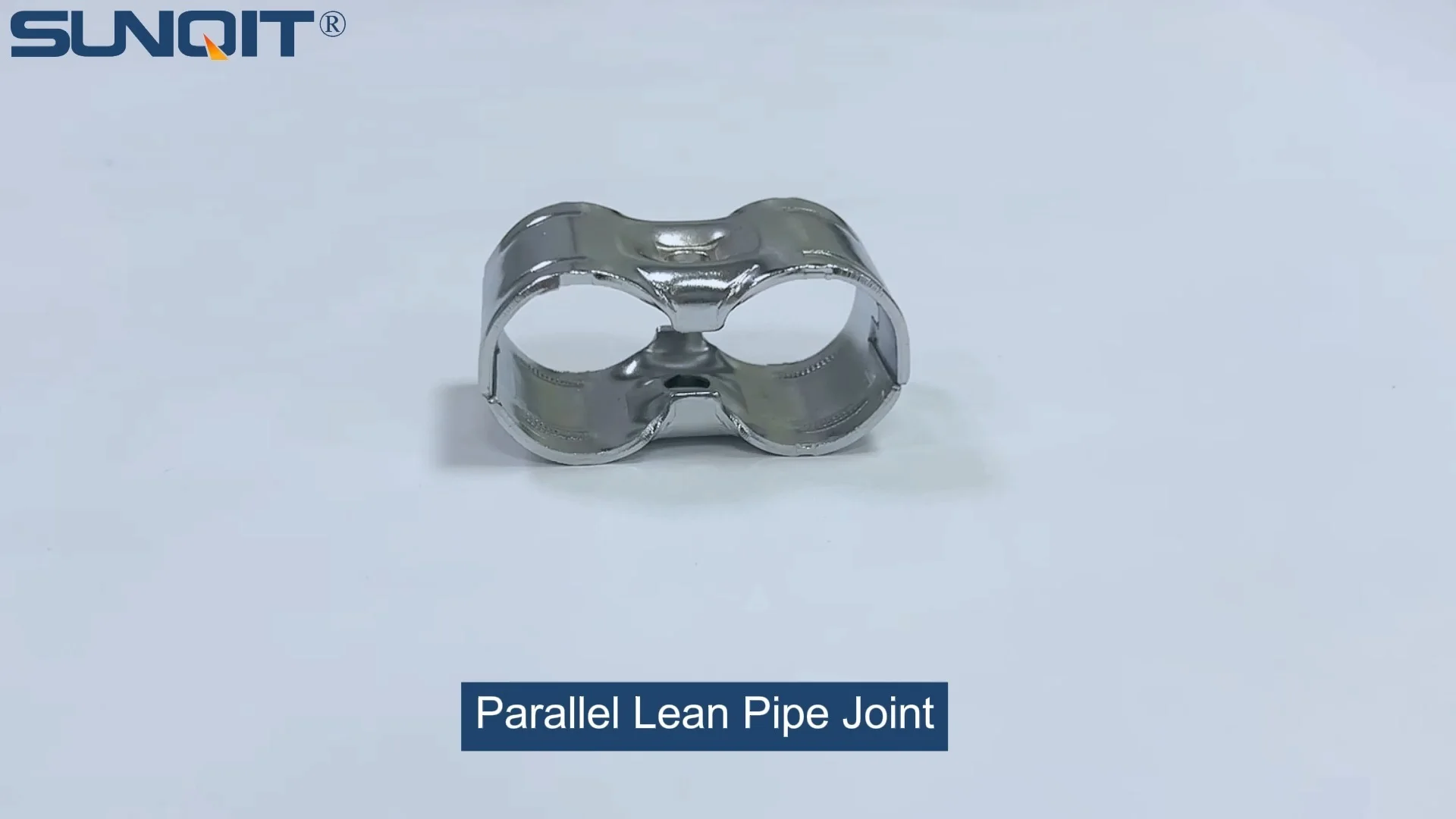
Parallel Lean Pipe Joint Chrome
Parallel lean pipe joint used for 2 pcs 28MM lean pipe connection in parallel direction to enhance frame structure, usually for heavy payload requirement for workbench. flow rack, hand trolley.
The Evolution of Lean Systems in Logistics
Logistics, once viewed as a mere support function, has evolved into a strategic cornerstone of global business. In today's fast-paced market, where supply chains span continents and customer demands shift overnight, efficiency is no longer optional—it's survival. This is where lean systems come into play. Rooted in the Toyota Production System (TPS), lean principles focus on identifying and eliminating waste (or "muda") in all forms: overproduction, waiting times, unnecessary transportation, excess inventory, overprocessing, defects, and unused employee talent. When applied to logistics, these principles transform material handling from a cost center into a competitive advantage.
At the core of lean logistics is the idea that material flow should be smooth, continuous, and tailored to actual demand. Traditional conveyor systems, often rigid and inflexible, frequently become sources of waste—either by moving goods faster than downstream processes can handle (causing bottlenecks) or by being too slow to adapt to changes in product size, volume, or workflow. This is where modular material handling systems, built with components like lean pipes and joints, have revolutionized the industry. Unlike fixed conveyor systems, modular setups allow for quick reconfiguration, ensuring that logistics operations can scale up, down, or sideways as needed without major overhauls.
Lean pipes, also known as "flexible pipes" or "kitchen pipes" (due to their early use in Japanese factories to organize kitchen supplies), are lightweight yet sturdy tubes typically made of steel, aluminum, or stainless steel, often coated with plastic or chrome for durability. When combined with joints, these pipes form the building blocks of workbenches, racks, trolleys, and—most importantly—conveyor systems. Among the many types of joints available, the Parallel Lean Pipe Joint Chrome stands out for its unique design, which prioritizes stability, load-bearing capacity, and ease of assembly. As logistics operations increasingly adopt lean principles, the demand for components that can support modular, adaptable conveyor systems has skyrocketed, making the Parallel Lean Pipe Joint Chrome an indispensable tool in the modern warehouse.
Conveyor Systems: The Backbone of Material Flow
Conveyor systems are the arteries of logistics operations, responsible for moving materials from point A to point B with minimal human intervention. From small packages in e-commerce fulfillment centers to heavy pallets in manufacturing plants, conveyors handle a wide range of loads, reducing manual labor, minimizing errors, and accelerating throughput. The efficiency of a conveyor system directly impacts key performance indicators (KPIs) like order fulfillment time, inventory turnover, and operational costs. As such, choosing the right type of conveyor and its components is critical.
There are several types of conveyor systems, each designed for specific applications: belt conveyors for irregularly shaped items, chain conveyors for heavy loads, and roller conveyors for smooth, flat-bottomed goods, to name a few. Among these, roller conveyors are particularly popular in lean logistics due to their simplicity, low maintenance, and adaptability. A typical roller conveyor consists of a series of rollers mounted on a frame, which can be gravity-driven (relying on incline) or powered (using motors to move rollers). The frame, which supports the rollers, is often constructed using lean pipes and joints—a design that aligns perfectly with lean principles of modularity and flexibility.
The effectiveness of a roller conveyor hinges on the stability of its frame. If the frame is misaligned, rollers may not spin freely, causing items to jam or tip over. If the joints connecting the pipes are weak, the frame may warp under heavy loads, leading to breakdowns and downtime. This is where the quality of joints becomes paramount. While standard joints may suffice for light-duty applications, high-traffic logistics environments require joints that can withstand constant use, heavy loads, and frequent reconfiguration. Parallel Lean Pipe Joint Chrome, with its chrome-plated steel construction and parallel design, is engineered to meet these demands, ensuring that conveyor frames remain stable, aligned, and durable over time.
Parallel Lean Pipe Joint Chrome: An Overview
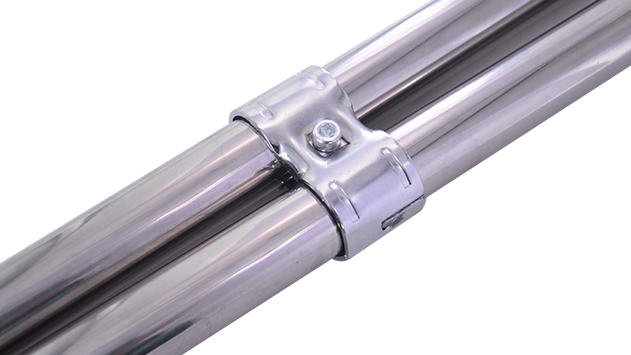
To understand the role of the Parallel Lean Pipe Joint Chrome in conveyor systems, it's first important to unpack what it is and how it differs from other joint types. At its core, this joint is a connector designed to link two or more lean pipes in a parallel configuration, creating a stable, rigid structure. Unlike standard T-joints or elbow joints, which connect pipes at angles, parallel joints are specifically engineered to hold pipes side by side, distributing weight evenly and preventing lateral movement. This design is particularly valuable in conveyor frames, where maintaining parallelism between support beams is critical for roller alignment.
The "chrome" in Parallel Lean Pipe Joint Chrome refers to its surface treatment—a layer of chromium applied via electroplating. This process not only enhances the joint's aesthetic appeal but also significantly improves its performance. Chrome plating provides a hard, smooth surface that resists corrosion, scratches, and wear, making the joint ideal for use in harsh environments like warehouses with high humidity, manufacturing facilities with chemical exposure, or cold storage units. Additionally, the chrome finish reduces friction during assembly, allowing for easier insertion and adjustment of pipes without damaging the joint or the pipe itself.
Constructed from high-grade steel, the Parallel Lean Pipe Joint Chrome offers impressive load-bearing capacity. While exact specifications vary by manufacturer, most parallel chrome joints can support between 300 kg to 600 kg per joint, depending on pipe diameter and installation. This strength is crucial in conveyor systems, where frames must support not only the weight of the rollers but also the goods being transported—often including heavy pallets or bulk items. The joint's design includes two parallel pipe sockets, each with internal threading or set screws to secure the pipes in place. This dual-socket configuration ensures that the pipes remain aligned, even under stress, preventing the frame from twisting or bending.
Another key advantage of the Parallel Lean Pipe Joint Chrome is its compatibility with a wide range of lean pipes. Whether using steel pipes coated in plastic (PE-coated lean pipes), aluminum pipes, or stainless steel pipes, these joints can accommodate various diameters (typically 28mm, 30mm, or 40mm) with the use of adapters if needed. This versatility makes them a go-to choice for logistics operations that may already have existing pipe infrastructure, as they can be retrofitted without requiring a complete system overhaul. For new installations, this compatibility allows businesses to mix and match pipe materials based on cost, weight, or environmental requirements, without sacrificing structural integrity.

Applications in Conveyor Systems: Where Chrome Joints Make a Difference
1. Roller Track Conveyors: Ensuring Smooth Material Flow
Roller track conveyors, a subset of roller conveyors, are widely used in logistics for moving boxes, totes, and small pallets. They consist of parallel tracks of rollers mounted on a frame, with the distance between tracks (gauge) adjustable to fit different product sizes. For these conveyors to function effectively, the tracks must be perfectly parallel and level. Even a slight misalignment can cause items to skew, jam, or fall off the conveyor, leading to delays and potential damage. This is where the Parallel Lean Pipe Joint Chrome shines.
In roller track conveyor frames, parallel joints are used to connect the horizontal support beams that hold the roller tracks. By securing these beams in a parallel configuration, the joints ensure that the tracks remain evenly spaced and aligned. For example, in a gravity roller conveyor used to move boxes from a picking station to a packing station, the frame's side rails (which support the rollers) are often constructed using two parallel lean pipes connected by chrome joints. These joints prevent the rails from spreading apart or narrowing, even as boxes slide over the rollers, maintaining consistent spacing and smooth flow.
In powered roller conveyors, where motors drive the rollers, the stakes are even higher. Misalignment can cause uneven wear on rollers and motors, leading to premature failure and costly repairs. Parallel Lean Pipe Joint Chrome, with its rigid connection, minimizes vibration and movement, ensuring that the frame remains stable even when the conveyor is operating at full speed. This stability not only extends the life of the conveyor but also reduces noise—a welcome benefit in busy warehouses where noise pollution can impact employee morale and productivity.
2. Mobile Conveyor Units: Flexibility on the Move
Not all conveyor systems are fixed in place. Mobile conveyors, mounted on caster wheels, are increasingly popular in logistics operations that require temporary or movable material flow solutions—for example, loading/unloading trucks, supplementing fixed conveyors during peak seasons, or reaching tight corners in warehouses. These units must be sturdy enough to support loads while being lightweight enough to move manually. The Parallel Lean Pipe Joint Chrome plays a critical role in balancing these two needs.
Mobile conveyor frames are typically constructed using lightweight lean pipes (often aluminum or thin-walled steel) to reduce overall weight. However, lightweight materials can compromise stability if not properly reinforced. Parallel chrome joints address this by providing strong, rigid connections between pipes, ensuring that the frame doesn't flex or wobble when the conveyor is moved or loaded. For instance, a mobile roller conveyor used to unload trucks might have a foldable frame with parallel joints at the hinges and support points. These joints allow the frame to fold for storage but lock into place when in use, providing the stability needed to handle heavy boxes as they roll from the truck to the warehouse floor.
Caster wheels, another key component of mobile conveyors, are often mounted to the frame using brackets connected via parallel joints. The joints distribute the weight of the conveyor and its load evenly across the casters, preventing uneven wear and ensuring smooth movement. In high-capacity mobile conveyors, where loads can exceed 500 kg, this even weight distribution is critical to avoiding caster failure and ensuring operator safety. Chrome joints, with their corrosion resistance, also hold up well to the wear and tear of frequent movement, as they are less likely to rust or seize compared to unplated steel joints.
3. Workbench Integration: Bridging Conveyors and Workstations
In many logistics operations, conveyor systems are not standalone—they are integrated with workbenches where employees pick, pack, label, or inspect goods. For example, in an e-commerce fulfillment center, a roller conveyor might feed directly into a packing workbench, where associates box items before sending them to shipping. In such setups, the conveyor and workbench must be aligned to ensure that items slide smoothly from the conveyor onto the workbench surface, reducing manual lifting and minimizing errors.
Parallel Lean Pipe Joint Chrome is often used to construct the frames of both the conveyor and the workbench, ensuring compatibility and alignment. Workbenches built with lean pipes and chrome joints can be customized to match the height and width of the conveyor, creating a seamless transition. For instance, a workbench with a single deck (without casters) might have a frame constructed using parallel joints to support the tabletop, with the conveyor's end positioned directly alongside the bench. The joints ensure that the workbench frame remains level and stable, even as employees lean on it or place heavy items on the surface, preventing gaps or misalignment with the conveyor that could disrupt material flow.
Additionally, parallel joints allow for the addition of accessories like tool holders, bins, or label dispensers to the workbench frame, keeping essential items within reach and further streamlining workflows. This integration of conveyors and workbenches, made possible by modular components like chrome joints, embodies lean principles by reducing motion waste—employees no longer need to walk to retrieve tools or reach across large gaps to access items from the conveyor.
Benefits of Parallel Lean Pipe Joint Chrome in Logistics
The decision to invest in Parallel Lean Pipe Joint Chrome for conveyor systems is driven by a host of benefits that directly impact operational efficiency, cost savings, and long-term sustainability. Let's explore these advantages in detail:
1. Enhanced Durability and Longevity
Logistics environments are tough on equipment. Conveyors operate for hours on end, handling thousands of items daily, and are exposed to dust, moisture, and occasional impacts. Components that fail prematurely can lead to costly downtime, missed deadlines, and increased maintenance expenses. Parallel Lean Pipe Joint Chrome, with its chrome-plated steel construction, is built to withstand these challenges. The chrome plating acts as a barrier against corrosion, preventing rust even in humid warehouses or cold storage facilities. The steel core provides tensile strength, ensuring that the joints don't crack or deform under heavy loads. In fact, when properly installed, these joints can last 10+ years—far longer than plastic joints (2-3 years) or unplated steel joints (5-7 years).
2. Flexibility and Adaptability
In logistics, change is constant. A warehouse might need to reconfigure its conveyor layout to accommodate a new product line, scale up operations during peak seasons (like Black Friday), or downsize during slower periods. Rigid conveyor systems make this difficult, requiring expensive modifications or replacements. Modular systems, however, allow for quick reconfiguration, and Parallel Lean Pipe Joint Chrome is a key enabler of this flexibility. These joints can be disassembled and reassembled in minutes, using basic tools like hex keys or wrenches. This means that a roller conveyor used for small packages in Q1 can be reconfigured into a wider conveyor for larger boxes in Q2, without purchasing new frames or hiring specialized contractors.
For example, a third-party logistics (3PL) provider handling multiple clients might need to adjust its conveyor systems weekly based on client-specific needs. With parallel chrome joints, the provider can quickly add or remove roller tracks, extend conveyor lengths, or change angles, ensuring that each client's material flow requirements are met without delay. This adaptability not only reduces capital expenditure but also allows businesses to respond to market changes with agility—a critical advantage in today's fast-paced economy.
3. Cost-Effectiveness Over Time
While Parallel Lean Pipe Joint Chrome may have a higher upfront cost than plastic or unplated steel joints, their long-term cost-effectiveness is undeniable. Let's break it down: Suppose a logistics operation installs a roller conveyor using plastic joints at a cost of $500. The joints fail after 2 years, requiring replacement at another $500. Over 10 years, this amounts to $2,500 in joint replacements. In contrast, a parallel chrome joint might cost $1,000 upfront but last 10+ years, requiring no replacements. When factoring in maintenance costs (plastic joints may need tightening or lubrication every few months, while chrome joints require minimal upkeep), the savings become even more significant.
Additionally, the flexibility of modular systems reduces the need for redundant equipment. Instead of purchasing separate conveyors for different product sizes, a single system with reconfigurable chrome joints can handle multiple applications, further lowering capital costs. For small to medium-sized businesses, this cost-effectiveness makes parallel chrome joints an investment that pays off in both the short and long term.
4. Safety and Ergonomics
Safety is a top priority in logistics, where heavy machinery and manual labor create inherent risks. Conveyor systems with unstable frames or loose joints can pose hazards, such as items falling off, employees tripping over misaligned components, or pinch points from moving parts. Parallel Lean Pipe Joint Chrome reduces these risks by ensuring that conveyor frames remain stable and secure. The set screws or threading in the joints lock pipes in place, preventing accidental dislodging. The smooth chrome finish also eliminates sharp edges, reducing the risk of cuts or scrapes during assembly or maintenance.
Ergonomics is another area where these joints contribute. By allowing for precise customization of conveyor height, width, and angle, parallel joints help create workflows that reduce strain on employees. For example, a roller conveyor feeding into a workbench can be adjusted to the ideal height (typically elbow height for the average worker), minimizing bending or reaching. This not only improves employee comfort but also reduces the risk of musculoskeletal injuries, lowering workers' compensation costs and improving retention.
Comparing Joint Types: Why Chrome Parallel Joints Stand Out
To fully appreciate the value of Parallel Lean Pipe Joint Chrome, it's helpful to compare it with other common joint types used in conveyor systems. Below is a table outlining key differences in material, performance, and cost:
| Joint Type | Material | Load Capacity (per joint) | Corrosion Resistance | Assembly Time (minutes per joint) | Expected Lifespan (years) | Cost (Relative) |
|---|---|---|---|---|---|---|
| Parallel Lean Pipe Joint Chrome | Chrome-plated steel | 300-600 kg | High (resists rust, moisture) | 2-3 | 10+ | Medium-High |
| Standard Plastic Joint | Nylon or polypropylene | 50-150 kg | Medium (resists moisture, not chemicals) | 1-2 | 2-3 | Low |
| Unplated Steel Joint | Mild steel | 200-400 kg | Low (prone to rust) | 2-3 | 5-7 | Medium |
| Aluminum Alloy Joint | Aluminum alloy | 150-300 kg | High (natural oxide layer) | 3-4 | 7-9 | Medium-High |
As the table shows, Parallel Lean Pipe Joint Chrome outperforms plastic and unplated steel joints in load capacity, corrosion resistance, and lifespan. While aluminum alloy joints offer similar corrosion resistance, they have lower load capacity and require more time to assemble. For logistics operations handling heavy loads or operating in harsh environments, chrome parallel joints are the clear choice. For light-duty applications with minimal exposure to moisture, plastic joints may suffice, but they often end up costing more in the long run due to frequent replacements.
Real-World Case Study: A Distribution Center's Success Story
Challenge: Frequent Downtime in a Food Distribution Center
A regional food distribution center specializing in perishable goods (dairy, meats, produce) was struggling with frequent conveyor breakdowns. The center operated 24/7, with roller conveyors moving pallets and totes between cold storage (3°C) and packing areas (20°C). The existing conveyor frames used unplated steel joints, which had begun to rust due to condensation from temperature fluctuations. Rust caused the joints to seize, making it difficult to adjust the conveyor tracks, and in some cases, the joints failed completely under the weight of loaded pallets. Breakdowns occurred 2-3 times per week, each requiring 1-2 hours of maintenance, leading to missed delivery deadlines and increased labor costs.
Solution: Retrofitting with Parallel Lean Pipe Joint Chrome
After consulting with a lean system supplier, the distribution center decided to retrofit its roller conveyor frames with Parallel Lean Pipe Joint Chrome. The project involved replacing all unplated steel joints with chrome parallel joints, as well as adding corrosion-resistant aluminum roller tracks to complement the new joints. The supplier provided adapters to ensure compatibility with the existing steel pipes, minimizing downtime during installation. The retrofitting was done in phases over two weeks, with crews working during off-peak hours to avoid disrupting operations.
Results: Improved Reliability and Cost Savings
Within three months of the retrofit, the distribution center saw dramatic improvements: conveyor breakdowns dropped to zero, maintenance time was reduced by 90% (from 8-10 hours/week to less than 1 hour/week), and order fulfillment time decreased by 15% due to smoother material flow. The chrome joints withstood the temperature fluctuations and condensation without rusting, and the rigid frame alignment reduced pallet jams by 70%. Over the first year, the center saved approximately $50,000 in maintenance costs and avoided $100,000 in lost revenue from missed deliveries. The ROI on the joint replacement project was achieved in just 6 months, with the remaining lifespan of the chrome joints (estimated at 10+ years) promising continued savings.
Challenges and Considerations
While Parallel Lean Pipe Joint Chrome offers numerous benefits, there are considerations logistics operations should keep in mind when choosing this component:
1. Upfront Cost vs. Long-Term Value
As mentioned earlier, chrome parallel joints have a higher upfront cost than plastic or unplated steel joints. For budget-constrained businesses, this can be a barrier. However, it's important to view this as an investment rather than an expense. Conducting a total cost of ownership (TCO) analysis—factoring in lifespan, maintenance, downtime, and replacement costs—typically reveals that chrome joints are more economical over time. Businesses can also mitigate upfront costs by retrofitting in phases, starting with high-traffic conveyors most prone to breakdowns.
2. Installation Expertise
While parallel chrome joints are designed for easy assembly, proper installation is critical to maximizing their performance. Set screws must be tightened to the correct torque to ensure pipes are secure without damaging the pipe coating. Misalignment during installation can lead to uneven weight distribution and premature wear. To address this, many suppliers offer installation training or on-site support, ensuring that in-house teams or contractors have the skills needed to assemble the joints correctly. Investing in training upfront can prevent costly mistakes later.
3. Compatibility with Existing Systems
Logistics operations with existing lean pipe systems may worry about compatibility. Fortunately, most parallel chrome joints are designed to work with standard lean pipe diameters. If the existing pipes are a non-standard size, suppliers can provide custom adapters. It's important to consult with a supplier early in the planning process to verify compatibility and avoid delays.
Future Trends: What's Next for Lean Conveyor Components?
As logistics continues to evolve, driven by automation, IoT, and sustainability, the components used in conveyor systems are also advancing. Here are a few trends that are likely to shape the future of Parallel Lean Pipe Joint Chrome and similar components:
1. Integration with Smart Technology
The rise of Industry 4.0 is bringing smart sensors and connectivity to material handling equipment. Future iterations of parallel joints may include embedded sensors that monitor load, temperature, or vibration, sending real-time data to a central system. This would enable predictive maintenance, where managers can identify worn joints before they fail, further reducing downtime. For example, a sensor in a chrome joint could detect when the set screws are loosening and alert maintenance staff to tighten them, preventing a potential breakdown.
2. Sustainable Materials and Manufacturing
Sustainability is becoming a priority for businesses and consumers alike. Manufacturers of lean pipe components are exploring ways to reduce their environmental footprint, such as using recycled steel in chrome joints or developing chrome-plating processes with lower energy consumption and reduced chemical waste. Additionally, the modular nature of lean systems aligns with the circular economy, as joints and pipes can be reused or repurposed when systems are reconfigured, reducing waste.
3. Lightweight yet Stronger Designs
Advancements in materials science may lead to chrome joints that are lighter in weight but just as strong as current models. This would make conveyor systems easier to move and reconfigure, while still supporting heavy loads. For example, using high-strength steel alloys or composite materials could reduce joint weight by 10-15% without compromising load capacity, making mobile conveyors more maneuverable and reducing shipping costs for new installations.
Conclusion: The Unsung Hero of Lean Logistics
In the grand scheme of logistics, it's easy to overlook components like joints. Yet, as we've explored, the Parallel Lean Pipe Joint Chrome plays a vital role in ensuring that conveyor systems are durable, flexible, and efficient—qualities that are essential for lean logistics success. By providing stable, corrosion-resistant connections between lean pipes, these joints enable the creation of modular conveyor systems that can adapt to changing needs, reduce waste, and support continuous improvement.
From roller track conveyors in food distribution centers to mobile conveyors in e-commerce warehouses, Parallel Lean Pipe Joint Chrome has proven its value in real-world applications. Its ability to withstand harsh environments, support heavy loads, and simplify reconfiguration makes it a cornerstone of modern material handling. As logistics operations continue to embrace lean principles and adapt to new technologies, the demand for reliable, flexible components like chrome parallel joints will only grow.
For businesses looking to enhance their conveyor systems, the message is clear: don't underestimate the power of a well-designed joint. Investing in Parallel Lean Pipe Joint Chrome is not just about buying a component—it's about investing in the efficiency, reliability, and future adaptability of your entire logistics operation. In the end, it's the small, often unseen components that keep the wheels of logistics turning smoothly.