- Company Articles
- Products and Technology
- Product knowledge
- Parallel Lean Pipe Joint Chrome in Mechanical Manufacturing: Assembly Line Integration

Parallel Lean Pipe Joint Chrome in Mechanical Manufacturing: Assembly Line Integration
Related Product
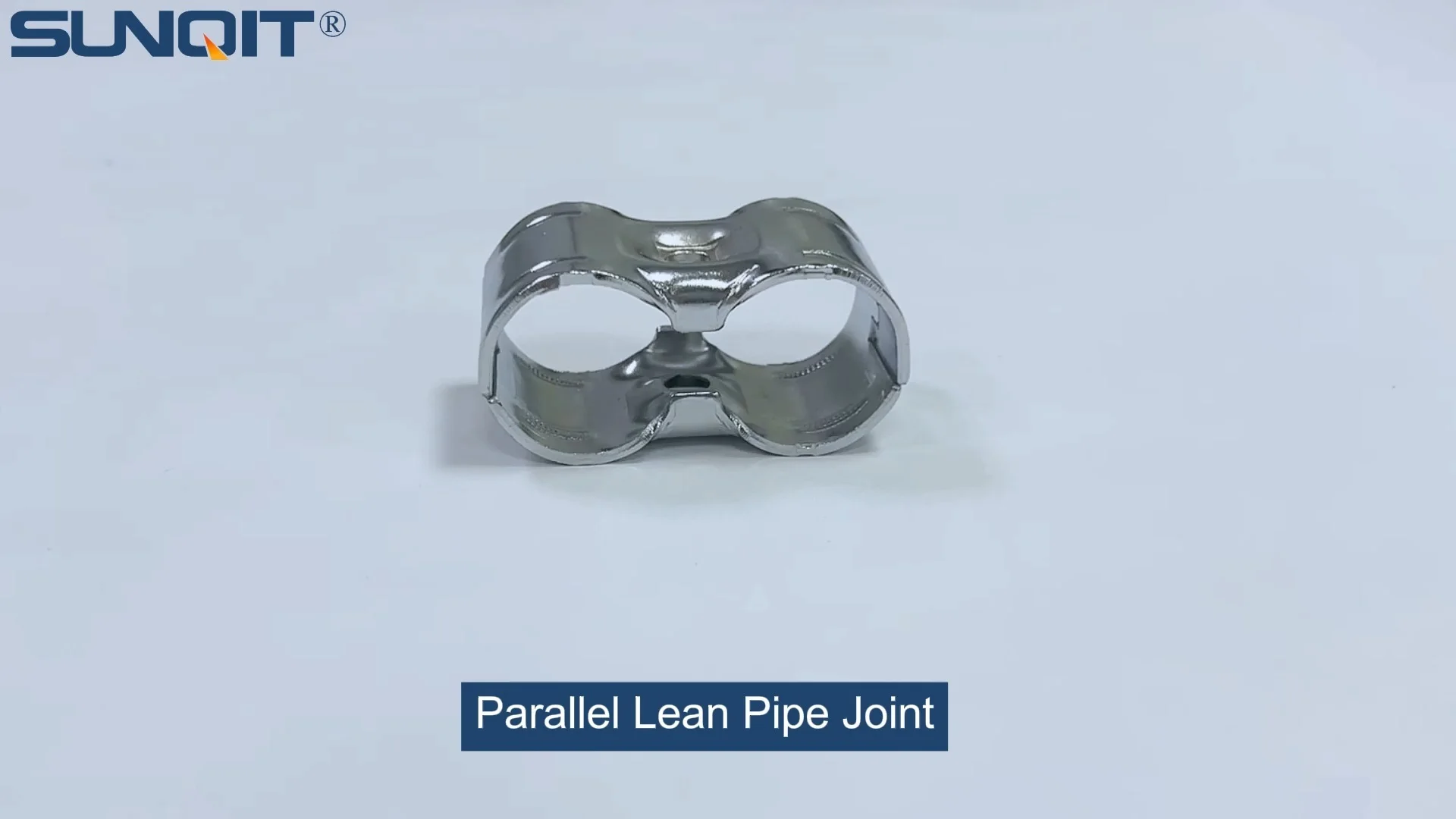
Parallel Lean Pipe Joint Chrome
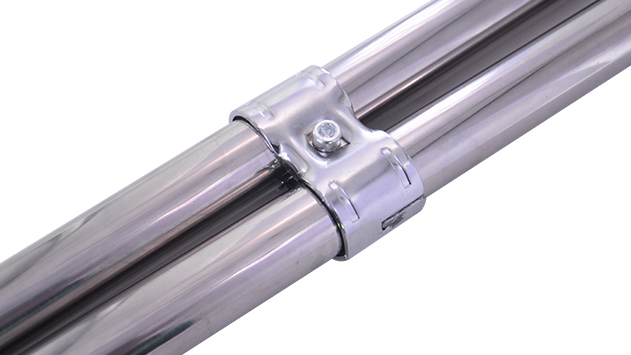
Parallel lean pipe joint used for 2 pcs 28MM lean pipe connection in parallel direction to enhance frame structure, usually for heavy payload requirement for workbench. flow rack, hand trolley.
The Pulse of Modern Manufacturing: Efficiency Meets Adaptability
In the bustling world of mechanical manufacturing, where every second counts and every square foot of floor space matters, the difference between a struggling production line and a thriving one often boils down to one key factor: adaptability. Imagine a factory floor where reconfiguring a workstation takes days of welding and heavy lifting, or where a sudden shift in product design leaves entire sections of the assembly line obsolete. This isn't just a hypothetical scenario—it's the reality for many manufacturers still clinging to rigid, outdated systems. But in today's fast-paced market, where customer demands evolve overnight and production runs get shorter, rigidity is the enemy. Enter lean manufacturing: a philosophy built on eliminating waste, streamlining processes, and—above all—embracing flexibility. And at the heart of this philosophy lies a small but mighty component: the parallel lean pipe joint chrome.
You might not notice it at first glance, but walk through any world-class manufacturing facility, and you'll see its work everywhere. It's in the seamless connections of lean pipe workbenches that adjust to worker heights in minutes, in the flow racks that gently guide components from storage to assembly without jams, and in the conveyors that adapt to new product sizes with a few quick tweaks. The parallel lean pipe joint chrome isn't just a piece of hardware; it's the unsung hero that turns static production lines into dynamic, responsive ecosystems. In this article, we'll dive deep into how this unassuming joint is revolutionizing assembly line integration, why its chrome finish matters, and how it works hand-in-hand with other lean components to transform manufacturing floors from chaotic to controlled.
What Is Parallel Lean Pipe Joint Chrome, Anyway?
Let's start with the basics. At its core, a parallel lean pipe joint chrome is a connector designed to link lean pipes (also known as or "lean tubes")—hollow tubes typically made of steel, aluminum, or stainless steel—into sturdy, customizable structures. But what sets it apart from generic pipe fittings? For starters, its "parallel" design means it's engineered to connect two or more pipes in parallel alignment, creating stable frameworks that can support everything from lightweight workbenches to heavy-duty material racks. The "chrome" finish isn't just for show, either; it's a deliberate choice to enhance durability, resist corrosion, and make cleaning a breeze in industrial environments where oils, coolants, and dust are part of the daily grind.
Unlike traditional welded joints or fixed brackets, these chrome-plated connectors are designed for tool-free assembly. Most feature a simple (screw-in) or clamp-on mechanism that allows workers to tighten or loosen them with basic hand tools—no welding torches, no specialized training, no downtime. This might sound like a small detail, but in a factory where a single production line can have hundreds of connections, the time saved adds up fast. Imagine needing to raise a workbench by 6 inches to accommodate a taller worker: with traditional welded frames, that would mean disassembling the entire structure, cutting new pipes, and rewelding. With parallel lean pipe joint chrome? It's a 15-minute job: loosen the joints, adjust the pipes, retighten, and you're back to work.
But its real magic lies in modularity. These joints are part of a larger lean ecosystem, compatible with everything from aluminum profiles to roller tracks, casters, and ESD (electrostatic discharge) components. This means manufacturers aren't locked into a single supplier or a fixed design—they can mix and match parts to create exactly what they need, when they need it. Need a temporary workstation for a rush order? Combine lean pipes, parallel joints, and a simple tabletop. Want to add a flow rack to reduce material handling time? Attach roller tracks to a frame built with these joints. The possibilities are limited only by the imagination of the production team.
Why Chrome? The Science Behind the Shine
You might be wondering: why chrome-plate these joints? After all, there are cheaper finishes out there—painted steel, plastic coatings, even bare metal. But in manufacturing, where durability and hygiene are non-negotiable, chrome isn't a luxury; it's a necessity. Let's break it down.
First, corrosion resistance. Manufacturing floors are harsh environments. Oils from machinery, coolants from metalworking, and even humidity in the air can eat away at unprotected metal over time. Chrome plating creates a hard, non-porous barrier that repels moisture and chemicals, preventing rust and extending the life of the joint. This isn't just about saving money on replacements; it's about safety. A rusted joint could weaken over time, putting workers at risk of injury if a structure collapses. Chrome ensures that even after years of use, these joints maintain their structural integrity.
Second, ease of cleaning. In industries like automotive or electronics manufacturing, where dust and debris can ruin sensitive components, a clean workspace is critical. Chrome's smooth, shiny surface doesn't trap dirt or grime—wiping it down with a damp cloth is usually enough to keep it spotless. Compare that to painted joints, where scratches can create crevices for bacteria or dust to hide, or plastic-coated joints that can peel and harbor contaminants. Chrome simplifies maintenance, reducing the time workers spend on cleaning and freeing them up for more value-added tasks.
Finally, aesthetics might seem trivial, but they matter more than you think. A well-maintained, shiny production line sends a message—to workers, to clients, and to regulators—that the company cares about quality. Chrome joints add a professional, polished look to lean structures, making the factory floor feel more organized and less chaotic. This might seem like a small psychological boost, but studies have shown that clean, visually appealing workspaces improve employee morale and reduce errors. When workers take pride in their environment, they're more likely to take pride in their work.

Integration in Action: From Workbench to Warehouse
To truly understand the impact of parallel lean pipe joint chrome, let's look at how it integrates with three key components of the modern assembly line: lean pipe workbenches, flow racks, and conveyors. These are the backbone of any manufacturing facility, and the way they connect can make or break production efficiency.
1. Lean Pipe Workbench: The Heart of the Assembly Line
The lean pipe workbench is where the magic happens—the place where workers assemble, inspect, and test products. But not all workbenches are created equal. A poorly designed workstation can lead to ergonomic issues (think back pain from hunching over a low table), wasted motion (searching for tools stored across the room), and even product defects (static electricity damaging sensitive parts). This is where parallel lean pipe joint chrome shines.
Take, for example, a workbench used in electronics assembly. Workers here need ESD protection to prevent static from frying microchips, adjustable height to accommodate different team members, and tool storage that keeps essentials within arm's reach. With traditional workbenches, achieving this would require custom fabrication—expensive and inflexible. With lean pipe workbenches built using parallel lean pipe joint chrome, it's a snap. Start with a base frame of aluminum lean pipes connected by chrome joints, add an ESD-safe tabletop, and then customize: attach tool hooks to the frame using additional joints, mount a small shelf for components, and install adjustable leveling feet to tweak the height. If the team switches to a larger product next month? Loosen the joints, add longer pipes to widen the tabletop, and reconfigure the tool storage—no new workbench needed.
One manufacturer I worked with recently shared a story that perfectly illustrates this. They produce both small circuit boards and larger industrial controllers. In the past, they had two separate workbenches: one for small parts, one for large. But with production runs getting shorter, they often found themselves with unused workbenches taking up space. After switching to lean pipe workbenches with parallel chrome joints, they built a single, adjustable workstation. For small boards, they kept it narrow with lower shelves; for large controllers, they widened the frame and added taller shelves. The result? They freed up 200 square feet of floor space and reduced setup time between runs by 40%.
2. Flow Rack: From Storage to Assembly, Seamlessly
Next up: flow racks. These gravity-fed systems are designed to move materials from storage to the assembly line with minimal effort—components slide down roller tracks, ensuring that the next part is always within reach. But to work effectively, flow racks need to be precisely angled (too steep, and parts might slide too fast; too shallow, and they get stuck) and sturdy enough to handle heavy loads. Again, parallel lean pipe joint chrome is the key to making this work.
Consider a flow rack for automotive parts—think brake calipers, alternators, or wiring harnesses. These parts are heavy, so the rack needs a strong frame. Traditional flow racks are often made of welded steel, which is strong but impossible to adjust. If a new part is slightly taller than the existing shelves, you're out of luck. With a lean flow rack built using parallel lean pipe joint chrome, the frame is constructed from steel or aluminum pipes connected by chrome joints, with roller tracks attached via brackets. Need to adjust the angle of the roller track? Loosen the joints holding the track in place, tilt it to the desired angle, and retighten. Need to add a shelf for taller parts? insert longer pipes into the joints and secure them—done. This flexibility isn't just convenient; it's cost-effective. Instead of buying a new rack every time your product line changes, you adapt the one you have.
A warehouse manager at a mid-sized auto parts supplier once told me about their "flow rack nightmare" before switching to lean systems. They'd ordered a custom rack for a new line of fuel injectors, only to discover the injectors were slightly longer than expected. The rack was useless, and they had to pay rush fees for a replacement. Today, with lean flow racks, they can adjust shelf heights and track angles on the fly. "Last month, we had a part that was 3 inches longer than the previous one," he said. "Two guys, 30 minutes, and the rack was good to go. No rush fees, no downtime—just problem solved."
3. Conveyor Systems: Keeping the Line Moving
Finally, we have conveyors—the arteries of the assembly line, moving products from one station to the next. Whether it's a simple roller conveyor for heavy parts or a belt conveyor for delicate electronics, conveyors need to integrate seamlessly with workbenches, flow racks, and other equipment. And once again, parallel lean pipe joint chrome plays a starring role.
Imagine a conveyor that feeds into a lean pipe workbench where workers inspect products. If the conveyor is even an inch too high or too low, workers have to bend or reach awkwardly, slowing down production and increasing the risk of injury. With traditional conveyors, adjusting the height would require disassembling the frame or hiring a technician. With a lean conveyor built using parallel lean pipe joint chrome, it's a matter of adjusting the support legs—connected via chrome joints—to the perfect height. But it doesn't stop there: these joints also allow conveyors to be extended or shortened as needed. If production ramps up and you need a longer conveyor to keep up, simply add more pipe sections and joints. If a new machine is installed and the conveyor path needs to curve, use swivel joints (another type of lean pipe connector) to create a gentle bend—no need for expensive custom curves.
One electronics manufacturer I visited had a particularly clever setup: they used conveyors with adjustable heights and angles, all connected via parallel lean pipe joint chrome, to move circuit boards through different stages of assembly. The first conveyor, set low, brought boards from the flow rack to the soldering station; the next, slightly higher, carried them to inspection; and the final one, angled downward, sent finished boards to packaging. If a new soldering machine required a taller workstation, they adjusted the first conveyor's height in minutes—no disruption to the rest of the line.
Traditional vs. Lean: A Clear Winner
Still not convinced that parallel lean pipe joint chrome is worth the switch? Let's put it head-to-head with traditional welded systems in a side-by-side comparison. The table below breaks down key factors like setup time, adaptability, cost, and maintenance—areas that matter most to manufacturers.
| Factor | Traditional Welded Systems | Lean Systems with Parallel Lean Pipe Joint Chrome |
|---|---|---|
| Setup Time | Days to weeks (requires welding, custom fabrication) | Hours to days (tool-free assembly, modular components) |
| Adaptability | Fixed design; difficult/impossible to reconfigure | Highly adaptable; reconfigurable in minutes/hours |
| Cost (Initial) | Lower upfront (cheap materials, but custom labor adds up) | Slightly higher upfront (quality materials, modular components) |
| Cost (Long-Term) | High (frequent replacements, downtime for reconfigurations) | Low (reusable components, minimal downtime, reduced waste) |
| Maintenance | High (welds can crack, hard to repair, rust-prone) | Low (chrome resists corrosion, joints easy to tighten/repair) |
| Safety | Risk of sharp edges from welding, unstable if welds weaken | Safe (smooth chrome finish, secure clamp-on joints, no sharp edges) |
The data speaks for itself: while traditional systems might seem cheaper upfront, they cost more in the long run due to downtime, replacements, and lost productivity. Lean systems, powered by components like parallel lean pipe joint chrome, offer a better return on investment by adapting to your needs—today, tomorrow, and next year.
Overcoming Challenges: The Learning Curve and Beyond
Of course, no system is perfect, and switching to lean manufacturing with parallel lean pipe joint chrome isn't without its challenges. The most common pushback I hear from manufacturers is the initial learning curve. Workers used to welded systems might be hesitant to adopt new tools, and managers might worry about training costs. But here's the truth: these joints are designed to be intuitive. Most workers can learn to assemble and reconfigure basic structures in an hour or two of hands-on training. And once they see how much time they save—no more waiting for the welding team, no more struggling with heavy tools—resistance quickly turns to enthusiasm.
Another concern is durability. "Are these joints strong enough?" manufacturers ask. It's a fair question—after all, if a structure collapses, the cost in injuries and lost production could be catastrophic. But modern parallel lean pipe joint chrome is engineered to handle heavy loads. Most are made from high-grade steel with chrome plating, and they're tested to withstand thousands of pounds of pressure. In fact, many manufacturers report that their lean structures are more stable than traditional welded ones, thanks to the flexibility of the joints, which absorb vibrations from machinery better than rigid welds.
Finally, there's the issue of supplier reliability. With so many "lean" components on the market, how do you ensure you're getting quality joints? The key is to partner with a reputable lean pipe supplier—one that provides certifications for material strength, corrosion resistance, and load capacity. Look for suppliers who offer samples so you can test the joints yourself, and who provide clear documentation on how to use and maintain them. A good supplier won't just sell you parts; they'll help you design your ideal system and provide ongoing support.
The Future of Manufacturing: Smart, Flexible, and Lean
As we look to the future—Industry 4.0, smart factories, and the Internet of Things (IoT)—one thing is clear: flexibility will only become more important. Factories won't just need to adapt to new products; they'll need to connect with sensors, robots, and data analytics platforms to optimize production in real time. Parallel lean pipe joint chrome is ready for this future. Because it's modular, it can easily integrate with smart components: attach IoT sensors to a lean pipe frame to monitor production flow, mount collaborative robots (cobots) on adjustable lean pipe workbenches, or connect conveyors to AI-powered inventory systems.
Consider this: a smart factory where a sudden spike in orders triggers an automatic reconfiguration of the assembly line. With traditional systems, this would require human intervention and hours of downtime. With lean systems built on parallel lean pipe joint chrome, the reconfiguration could happen in minutes—robots or workers loosen joints, adjust frames, and retighten, guided by real-time data. It's not science fiction; it's already happening in forward-thinking facilities around the world.
Conclusion: The Small Joint That Makes a Big Difference
At the end of the day, manufacturing is about more than just making products—it's about making progress. It's about finding better ways to work, reducing waste, and creating environments where workers can thrive. The parallel lean pipe joint chrome might be small, but its impact is huge. It's the difference between a production line that fights change and one that embraces it. It's the reason a worker can adjust their workstation to avoid back pain, or a manager can reconfigure a flow rack to meet a rush order, or a company can free up floor space to invest in new technology.
So if you're still using traditional welded systems, ask yourself: What could my team accomplish with 40% more time? With 200 extra square feet of floor space? With workstations that adapt to their needs, not the other way around? The answer, I think, is clear. The future of manufacturing is lean, flexible, and chrome-plated. And it starts with a single joint.