- Company Articles
- Products and Technology
- Product knowledge
- Parallel Lean Pipe Joint Chrome: Key Features for Quick Disassembly & Reconfiguration

Parallel Lean Pipe Joint Chrome: Key Features for Quick Disassembly & Reconfiguration
Related Product
Parallel Lean Pipe Joint Chrome
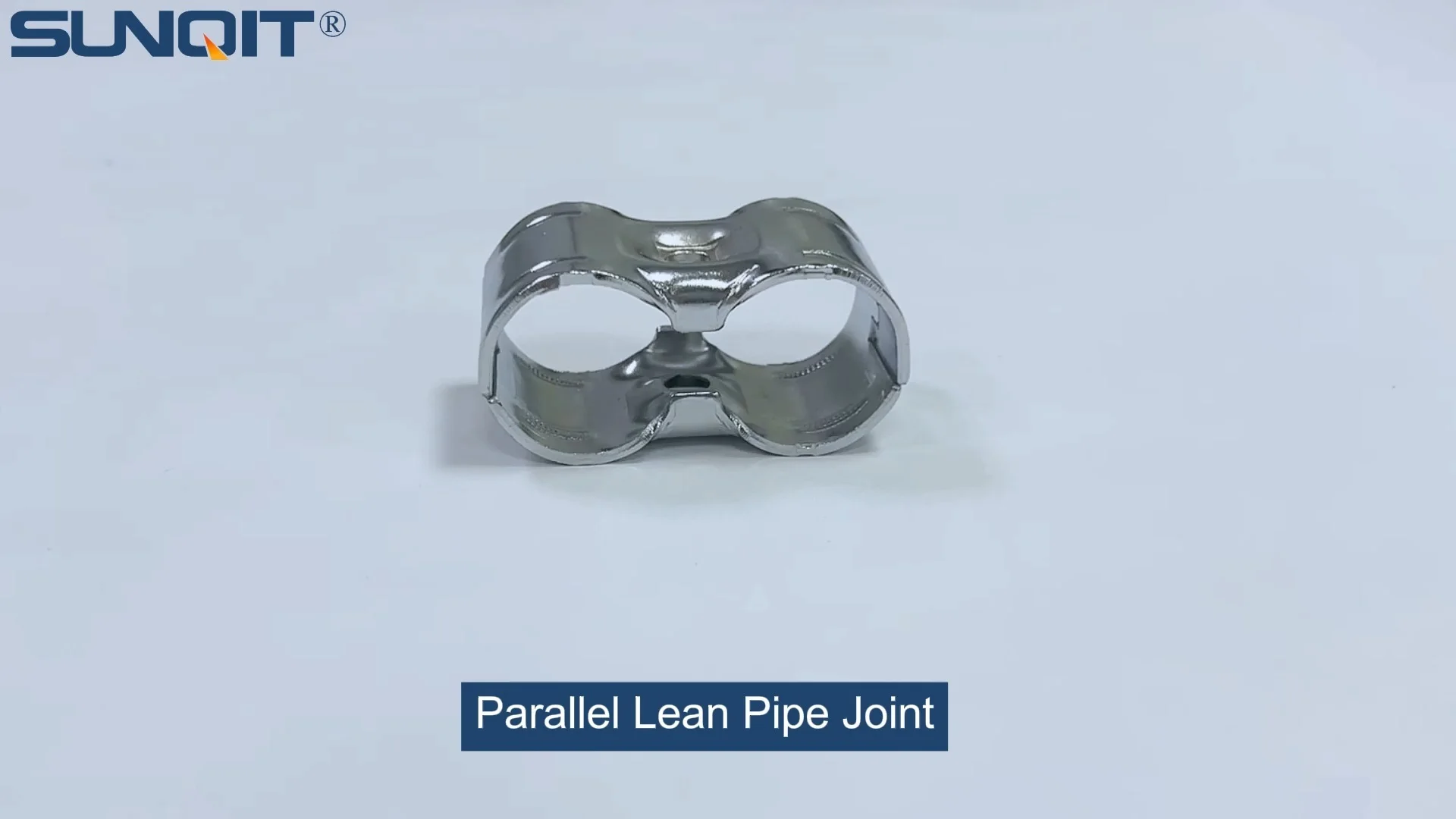
Parallel lean pipe joint used for 2 pcs 28MM lean pipe connection in parallel direction to enhance frame structure, usually for heavy payload requirement for workbench. flow rack, hand trolley.
Introduction: The Need for Flexibility in Modern Manufacturing
Walk into any busy factory or production facility today, and you'll notice one thing right away: change is constant. Product lines shift, customer demands evolve, and even the size of orders can fluctuate from week to week. In this fast-paced environment, rigidity is the enemy of efficiency. That's where lean systems come in—they're all about streamlining processes, eliminating waste, and, perhaps most importantly, staying adaptable. But here's the thing: a lean system is only as strong as its components. When it comes to building workbenches, material racks, or assembly lines that can keep up with changing needs, the right joints make all the difference. Enter the parallel lean pipe joint chrome —a small but mighty component that's quietly revolutionizing how manufacturers approach flexibility and efficiency.
Imagine a scenario: A electronics manufacturer suddenly lands a rush order for a new smartphone model. Their existing assembly line is set up for larger devices, and they need to reconfigure their workstations to fit the smaller components. If their workbenches and material racks are held together with clunky, permanent fasteners, this could take days—delaying production and eating into profits. But if they're using parallel lean pipe joint chrome? The process might take hours instead. That's the power of a component designed with quick disassembly and reconfiguration in mind. In this article, we'll dive deep into what makes these joints so special, why they're a game-changer for lean systems, and how they can transform your production floor from static to adaptable.
What Exactly Is a Parallel Lean Pipe Joint Chrome?
Let's start with the basics. If you're familiar with lean manufacturing, you've probably heard of lean pipes—those lightweight, durable tubes used to build everything from workbenches to turnover trolleys. They're the backbone of many lean systems, thanks to their versatility and affordability. But lean pipes don't work alone; they need joints to connect them into stable, functional structures. That's where lean pipe joints come in, and the parallel lean pipe joint chrome is a standout in this category.
At its core, a parallel lean pipe joint chrome is a specialized connector designed to join two or more lean pipes in a parallel arrangement. Unlike some joints that angle pipes at 90° or 45°, this one is all about keeping pipes running side-by-side—think the horizontal supports on a workbench or the vertical posts on a material rack. What sets it apart? The "chrome" part of the name gives a clue: it's coated in a layer of chrome, which adds durability and corrosion resistance. But the real magic is in its design. These joints are engineered to balance strength with speed—strong enough to hold heavy loads, yet easy enough to take apart and reassemble when you need to tweak your setup.
So, who uses them? Just about anyone relying on lean systems: automotive plants, electronics manufacturers, warehouses, and even small-scale workshops. If your operation involves production assemble lines that need to shift layouts, or workbench setups that must adapt to different tasks, these joints are about to become your new best friend. Let's break down their key features to see why.
Key Features of Parallel Lean Pipe Joint Chrome: Why It Stands Out
Not all lean pipe joints are created equal. Some are great for heavy loads but take forever to adjust; others are quick to assemble but lack stability. The parallel lean pipe joint chrome, however, hits that sweet spot between strength, speed, and versatility. Let's unpack its most important features:
1. Quick Disassembly & Reconfiguration: No Tools, No Fuss
Here's the star of the show: these joints are built for speed. Traditional pipe joints often require wrenches, screwdrivers, or even power tools to take apart—imagine spending 20 minutes just to remove a single joint when you're in the middle of a line reconfiguration. With parallel lean pipe joint chrome, though, the process is dramatically simpler. Most models use a cam lever or a quick-release mechanism that lets you loosen or tighten the joint with just a twist of your hand or a basic hex key. Some even claim tool-free operation, which is a game-changer during those high-pressure moments when every minute counts.
Real-World Example: A furniture manufacturer in Ohio recently switched to parallel lean pipe joint chrome for their material racks. Previously, changing the height of a shelf required two workers, a wrench, and about 15 minutes per joint. Now, one worker can adjust three shelves in the same time—saving over 60 hours of labor per month. That's the kind of efficiency that adds up.
2. Chrome Plating: Durability That Lasts
Let's talk about the "chrome" in the name. Chrome plating isn't just for looks (though it does give the joint a sleek, professional finish). It's a protective layer that shields the underlying metal from rust, corrosion, and daily wear and tear. In manufacturing environments, where spills, humidity, or even just frequent handling can take a toll, this is a big deal. A standard unplated joint might start showing signs of rust after a few months in a damp warehouse, but a chrome-plated one? It'll stay looking and performing like new for years. That durability means fewer replacements, less downtime, and a better return on investment over time.
3. Parallel Design: Stability for Side-by-Side Pipes
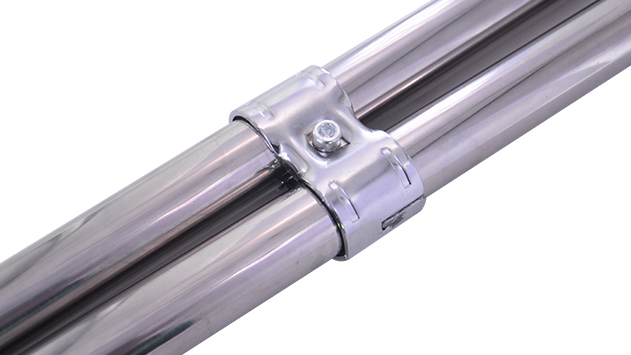
Ever tried to build a shelf with two parallel pipes, only to have them wobble or shift out of alignment? It's frustrating, and it compromises the structure's stability. The parallel lean pipe joint chrome solves this with its specialized design. Unlike generic joints that can connect pipes at any angle, these are engineered specifically for parallel setups. They cradle the pipes securely, ensuring they stay perfectly aligned even under heavy loads. Whether you're building a workbench with parallel supports or a material rack with multiple horizontal bars, this design reduces flex and keeps everything rock-solid. And when you need to reconfigure? The alignment stays consistent, so you don't have to spend extra time readjusting.
4. Compatibility: Works with Your Existing Setup
One of the biggest concerns when adopting new components is compatibility. Will this joint work with the lean pipes I already have? The good news is, parallel lean pipe joint chrome is designed to play well with others. It's compatible with standard lean pipes (often 28mm in diameter), as well as many aluminum pipes and even some stainless steel series. This means you don't have to overhaul your entire system to start using them—just swap out your old joints for these, and you're good to go. It's a low-risk upgrade that delivers immediate benefits.
5. Impressive Load Capacity: Strength Without the Bulk
Flexibility is great, but what if the joint can't handle the weight of your materials? That's a non-starter. Fortunately, parallel lean pipe joint chrome doesn't skimp on strength. Thanks to high-quality materials (usually steel with chrome plating) and precision engineering, these joints can support surprisingly heavy loads. Most models can handle anywhere from 50kg to 150kg per joint, depending on the size and design. That's more than enough for typical workshop needs—think stacks of inventory on a material rack, or heavy tools on a workbench. So you get the best of both worlds: the ability to reconfigure quickly and the peace of mind that your structure is stable.

How Parallel Lean Pipe Joint Chrome Fits into Lean Systems
Lean systems are all about eliminating waste, and one of the biggest sources of waste in manufacturing is downtime —time spent waiting for equipment to be adjusted, lines to be reconfigured, or tools to be moved. The parallel lean pipe joint chrome directly targets this waste by making reconfiguration faster and easier. Let's look at some common applications where these joints shine:
1. Production Assemble Lines: Adapting to New Products
In production assemble , change is the only constant. A single assembly line might need to switch between different product models, each with its own set of tools, parts, and workspace requirements. With parallel lean pipe joint chrome, workers can quickly adjust the height of work surfaces, add or remove tool holders, or even reposition conveyor belts to fit the new product. For example, if a line is switching from assembling laptops to tablets, the workstations can be narrowed, and material racks can be adjusted to hold smaller components—all in a fraction of the time it would take with traditional joints.
2. Workbenches: Customizing for Every Task
A workbench is the heart of any workshop, but what works for one task might not work for another. A mechanic assembling small parts needs a different setup than someone packing boxes, right? With parallel lean pipe joint chrome, workbenches become infinitely customizable. Want to add a shelf for extra tools? Just attach a few joints and pipes. Need to lower the surface to accommodate a seated worker? Loosen the joints, adjust the height, and tighten them back up. Even accessories like LED lights, power strips, or storage bins can be easily added or moved as needed. The result? A workbench that adapts to the worker, not the other way around.
3. Material Racks: Keeping Inventory Accessible
Material racks are another area where flexibility matters. Seasonal demand, new product launches, or even just reorganizing inventory can require changing shelf heights or adding new levels. With parallel lean pipe joint chrome, adjusting a material rack is as simple as loosening the joints, sliding the pipes to the desired height, and retightening. No more drilling new holes, welding, or replacing entire sections of the rack. This is especially useful in warehouses where space is tight—you can maximize vertical storage one month and switch to wider shelves the next, all without breaking a sweat.
4. Turnover Trolleys: Moving Materials with Ease
Turnover trolleys are essential for moving materials around a facility, but their size and capacity need to match the load. A trolley used to transport large boxes might need a wider base, while one carrying small parts could be narrower. Parallel lean pipe joint chrome makes it easy to adjust trolley dimensions—add extra pipes for stability, remove sections to lighten the load, or even change the height of the handle for ergonomic use. And because the joints are durable, you don't have to worry about the trolley wobbling under heavy loads.
How Does It Compare to Other Joints? A Quick Comparison
To really understand the value of parallel lean pipe joint chrome, it helps to see how it stacks up against other common types of lean pipe joints. Let's take a look at a comparison table:
| Feature | Parallel Lean Pipe Joint Chrome | Standard Unplated Lean Pipe Joint | Aluminum Lean Pipe Joint |
|---|---|---|---|
| Disassembly Speed | Tool-free or 1-2 minutes per joint | 5-10 minutes per joint (requires wrench) | 2-3 minutes per joint (requires hex key) |
| Durability | High (chrome plating resists corrosion) | Medium (prone to rust in damp environments) | High (aluminum resists corrosion, but less impact-resistant) |
| Best For | Parallel pipe setups, frequent reconfiguration | Static structures, low-moisture environments | Lightweight applications, cleanrooms |
| Load Capacity | 50-150kg per joint | 50-120kg per joint | 30-100kg per joint |
| Cost | Moderate (higher than standard, but better ROI long-term) | Low | High (aluminum is more expensive) |
As you can see, the parallel lean pipe joint chrome excels in the areas that matter most for flexibility and durability. While standard joints are cheaper upfront, they cost more in downtime and replacements over time. Aluminum joints are lightweight but can't match the load capacity or impact resistance of chrome-plated steel. For most manufacturers, the balance of speed, strength, and durability makes the parallel lean pipe joint chrome the clear winner.
Installation and Maintenance Tips: Getting the Most Out of Your Joints
Like any component, parallel lean pipe joint chrome works best when installed and maintained properly. Here are some quick tips to ensure you get the most out of them:
Installation: Keep It Simple
- Align first, then tighten: Before tightening the joint, make sure the pipes are perfectly parallel and aligned. A small misalignment can lead to wobbling later.
- Don't over-tighten: Most joints use a cam lever or hex key—tighten until snug, but avoid cranking it down. Over-tightening can strip threads or damage the pipe.
- Check for compatibility: While these joints work with most standard lean pipes, double-check the pipe diameter (usually 28mm) to ensure a snug fit.
Maintenance: Keep Them Shining (and Working)
- Clean the chrome finish: Wipe down the joints with a soft cloth and mild detergent occasionally to remove grease or dirt. Avoid abrasive cleaners, which can scratch the chrome.
- Inspect for tightness: After heavy use or reconfiguration, give the joints a quick check to make sure they're still snug. Vibration from machinery can loosen them over time.
- Lubricate moving parts: If your joints have moving components (like cam levers), a drop of light machine oil every few months will keep them operating smoothly.
Conclusion: Small Joints, Big Impact on Lean Systems
In the world of lean manufacturing, it's often the smallest components that make the biggest difference. The parallel lean pipe joint chrome might not look like much at first glance, but its ability to enable quick disassembly and reconfiguration is transforming how manufacturers adapt to change. Whether you're running a small workshop or a large-scale production facility, these joints offer a simple, cost-effective way to reduce downtime, improve efficiency, and keep up with the demands of modern manufacturing.
So, the next time you're looking to upgrade your lean system, don't overlook the joints. Invest in components that work as hard as you do—components like the parallel lean pipe joint chrome. Your production line (and your bottom line) will thank you.