- Company Articles
- Products and Technology
- Product knowledge
- Parallel Lean Pipe Joint Chrome Maintenance Cost: Long-Term Savings Analysis

Parallel Lean Pipe Joint Chrome Maintenance Cost: Long-Term Savings Analysis
Related Product
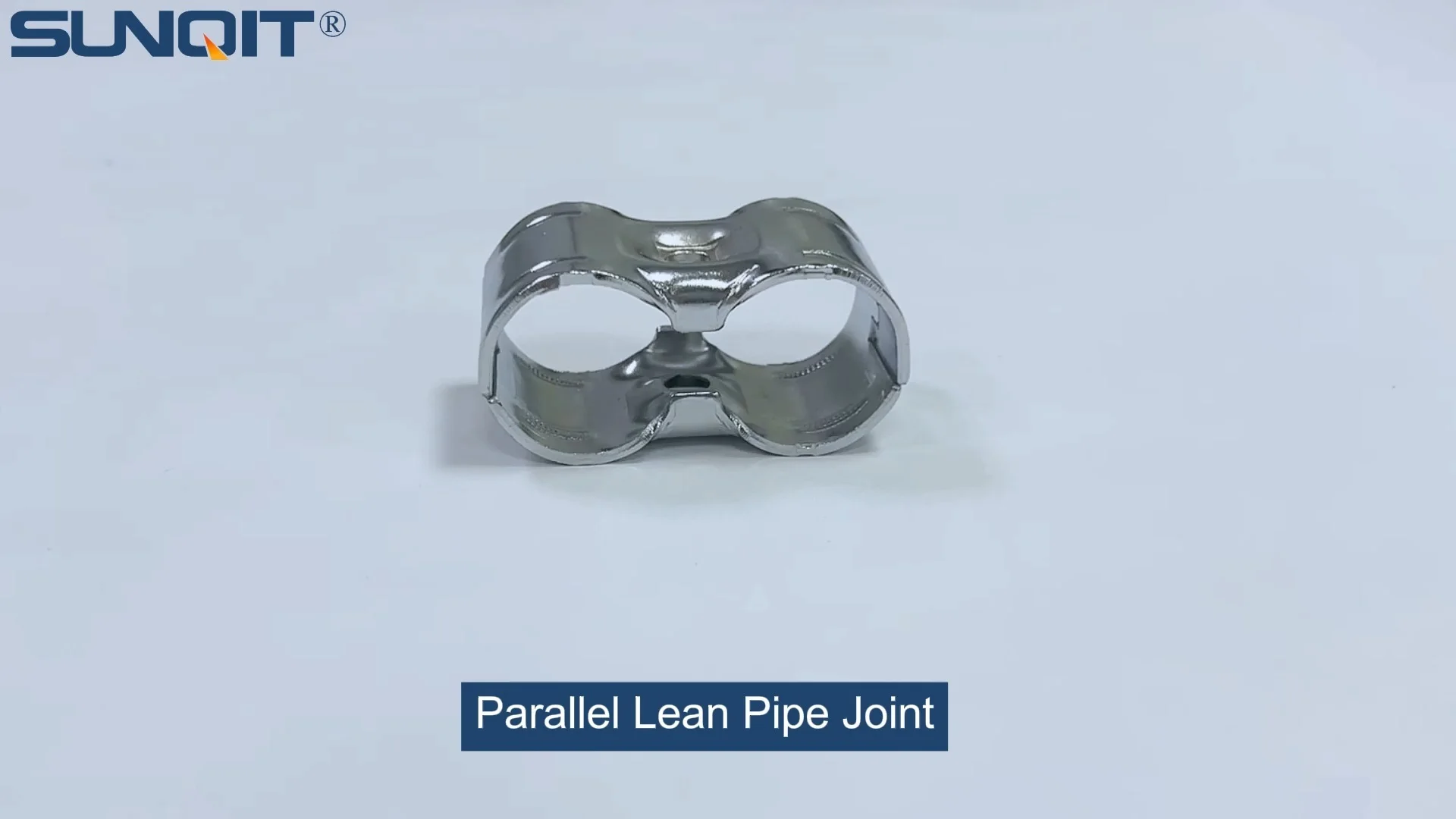
Parallel Lean Pipe Joint Chrome
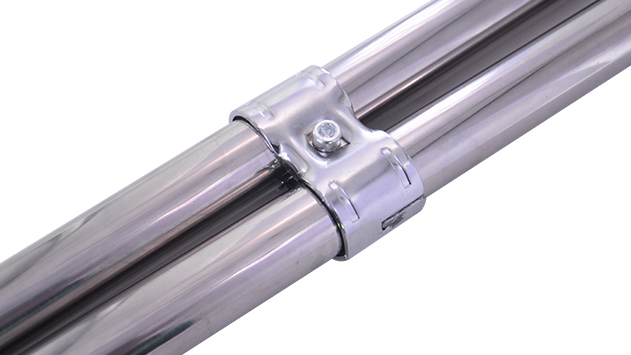
Parallel lean pipe joint used for 2 pcs 28MM lean pipe connection in parallel direction to enhance frame structure, usually for heavy payload requirement for workbench. flow rack, hand trolley.
1. Introduction: The Hidden Cost of Neglecting Joint Quality in Lean Systems
In the world of manufacturing and production, the term "lean system" has become more than just a buzzword—it's a philosophy that drives efficiency, reduces waste, and keeps operations running like well-oiled machines. At the heart of any lean system are the physical components that hold everything together: workbenches, flow racks, conveyors, and the often-overlooked heroes: pipe joints. These small, unassuming parts are the backbone of your production line, yet their quality can make or break your bottom line. Today, we're zeroing in on one specific component that's been quietly revolutionizing maintenance costs for forward-thinking facilities: the parallel lean pipe joint chrome.
If you've ever walked through a factory floor, you've probably seen them—those metal joints connecting pipes to form workbenches, material racks, or assembly lines. What you might not realize is how much time, money, and frustration goes into maintaining them. A loose joint here, a rusted connector there, and suddenly your "lean" system is anything but. Downtime creeps in, repair crews scramble, and the waste you worked so hard to eliminate starts piling up again. But what if there was a way to cut through that cycle? What if a single upgrade to your joints could slash maintenance costs, reduce downtime, and let your team focus on what they do best: producing quality products? That's where parallel lean pipe joint chrome comes into play.
2. Understanding Parallel Lean Pipe Joint Chrome: What Makes It Different?
Before we dive into costs, let's get clear on what parallel lean pipe joint chrome actually is. Unlike standard steel or plastic joints, these components are made from high-grade steel with a chrome plating finish. Chrome isn't just for shine—it's a protective layer that resists corrosion, wear, and tear, even in harsh industrial environments. The "parallel" design refers to how the joint connects pipes: it's engineered to distribute weight evenly, reducing stress on individual connection points and minimizing the risk of loosening over time.
Think of it like comparing a basic garden hose connector to a professional-grade fitting. The garden hose version might work for a while, but after exposure to water, sun, and regular use, it cracks, leaks, or strips. The professional one? It's built to last, with materials that stand up to the elements. Parallel lean pipe joint chrome is the professional-grade fitting of the manufacturing world. Its design isn't just about durability, though—it's about compatibility. These joints play nice with a wide range of lean system components, from lean pipe workbenches to flow racks, making them a versatile choice for facilities of all sizes.
But why chrome? Let's break it down. Chrome plating adds a hard, smooth surface to the steel joint. This smoothness reduces friction when pipes are adjusted or moved, which means less wear on both the joint and the pipe itself. It also acts as a barrier against moisture, chemicals, and debris—common culprits in factory settings that cause rust and degradation. For facilities dealing with humidity, oil, or even occasional spills, this resistance is a game-changer. Standard joints might start showing signs of rust within months; chrome-plated ones can last years without so much as a spot.
3. Breaking Down Maintenance Costs: The True Price of "Cheap" Alternatives
3.1 Material Degradation and Wear
Let's start with the most obvious cost: replacing worn-out parts. Standard steel joints, especially those without protective coatings, are prone to rust and corrosion. Every time you wipe down a lean pipe workbench or clean a flow rack, moisture seeps into tiny crevices in the joint. Over time, that moisture eats away at the metal, weakening the connection. Eventually, the joint becomes loose, and you're left with two options: tighten it (temporarily) or replace it (permanently).
Plastic joints, while cheaper upfront, fare even worse. They're susceptible to cracking under heavy loads, warping in high temperatures, and breaking down when exposed to oils or cleaning agents. A facility using plastic joints might find themselves replacing 20-30% of their joints annually, depending on usage. That's not just the cost of the joint itself—it's the cost of the pipe it's connected to, too. A cracked joint can damage the pipe's end, requiring you to cut off a section and shorten the pipe, which then affects the entire structure's stability.
Parallel lean pipe joint chrome, on the other hand, laughs in the face of these issues. The chrome plating acts as a shield, preventing moisture and debris from penetrating the steel core. Even in high-moisture environments—like food processing plants or warehouses in humid climates—these joints stay strong. I visited a automotive parts manufacturer last year that switched to chrome joints three years ago, and their maintenance manager told me, "We used to replace joints on our flow racks every six months. Now? We haven't touched them. They still look like the day we installed them."
3.2 Labor Costs for Repairs and Replacements
Material costs are just the tip of the iceberg. The real drain on your budget comes from labor. Let's say a standard joint takes 15 minutes to replace. That includes tracking down the replacement part, shutting down the section of the line, removing the old joint, installing the new one, and testing the stability. If your facility has 500 joints and replaces 10% of them annually, that's 50 replacements per year—adding up to 12.5 hours of labor. At an average maintenance labor rate of $35 per hour, that's $437.50 per year just for joint replacements.
But wait—what if the joint failure causes a larger issue? A loose joint on a flow rack might lead to a collapsed shelf, spilling materials and damaging products. Now you're not just replacing a joint; you're cleaning up debris, repairing the rack, and possibly even replacing damaged inventory. That 15-minute job balloons into a 2-hour crisis. Multiply that by a few incidents per year, and suddenly labor costs skyrocket.
Chrome joints drastically reduce this workload. With their corrosion resistance and even weight distribution, they rarely loosen or fail. A facility using parallel lean pipe joint chrome might see replacement rates drop to less than 1% annually. Using the same numbers—500 joints, 1% replacement rate—that's just 5 replacements per year, totaling 1.25 hours of labor, or $43.75. That's a 90% reduction in labor costs for joint maintenance alone. Imagine what your team could accomplish with those extra hours freed up—training, process improvements, or tackling other pressing issues instead of chasing loose joints.
3.3 Downtime: The Silent Budget Killer
If labor costs are a drain, downtime is a flood. Every minute your production line is stopped is money walking out the door. Let's put a number to it: the average manufacturing facility loses $22,000 per minute of unplanned downtime, according to IndustryWeek. That's a staggering figure, and while not every joint failure will stop the entire line, even a 10-minute delay on a single workstation can add up.
Consider a scenario: a joint on a lean pipe workbench in your assembly area fails, causing the workbench to wobble. Your operator notices and stops work to report it—safety first, of course. The maintenance team is called, and they take 20 minutes to replace the joint. In those 20 minutes, that workstation is idle. If that workstation produces 10 units per minute, that's 200 units lost. At $5 profit per unit, that's $1,000 in lost revenue—from a single joint. Now imagine this happening once a month. That's $12,000 per year from one workstation alone.
Chrome joints minimize this risk. Their durability means fewer unexpected failures, and when they do need attention, it's often planned maintenance during off-hours, not mid-shift emergencies. A plant manager I spoke with in the aerospace industry summed it up: "Before chrome joints, we had a 'break-fix' culture. Now, we schedule maintenance during weekends, when production is slow. No more dropping everything to fix a wobbly rack. Our uptime has increased by 3%, and that's translated directly to higher output."

4. Long-Term Savings with Parallel Lean Pipe Joint Chrome: A 5-Year Analysis
Now that we've broken down the costs of standard joints, let's look at the flip side: the long-term savings of investing in parallel lean pipe joint chrome. We'll compare two scenarios over a 5-year period: a facility using standard steel joints and one using chrome-plated parallel joints. For consistency, we'll assume 500 joints, a labor rate of $35/hour, downtime costs of $367 per minute (based on $22,000/hour), and initial joint costs of $5 for standard and $8 for chrome (a 60% higher upfront cost).
| Cost Category | Standard Steel Joints (5-Year Total) | Parallel Lean Pipe Joint Chrome (5-Year Total) | Savings |
|---|---|---|---|
| Initial Joint Cost (500 joints) | $2,500 | $4,000 | -$1,500 (Higher upfront) |
| Replacement Joints (10% vs. 1% annual) | $1,250 (250 replacements) | $125 (25 replacements) | $1,125 |
| Labor for Replacements (15 mins/replacement) | $2,187.50 | $218.75 | $1,968.75 |
| Downtime (5 incidents/year vs. 0.5 incidents/year) | $36,700 (50 mins/incident) | $3,670 (50 mins/incident) | $33,030 |
| Total 5-Year Cost | $42,637.50 | $8,013.75 | $34,623.75 |
Let that sink in: over five years, the facility using parallel lean pipe joint chrome saves over $34,000. That's despite the higher upfront cost of the chrome joints. The initial $1,500 difference is dwarfed by the savings in replacements, labor, and downtime. This isn't just a cost-cutting measure—it's an investment with a clear, rapid return. For many facilities, that $34k could fund new equipment, employee bonuses, or R&D initiatives that drive growth.
4.1 Durability: Chrome Plating's Protective Edge
The star of the savings show is durability. Chrome plating isn't just about looks; it's a hard, non-porous layer that acts as armor for the steel underneath. In tests, chrome-plated steel has been shown to resist corrosion up to 10 times longer than uncoated steel in high-moisture environments. For facilities in regions with humid climates or those using water-based cleaning solutions, this resistance is invaluable. Even in dry environments, the smooth surface of chrome prevents debris from building up in the joint's crevices, which can cause jamming or wear over time.
Another factor is the parallel design. Standard joints often have uneven weight distribution, with stress on one or two points. This leads to loosening as the joint flexes under load. Parallel lean pipe joint chrome, by contrast, spreads the weight evenly across the entire connection, reducing flex and preventing the joint from working itself loose. It's like the difference between standing on one foot and two—stability matters, and the parallel design delivers it in spades.
4.2 Compatibility with Lean Pipe Workbenches and Flow Racks
A common concern when upgrading components is compatibility: will the new joints work with my existing lean pipe workbenches, flow racks, or aluminum pipes? The good news is that parallel lean pipe joint chrome is designed to be a drop-in replacement for standard joints. They fit the same pipe diameters, use the same tools for installation, and integrate seamlessly with existing systems. This means you don't have to overhaul your entire line to start seeing savings—you can upgrade joints as needed, starting with high-stress areas like flow racks or heavy-duty workbenches.
For example, a facility might start by replacing joints on their busiest flow rack, which sees constant material movement and is prone to joint wear. Within months, they notice fewer jams and less downtime on that rack. Encouraged, they expand to their assembly workbenches, then to material trolleys. Each upgrade brings incremental savings, with no disruption to existing operations. This modular approach makes the transition low-risk and easy to budget for.
5. Real-World Case Study: How a Manufacturer Cut Costs by 32% in 3 Years
The Challenge
A mid-sized electronics manufacturer in the Midwest was struggling with rising maintenance costs. Their production line relied on standard steel joints for their lean pipe workbenches and flow racks, which were installed when the facility opened 5 years prior. By year 3, they were replacing 15% of their joints annually, dealing with monthly downtime incidents due to joint failures, and spending over $15,000 per year on joint-related maintenance and downtime.
The Solution
In 2020, the facility's operations manager attended a lean manufacturing conference where they learned about parallel lean pipe joint chrome. Skeptical but desperate to cut costs, they decided to pilot the joints on their most problematic area: a flow rack used for transporting circuit boards, which had become a frequent source of downtime. They replaced 100 joints on the rack with chrome-plated parallel joints, at a total cost of $800 (vs. $500 for standard joints).
The Results
Within 6 months, the pilot area showed remarkable improvements: zero joint replacements, no downtime incidents, and a 20% reduction in labor hours spent on maintenance for that rack. Encouraged, the manufacturer expanded the upgrade to all their flow racks and workbenches over the next year, replacing 1,200 joints total. By 2023, they reported:
- 92% reduction in joint replacements (from 180/year to 14/year)
- 85% reduction in downtime related to joint failures (from 12 incidents/year to 2)
- Total annual savings of $12,300 (including materials, labor, and downtime)
- 32% lower maintenance costs overall compared to 2020
The operations manager noted, "We thought the upfront cost was steep, but the payback was faster than we expected. Within the first year, we'd already recouped the extra $300 per 100 joints. Now, we're looking at upgrading other components—all because we started with joints."
6. Choosing the Right Lean Pipe Supplier: Why Quality Components Matter
Of course, not all parallel lean pipe joint chrome is created equal. To maximize your savings, you need to partner with a reputable lean pipe supplier that prioritizes quality. Here's what to look for:
Material Sourcing: Ask where the steel is sourced and how the chrome plating is applied. High-quality suppliers use cold-rolled steel for strength and apply chrome via electroplating, which ensures a uniform, thick layer. Cheaper alternatives might use lower-grade steel or thin chrome sprays that chip easily.
Testing and Certifications: Reputable suppliers test their joints for corrosion resistance, load capacity, and durability. Look for certifications like ISO 9001, which indicates a commitment to quality control. A supplier who can provide test reports or case studies from other customers is a good sign they stand behind their products.
Customer Support: Upgrading components can raise questions—will this joint fit my pipe? How do I install it? A good supplier offers technical support, installation guides, and even on-site assistance if needed. Avoid suppliers who treat you like a transaction; you want a partner invested in your success.
Remember, the cheapest joint isn't the best deal if it fails in a year. Investing in quality from a trusted lean pipe supplier ensures you get the full durability and savings potential of parallel lean pipe joint chrome.
7. Conclusion: Investing in Chrome Joints as a Lean Strategy
At the end of the day, lean systems are about more than just eliminating waste—they're about making smart investments that pay off over time. Parallel lean pipe joint chrome might seem like a small upgrade, but its impact ripples through your entire operation: lower maintenance costs, less downtime, happier teams, and higher profits. The data speaks for itself: over 5 years, the savings from reduced replacements, labor, and downtime far outweigh the upfront cost.
If you're tired of chasing loose joints, fixing avoidable breakdowns, and watching your budget shrink under maintenance costs, it's time to consider the switch. Start small—pick one problem area, pilot the joints, and watch the savings roll in. Before long, you'll wonder how you ever ran your lean system without them. After all, in lean manufacturing, every detail counts—and when it comes to joints, chrome is the detail that delivers.